In the high-stakes arena of flagship smartphones, Apple and Samsung have long played a game of leapfrog—each pushing innovation forward in alternating years. The iPhone 15 Pro Max, released in late 2023, arrived with titanium construction, a powerful A17 Pro chip, and enhanced camera systems. Just months later, Samsung countered with the Galaxy S24 series, headlined by aggressive AI integration, longer software support, and refined hardware. Now, as consumers weigh their options, a critical question emerges: Is Apple, for the first time in over a decade, losing its technological edge?
This isn’t just about megapixels or battery life. It’s about vision—where each company sees the future of mobile computing. Apple has historically won on ecosystem cohesion and long-term value. Samsung, meanwhile, has often led in raw specs and early feature adoption. But with the S24 series leaning heavily into on-device artificial intelligence, the balance may be shifting.
Performance and Hardware: Power vs Practicality
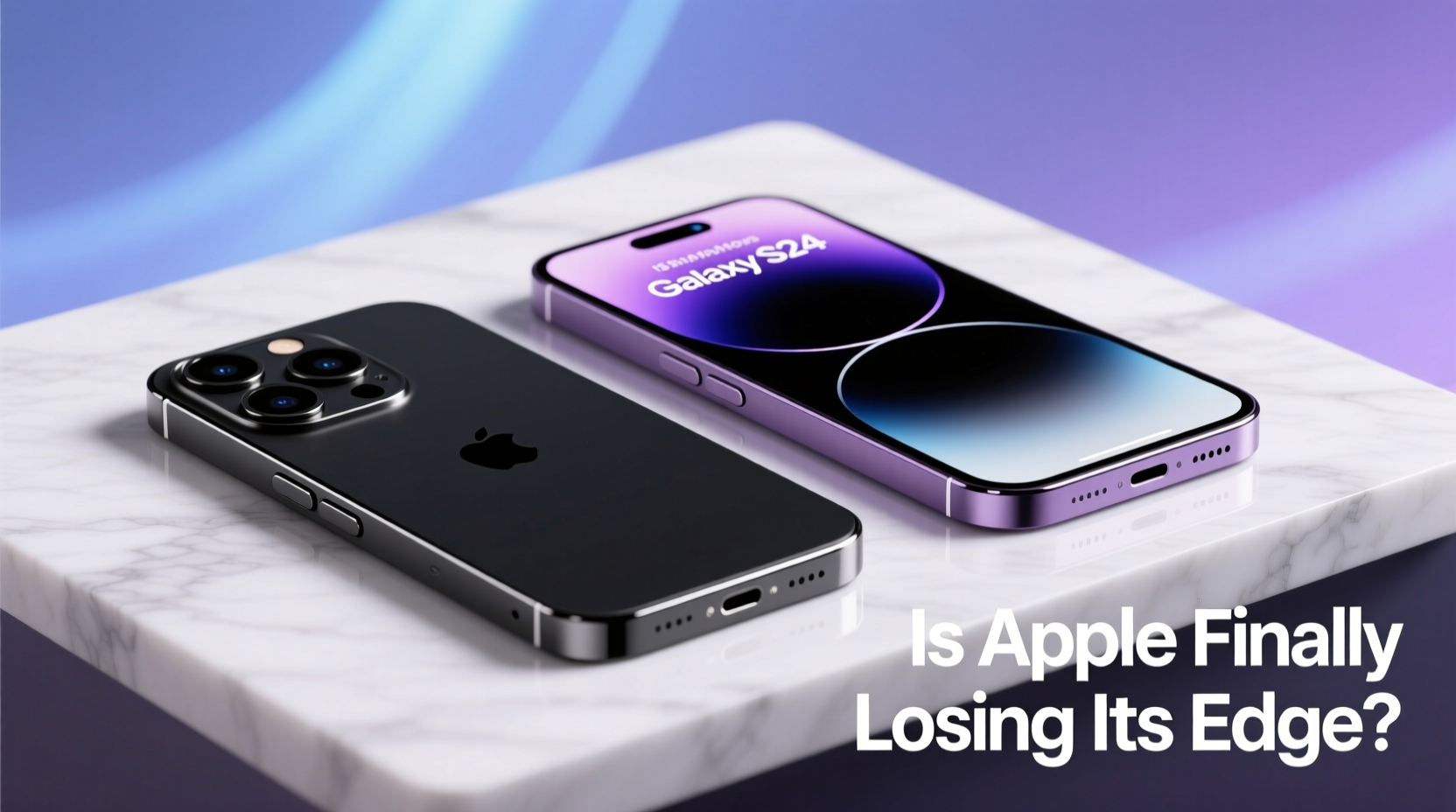
The iPhone 15 Pro Max runs on Apple’s custom A17 Pro chip, built on a 3nm process. It delivers top-tier CPU and GPU performance, particularly noticeable in gaming and video editing. The switch to a titanium frame reduced weight without sacrificing durability, making it the most refined iPhone yet. However, Samsung’s Galaxy S24 Ultra packs the Snapdragon 8 Gen 3 (or Exynos 2400 in some regions), which rivals the A17 Pro in multi-core workloads and surpasses it in thermal efficiency during sustained tasks.
One notable difference lies in display technology. Both phones offer 6.8-inch QHD+ OLED panels with 120Hz refresh rates, but the S24 Ultra features a slightly brighter peak output (2,600 nits vs. 2,000 nits) and superior outdoor visibility. Additionally, Samsung includes an integrated S Pen—a productivity tool absent from Apple’s lineup despite persistent rumors of stylus support.
Tip: If you frequently edit videos or play graphics-intensive games, test both devices under load—real-world thermal throttling can impact sustained performance.AI Integration: The New Battleground
The most striking divergence between these devices is their approach to artificial intelligence. Apple introduced on-device AI features like Live Voicemail transcription and improved photo search, but much of its machine learning remains background and utility-focused. In contrast, Samsung launched the Galaxy AI suite with generative capabilities: real-time call translation, AI-powered note summarization, photo retouching, and live message transcription across apps.
Critically, Samsung offers these features at no extra cost and with strong privacy safeguards via on-device processing. Apple, by comparison, has been cautious—likely due to infrastructure limitations and privacy-first policies. But this caution now reads as hesitation in a market racing toward AI-driven interfaces.
“Samsung didn’t just add AI features—they rebuilt the user experience around proactive assistance. Apple is still optimizing the past.” — Dr. Lena Park, Mobile Innovation Analyst at TechInsight Group
The implications are significant. For users who rely on cross-language communication or need intelligent productivity tools, the S24 provides tangible daily benefits. Apple’s AI feels more like polish than transformation.
Camera Comparison: Refinement vs Revolution
Apple has long held a lead in video recording quality, and the iPhone 15 Pro Max continues that trend with 4K Dolby Vision HDR and cinematic mode improvements. Its computational photography produces natural skin tones and balanced exposures, favored by professional creators.
Samsung, however, has closed the gap. The S24 Ultra features a 200MP main sensor with adaptive pixel binning, delivering exceptional detail in daylight. Its AI-enhanced zoom—up to 100x with improved clarity—is unmatched. Nightography modes now rival Apple’s, and the inclusion of a dedicated telephoto lens with 5x optical zoom gives it flexibility the iPhone lacks.
| Feature | iPhone 15 Pro Max | Galaxy S24 Ultra |
|---|---|---|
| Main Sensor | 48MP (f/1.78) | 200MP (f/1.7) |
| Optical Zoom | 5x (tetraprism) | 5x periscope + 3x telephoto |
| Video Recording | 4K HDR Dolby Vision | 8K@30fps, AI stabilization |
| Low-Light Performance | Excellent | Outstanding (AI Night Mode) |
| Front Camera | 12MP (f/1.9) | 12MP (f/2.2, autofocus) |
While Apple excels in consistency, Samsung now offers more versatility—especially for photographers who want creative control and extreme zoom capability.
Software and Longevity: Ecosystem Strengths and Shifts
Apple’s iOS remains a gold standard for smooth updates, security, and app optimization. The iPhone 15 Pro Max is expected to receive software support for at least six years—an industry benchmark. However, Samsung recently announced seven years of OS and security updates for the S24 series, matching and potentially exceeding Apple’s longevity promise.
This shift matters. Historically, Android lagged behind in update reliability. Now, with Google partnering closely on the S24’s AI stack and Samsung committing to long-term support, the durability argument for iOS is weakening. Moreover, Samsung allows greater customization, file management, and cross-device integration with Windows PCs—features many power users prefer.
Real-World Example: A Content Creator's Dilemma
Consider Maria, a travel vlogger based in Seoul. She used iPhones exclusively for five years, valuing the seamless integration with her MacBook and iPad. But after testing the S24 Ultra during a trip to Japan, she switched. “The real-time translation during interviews was flawless,” she said. “I could record a conversation, transcribe it instantly, and export summarized notes—all on the phone. No app switching, no delays. That kind of workflow change is hard to ignore.”
Maria’s story reflects a growing trend: professionals who once chose Apple for reliability are now opting for Android when AI-driven productivity becomes mission-critical.
Battery and Charging: The Hidden Trade-Off
The iPhone 15 Pro Max offers all-day battery life, typically lasting 10–12 hours of mixed use. However, it charges slowly—still capped at 27W wired and 15W wireless. In contrast, the S24 Ultra supports 45W fast charging, reaching 70% in 30 minutes. While both have similar total capacity (~5000mAh), Samsung’s faster charging and more efficient processor give it an edge in high-usage scenarios.
Apple’s conservative charging speeds stem from battery longevity concerns. But in a world where users expect rapid top-ups, this restraint feels increasingly outdated.
Tip: If you're frequently on the move, prioritize fast charging—even if it means slightly reduced battery lifespan over time.Checklist: Choosing Between iPhone 15 Pro Max and Galaxy S24 Ultra
- ✅ Need seamless Apple ecosystem integration? → iPhone 15 Pro Max
- ✅ Prioritize AI-powered productivity tools? → Galaxy S24 Ultra
- ✅ Edit videos regularly on-device? → iPhone 15 Pro Max (better codec support)
- ✅ Travel internationally and need real-time translation? → Galaxy S24 Ultra
- ✅ Want fastest possible charging? → Galaxy S24 Ultra
- ✅ Prefer minimalist UI with consistent updates? → iPhone 15 Pro Max
- ✅ Use a Windows PC or non-Apple devices? → Galaxy S24 Ultra
Frequently Asked Questions
Is the iPhone 15 Pro Max still worth buying in 2024?
Absolutely—if you’re invested in the Apple ecosystem, value long-term software support, or prioritize video recording quality. It remains one of the most capable smartphones ever made, even if it’s not leading the innovation curve.
Does the Galaxy S24’s AI drain the battery quickly?
Not significantly. Most AI features run on dedicated NPUs (Neural Processing Units) that are highly efficient. Battery impact is minimal under normal use, though extended video generation or live translation sessions will increase consumption.
Can the iPhone catch up to Samsung’s AI features?
Possibly—with iOS 18 expected to introduce major AI enhancements. However, Apple’s focus will likely remain on privacy and on-device processing, meaning cloud-dependent generative features may be limited compared to Samsung’s approach.
Conclusion: A Shifting Balance of Power
The iPhone 15 Pro Max is not a weak device. It’s polished, powerful, and deeply integrated into one of the most cohesive ecosystems in tech. But for the first time, Samsung’s Galaxy S24 series doesn’t just match Apple—it anticipates the next phase of mobile computing. With meaningful AI features, faster charging, longer official support, and hardware innovations like the S Pen, the S24 represents a strategic leap.
Apple isn’t losing relevance. But it may be losing its aura of inevitability. Where it once defined the future, it now responds to it. For consumers, that’s good news: competition is driving progress. For Apple, it’s a wake-up call. The edge isn’t gone—but it’s narrowing fast.
💬 Which phone aligns better with your lifestyle—Apple’s refinement or Samsung’s innovation? Share your thoughts and experiences below.