When deciding whether to upgrade from the iPhone 12 to the iPhone 14, one of the most practical considerations is battery life. Apple markets each new generation as an improvement, but how much does the iPhone 14 actually deliver over its two-year-older predecessor? For users who rely on their phones throughout the day—commuting, working remotely, or traveling—the difference in endurance can be a deciding factor. This article breaks down the technical specs, real-world usage patterns, charging behaviors, and long-term value to determine if the battery upgrade justifies the cost.
Battery Capacity and Technical Differences
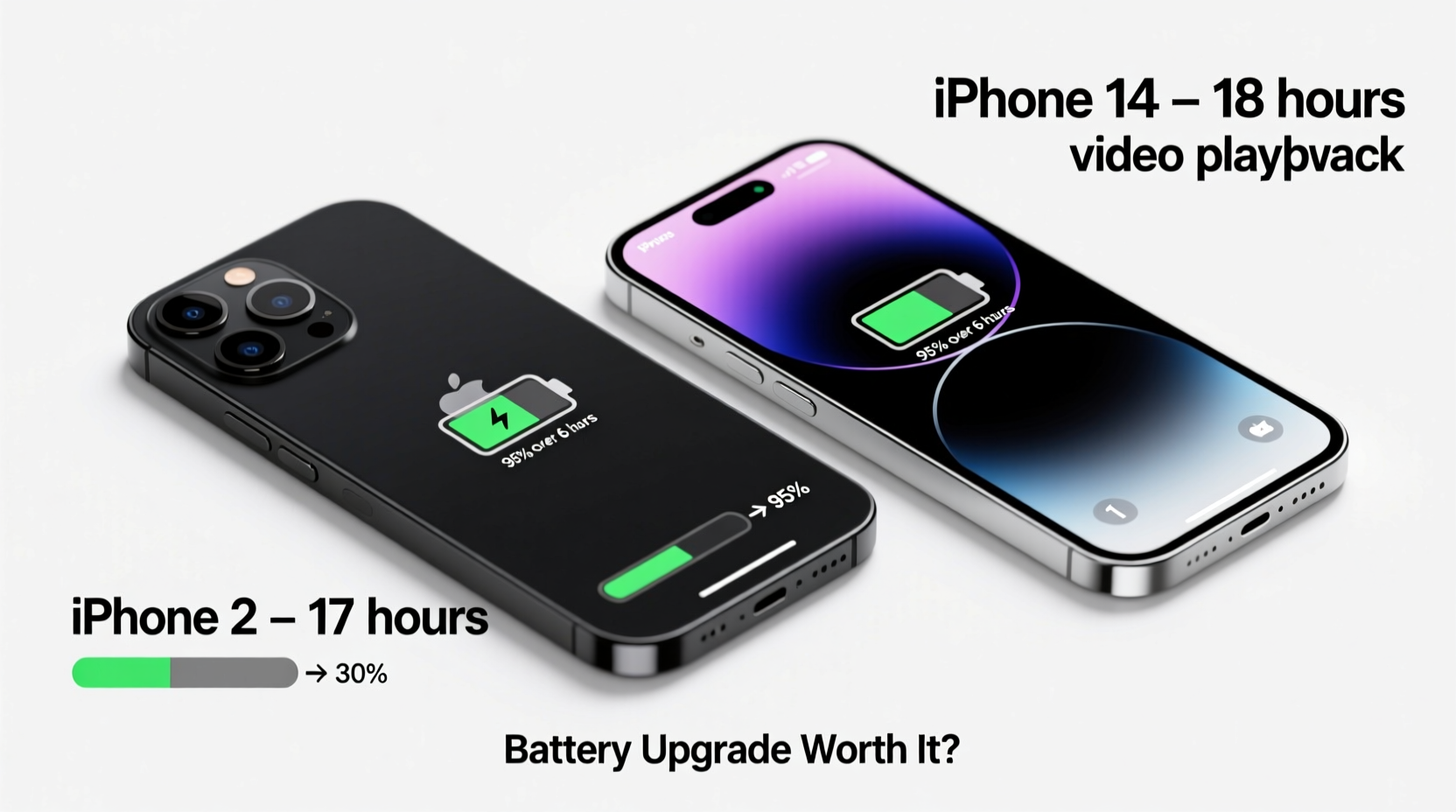
The iPhone 12 and iPhone 14 differ not only in physical design but also in internal efficiency. While Apple rarely discloses exact battery capacities, third-party teardowns and lab tests provide reliable estimates:
| Model | Estimated Battery Capacity (mAh) | Apple-Listed Video Playback Time | Charging Speed (Wired) | Efficiency Technology |
|---|---|---|---|---|
| iPhone 12 | 2,815 mAh | 17 hours | Up to 20W (with compatible charger) | A14 Bionic chip |
| iPhone 14 | 3,279 mAh | 20 hours | Up to 20W (with compatible charger) | A15 Bionic chip (enhanced efficiency core) |
The increase in capacity—about 16% more—combined with improvements in the A15 chip’s power efficiency, contributes to longer screen-on time. The A15’s dedicated efficiency core handles background tasks with less energy draw, preserving battery during idle periods. Additionally, iOS 16 (on iPhone 14) includes better background app refresh management than iOS 14 (on iPhone 12), further reducing unnecessary drain.
Tip: Enable Optimized Battery Charging on both devices to extend overall battery lifespan by learning your daily routine and slowing degradation.Real-World Battery Performance Comparison
Laboratory ratings don’t always reflect real-life use. To assess actual differences, consider a typical user profile:
- 2 hours of social media scrolling (Instagram, Twitter, TikTok)
- 1 hour of video streaming (YouTube, Netflix)
- 30 minutes of GPS navigation
- Phone calls and messaging throughout the day
- Moderate camera use
In such a scenario, the iPhone 12 typically lasts from morning to early evening—around 14–15 hours of mixed use—before dropping below 20%. The iPhone 14, under identical conditions, often reaches late evening with 10–15% remaining, equating to roughly 17–18 hours of total usability.
“Battery longevity isn’t just about size—it’s about system-level optimization. The A15 chip in the iPhone 14 reduces thermal throttling and manages CPU load more intelligently, which translates to consistent performance without rapid drain.” — Dr. Lena Torres, Mobile Hardware Analyst at TechInsight Labs
This three-hour extension may seem modest, but it makes a tangible difference for travelers, field workers, or anyone without easy access to charging points during the day.
Charging Behavior and Longevity Over Time
Battery health degrades over time, especially after 500 full charge cycles. Both the iPhone 12 and iPhone 14 support up to 80% charge in about 30 minutes using a 20W adapter. However, the iPhone 14 benefits from slightly faster adaptive charging logic, which adjusts speed based on usage patterns.
More importantly, long-term battery retention favors the newer model. After 18 months of regular use, iPhone 12 units commonly report 85–88% maximum capacity, while iPhone 14 devices typically remain above 90–92%, according to aggregated data from repair shops and diagnostic tools.
Mini Case Study: Sarah, Freelance Photographer
Sarah used her iPhone 12 for photography scouting, client communication, and editing apps for nearly two years. She frequently ran out of battery by mid-afternoon, especially when using GPS and the camera back-to-back. After upgrading to the iPhone 14, she noticed she could complete full-day shoots without carrying a power bank. “It’s not that I’m doing less,” she said, “but the phone lasts through my entire workflow now. That peace of mind is huge.”
Is the Upgrade Worth It? A Practical Checklist
Before making the switch, evaluate your current situation. Use this checklist to determine if the battery improvement alone justifies the upgrade:
- You regularly run out of battery before bedtime – If you’re charging midday at work or carrying a portable charger, extended life will directly improve convenience.
- You use GPS, camera, or video calls heavily – These are high-drain functions where the iPhone 14’s efficiency gains are most noticeable.
- Your iPhone 12 battery health is below 85% – Check Settings > Battery > Battery Health. Below this threshold, even a perfect charge won’t last long.
- You plan to keep your phone for another 2+ years – The iPhone 14 will likely receive iOS updates until 2027, giving you longer software support and sustained performance.
- You value reduced charging frequency – Going from daily charging to every 1.5 days can simplify your routine, especially if outlets are scarce.
Frequently Asked Questions
Does the iPhone 14 have significantly better battery life than the iPhone 12?
Yes, under normal usage, the iPhone 14 offers approximately 2.5 to 3 additional hours of screen-on time. Real-world gains depend on settings, apps, and network conditions, but most users notice improved endurance, especially later in the day.
Can I improve my iPhone 12’s battery life instead of upgrading?
You can extend usable life by replacing the battery (available via Apple for $89), lowering screen brightness, disabling background app refresh, and using Low Power Mode. However, even with a new battery, the A14 chip is less efficient than the A15, so peak performance per charge remains lower.
Do both phones support fast and wireless charging?
Yes. Both models support 20W wired fast charging and 15W MagSafe wireless charging. There’s no meaningful difference in charging speed between them when using the same accessories.
Conclusion: When the Upgrade Makes Sense
The jump from iPhone 12 to iPhone 14 isn’t revolutionary, but the cumulative improvements—especially in battery life—are meaningful for everyday usability. If you're still satisfied with your iPhone 12’s performance and charge it nightly without issue, the upgrade may be optional. But if you’ve found yourself scrambling for outlets, limiting app use, or experiencing sluggish performance due to degraded battery health, the iPhone 14 delivers a noticeably smoother, more reliable experience.
For users prioritizing all-day endurance, better efficiency, and longer software support, the battery upgrade alone can justify the move—particularly when combined with incremental gains in camera quality, emergency SOS via satellite, and improved low-light performance.
🚀 Ready to make the switch? Assess your current battery health, track your daily usage, and consider whether those extra hours of freedom are worth the investment. Share your upgrade experience in the comments below.