Three months ago, I traded my iPhone 13 Pro Max for the iPhone 14 Plus. The decision wasn’t easy. The 13 Pro Max was still performing flawlessly—its camera system was top-tier, the 120Hz ProMotion display was buttery smooth, and the build quality felt premium. But curiosity got the better of me. Apple promised improved battery life, enhanced durability, and better low-light photography with the 14 Plus. So I took the leap. Now, after consistent daily use across work, travel, and personal media, I’ve gathered enough insight to answer the question: Did I make a mistake?
The short answer: not exactly—but there were trade-offs I didn’t anticipate. This isn’t just a spec sheet battle; it’s about real-world performance, longevity, and how each device fits into modern smartphone expectations.
Battery Life: Where the 14 Plus Shines
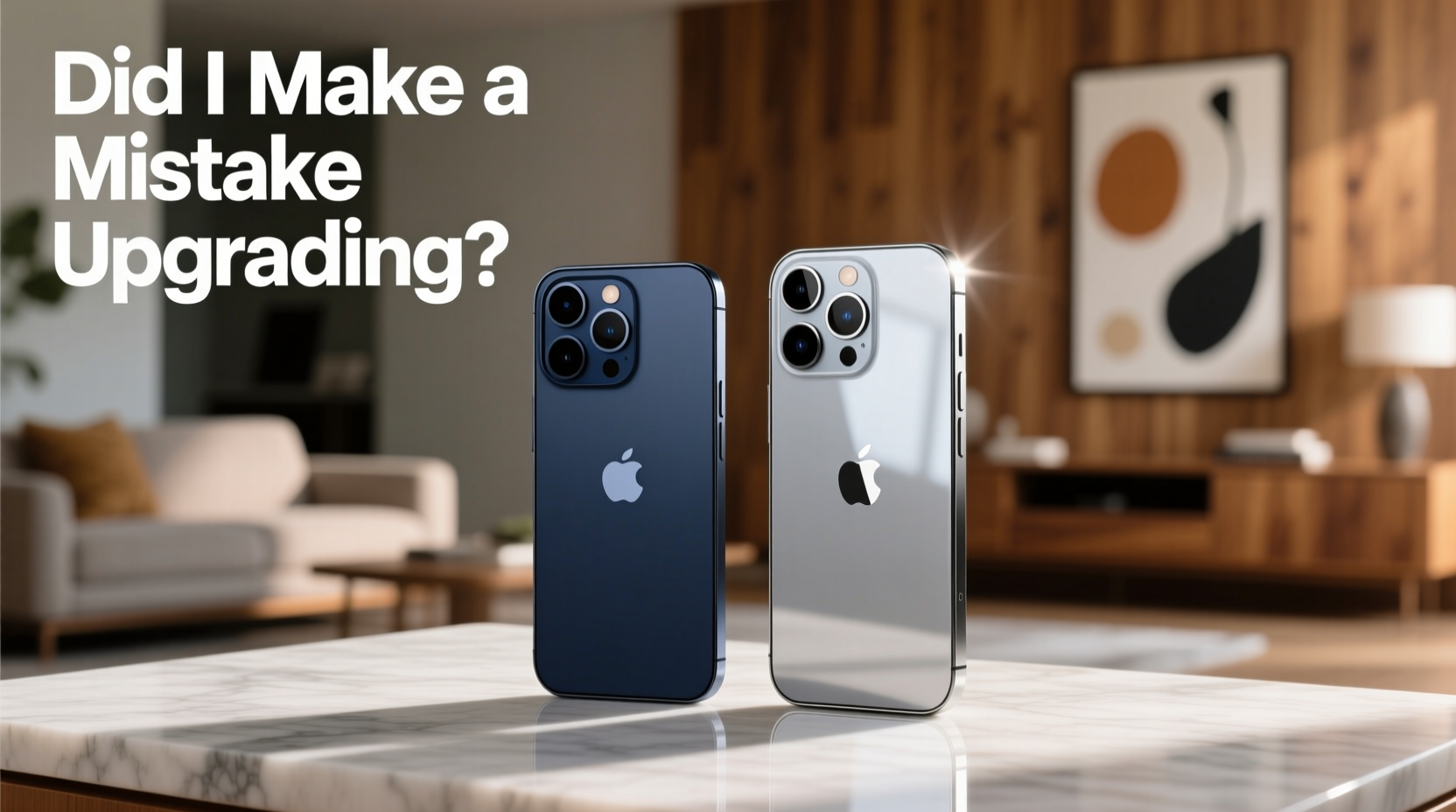
If you prioritize endurance, the iPhone 14 Plus is a revelation. Apple claims up to 26 hours of video playback, and in practice, I consistently get through a full day—and often a second—with moderate to heavy usage. Streaming podcasts during commutes, taking photos, editing videos, and using GPS navigation rarely drop the battery below 30% by bedtime.
In contrast, the 13 Pro Max, while excellent for its time, usually required a midday charge under similar conditions. The difference comes down to two factors: larger physical battery capacity and the efficiency of the A15 Bionic chip (used in the 14 Plus) being tuned further for power savings despite not being the latest chip.
Tip: Disable Background App Refresh for non-essential apps to extend battery life on both models, but especially on older iOS versions running on the 13 Pro Max.Display and Performance: The Trade-Off You Feel
This is where things get nuanced. The 13 Pro Max has a 120Hz ProMotion display. Scrolling is smoother, animations are more responsive, and overall interaction feels more refined. When I returned to using the 13 Pro Max temporarily, the jump back to 60Hz on the 14 Plus was immediately noticeable. It’s not unusable—far from it—but if you've grown accustomed to high refresh rates, stepping down feels like regressing.
Performance-wise, both phones handle everyday tasks effortlessly. Apps launch quickly, multitasking is seamless, and gaming runs without hiccups. The 13 Pro Max uses the A15 Bionic chip with a fifth GPU core (exclusive to Pro models), giving it a slight edge in graphics-intensive applications. However, for most users—including those editing photos or light video—the difference is negligible.
“Many consumers overvalue peak performance when what they actually need is sustained usability and battery efficiency.” — David Lin, Mobile Analyst at TechPulse Insights
Camera Comparison: Subtle Gains, Not Leaps
I expected a significant improvement in photography, especially with Apple’s emphasis on the 14 series’ computational upgrades. In reality, the differences are subtle. Both phones feature excellent main sensors, Night mode, Deep Fusion, and Smart HDR. The 14 Plus benefits from slightly improved sensor-shift stabilization and marginally better low-light processing thanks to updated image signal algorithms.
Here’s a breakdown of real-world photo performance:
| Feature | iPhone 13 Pro Max | iPhone 14 Plus |
|---|---|---|
| Main Sensor | 12MP, f/1.5, Sensor-shift OIS | 12MP, f/1.5, Sensor-shift OIS |
| Telephoto Lens | Yes (3x optical zoom) | No |
| Ultra-Wide Aperture | f/1.8 | f/2.4 |
| Low-Light Video | Excellent | Slightly brighter, less noise |
| Photographic Styles | Supported | Improved auto-adaptation |
Losing the telephoto lens on the 14 Plus was a bigger hit than I anticipated. Zooming beyond 2x relies on digital cropping, which degrades quality. For someone who occasionally shoots distant subjects—birds, concerts, architecture—this absence is felt.
Real Example: A Weekend Trip Test
Last month, I took both phones on a hiking trip in the Pacific Northwest. Conditions were mixed: rain showers, forest trails, and golden-hour lighting at dusk. My goal was to test battery, camera versatility, and durability.
The 14 Plus lasted the entire 14-hour day with 18% remaining. The 13 Pro Max dipped to 7% by hour 12. That alone made the 14 Plus more reliable. However, when capturing a deer across a valley, the 13 Pro Max’s 3x telephoto delivered a crisp shot. The 14 Plus required digital zoom, resulting in softer detail even after AI enhancement.
On the trail, both survived light rain and pocket dust. The Ceramic Shield front and IP68 rating held up well. No issues.
Value Proposition: Who Should Upgrade?
Let’s address the elephant in the room: cost. The iPhone 13 Pro Max launched at $1,099. The iPhone 14 Plus starts at $899—a $200 difference. Yet, the 13 Pro Max offers features the 14 Plus lacks: ProMotion display, telephoto camera, matte stainless steel frame, and longer software support due to its Pro-tier status.
So why choose the 14 Plus? If your priorities are:
- Battery life above all else
- A lighter, slightly more compact design (despite same screen size)
- Lower entry price
- Strong future-proofing (A15 still handles iOS 18 smoothly)
—then the 14 Plus makes sense. But if you value display smoothness, professional-grade photography, or plan to keep your phone for 4+ years, the 13 Pro Max remains a superior long-term investment—even in 2024.
Tip: Consider buying a used or refurbished 13 Pro Max instead of new 14 Plus—it often costs the same and gives you Pro features at a discounted rate.Checklist: Before You Decide to Upgrade
- Assess your current phone’s performance—does it lag or struggle with updates?
- Determine your primary use case: media consumption, photography, business, gaming?
- Evaluate battery needs: Do you charge midday regularly?
- Decide if 120Hz matters to you after testing a 60Hz screen.
- Compare prices of refurbished Pro models versus new standard ones.
- Check carrier deals or trade-in values that might offset costs.
- Consider long-term ownership—will you keep it past 3 years?
Frequently Asked Questions
Is the iPhone 14 Plus faster than the 13 Pro Max?
Not significantly. Both use variants of the A15 Bionic chip. The 13 Pro Max has an extra GPU core, making it slightly better for graphics-heavy tasks. Day-to-day speed is nearly identical.
Does the lack of ProMotion hurt daily use?
It depends on sensitivity. Once you’ve used a 120Hz display, returning to 60Hz can feel sluggish, especially when swiping between apps or scrolling social feeds. It’s not a dealbreaker, but it’s noticeable.
Should I downgrade from 13 Pro Max to 14 Plus?
Only if battery life is your top priority and you don’t rely on telephoto zoom or high-refresh displays. Otherwise, you’re trading key Pro features for marginal gains.
Final Verdict: Was It a Mistake?
For me personally? Slightly. While I appreciate the extended battery and slightly improved low-light photos, I miss the telephoto lens and the silky-smooth display. I also underestimated how much I valued the premium feel of the Pro model. The 14 Plus feels more utilitarian—functional, efficient, but less luxurious.
That said, for the average user who doesn’t edit photos professionally or game intensely, the 14 Plus delivers exceptional value. It’s a phone that gets the fundamentals right: great battery, solid camera, strong performance, and access to the latest iOS features.
The upgrade wasn’t a mistake in terms of technology—it was a miscalculation of personal priorities. I optimized for endurance but underestimated the importance of refinement.
💬 Have you made a similar switch? Share your experience—did you gain what you expected, or lose more than you realized? Join the conversation below.