When the iPhone 12 and Samsung Galaxy S20 FE 5G launched in late 2020, they represented two distinct philosophies in smartphone design: Apple’s tightly integrated ecosystem with long-term software support, and Samsung’s feature-packed Android alternative at a slightly lower price. Three years later, both devices are well beyond their prime, yet many users still rely on them daily. The question isn’t just about specs or launch-day excitement—it’s whether the iPhone 12’s higher initial cost continues to justify its premium when compared to the more affordable S20 FE 5G.
This comparison goes beyond camera megapixels or processor benchmarks. It’s about real-world longevity, software updates, repair costs, resale value, and how each device handles the wear and tear of daily use over time. For users deciding between holding onto their current phone, upgrading, or buying a used model, this analysis offers practical insight into which device delivers better long-term value.
Performance and Software Longevity
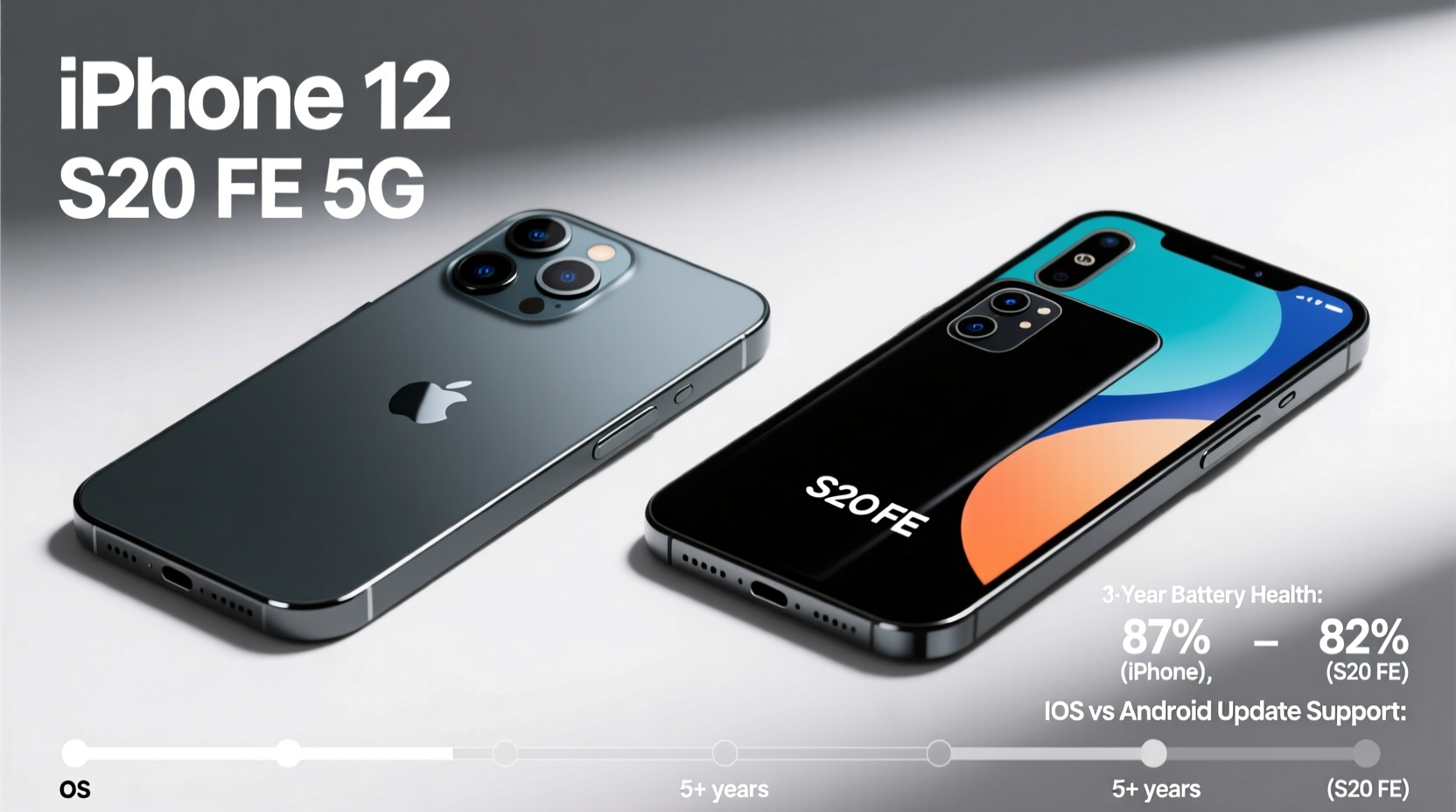
The heart of any smartphone’s lifespan lies in its operating system and processor efficiency. The iPhone 12 runs on Apple’s A14 Bionic chip—one of the first 5nm processors in consumer smartphones. Even today, it remains remarkably capable. iOS 17, released in 2023, supports the iPhone 12, offering modern features like StandBy mode, enhanced privacy controls, and improved messaging functionality. This means users continue receiving security patches, app compatibility, and interface refinements that keep the experience fresh.
In contrast, the S20 FE 5G, powered by the Qualcomm Snapdragon 865 (or Exynos 990 in some regions), was strong in its day but shows its age under heavier loads. While Samsung promised four major Android OS updates and five years of security patches, the rollout has been inconsistent across carriers and regions. As of 2024, many S20 FE units have stopped receiving updates entirely, leaving them vulnerable to new threats and incompatible with newer versions of popular apps.
Tip: Always check your device’s official update roadmap before purchasing secondhand—Samsung’s promise doesn’t always translate to timely delivery.“Apple’s control over hardware and software allows for tighter optimization, meaning older iPhones often outlive their Android counterparts in meaningful ways.” — David Kim, Mobile Systems Analyst at TechInsight Group
Battery Life and Hardware Durability
After three years of daily charging cycles, battery degradation becomes a critical factor. The iPhone 12 started with a modest 2,815 mAh battery, while the S20 FE 5G came with a larger 4,500 mAh unit. Initially, Samsung had a clear advantage. However, real-world endurance now depends heavily on usage patterns and battery health.
Many iPhone 12 owners report stable performance with optimized background activity and iOS power management—even as capacity drops to 80%. Replacing an iPhone battery through Apple or authorized providers is straightforward and restores much of the original experience. On the other hand, the S20 FE’s larger battery degrades faster under heavy app usage and high refresh rate settings (120Hz). Users frequently report needing midday charges even after light calibration.
| Feature | iPhone 12 | S20 FE 5G |
|---|---|---|
| Original Battery Capacity | 2,815 mAh | 4,500 mAh |
| Avg. Daily Use (3 Years Later) | 6–8 hours screen-on time | 4–6 hours screen-on time |
| Replaceable Battery Cost | $89 (Apple) | $99+ (third-party) |
| Dust/Water Resistance | IP68 (6m for 30 min) | IP68 (1.5m for 30 min) |
| Build Material | Ceramic Shield front, aluminum frame | Glass front/back, plastic polycarbonate frame |
The iPhone 12’s build quality gives it an edge in perceived durability. Its flat-edge design and Ceramic Shield glass resist scratches better than the S20 FE’s curved display and plastic back. Though both carry IP68 ratings, real-world exposure to moisture and drops favors Apple’s sturdier construction.
Camera Performance Over Time
Cameras don’t degrade physically, but software optimizations and processing play a growing role as time passes. The iPhone 12’s dual-camera system (12MP wide and ultra-wide) benefits from ongoing computational photography improvements in iOS. Night mode, Deep Fusion, and Smart HDR 3 continue to deliver consistent results, especially in mixed lighting. Video recording remains a standout, supporting Dolby Vision HDR at 4K up to 60fps—a feature unmatched by the S20 FE.
The S20 FE boasts a triple rear setup (12MP main, 12MP ultra-wide, 8MP telephoto) and a 32MP front camera, which sounded superior on paper. In practice, image processing lags behind due to outdated firmware and lack of AI enhancement updates. Low-light photos appear noisier, and autofocus can be sluggish. While capable for social media sharing, it struggles with dynamic range and color accuracy compared to the iPhone 12’s more natural output.
Real-World Example: Travel Photography After Three Years
Sophie, a digital nomad who bought an S20 FE 5G in 2020, found herself switching to her partner’s iPhone 12 during a trip to Morocco in 2023. Despite identical scenes, the iPhone consistently produced sharper images with balanced exposures, especially indoors and at dusk. “I thought my phone was dirty,” she said. “But cleaning the lens didn’t help—the processing just feels behind now.”
Resale Value and Repair Ecosystem
One of the most telling indicators of long-term value is resale potential. According to data from Swappa and Gazelle (Q1 2024), a used iPhone 12 in good condition retains around 40–50% of its original retail value, depending on storage size. In contrast, the S20 FE 5G holds only 25–30%, reflecting weaker demand and shorter software support.
Repair accessibility also differs significantly. Apple’s Global Service Provider network makes battery replacements and screen repairs widely available, though costly. Third-party shops offer cheaper alternatives, but risks increase without Genuine Apple Parts certification. Samsung’s modular design should make repairs easier, but the scarcity of official parts and reliance on third-party technicians leads to inconsistent outcomes. Additionally, the S20 FE’s plastic body may feel less premium over time, reducing buyer appeal.
Tip: If reselling or trading in your phone, reset it completely and remove all accounts to maximize trust and value.Step-by-Step: Evaluating Your Aging Smartphone (2024 Guide)
- Check Update Status: Go to Settings > General > Software Update (iOS) or Settings > About Phone > Software Update (Android). If no updates are available, consider migration plans.
- Test Battery Health: On iPhone, go to Settings > Battery > Battery Health. Replace if maximum capacity is below 80%. On Android, dial
*#*#4636#*#*to access hidden test menus (if supported). - Assess Daily Usability: Does the phone lag during multitasking? Do apps crash frequently? These signs indicate hardware strain.
- Evaluate Security: Are you missing critical security patches? Outdated devices are vulnerable to phishing and malware.
- Compare Trade-In Values: Use Apple, Samsung, or carrier trade-in tools to see current worth and upgrade incentives.
Frequently Asked Questions
Can the S20 FE 5G still run modern apps smoothly?
Basic apps like WhatsApp, Gmail, and Instagram work, but performance dips with multitasking or media-heavy platforms like TikTok and YouTube. Some newer games either won’t install or run poorly due to API level restrictions.
Is it worth repairing an iPhone 12 battery now?
Yes. At $89 from Apple, a battery replacement can extend usable life by 1–2 years, especially if the rest of the hardware is intact. It’s one of the best ROI maintenance actions for aging iPhones.
Will either phone get another major OS update?
Unlikely. The iPhone 12 will likely receive iOS 18 in fall 2024, possibly its last. The S20 FE 5G has already reached its update limit and won’t get Android 14 or beyond officially.
Final Verdict: Is the iPhone 12 Still Worth the Extra?
Three years later, the answer is yes—for those prioritizing reliability, consistency, and long-term usability. The iPhone 12’s sustained software support, superior video capabilities, and stronger resale market justify its original price premium over the S20 FE 5G. While the Samsung offered more features upfront—larger battery, higher refresh rate, expandable storage—those advantages diminish when the foundation (updates, security, optimization) erodes.
The S20 FE wasn’t a bad phone; it was a great mid-tier flagship for its time. But Apple’s ecosystem strategy rewards patience. The iPhone 12 continues to function like a modern smartphone in 2024, whereas the S20 FE increasingly feels like a legacy device.
If you’re choosing between used models today, or deciding whether to hold onto your current device, the iPhone 12 represents smarter long-term value. Not because it was perfect, but because it was built to last—not just physically, but digitally.
💬 Still using your iPhone 12 or S20 FE 5G? Share your experience—what’s working, what’s not? Join the conversation and help others decide their next move.