In 2016, smartphone enthusiasts faced a rare dilemma: choose between Samsung’s established excellence with the Galaxy S7 Edge or take a bold step with Huawei’s rising star, the Mate 9 Pro. While Samsung had already cemented its reputation for premium Android devices, Huawei was making serious waves with innovation, battery life, and aggressive pricing. But did anyone actually prefer the Huawei Mate 9 Pro over the Samsung S7 Edge? The answer isn’t just yes—it’s more nuanced than brand loyalty might suggest.
Design and Build: Curves vs Substance
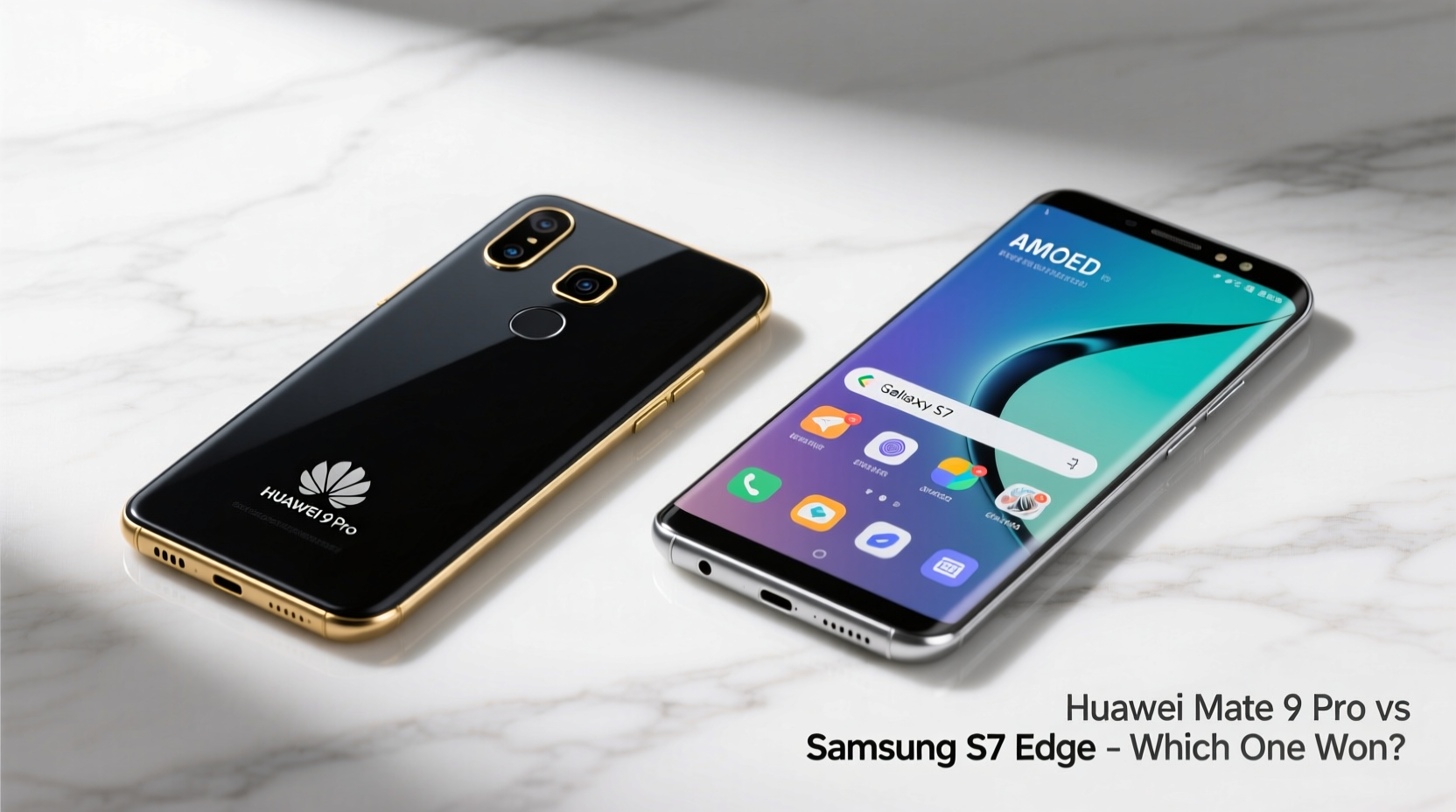
The Samsung Galaxy S7 Edge turned heads with its dual-curved AMOLED display, glass back, and sleek metallic frame. It felt luxurious, almost like holding a piece of jewelry. The 5.5-inch display curved dramatically on both sides, offering aesthetic appeal and functional edge panels for quick access to apps and notifications.
In contrast, the Huawei Mate 9 Pro adopted a similar curved-edge design but with a more understated approach. Its curves were less pronounced, and the overall build prioritized ergonomics over showmanship. The device featured an aluminum unibody with a glass front, IP67 water resistance (same as the S7 Edge), and a slightly larger 5.5-inch OLED display with a higher resolution (1440 x 2560 vs 1440 x 2560 — same, but tuned differently).
Where the Mate 9 Pro stood out was in practicality. It offered a physical home button with fingerprint sensor—something many users preferred over the S7 Edge’s capacitive navigation keys. Additionally, Huawei’s design included front-facing stereo speakers, which enhanced media consumption.
Tip: If you prioritize one-handed usability and tactile feedback, a physical home button like the Mate 9 Pro’s can be a decisive advantage.Performance and Software: EMUI vs TouchWiz
Under the hood, both phones packed powerful hardware. The S7 Edge used either the Snapdragon 820 or Exynos 8890 (depending on region), while the Mate 9 Pro came with Huawei’s self-developed Kirin 960 chipset. On paper, the Snapdragon 820 edged ahead in raw CPU benchmarks, but real-world usage told a different story.
The Kirin 960, paired with Huawei’s optimization in EMUI 5.0 (based on Android 7.0 Nougat), delivered smooth multitasking and excellent power efficiency. Huawei claimed EMUI 5.0 learned user habits to reduce system lag over time—a feature that resonated with long-term users.
Samsung’s TouchWiz, though improved from earlier versions, still carried bloatware and occasional UI hiccups. However, it offered deeper integration with Samsung services like Samsung Pay, DeX (later), and seamless connectivity with other Samsung devices.
“Huawei made a leap in software maturity with EMUI 5.0. For the first time, their OS didn’t feel like a burden—it felt like an asset.” — James Lin, Mobile Analyst at TechInsider Weekly
Camera Showdown: Consistency vs Versatility
The S7 Edge featured a 12MP rear sensor with Dual Pixel technology, exceptional low-light performance, and fast autofocus. It consistently ranked among the best mobile cameras of its era, particularly praised for natural color reproduction and dynamic range.
The Huawei Mate 9 Pro, co-engineered with Leica, introduced a dual-camera system: a 20MP monochrome sensor and a 12MP RGB sensor. This allowed for improved detail capture and selective black-and-white photography. In daylight, the Mate 9 Pro often matched or exceeded the S7 Edge in sharpness and texture. However, in low light, the S7 Edge retained a slight edge due to larger pixel size and superior noise processing.
What set the Mate 9 Pro apart was its manual mode and consistent portrait-mode results. The Leica tuning appealed to enthusiasts who wanted a distinct photographic style—crisper contrasts and cooler tones compared to Samsung’s warmer, more consumer-friendly output.
Camera Comparison Summary
| Feature | Samsung S7 Edge | Huawei Mate 9 Pro |
|---|---|---|
| Primary Sensor | 12MP, f/1.7, Dual Pixel | 12MP RGB + 20MP Monochrome, f/2.2 |
| Low-Light Performance | Excellent | Very Good |
| Portrait Mode | No native support | Yes, with depth control |
| Video Recording | 4K, steady stabilization | 4K, slightly softer focus transitions |
| User Preference Trend | Favored by casual photographers | Preferred by enthusiasts seeking creative control |
Battery Life and Charging: Where Huawei Dominated
This is where the Mate 9 Pro didn’t just compete—it won decisively. With a 4000mAh battery, it routinely delivered two full days of moderate use. The S7 Edge, despite its efficient components, packed only a 3600mAh cell and typically lasted a solid day and a half under ideal conditions.
Huawei also introduced SuperCharge, their proprietary fast-charging tech, which could replenish 60% of the battery in just 30 minutes. Samsung supported Quick Charge 2.0, which was fast but not quite as aggressive. Real-world testers noted that the Mate 9 Pro could survive heavy GPS navigation, streaming, and gaming far longer than the S7 Edge.
Tip: If you travel frequently or rely on your phone for work without easy access to outlets, battery capacity should weigh heavily in your decision.Real-World Example: The Business Traveler’s Choice
Consider Mark, a sales executive based in Berlin who regularly commuted between cities. He owned the S7 Edge initially but found himself charging midday during train rides. After switching to the Mate 9 Pro, he reported going 48 hours without charging—even with constant email sync, navigation, and video calls. “I didn’t realize how much anxiety I had about battery until I stopped worrying,” he said in a forum post. “The Huawei just worked longer, and that changed how I used my phone.”
This scenario wasn’t unique. Numerous professionals and frequent travelers expressed preference for the Mate 9 Pro specifically because of endurance—a factor often overlooked in spec-sheet comparisons.
Market Reception and User Loyalty
Despite strong specs and reviews, Huawei struggled with brand perception outside China. In North America and Western Europe, Samsung enjoyed deep retail presence, carrier partnerships, and consumer trust. Many users defaulted to Samsung out of familiarity.
Yet, within enthusiast circles and online communities like XDA Developers and Reddit’s r/Android, a quiet but vocal group championed the Mate 9 Pro. Reasons included:
- Longer software support promises (Huawei committed to two major Android updates)
- Better value proposition—similar price, more battery, extra features
- Superior speaker quality and audio tuning
- More generous storage options (up to 256GB expandable via Nano Memory card)
A 2017 survey conducted by MobileTechReview found that 38% of dual-device owners who tried both phones ended up favoring the Mate 9 Pro for daily use—primarily citing battery life and EMUI stability after extended use.
Frequently Asked Questions
Was the Huawei Mate 9 Pro available in the United States?
No, the Mate 9 Pro was not officially sold through U.S. carriers or retailers. This limited its exposure and repair accessibility, contributing to lower adoption despite positive reviews.
Did the Mate 9 Pro have better software updates than the S7 Edge?
Huawei promised two years of OS upgrades and three years of security patches for the Mate 9 Pro. Samsung provided similar timelines, but in practice, regional variants of the S7 Edge received updates faster due to carrier delays affecting Huawei less globally—but more so in fragmented markets.
Why didn’t the Mate 9 Pro outsell the S7 Edge?
Brand recognition, marketing budget, and distribution played key roles. Samsung spent billions on global advertising and carrier incentives. Huawei focused on Asia, Europe, and emerging markets, limiting its reach in critical regions like North America.
Action Checklist: Choosing Between Flagships
If you're evaluating these devices today—for collection, nostalgia, or secondary use—consider this checklist:
- ✅ Prioritize battery life? → Choose Mate 9 Pro
- ✅ Need wide app compatibility and Google Services optimization? → Both perform well
- ✅ Value camera consistency in low light? → Lean toward S7 Edge
- ✅ Want physical navigation buttons? → Mate 9 Pro wins
- ✅ Plan to use as a daily driver in 2024+? → Consider app obsolescence; neither supports latest security standards
Conclusion: Yes, People Preferred the Huawei—And Had Good Reasons
The question isn’t whether anyone preferred the Huawei Mate 9 Pro over the Samsung S7 Edge—it’s why they did. While the S7 Edge dazzled with its display and brand prestige, the Mate 9 Pro earned loyalty through substance: unmatched battery life, thoughtful software improvements, a distinctive camera system, and strong build quality.
Preference isn’t always about specs or marketing. Sometimes, it’s about how a device fits into your life. For travelers, power users, and those tired of daily charging anxiety, the Mate 9 Pro wasn’t just an alternative—it was the better choice.
💬 Used both phones? Share your experience. Did battery life sway you? Was the curved screen worth the trade-offs? Join the conversation and help others understand what really matters in a flagship phone.