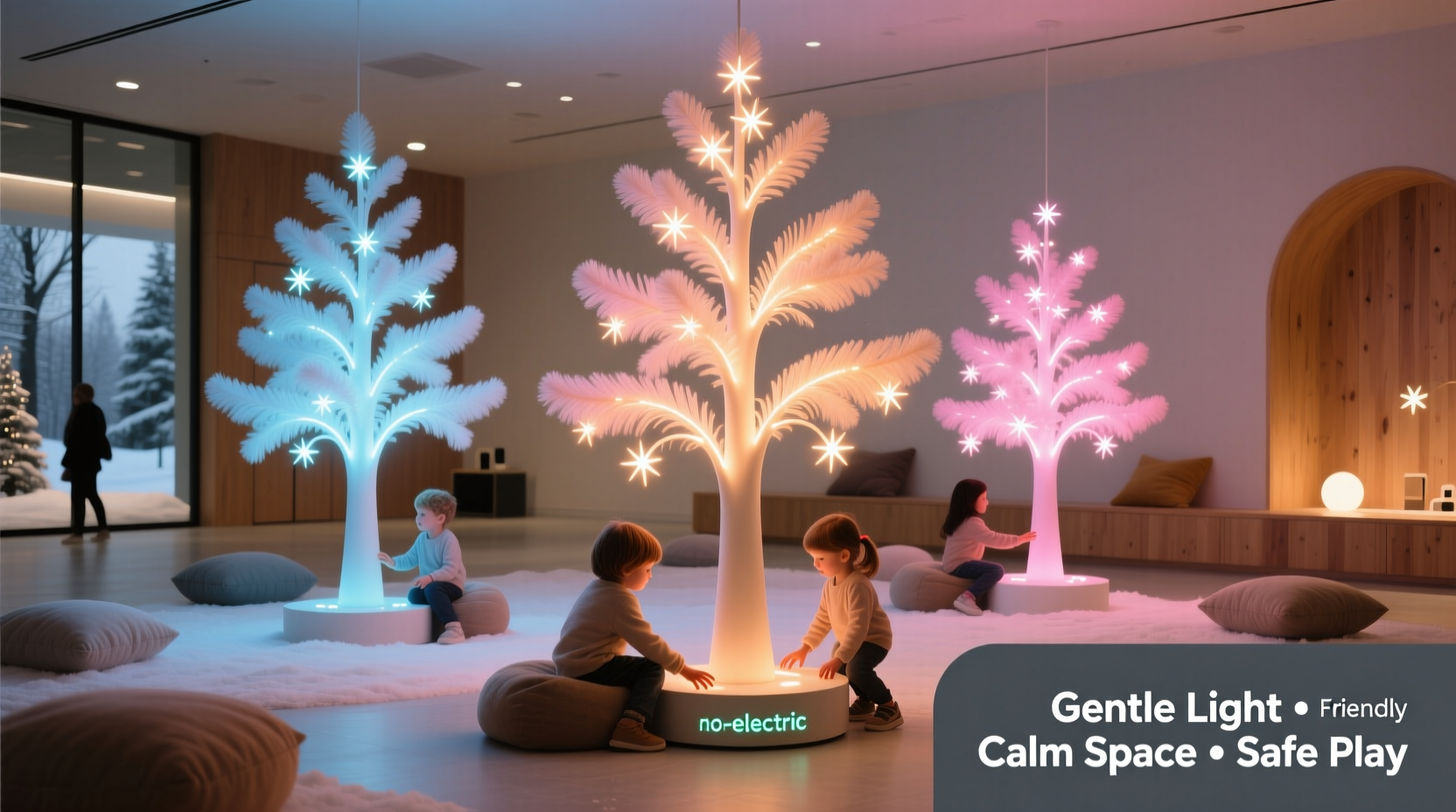
The holiday season often brings a surge of lights, sounds, and decorations that can overwhelm individuals with sensory sensitivities. For those on the autism spectrum, living with anxiety disorders, or managing sensory processing differences, traditional holiday setups—bright flashing lights, loud music, strong scents—can trigger discomfort or meltdowns. A thoughtful alternative is emerging in homes, schools, therapy centers, and community events: the fiber optic tree. Unlike conventional light displays, these trees offer a gentle, mesmerizing glow without harsh flickering or glare, making them ideal for creating inclusive, calming holiday experiences.
Fiber optic trees use strands of optical fibers to transmit light from a single source, typically an LED base, through thousands of tiny filaments. The result is a soft, shimmering effect—like starlight or distant fireflies—that captures attention without overstimulation. When integrated thoughtfully into a space, they become more than decorative items; they serve as tools for emotional regulation, focus, and sensory engagement.
Why Sensory-Friendly Holiday Spaces Matter
Holiday traditions are often built around shared sensory experiences: twinkling lights, festive music, cinnamon-scented candles. While joyful for many, these elements can be distressing for people who process sensory input differently. According to the STAR Institute for Sensory Processing Disorder, up to 16% of adults report significant sensory challenges in daily life, and children with autism are particularly vulnerable to environmental overload.
In schools and therapy settings, occupational therapists emphasize the importance of \"sensory diets\"—structured exposure to stimuli that help regulate the nervous system. During the holidays, maintaining this balance becomes harder when surroundings shift dramatically. That’s where design choices matter. Replacing strobe-effect lights with steady glows, reducing auditory clutter, and offering quiet zones can transform a potentially overwhelming event into a welcoming celebration.
Fiber optic trees support this goal by delivering visual interest without intensity. They don’t generate heat, emit sound, or require blinking mechanisms. Their continuous, low-lumen output provides just enough stimulation to engage curiosity while allowing for self-regulation.
“Lighting plays a critical role in sensory modulation. Soft, predictable illumination gives individuals a sense of control over their environment—something many with sensory sensitivities lack during high-stimulus seasons.” — Dr. Lena Torres, Occupational Therapist & Sensory Integration Specialist
How Fiber Optic Trees Work: A Simple Breakdown
Understanding the technology behind fiber optics helps clarify why it's uniquely suited for sensory-sensitive settings. At its core, a fiber optic tree consists of three components:
- LED Light Source: Located at the base, this emits colored light (often color-changing via remote or automatic cycle).
- Optical Fibers: Thin, flexible strands made of acrylic or glass that carry light along their length using internal reflection.
- Distribution System: Bundled fibers radiate outward to form branches, each tip glowing faintly like a pinpoint of light.
Unlike incandescent or standard LED string lights, which shine directly and often brightly, fiber optics diffuse light across many small points. This creates a “twinkle” effect without sharp contrasts or rapid changes. Most models operate on a slow fade between colors—such as blue to purple to green—avoiding sudden shifts that could startle.
Tip: Choose fiber optic trees with manual color control so users can select one soothing hue instead of cycling through multiple shades.Designing a Sensory-Friendly Display: Step-by-Step Guide
Creating a truly supportive environment involves more than choosing the right tree—it requires intentional placement, complementary elements, and user-centered planning. Follow these steps to maximize comfort and accessibility:
- Assess the Space
Select a location away from high traffic, noise sources, or competing visuals. Corners or alcoves work well for designated calm zones. - Choose the Right Size
A tabletop model (18–30 inches) is often sufficient for personal engagement. Larger floor models (4–6 feet) suit communal areas but should not dominate the room. - Control the Lighting Environment
Use dimmable overhead lights or eliminate ambient lighting entirely. Allow the fiber optic tree to be the primary visual focus to reduce sensory fragmentation. - Add Tactile Companions
Pair the tree with soft seating, weighted blankets, or textured mats. Some individuals enjoy gently touching the fiber strands, which are safe to handle and cool to the touch. - Limit Audio Input
Keep music volume low or absent near the display. If background sound is desired, opt for nature recordings or white noise rather than jingles. - Offer Choice and Control
Provide options: let individuals decide whether to view the tree, interact with it, or avoid it altogether. Autonomy reduces anxiety.
Real Example: Calming Corner in an Elementary School
An elementary school in Portland, Oregon, introduced a sensory-friendly holiday station in its library during December. Teachers noticed that students with autism were increasingly withdrawn during seasonal assemblies filled with loud carols and flashing lights. In response, they created a “Winter Glow Zone” featuring a 24-inch fiber optic tree placed on a low table, surrounded by bean bags and noise-dampening panels.
Students could visit during breaks or as part of a scheduled sensory break. The tree was set to a constant soft blue, avoiding color transitions. Staff reported that several children spent extended time gazing at the lights, showing reduced fidgeting and improved verbal engagement afterward. One teacher noted, “It wasn’t about celebrating Christmas—it was about giving kids a peaceful moment in a chaotic month.”
Do’s and Don’ts: Best Practices Table
| Do | Don’t |
|---|---|
| Use fiber optic trees in quiet, low-distraction areas | Place them near loud speakers or busy hallways |
| Select models with adjustable brightness or single-color modes | Use only full-color cycling settings without pause options |
| Combine with other sensory tools (e.g., fidget toys, headphones) | Overload the space with additional blinking decorations |
| Allow personal interaction—touching, close viewing, sitting nearby | Restrict access or treat the display as purely decorative |
| Involve participants in choosing the setup (color, location, timing) | Assume everyone will respond the same way to the display |
Expanding Accessibility: Who Benefits Beyond Autism?
While often associated with autism support, fiber optic trees also benefit a broader range of individuals:
- Children with ADHD: The focused visual field helps sustain attention without distraction.
- Individuals with dementia: Gentle light patterns can evoke positive memories and reduce agitation.
- People recovering from trauma: Predictable, non-threatening stimuli promote feelings of safety.
- Highly sensitive persons (HSPs): Those who experience emotional overstimulation appreciate subtle beauty without excess.
- Anyone needing a mental reset: In workplaces or public libraries, these trees can anchor mindfulness corners.
In assisted living facilities, caregivers have used fiber optic trees during evening routines to signal transition times. The soft glow acts as a non-verbal cue, replacing abrupt announcements or bright hallway lights that disrupt sleep cycles.
Tip: Pair the tree with deep breathing exercises—inhale for four counts while watching a light pulse, exhale for six. This combines visual rhythm with breathwork.Setting Up Your Own Sensory-Friendly Tree: Checklist
Follow this checklist to ensure your fiber optic tree supports a calming atmosphere:
- ☐ Select a model with a quiet motor (if color-changing)
- ☐ Test the light speed—avoid fast flashes or strobing effects
- ☐ Position the tree at eye level or slightly below for seated viewers
- ☐ Ensure cords are secured and out of walking paths
- ☐ Offer alternatives: include non-light-based holiday elements (tactile ornaments, scent-free pinecones)
- ☐ Provide clear signage: “Quiet Space – Feel Free to Observe or Rest Here”
- ☐ Monitor usage and gather feedback from participants
Frequently Asked Questions
Are fiber optic trees safe for children to touch?
Yes. The fibers are made of flexible plastic and do not conduct electricity. They remain cool even after hours of use, making them safe for curious hands. However, supervise young children to prevent pulling or chewing on strands.
Can I use a fiber optic tree in a dark room for sleep support?
Yes, especially if set to a single warm or cool tone. Many parents use smaller models in bedrooms as nightlights for children with bedtime anxiety. Avoid models with random color changes if consistency is needed.
Do fiber optic trees use a lot of energy?
No. Most operate on low-wattage LEDs and consume less power than a standard light bulb. A typical tabletop unit uses around 5–10 watts, making it energy-efficient and safe for prolonged use.
Conclusion: Lighting the Way to Inclusive Holidays
The holidays should be a time of connection, not stress. By rethinking how we decorate and engage with seasonal traditions, we open doors for more people to participate meaningfully. Fiber optic trees are more than novelty items—they are accessible design tools that foster inclusion, reduce sensory strain, and invite wonder in a gentle way.
Whether you’re a parent, educator, therapist, or event planner, consider integrating a fiber optic tree into your holiday setup with intention. Focus not on spectacle, but on sanctuary. Let the quiet glow remind us that joy doesn’t need to be loud to be profound.
💬 Have you used a fiber optic tree in a sensory setting? Share your experience, tips, or photos in the comments—your insight could inspire others to create calmer, kinder celebrations.