Most travelers leave Kyoto and Oaxaca with vivid memories of geisha dances or folkloric ballets — polished, choreographed, beautiful. But few return having ground indigo paste with a 78-year-old dyer in Nishijin, or shaped a coil-built barro negro vessel alongside a Zapotec matriarch in San Bartolo Coyotepec. The difference isn’t just aesthetic; it’s ontological. Authentic cultural workshops are sites of knowledge transmission — not demonstration. They require reciprocity, duration, humility, and intentionality. They’re rarely listed on TripAdvisor or promoted by mainstream tour operators. This article distills over a decade of fieldwork, language study, and relationship-building across both cities: what signals legitimacy, where to look beyond the surface, how to assess ethical alignment, and why timing, language, and local intermediaries matter more than booking platforms.
Why “authentic” isn’t about purity — it’s about participation and purpose
“Authentic” is often misused as a synonym for “traditional” or “unmodernized.” In practice, authenticity in cultural learning means being invited into a living practice — one that serves its community first, tourists second (if at all). In Kyoto, this might mean joining a monthly shishu (embroidery) circle led by members of the Kyoto Embroidery Association, where beginners learn not just stitches but the seasonal symbolism behind crane motifs used in kimono linings. In Oaxaca, it could be participating in a pre-Hispanic corn ritual with a tejedor family in Teotitlán del Valle, grinding nixtamal at dawn before weaving begins — not because it’s “exotic,” but because the maize is sacred, and the work is communal.
What separates these from tourist performances is agency: who designs the experience? Who sets the pace and terms? Who benefits economically and culturally? When the workshop exists primarily to generate income for a foreign-owned boutique or hotel, it’s a performance. When it originates from a local guild, cooperative, or intergenerational household practice — and welcomes outsiders as respectful observers or apprentices — it’s a workshop.
“Tourism sells culture as spectacle. Real cultural learning happens in the quiet hours — when the loom is set up, when the dye vats are stirred, when the elder corrects your hand position for the third time. That’s where respect lives.” — Dr. Mariko Tanaka, Cultural Anthropologist & Kyoto-based educator for 22 years
Five concrete signals of legitimacy — and what to avoid
Discernment starts before you book. These five markers help separate embedded learning from curated entertainment:
Tip: If the workshop promises “meet a real geisha” or “learn Zapotec secrets in 90 minutes,” walk away. Authentic transmission requires trust, which takes time to build — and cannot be commodified into timed slots.- Language access: Legitimate workshops are conducted primarily in Japanese or Spanish (or indigenous languages like Zapotec), with translation provided only as needed — not vice versa. If all materials, instructions, and facilitator introductions are in English first, it’s almost certainly designed for consumption, not continuity.
- Local ownership & governance: Look for registered cooperatives (cooperativas in Oaxaca), guild affiliations (shudan or kai in Kyoto), or family names embedded in the organization’s legal name (e.g., “Tlacolula Weavers’ Collective, founded by Doña Marta Gómez y familia” or “Nishijin Textile Center, operated by the Kyoto Nishijin Textile Cooperative Association”). Avoid entities named after vague concepts (“Zen Harmony Studio”) or geography without specificity (“Kyoto Cultural Experience” — no address, no founder, no association).
- Duration & repetition: Authentic workshops are rarely one-offs. They follow seasonal rhythms (indigo dyeing peaks in Kyoto’s humid summer; wool spinning slows during Oaxacan rainy season) and often recur weekly or monthly. A “one-day tea ceremony class” taught by a non-certified instructor in a rented tatami room is performance. A six-session chado course with a iemoto-recognized school in Sakyo Ward, requiring prior application and commitment, is transmission.
- Material sourcing & tools: Observe where supplies come from. Are the washi paper and sumi ink made locally (e.g., by Washi no Sato in Mino, Gifu, or Kyoto’s Kamigamo Paper Mill)? Is the clay dug from ancestral pits near San Marcos Tlapazola? If materials are imported, generic, or mass-produced, the practice is likely decontextualized.
- Community visibility: Search local-language social media (Instagram Japan: #京友禅教室, #オアハカ陶芸; Facebook Mexico: #tejidozapoteca, #kyotozukuri). Legitimate workshops appear in community event calendars, local news features, or university extension program listings — not just international travel blogs.
Where to look — and who to ask (beyond Google)
Start with institutions rooted in preservation, not promotion:
| City | Trusted Local Sources | How to Engage Ethically |
|---|---|---|
| Kyoto | • Kyoto City Museum of Traditional Crafts (free consultation desk) • Kyoto Prefectural University’s Lifelong Learning Center • Nishijin Textile Center’s “Apprentice Match Program” (requires Japanese proficiency or interpreter) |
Visit in person during weekday mornings. Bring a small gift (washi-wrapped manju or matcha sweets). Ask for the coordinator’s name and follow up via email *in Japanese* (even basic: “I would like to respectfully observe a workshop. May I learn more?”). Never call repeatedly — wait 5–7 business days for reply. |
| Oaxaca | • Centro de las Artes de San Agustín Etla (CAASAE), run by the state’s Ministry of Culture • Taller Cacao in San Juan Bautista Cuicatlán (indigenous-led cacao processing workshops) • The Zapotec Language Institute (ILZ) in Juchitán (offers craft + language immersion) |
Attend a free public lecture or exhibition first. Introduce yourself to staff *after* the event. Express interest in supporting the community’s goals — not just your itinerary. Ask: “What support does this workshop need right now?” (e.g., materials, documentation, volunteer translators). |
Crucially, avoid third-party booking platforms that aggregate workshops without vetting. Sites like Viator, GetYourGuide, or even well-intentioned local aggregators often list experiences based on availability and commission rates — not pedagogical integrity or community consent. One documented case in 2023 involved a Kyoto “kimono dyeing” workshop advertised widely online, later revealed to use synthetic dyes and pre-printed stencils in a warehouse outside the historic district — with no ties to Nishijin weavers’ associations. Participants paid premium prices while contributing nothing to the craft’s continuity.
A real-world example: From tourist to trusted participant in San Bartolo Coyotepec
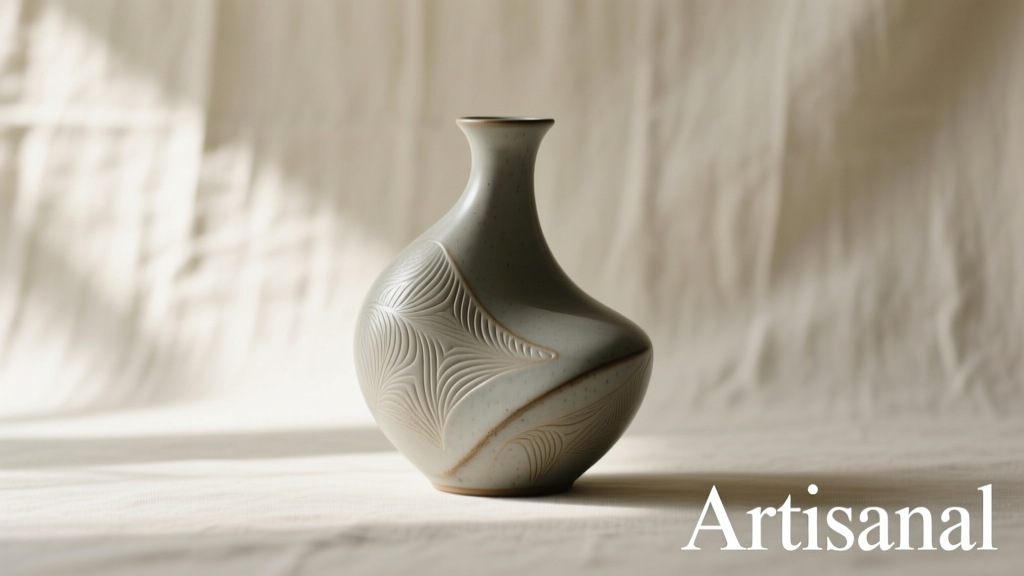
In early 2022, Canadian ceramicist Lena R. arrived in San Bartolo Coyotepec expecting a half-day black pottery workshop. She’d booked through a bilingual Oaxacan travel agency known for ethical partnerships. Instead of a studio, she was taken to the home of Doña Guadalupe García, matriarch of a seven-generation barro negro family. There were no reserved seats, no English handouts. Lena spent Day 1 observing — watching Doña Guadalupe’s hands shape coils, listening to her explain soil composition differences between pits near the river versus the hillside. On Day 2, she helped collect and sift clay. On Day 4, under quiet guidance, she shaped her first small bowl. By Day 7, she was burnishing with quartz stone — a skill requiring months to master, but introduced with patience, not pressure.
The turning point came when Doña Guadalupe invited Lena to join the family’s Día de Muertos altar preparation — not as a guest, but to help mold sugar skulls using traditional molds. “She didn’t teach me to make pottery,” Lena reflects. “She taught me why the clay breathes, why the fire must be slow, why we don’t rush the polishing. The bowl was secondary. The respect was primary.” Lena returned three times over 18 months, each visit deepening her understanding — and each time, compensating directly, transparently, and above fair-trade minimums.
Your ethical action plan: A 6-step timeline to secure meaningful access
Finding authentic workshops isn’t about speed — it’s about alignment. Follow this sequence, beginning at least 12 weeks before travel:
- Weeks 12–10: Identify 2–3 target practices (e.g., Kyoto: yuzen-zome dyeing or washi papermaking; Oaxaca: tejido backstrap weaving or mezcal agave roasting). Research their historical context using academic sources (JSTOR, Redalyc) — not travel blogs.
- Weeks 9–7: Contact one trusted local institution (see table above) via email *in the local language*. State your background, intent, and timeframe. Attach a brief CV if relevant (e.g., art student, textile conservator). No demands — only requests for guidance.
- Weeks 6–4: If invited to a preliminary meeting or orientation, attend in person. Bring a thoughtful gift reflecting local custom (e.g., high-grade matcha for Kyoto; artisanal chocolate from Oaxaca’s Mayordomo for San Bartolo). Take notes by hand — not phone.
- Weeks 3–2: Negotiate terms transparently: duration, fees, materials, cancellation policy. Fees should cover materials, mentor time, and community contribution (e.g., 10% donated to a local youth craft fund). Reject any “all-inclusive” pricing that obscures where money flows.
- Week 1: Confirm logistics *in writing*, including host’s full name, address, and emergency contact. Verify insurance coverage for hands-on activities (some traditional crafts involve open flames, hot dyes, or sharp tools).
- On-site: Arrive 15 minutes early. Observe silence during instruction. Ask permission before photographing people or processes. Compensate hosts *in cash*, in local currency, at the end — never via digital transfer unless explicitly requested.
FAQ: Addressing common concerns with grounded answers
What if I don’t speak Japanese or Spanish?
Beginner-level proficiency is essential for Kyoto; intermediate is strongly advised. In Oaxaca, Spanish is required for most non-English workshops — though some Zapotec-led initiatives (e.g., ILZ programs) offer bilingual facilitation. Do *not* rely on translation apps during instruction: tone, nuance, and gesture carry meaning critical to craft mastery. Enroll in a 4-week intensive language course *before* travel — many Kyoto and Oaxacan universities offer summer modules with craft components.
Are there affordable options — or is this only for high-budget travelers?
Yes — but affordability requires flexibility, not compromise. In Kyoto, the Kyoto City Museum of Traditional Crafts offers free observation passes for certain workshops (with advance reservation). In Oaxaca, CAASAE charges sliding-scale fees (as low as 200 MXN / ~$11 USD) for multi-week courses, with scholarships for students. Avoid “budget” workshops advertised heavily online — they often cut corners on materials, mentor time, and fair wages.
How do I know if my participation is actually helping — or just extracting?
Ask two questions: First, “Would this workshop exist without me?” If the answer is no, reconsider. Second, “Who decides the curriculum, pace, and outcomes?” If it’s not the practitioner or their community collective, it’s extraction. Ethical participation means accepting that you may not produce a finished object — that learning to prepare tools, understand soil, or sit in attentive silence is the real outcome.
Conclusion: Your role isn’t as consumer — it’s as witness and steward
Finding authentic cultural workshops in Kyoto and Oaxaca isn’t a logistical puzzle to solve. It’s an invitation to shift your posture as a traveler — from spectator to student, from customer to collaborator, from visitor to temporary member of a lineage. The geisha apprentice doesn’t perform for guests; she trains for decades under scrutiny and expectation. The Zapotec weaver doesn’t demonstrate technique for cameras; she teaches her granddaughter the rhythm of the loom so the pattern survives another century. When you sit beside them — humbly, patiently, respectfully — you’re not acquiring an experience. You’re honoring a covenant between past, present, and future.
Start small. Email that Kyoto museum today — in Japanese. Attend that CAASAE lecture in Oaxaca next month. Learn three words for “clay,” “thread,” or “dye” in the local language. Authenticity isn’t found in perfection — it’s built, stitch by stitch, coil by coil, season by season.
💬 Have you participated in a workshop that changed how you see cultural learning? Share your story — not the destination, but the moment you realized you weren’t watching, but belonging. Your insight could guide someone else toward real connection.