
The smartphone market has reached a crossroads. For over a decade, we’ve seen incremental improvements in glass-and-metal slabs—better cameras, faster processors, longer battery life. But now, a new category challenges the status quo: folding phones. With screens that bend, fold, and unfold, these devices promise a fresh experience. Yet they come with trade-offs. Chief among them: fragility. So, is the flexibility of a folding phone worth the risk of damage compared to a traditional smartphone?
This isn’t just a question of hardware preference—it’s about how we use our phones, what we value in daily functionality, and whether innovation should prioritize novelty over longevity.
The Evolution of Flexibility in Smartphones
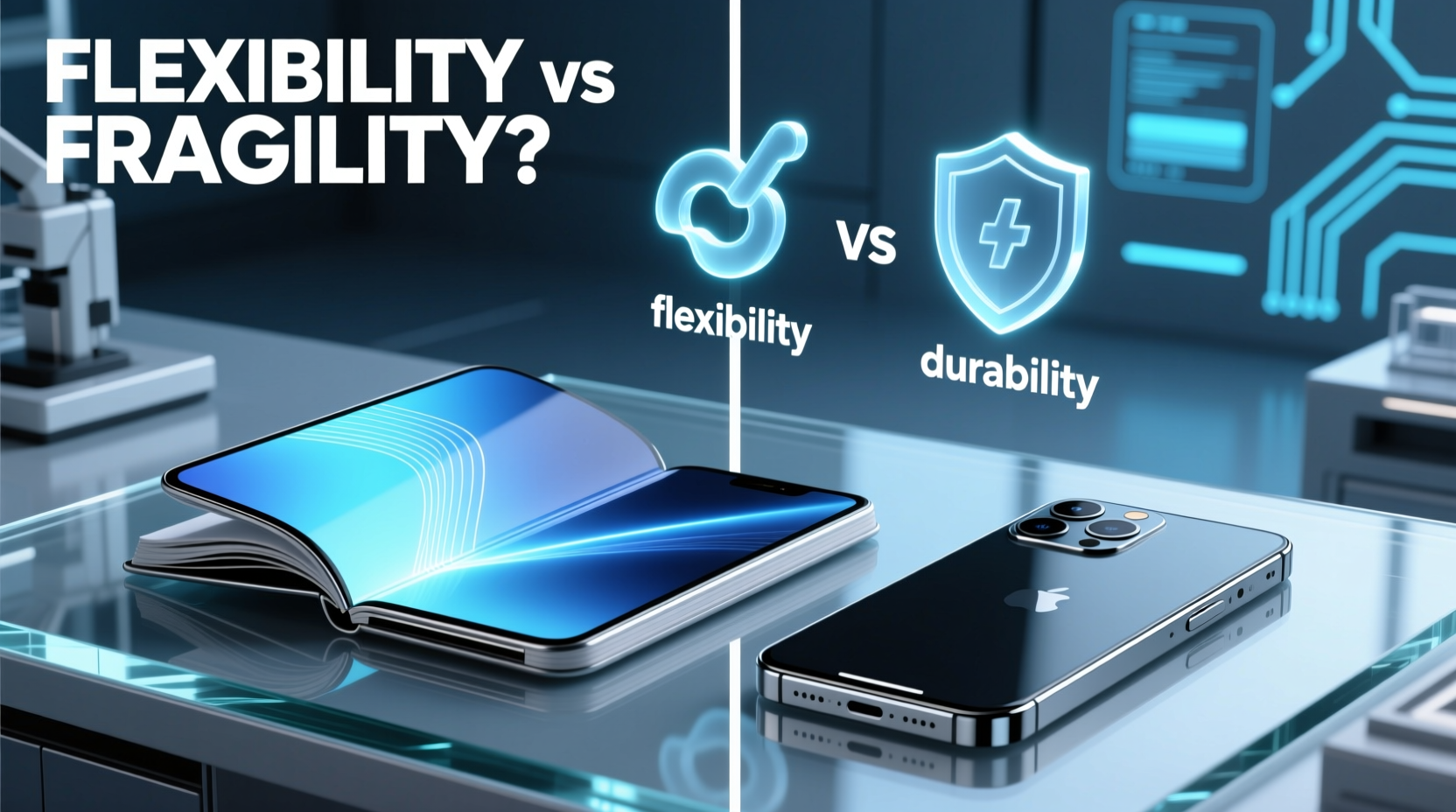
Folding phones emerged as a bold engineering experiment. Samsung introduced the Galaxy Fold in 2019 amid skepticism and early failures. Initial units suffered from screen creases, dust intrusion, and hinge malfunctions. Critics dismissed the concept as premature. But manufacturers persisted.
Today, folding phones are more refined. The latest models from Samsung, Huawei, Motorola, and Google feature improved hinge mechanisms, stronger ultra-thin glass, and better software integration. They offer two form factors in one: compact enough to fit in a pocket, expansive enough to replace a small tablet when unfolded.
The appeal is clear: multitasking becomes seamless, media consumption feels immersive, and productivity improves with split-screen capabilities. Yet beneath this promise lies a persistent concern—durability.
Tip: Always close your folding phone screen-side up to reduce pressure on the hinge and avoid accidental scratches.Durability Showdown: Folding Phones vs Traditional Smartphones
Traditional smartphones have benefited from years of refinement. Gorilla Glass, water resistance ratings (IP68), and robust aluminum or stainless steel frames make modern flagships resilient. Drop tests routinely show devices surviving falls from waist height onto concrete—with minor or no damage.
Folding phones, by contrast, are inherently more complex. The flexible OLED panel, exposed inner screen, and moving hinge create multiple points of failure. Even with advancements, most manufacturers still advise against placing objects on the screen or exposing the device to dust and sand.
A 2023 study by SquareTrade Labs found that folding phones were 40% more likely to suffer critical screen damage after six months of regular use compared to traditional smartphones. While newer models have reduced this gap, the structural vulnerability remains.
“Flexibility introduces stress points that static designs don’t face. No matter how strong the materials, repeated folding creates micro-fatigue over time.” — Dr. Lena Park, Materials Engineer at MIT Mobile Innovation Lab
Real-World Trade-Offs: Performance, Portability, and Price
Choosing between a folding phone and a traditional smartphone isn’t just about durability. It’s a balance of practicality, cost, and personal usage patterns.
Consider the following dimensions:
- Portability: When folded, many models are thicker and less pocket-friendly than traditional phones.
- Battery Life: Larger screens and dual batteries help, but power demands increase significantly when using the full display.
- Price: Most folding phones start at $1,000–$1,800, often exceeding flagship traditional models.
- Software Optimization: Not all apps support large-screen layouts, leading to awkward scaling or wasted space.
Yet, for certain users, the benefits outweigh these drawbacks. Professionals who edit documents, watch videos, or manage emails on the go gain tangible advantages from the larger canvas.
Mini Case Study: Sarah, Digital Marketing Consultant
Sarah upgraded from an iPhone 15 Pro Max to a Samsung Galaxy Z Fold 5 for her freelance work. She frequently reviews client campaigns, edits visuals, and joins video calls while traveling.
“I used to carry a tablet just for spreadsheets,” she says. “Now I can open my phone, run Excel on one side, Slack on the other, and take notes in Keep—all at once. It’s transformed my workflow.”
But it hasn’t been flawless. After four months, she noticed a faint line across the inner screen. “I’m careful, but I dropped it once—onto carpet. That was enough to leave a mark.” She now uses a protective case and avoids folding it with anything on the screen.
For Sarah, the productivity gains justify the risks. But she admits she wouldn’t recommend it to someone who’s rough with their devices.
Comparative Analysis: Key Features at a Glance
| Feature | Folding Phone | Traditional Smartphone |
|---|---|---|
| Screen Durability | Moderate (prone to creasing, dust) | High (scratch-resistant, sealed design) |
| Portability | Compact when folded, bulky when open | Consistently slim and pocketable |
| Multitasking Ability | Excellent (native split-screen, app pairing) | Limited (picture-in-picture only) |
| Typing Experience | Tablet-like keyboard comfort | Standard virtual keyboard |
| Repair Cost | Very high ($400–$700 for screen) | Moderate ($200–$400 for screen) |
| Average Lifespan | 2–3 years (with careful use) | 3–5 years |
Is Flexibility Worth the Fragility? A Step-by-Step Decision Framework
Deciding whether a folding phone is right for you shouldn’t be based on hype alone. Follow this timeline to evaluate your needs objectively:
- Assess Your Daily Use (Week 1): Track how often you use your phone for multitasking, media, or productivity. Do you regularly wish for a bigger screen?
- Test Real Devices (Week 2): Visit a store and handle both a folding phone and a large traditional phone. Notice weight, thickness, and ease of one-handed use.
- Evaluate Your Environment (Week 3): Are you often outdoors, commuting, or in dusty environments? These increase wear risks for folding phones.
- Calculate Long-Term Costs (Week 4): Factor in insurance, potential repairs, and expected replacement cycle. Folding phones may require earlier upgrades.
- Make a Trial Decision (Optional): Some carriers offer 30-day return windows. Use this to test real-world performance before committing.
This structured approach helps separate desire from necessity. Many users discover that while folding phones are impressive, they don’t meaningfully improve their daily routines.
Expert Recommendations and Best Practices
Industry experts agree: folding phones are not for everyone. However, for specific user profiles, they represent a legitimate upgrade path.
“The ideal candidate for a folding phone is someone who values screen real estate over ruggedness, has a stable environment, and uses their phone as a mini workstation.” — James Lin, Senior Analyst at TechInsight Group
To maximize the lifespan of a folding phone, follow these best practices:
- Always clean the screen with a microfiber cloth—never paper towels.
- Keep the device away from sand, dust, and liquids.
- Fold and unfold smoothly; don’t force the mechanism.
- Use manufacturer-approved cases that protect the hinge area.
- Update software regularly—manufacturers often release hinge optimization patches.
Checklist: Before Buying a Folding Phone
- ✅ I frequently use multiple apps at once
- ✅ I consume a lot of video or read long documents
- ✅ I have a safe, controlled environment (home/office)
- ✅ I’m willing to pay higher repair or replacement costs
- ✅ I understand the limitations and care requirements
- ❌ I often drop my phone or use it in harsh conditions
Frequently Asked Questions
Can folding phones survive drops?
Some can, but outcomes vary widely. Modern models include shock-absorbing frames, but the inner screen remains vulnerable. A drop onto the folded edge might be survivable, but landing on the open screen often causes permanent damage. Traditional smartphones generally offer more consistent drop protection.
How long do folding phone screens last?
Most manufacturers rate their hinges for 200,000 folds—equivalent to about five years of average use. However, environmental factors like dust and improper cleaning can shorten screen life significantly. Visible creases typically appear after 1–2 years of heavy use.
Are folding phones waterproof?
No current folding phone offers full IP68 water resistance. Some models have limited splash protection, but the hinge and gap between panels prevent complete sealing. Exposure to moisture is a major risk and often voids warranties.
Conclusion: Balancing Innovation and Practicality
Folding phones are a testament to technological ambition. They deliver a glimpse of the future—devices that adapt to our needs rather than forcing us to adapt to them. The flexibility they offer is genuinely transformative for certain tasks, from editing presentations to watching movies without black bars.
But that innovation comes at a cost. The fragility of these devices means they demand more attention, more care, and ultimately, more investment over time. For users who prioritize reliability, longevity, and simplicity, traditional smartphones remain the smarter choice.
The answer to “Is flexibility worth the fragility?” depends entirely on your lifestyle. If you’re a digital nomad, a creative professional, or someone who craves cutting-edge tech and accepts its compromises, a folding phone may be worth the risk. If you want a durable, no-fuss device that lasts for years, stick with the proven design.
🚀 Ready to decide? Reflect on your daily habits, try a demo unit, and ask yourself: Do I need more screen—or more resilience? Your answer will guide the right choice.