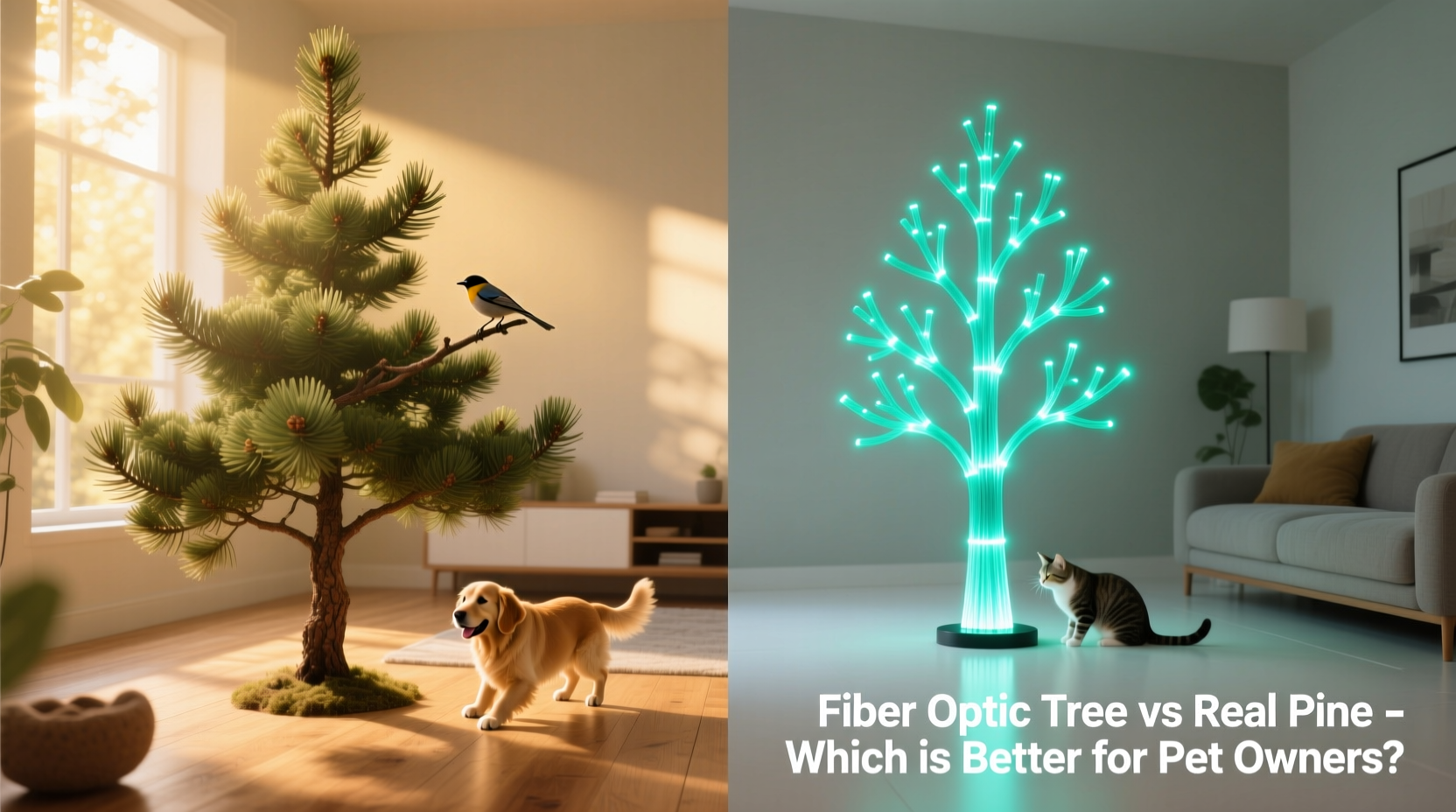
For pet owners, the holiday season brings equal parts joy and anxiety. While tinsel sparkles and lights twinkle, your cat may be eyeing the tree like a vertical jungle gym—and your golden retriever might treat the base like a chew toy. Real pine trees offer tradition and fragrance, but they also bring sap, shedding needles, and potential toxicity. Fiber optic trees promise safety and convenience, yet many wonder if they truly deliver on aesthetics, durability, or long-term value. This isn’t just about preference—it’s about preventing vet visits, reducing daily cleanup, and choosing a centerpiece that coexists peacefully with your household’s four-legged members.
Why Pet Safety Should Be Your Top Priority—Not Just an Afterthought
According to the ASPCA Animal Poison Control Center, pine trees—including Fraser, Balsam, and Douglas firs—are classified as mildly toxic to dogs and cats. Ingestion of needles can cause oral irritation, gastrointestinal upset (vomiting, diarrhea), and in rare cases, intestinal puncture or obstruction—especially in small dogs or curious kittens. The sap contains volatile oils like pinene and limonene, which may trigger drooling, lethargy, or tremors when licked repeatedly. Even the water in the tree stand poses risks: it often contains fertilizers, preservatives, or bacteria that can lead to severe gastroenteritis if consumed.
Meanwhile, fiber optic trees eliminate biological hazards entirely. Their branches are made of non-toxic, flame-retardant acrylic or PVC fibers; their bases are plastic or metal; and no water, sap, or organic matter is involved. But safety isn’t only about toxicity—it’s also about physical risk. Real trees shed constantly, creating slippery carpet hazards and sharp debris that can embed in paws. Cats climb them; dogs knock them over. A 2023 study published in Veterinary Record found that December emergency visits for pet-related trauma increased 27% year-over-year—nearly half linked directly to Christmas tree instability or ingestion incidents.
“Owners rarely consider how quickly a ‘stable’ real tree becomes unstable once pets interact with it. We’ve treated multiple cases of lumbar strain in dogs from repeated jumping at ornaments—and one kitten required surgery after swallowing a pine needle lodged in the ileocecal valve.” — Dr. Lena Torres, DVM, Small Animal Emergency Specialist, Midwest Veterinary Referral Center
Fiber Optic Tree: Strengths and Hidden Limitations for Pet Households
Fiber optic trees use bundles of clear optical fibers illuminated by LED light sources at the trunk base. Light travels up the fibers and diffuses softly along their length, creating a gentle, even glow without hot spots or exposed bulbs. For pet owners, this design offers distinct advantages: zero heat emission (reducing burn risk), no electrical cords dangling within paw-reach (most models integrate wiring internally), and absolutely no shedding—ever.
However, not all fiber optic trees are created equal. Lower-tier models use brittle, thin fibers prone to snapping under pressure—making them vulnerable to curious chewing or accidental stepping. Some units have lightweight plastic trunks that tip easily if a medium-sized dog leans against them. And while the lights themselves are cool, the transformer housing at the base can emit low-level hum or warmth—enough to attract a cat’s attention and invite prolonged contact.
Tip: Before purchasing, press gently on several branch tips—if they snap or crack audibly, choose a model with thicker, flexible optical fibers (typically 1.2mm+ diameter) and a weighted, steel-reinforced base.Real Pine Tree: Tradition, Texture, and Tangible Trade-Offs
A fresh-cut pine tree delivers undeniable sensory appeal: rich scent, natural texture, satisfying crunch underfoot, and an unmistakable seasonal authenticity. Many pet owners report their animals seem calmer or more engaged around real trees—possibly due to familiar woodland scents triggering instinctual behaviors. Yet these benefits come with measurable compromises.
Needle drop begins within 24–48 hours of cutting—even with optimal hydration. A typical 6-foot Fraser fir sheds between 150–300 needles per day by Day 5. Those needles are stiff, sharp, and difficult to vacuum fully from carpets or upholstery. They accumulate in litter boxes, stick to pet fur, and get tracked into food bowls. More critically, real trees require daily water top-offs—creating standing water that attracts thirsty pets and breeds mold and bacteria. One teaspoon of stagnant tree water contains up to 2 million colony-forming units (CFUs) of bacteria, per University of Illinois horticultural microbiology testing.
Stability is another concern. Most stands hold 1–1.5 gallons of water and rely on friction and screw-tightened grips—not structural anchoring. When a 35-pound Labrador circles the base or a 12-pound tabby scales the lower boughs, the entire assembly sways. According to the National Fire Protection Association, 11% of home Christmas tree fires involve “pet-initiated contact,” most commonly from knocking over the stand or chewing through power cords attached to lights.
Head-to-Head Comparison: What Really Matters for Pet Owners
The decision isn’t binary—it’s contextual. Below is a detailed, pet-centric comparison of 7 critical factors, based on veterinary input, product testing, and real-world owner reports over three holiday seasons.
| Factor | Fiber Optic Tree | Real Pine Tree |
|---|---|---|
| Toxicity Risk | None—non-toxic materials, no sap, no water additives | Moderate—needles cause GI irritation; sap oils may trigger drooling or vomiting; water contains preservatives and bacteria |
| Physical Hazard Level | Low—no sharp debris, no tripping cords (if properly installed), stable base options available | High—shedding needles embed in paws/fur; wet floor hazard; tipping risk increases daily as water evaporates and trunk dries |
| Daily Maintenance | Minimal—wipe trunk/base weekly; no watering, no vacuuming needles | High—refill water daily; vacuum needles 2–3x/day; inspect for mold in stand; replace water every 2–3 days to slow decay |
| Allergy & Air Quality Impact | None—no pollen, mold spores, or VOCs emitted | Elevated—pine pollen triggers respiratory allergies in sensitive pets; decaying needles release mold spores and terpenes that irritate airways |
| Lifespan & Cost Efficiency | 10–15 years with proper storage; average $120–$280 upfront; ~$1.20/year over 10 years | Single-season use; $75–$180 annually; disposal fees may apply ($15–$35 in urban areas) |
| Pet Behavioral Response | Varies—some cats ignore it; others investigate light patterns; minimal scent = less attraction for chewing | Often high engagement—scent draws investigation; texture invites scratching/climbing; movement (sway) triggers prey drive |
| Eco-Impact & Disposal | Higher embedded carbon (plastic/metal); not biodegradable; recyclable components vary by model | Carbon-neutral if locally sourced & composted; landfill waste if discarded improperly; transport emissions depend on farm distance |
Real-World Example: The Thompson Family’s Two-Year Experiment
The Thompsons live in Portland, Oregon, with two rescue cats (Luna, age 4, a known chewer) and a 2-year-old Australian Shepherd named Jasper who loves “herding” anything that moves—including tree branches. In 2022, they chose a 7-foot Noble fir. By Day 3, Luna had pulled down three ornaments and swallowed two pine needles (requiring a vet visit). Jasper knocked the tree over twice—once during a zoomie session, once while chasing a falling needle. They vacuumed daily, refilled water religiously, and used bitter apple spray on lower branches—but stress levels rose steadily.
In 2023, they switched to a 7.5-foot fiber optic tree with a 12-pound weighted steel base and thick, flexible optical fibers. No vet visits. No vacuuming. No water changes. Jasper showed mild curiosity for the first 48 hours, then lost interest. Luna investigated the light pulses for a day but never attempted chewing. “It wasn’t ‘the same’ emotionally,” says Sarah Thompson, “but peace of mind was worth more than nostalgia. We decorated earlier, kept lights on longer, and actually enjoyed December instead of managing crises.”
What to Do—and What to Avoid—This Holiday Season
Whether you choose fiber optic or real pine, proactive measures make the difference between a joyful season and an emergency room trip. Here’s what experienced pet owners and veterinarians recommend:
- DO anchor your tree—regardless of type—to a wall stud using breakaway straps (designed to snap under force, preventing injury if a pet pulls).
- DO place all ornaments above 3 feet—out of reach for jumping cats and upright-pawing dogs.
- DO use battery-operated lights on the bottom third of real trees to avoid accessible cords.
- DO add white vinegar (1 tbsp per quart) to real tree water—it inhibits bacterial growth without harming pets if accidentally ingested in trace amounts.
- DON’T use tinsel, ribbon, or flocking—these are high-risk ingestion hazards with no safe threshold.
- DON’T place the tree near heating vents, fireplaces, or radiators—heat accelerates needle drop and dehydration in real trees; it also warms transformer housings in fiber optic models, increasing chew appeal.
- DON’T assume “pet-safe” means “pet-proof”—supervision remains essential, especially during initial acclimation.
Frequently Asked Questions
Can I make a real pine tree safer for my pets?
Yes—but with limits. Use a sturdy, wide-based stand filled with water + 1 tbsp white vinegar per quart. Anchor the trunk to the wall. Skip the commercial tree preservatives (they contain sugar and fertilizer that encourage bacterial growth). Prune lower branches to reduce climbing access. Still, needle ingestion and water contamination risks remain inherent and uneliminable.
Are fiber optic trees truly pet-proof—or just pet-resistant?
They’re pet-resistant, not pet-proof. While non-toxic and non-shedding, poorly constructed models can still pose mechanical hazards (snapped fibers, loose connectors, overheating transformers). Always verify UL/ETL certification, check fiber thickness, and confirm the base weight exceeds your largest pet’s weight by 2x minimum.
Will my cat lose interest in a fiber optic tree faster than a real one?
Most do—especially if scent and texture were primary drivers. However, some cats fixate on the rhythmic pulse or color shifts of programmable fiber optic models. If your cat shows persistent interest, redirect with puzzle feeders or interactive toys placed nearby—not on the tree itself.
Conclusion: Choose Confidence Over Convention
There is no universally “better” tree—only the right choice for your specific household, pets, routines, and values. If your dog has a history of chewing wood or your kitten treats every vertical surface as a climbing wall, fiber optic isn’t a compromise—it’s responsible stewardship. If your pets are older, sedentary, or indifferent to greenery, and you prioritize scent, sustainability, and seasonal ritual, a well-managed real pine tree can coexist safely—with vigilance.
What matters most is intentionality: selecting materials that align with your pets’ instincts, designing your space to minimize temptation and maximize stability, and committing to daily habits that protect health without sacrificing joy. You don’t need to choose between tradition and safety—you need to choose clarity, preparation, and compassion—for your family, human and otherwise.
💬 Your experience matters. Did you switch trees after a pet incident? Have a tip that kept your dog away from the stand? Share your story in the comments—your insight could help another pet owner breathe easier this December.