As holiday seasons come around, many homeowners face a familiar dilemma: how to choose the right artificial Christmas tree that balances beauty, convenience, and longevity. Two popular options—fiber optic trees and flocking-coated trees—offer dramatically different aesthetics and care requirements. While fiber optic models deliver a mesmerizing glow with minimal setup, flocking-coated trees provide a realistic snowy forest look but demand more attention during storage and cleaning. The central question remains: does the enchanting light effect of a fiber optic tree justify avoiding the mess and maintenance of a flocked one?
This article dives deep into both types, examining their construction, visual appeal, durability, safety, and long-term upkeep. Whether you're decorating a cozy living room or managing a high-traffic commercial space, understanding the trade-offs will help you make an informed decision without sacrificing holiday magic.
Understanding Fiber Optic Trees: Light Without Bulbs
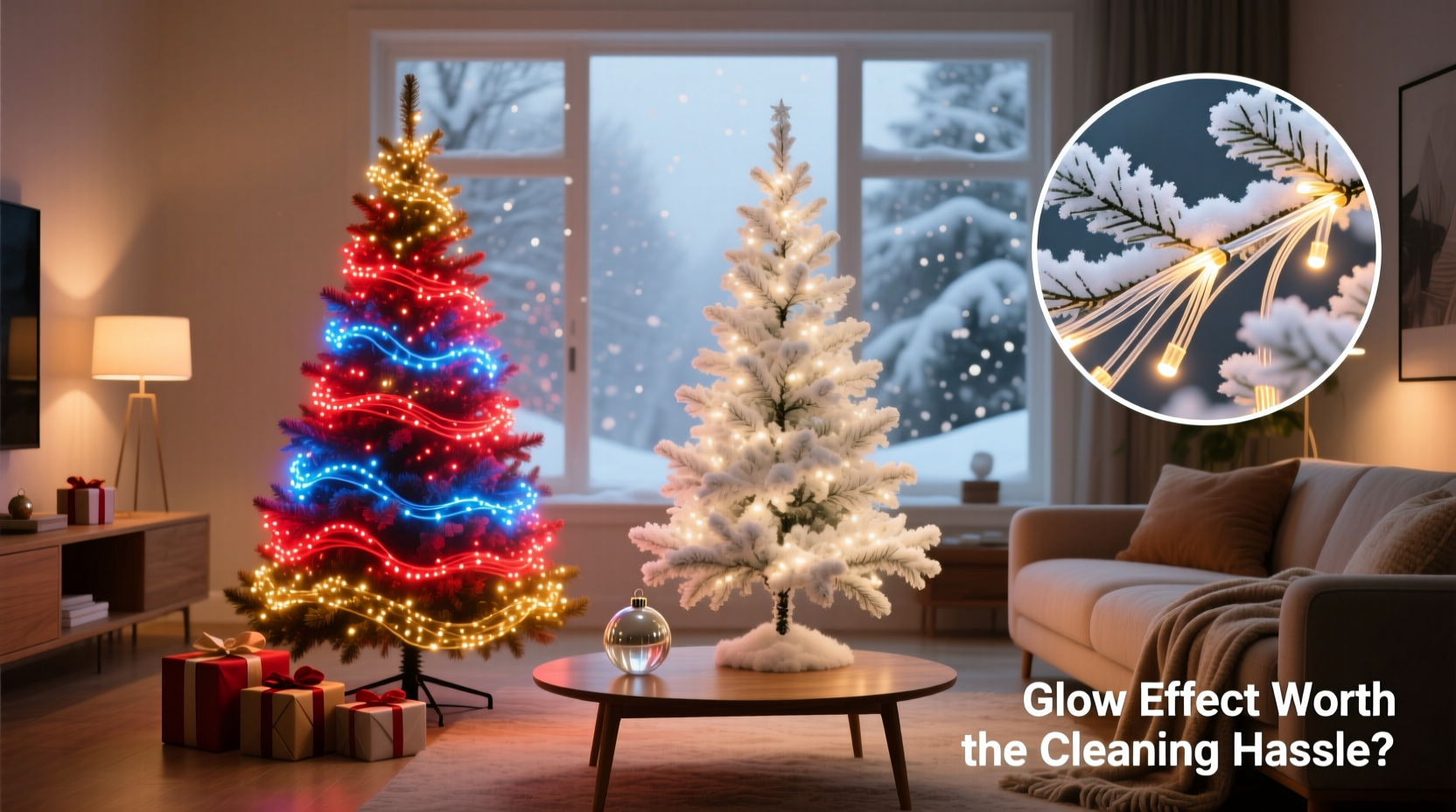
Fiber optic Christmas trees use thin strands of plastic or glass fibers to transmit light from a base unit up through the branches. These trees do not rely on traditional string lights; instead, LED sources in the trunk project colored light along the fibers, creating a shimmering, star-like effect. The result is a soft, ambient glow that changes colors if the model supports RGB settings.
Because the lighting is internal and low-voltage, these trees are inherently safer than conventional lit trees. They produce almost no heat, reducing fire risk—a major advantage for homes with pets or young children. Additionally, fiber optic trees eliminate the frustration of untangling hundreds of light strings each year. Setup is often as simple as assembling the trunk and fluffing the branches.
Tip: Choose a fiber optic tree with replaceable LED modules to extend its lifespan beyond a single season.However, the visual impact has limitations. The light distribution can appear uneven, especially in larger models, and the glow tends to be diffused rather than bright. Some users report that fiber optic trees lack the festive sparkle of traditional incandescent or LED-lit trees. Moreover, while they require less seasonal setup, their delicate fibers can degrade over time if mishandled during storage.
The Allure of Flocking-Coated Trees: Realism at a Cost
Flocking refers to a textured coating—typically a blend of adhesive and cellulose or polyethylene—applied to artificial tree branches to mimic snow. The result is a strikingly lifelike appearance, evoking a winter woodland scene. For decorators aiming for authenticity, few alternatives match the depth and dimension of a well-flocked tree.
Manufacturers apply flocking either at the factory or offer DIY kits for consumers. Factory-flocked trees tend to have more consistent coverage and better adhesion, though they come at a premium. Over time, however, even high-quality flocking sheds—especially when exposed to dry indoor air, handling, or improper storage.
Cleaning a flocked tree is where challenges arise. Dust accumulates in the textured coating, turning white flocking gray or yellowish. Vacuuming helps but risks pulling off loose fibers. Wiping down branches often spreads dust or damages the coating. After just a few seasons, some trees begin to look patchy or dingy, requiring touch-up kits or full replacement.
“Flocking adds instant realism, but it��s a high-maintenance finish. If you value low upkeep, consider pre-lit trees with snow-dusted tips instead.” — Daniel Reeves, Holiday Display Designer & Former Theme Park Decorator
Comparative Analysis: Key Factors Side by Side
| Feature | Fiber Optic Tree | Flocking-Coated Tree |
|---|---|---|
| Lighting Mechanism | Internal LEDs + light-conducting fibers | External string lights (usually pre-lit) |
| Visual Effect | Soft, ambient glow; color-changing options | Realistic snow-covered look; classic aesthetic |
| Setup Time | Fast (no light threading) | Moderate (lights pre-installed, but fluffing required) |
| Cleaning Difficulty | Low (wipe trunk; shake fibers) | High (dusting traps debris; shedding complicates cleanup) |
| Durability | Moderate (fibers can break if bent sharply) | Variable (flocking degrades with handling and storage) |
| Safety | Excellent (cool operation, low voltage) | Good (depends on light quality; potential heat buildup) |
| Lifespan | 5–7 years with careful handling | 3–5 years before flocking deteriorates significantly |
| Best For | Small spaces, rentals, minimalist decor | Traditionalists, photo backdrops, formal displays |
Real-World Example: A Family’s Five-Year Experiment
The Thompson family in Portland, Oregon, decided to test both tree types over consecutive holidays. In 2019, they purchased a 7-foot factory-flocked tree with built-in warm-white LEDs. The first two Christmases were magical—the tree looked like it belonged in a Vermont cabin. But by year three, noticeable shedding occurred during assembly. White dust covered the carpet, and vacuuming only worsened the loss of coating.
In 2022, they switched to a 6.5-foot fiber optic model with color-shifting capabilities. Setup took under 20 minutes, and there was no visible debris. Their young daughter loved the changing colors, and the lack of tangled lights reduced stress. However, guests often remarked that the tree felt “too futuristic” and lacked warmth compared to their previous version.
By 2023, the family adopted a hybrid solution: a pre-lit tree with lightly frosted tips (not fully flocked) and warm-toned LEDs. This gave them near-realism without the mess. Their experience highlights a growing trend—consumers seeking middle-ground solutions that balance aesthetics and practicality.
Step-by-Step: How to Maintain Each Tree Type
Fiber Optic Tree Care Timeline
- During Use: Keep away from direct sunlight to prevent fiber discoloration.
- After Dismantling: Gently shake each section to dislodge dust before packing.
- Cleaning: Wipe the central column with a dry microfiber cloth; avoid water near the LED base.
- Storage: Store upright in a dedicated tree bag with ventilation to prevent pressure cracks in fibers.
- Annual Check: Test color functions and inspect for broken strands before setup.
Flocking-Coated Tree Maintenance Routine
- Premature Cleaning: Use a soft-brush attachment on a vacuum to lightly remove surface dust before disassembly.
- Dismantling: Work from top to bottom, supporting branches to minimize breakage and shedding.
- Storage Prep: Wrap sections in breathable fabric (like cotton sheets) before placing in a tree bag—never plastic, which traps moisture.
- Off-Season: Store in a cool, dry place; elevated off concrete floors to reduce humidity exposure.
- Reassembly: Inspect for loose flocking; apply touch-up spray if available and needed.
Which Tree Should You Choose? A Decision Checklist
Selecting between a fiber optic and a flocking-coated tree depends on your priorities. Use this checklist to guide your decision:
- ✅ Do you want a quick, tangle-free setup? → Fiber optic
- ✅ Are you decorating a child- or pet-friendly space? → Fiber optic (cooler, safer operation)
- ✅ Do you prioritize traditional, snowy aesthetics? → Flocking-coated
- ✅ Are you willing to spend extra time cleaning and storing carefully? → Flocking-coated
- ✅ Do you live in a dry climate or heated home? → Avoid heavy flocking (increases shedding)
- ✅ Do you display the tree in a low-traffic area? → Flocking may last longer
- ✅ Do you prefer modern or minimalist decor? → Fiber optic
Frequently Asked Questions
Can I add flocking to a fiber optic tree?
No, applying flocking spray to a fiber optic tree is not recommended. The chemicals in the adhesive can damage the plastic fibers and interfere with light transmission. Additionally, the added weight may strain branch connectors. If you desire both effects, consider using decorative snow sprays on non-lighted tips or choosing a pre-lit frosted tree instead.
Do fiber optic trees use a lot of electricity?
No. Most fiber optic trees operate on low-voltage LED systems, consuming between 5 to 15 watts—comparable to a nightlight. This makes them highly energy-efficient, especially when left on for extended periods during the holidays. Always check the product label for exact wattage and ensure the transformer is UL-listed for indoor use.
Is flocking toxic if my pet ingests it?
While most modern flocking materials are non-toxic, ingestion can still cause gastrointestinal discomfort in pets. The fibrous texture may lead to blockages if consumed in large quantities. If your dog or cat tends to chew decorations, a fiber optic tree or a non-flocked alternative is safer. Monitor your pet closely during setup and display.
Final Thoughts: Balancing Beauty and Practicality
The choice between a fiber optic Christmas tree and a flocking-coated model ultimately hinges on your lifestyle and holiday vision. If you value ease, safety, and a futuristic glow, the fiber optic tree offers a compelling, low-hassle option—even if it lacks traditional charm. On the other hand, if realism and seasonal ambiance are non-negotiable, a flocked tree delivers unmatched visual richness, provided you’re prepared for its upkeep.
Many families now opt for middle-ground solutions: pre-lit trees with subtle snow effects, removable light pods, or modular designs that combine durable construction with attractive finishes. Technology continues to evolve, and newer hybrid models aim to merge the best of both worlds—glow without grit, beauty without burden.
Before making your next purchase, reflect on past experiences. Did you dread cleaning up white dust every January? Did your kids love the color-changing lights? Let real-life insights—not just marketing promises—guide your decision. The perfect tree isn’t just about looks; it’s about enhancing your holiday joy, not adding to your chores.
💬 Have you switched from flocking to fiber optics—or vice versa? Share your story in the comments and help others decide what works best for their home.