
As winter sets in and cold mornings become routine, many drivers turn to heated car seat cushions for comfort. These portable accessories plug into a vehicle’s 12V power outlet—commonly known as the cigarette lighter—and deliver warmth within minutes. But a common concern lingers: do they drain the car battery significantly, especially when the engine is off? The answer isn’t a simple yes or no—it depends on usage patterns, vehicle type, cushion wattage, and the health of your battery.
This article examines how much power heated seat cushions actually consume, whether they pose a risk to your car’s battery, and how to use them safely without compromising your vehicle’s performance. From technical specs to real-world scenarios, you’ll gain a clear understanding of what to expect and how to make informed decisions.
How Heated Seat Cushions Work
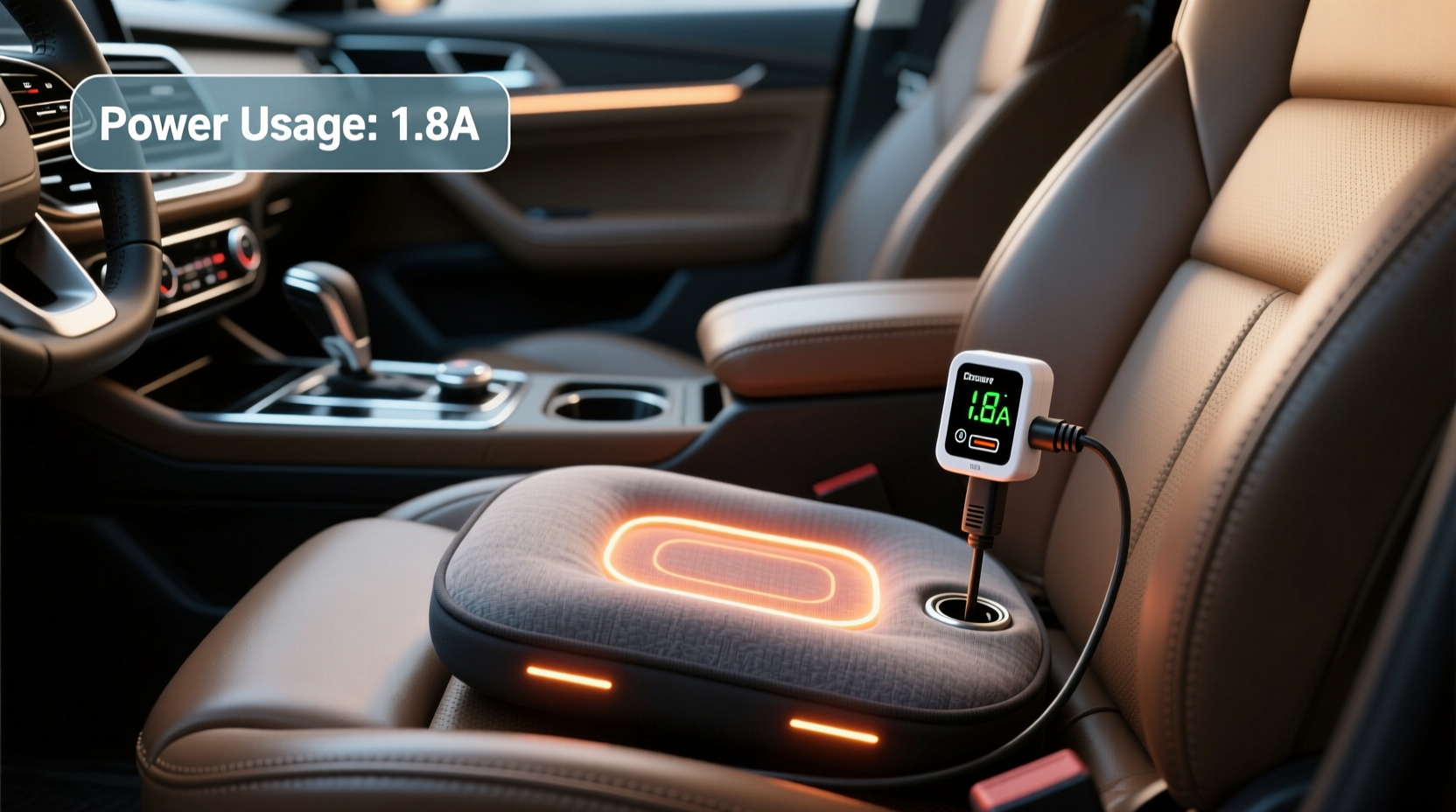
Heated seat cushions are designed to provide localized warmth using embedded heating elements, typically made of carbon fiber or resistive wire. When plugged into the 12V outlet, electricity flows through these elements, generating heat. Most models offer multiple heat settings—low, medium, and high—with corresponding power draw.
The convenience lies in their plug-and-play design. Unlike factory-installed heated seats that integrate with the car’s electrical architecture, aftermarket cushions operate independently. This makes them ideal for older vehicles or rentals but also raises questions about energy efficiency and load management.
Because they rely on the same circuit as phone chargers, GPS units, and dash cams, it's important to understand how much strain they add—especially during extended use or when the alternator isn't charging the battery (i.e., when the engine is off).
Power Consumption: Watts, Amps, and Voltage Explained
To assess battery impact, we need to look at three key electrical metrics:
- Volts (V): Car outlets supply 12 volts DC under normal conditions.
- Amps (A): Measure of electric current flow.
- Watts (W): Power consumed, calculated as Volts × Amps.
Most heated seat cushions range between 30 and 60 watts. At 12 volts, this translates to 2.5 to 5 amps of current draw. For context:
| Device | Typical Wattage | Amps Drawn (at 12V) | Battery Impact |
|---|---|---|---|
| Phone Charger | 10–18 W | 0.8–1.5 A | Negligible |
| Dash Cam (single) | 5–10 W | 0.4–0.8 A | Low |
| Heated Seat Cushion (Low) | 30 W | 2.5 A | Moderate |
| Heated Seat Cushion (High) | 60 W | 5.0 A | Significant over time |
| Cabin Heater (Blower Fan) | 200–300 W | 17–25 A | Very High |
While a single cushion draws less than the car’s internal heating system, it still represents one of the higher-power accessories commonly used via the 12V socket.
Tip: Always check the label or manual for exact wattage. Lower-wattage models (30–40W) are more battery-friendly for longer idle use.Battery Drain: Real-World Scenarios
The actual risk to your battery depends on two factors: whether the engine is running and how long the device operates.
Engine Running: Minimal Risk
When the engine is on, the alternator generates electricity and recharges the battery continuously. Most alternators produce 60 to 150 amps—far more than a 5-amp seat cushion consumes. In this state, the cushion uses only a small fraction of available power, posing no threat to battery life.
In fact, using heated cushions while driving may be more efficient than cranking up the cabin heater, which requires significant energy to warm air and circulate it through ducts.
Engine Off: Potential for Drain
The real concern arises when using the cushion while parked. Without the alternator charging, the battery supplies all power. A typical car battery holds around 40–70 amp-hours (Ah). Let’s consider an example:
If your cushion draws 4 amps and your battery has a 50 Ah capacity, continuous use would theoretically deplete it in about 12.5 hours (50 ÷ 4 = 12.5). However, this is misleading—car batteries should not be drained below 50% to avoid damage. So usable capacity is closer to 25 Ah.
At that rate, just 6 hours of continuous use could push the battery into a risky zone. After that, starting the car becomes difficult or impossible, especially in cold weather when battery efficiency drops by up to 30%.
“Even moderate loads like heated cushions can flatline a battery overnight if left unattended. It’s not the peak draw—it’s the duration that matters.” — Mark Reynolds, Automotive Electrical Technician with 18 years of experience
Mini Case Study: Winter Commute Gone Wrong
Sarah, a rideshare driver in Minnesota, used a dual-zone heated seat cushion during her early morning shifts. She often arrived at her pickup location 20 minutes early and turned on the cushion while waiting, engine off, to stay warm. Over two weeks, this became routine.
One particularly cold morning (-15°F), after 45 minutes of pre-heating her seat before shift start, her car failed to start. Jumper cables revived it temporarily, but a mechanic later diagnosed a weakened battery due to repeated deep discharges. The culprit? Sustained accessory use without engine recharge.
After switching to a lower-wattage model and limiting idle use to 15 minutes max, she avoided further issues. Her takeaway: convenience shouldn’t override battery health.
Factors That Influence Battery Impact
Not all vehicles respond the same way to accessory loads. Several variables affect how much stress a heated cushion places on your system:
- Battery Age and Health: A 4-year-old battery may have only 60–70% of its original capacity, making it more vulnerable.
- Temperature: Cold reduces chemical reaction efficiency in lead-acid batteries, increasing voltage drop under load.
- Other Devices in Use: Running a dash cam, phone charger, or interior lights simultaneously multiplies the drain.
- Cushion Design: Some models auto-shutoff after 30–60 minutes; others run indefinitely until unplugged.
- Voltage Regulation: Older vehicles may lack smart power management, allowing deeper discharge before warning lights appear.
Best Practices for Safe Use
You don’t need to give up comfort to protect your battery. With smart habits, you can enjoy heated seating without consequences. Follow this checklist to minimize risk:
🔋 Heated Cushion Safety Checklist
- Use only when the engine is running whenever possible.
- Limit engine-off use to 15–20 minutes maximum.
- Choose models with automatic shutoff (e.g., after 30 or 60 minutes).
- Opt for lower-wattage versions (30–40W) for extended sessions.
- Avoid using alongside other high-draw devices like inverters or coolers.
- Inspect your car battery annually, especially before winter.
- Keep terminals clean and tight to ensure efficient power delivery.
- Unplug the cushion when not in active use—even when the car is on—to prevent parasitic drain.
Step-by-Step: How to Use a Heated Cushion Safely in Cold Weather
- Start the Engine: Turn on the car to engage the alternator.
- Plug In the Cushion: Insert into the 12V outlet and select desired heat level.
- Warm Up While Driving: Allow 5–10 minutes for the seat to reach optimal temperature.
- If Parking: Turn off the cushion before shutting down the engine.
- Pre-Warming Exception: If warming the seat before departure, limit to 10–15 minutes with engine off, and ensure the battery is fully charged.
- Monitor Performance: Watch for dimming lights or sluggish cranking—early signs of battery strain.
Frequently Asked Questions
Can a heated seat cushion kill my car battery overnight?
Possibly. If left plugged in and active on high setting for 6+ hours with the engine off, especially on an older or weak battery, it can drain enough power to prevent startup. Models without auto-shutoff are the highest risk.
Is it safe to use a heated cushion with a portable power bank?
Only if the power bank supports 12V DC output with sufficient current (at least 5A). Most USB power banks output 5V and won’t work. Specialized automotive jump starters with 12V ports can power low-wattage cushions briefly, but runtime will be limited.
Do heated seat cushions use more power than factory heated seats?
Generally, no. Factory systems are more efficient because they’re integrated with vehicle controls and often use lower-temperature, larger-surface heating pads. However, power draw is similar—typically 30–60W per seat. The main difference is that factory systems usually include timers and battery-saving logic.
Expert Insight: What Mechanics Recommend
Professional mechanics emphasize prevention over repair when it comes to electrical loads.
“People underestimate how quickly small drains add up. A 5-amp load seems harmless, but over four hours, that’s 20 amp-hours—over a third of a typical battery’s usable capacity. Combine that with cold temps, and you’ve got a no-start situation.” — Lisa Tran, Master Auto Technician and ASE Certified Electrical Specialist
Tran recommends treating any 12V accessory like a faucet: turn it off when not needed. She also advises checking battery voltage monthly in winter. A healthy battery should read 12.6V or higher when the car is off. Below 12.2V indicates partial discharge and increased vulnerability.
Conclusion: Balance Comfort and Responsibility
Heated car seat cushions are a practical solution for staying warm in cold climates, but they aren’t energy-free luxuries. While they don’t “use a lot” of power compared to major systems like AC or headlights, their cumulative effect—especially during engine-off operation—can compromise battery health and reliability.
The truth is, most modern cushions are well-designed and efficient. The problem isn’t the device itself, but how it’s used. By respecting your vehicle’s electrical limits, choosing smarter models, and adopting disciplined usage habits, you can enjoy warmth without worry.
Don’t let convenience lead to costly mistakes. Treat your car battery with care, especially in winter. A few mindful choices today can prevent a frozen morning tomorrow.
🚀 Ready to stay warm without risking your battery? Review your current heated cushion’s wattage, set a timer for idle use, and share this guide with fellow drivers who bundle up in their cars. Stay warm, stay smart.