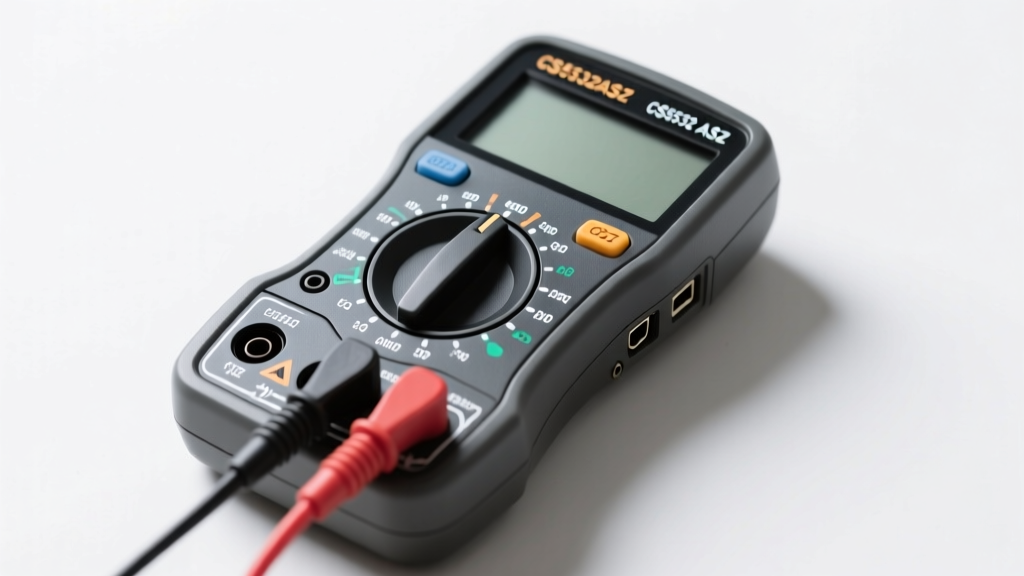
Types of CS5532ASZ: High-Precision ADC Variants Explained
The CS5532ASZ is a dual-channel, precision, low-noise operational amplifier with integrated analog-to-digital conversion (ADC) capabilities, designed for high-accuracy signal processing in demanding electronic systems. This advanced integrated circuit combines a precision amplifier, sample-and-hold (S&H) circuitry, and a high-resolution ADC on a single chip, enabling reliable data acquisition with minimal external components.
Available in a compact 16-pin SOIC package, the CS5532 series delivers exceptional performance with 18-bit resolution, an ultra-low 2μV offset voltage, and optimized power efficiency—making it ideal for applications requiring high fidelity, stability, and precision. Different variants of the CS5532 are engineered to meet specific operational requirements across industrial, medical, and telecommunications fields.
CS5532C – Precision Measurement ADC
The CS5532C is the most integrated variant in the CS5532 family, optimized for high-accuracy applications where signal integrity and data fidelity are paramount. It integrates precision amplifiers and a high-stability sample-and-hold circuit on-chip, minimizing noise and drift in sensitive environments.
Advantages
- Ultra-high 18-bit resolution for detailed signal capture
- Exceptional DC accuracy with 2μV offset voltage
- Integrated signal conditioning reduces component count
- Excellent linearity and low noise for precision measurements
Limitations
- Higher cost compared to standard ADCs
- Limited to controlled environments (commercial temperature range)
- Requires careful PCB layout for optimal performance
Best for: Scientific instrumentation, spectroscopy, precision power monitoring, medical imaging, and laboratory data acquisition systems
CS5532I – Industrial-Grade ADC
Engineered for rugged environments, the CS5532I is an industrial-grade version of the CS5532 series, built to maintain accuracy and stability under extreme temperatures and harsh operating conditions. Its robust internal architecture ensures reliable analog-to-digital conversion in real-time monitoring and control systems.
Advantages
- Wide operating temperature range (-40°C to +85°C)
- High noise immunity and EMI resistance
- Stable performance in fluctuating environments
- Real-time signal conversion for fast response systems
Limitations
- Slightly higher power consumption under load
- May require external filtering in high-noise settings
- Premium pricing for industrial qualification
Best for: Industrial automation, sensor interfaces, process control systems, and environmental monitoring equipment
CS5532M – High-Speed Communication ADC
The CS5532M is tailored for telecommunications and high-speed data acquisition applications. It features enhanced internal sample-and-hold and amplifier circuits that optimize signal throughput while maintaining low noise levels, making it ideal for systems requiring both speed and precision.
Advantages
- Balanced performance between speed and accuracy
- Low jitter and minimal signal distortion
- Optimized for continuous data streaming
- Excellent signal-to-noise ratio (SNR) in communication links
Limitations
- Not ideal for ultra-low-power battery applications
- Requires stable clock source for optimal timing
- More complex signal chain integration
Best for: Telecommunications infrastructure, medical diagnostic devices, high-speed data loggers, and RF signal processing systems
CS5532ASZ – General-Purpose High-Precision ADC
The standard CS5532ASZ serves as a versatile, high-performance ADC suitable for a broad range of applications. It offers the core benefits of the CS5532 family—18-bit resolution, low noise, and integrated signal conditioning—in a widely available SOIC package.
Advantages
- Cost-effective solution for precision ADC needs
- Easy to integrate into existing designs
- Proven reliability across multiple industries
- Low power consumption with high accuracy
Limitations
- Less rugged than industrial variants
- Not optimized for extreme-speed applications
- May require external calibration in high-precision setups
Best for: General-purpose data acquisition, test and measurement equipment, and mid-tier medical devices
| Model | Resolution | Offset Voltage | Operating Temp | Key Applications |
|---|---|---|---|---|
| CS5532C | 18-bit | 2μV | 0°C to +70°C | Scientific instruments, imaging systems, precision power monitoring |
| CS5532I | 18-bit | 2μV | -40°C to +85°C | Industrial sensors, automation, process control |
| CS5532M | 18-bit | 2μV | 0°C to +70°C | Telecom, medical diagnostics, high-speed DAQ |
| CS5532ASZ | 18-bit | 2μV | 0°C to +70°C | General-purpose precision measurement, test equipment |
Design Tip: When using any CS5532 variant, ensure proper grounding, use low-noise power supplies, and implement guard rings around sensitive analog traces to maximize performance and minimize interference in high-precision applications.
Materials and Durability of CS5532ASZ Operational Amplifier
The CS5532ASZ is a precision dual operational amplifier and buffer widely used in high-accuracy analog signal processing applications. Its performance, reliability, and service life are directly influenced by the quality of materials used in both internal components and external packaging. Understanding these materials helps engineers make informed decisions when deploying the device in critical systems such as medical instrumentation, industrial control, and data acquisition.
Internal Semiconductor Components
Silicon-Based Integrated Circuitry
The core of the CS5532ASZ is built on high-purity silicon, forming the basis of its monolithic CMOS integrated circuit. This semiconductor material ensures excellent electron mobility, low leakage current, and minimal power dissipation—critical for maintaining signal accuracy and thermal efficiency during prolonged operation.
Silicon's compatibility with advanced photolithography allows for precise fabrication of transistors, resistors, and capacitors on the die, enabling tight tolerance matching and stable gain characteristics essential for precision amplification.
Sample-and-Hold (S&H) Circuit Materials
The internal sample-and-hold circuit utilizes low-leakage MOS capacitors and JFET input stages made from doped silicon and epitaxial layers. These materials maintain signal integrity by minimizing charge injection and droop, ensuring accurate analog signal capture even over extended sampling intervals.
High-stability dielectric materials within the on-chip capacitors reduce drift and hysteresis, contributing to the device’s exceptional linearity and low noise performance in precision measurement systems.
External Packaging and Encapsulation
SOIC Package Construction
The CS5532ASZ is commonly housed in a Small Outline Integrated Circuit (SOIC) package made from thermoset plastic, specifically epoxy molding compound (EMC). This material offers excellent thermal resistance (typically rated up to 260°C for reflow soldering), moisture resistance, and mechanical protection.
The plastic encapsulation shields the silicon die from environmental contaminants such as dust, humidity, and chemical exposure, which is vital in industrial and outdoor applications where reliability under harsh conditions is required.
Lead Frame and Interconnects
Beneath the plastic casing lies a copper or alloy 42 (iron-nickel) lead frame that provides structural support and electrical connectivity. The leads are plated with matte tin or lead-free finishes to ensure solderability and prevent oxidation.
Fine gold or aluminum wire bonds connect the die to the lead frame, offering low-resistance pathways with high fatigue resistance—critical for maintaining signal fidelity and long-term reliability in vibrating or thermally cycling environments.
Durability, Reliability, and Environmental Performance
| Component | Material | Function & Benefit |
|---|---|---|
| Integrated Circuit Die | High-Purity Silicon (CMOS) | Enables low power consumption, high precision, and excellent noise performance |
| Capacitors & Resistors | Doped Silicon, Polysilicon, SiO₂ | Provides stable, matched components for accurate signal processing |
| Package Type | Epoxy Molding Compound (Plastic SOIC) | Protects against moisture, mechanical shock, and thermal stress |
| Lead Frame | Copper Alloy or Alloy 42 | Ensures structural integrity and efficient heat dissipation |
| Wire Bonds | Gold or Aluminum | Creates reliable, low-resistance electrical connections |
Important: While the CS5532ASZ is highly durable, proper PCB layout practices—such as grounding, decoupling, and thermal management—are essential to fully realize its performance potential. Avoid exceeding absolute maximum ratings, especially for supply voltage and input signals, to prevent irreversible damage. Always consult the manufacturer’s datasheet for storage, handling, and soldering guidelines to ensure long-term reliability.
Customization Options of CS5532ASZ
The CS5532ASZ is a high-performance 24-bit analog-to-digital converter (ADC) widely used in precision measurement applications such as industrial instrumentation, medical devices, and process control systems. While the device comes with a robust standard configuration, many suppliers offer key customization options that allow engineers and businesses to tailor the component to their specific application requirements.
Understanding these customization features is essential for optimizing system performance, ensuring environmental compatibility, and improving long-term reliability. Below is a detailed breakdown of the most important customization options available for the CS5532ASZ from leading semiconductor suppliers.
Package Type
The standard packaging for the CS5532ASZ is the 16-pin SOIC (Small Outline Integrated Circuit), which provides a balance of ease of assembly, thermal performance, and board space efficiency. However, suppliers often offer alternative packages to meet diverse design constraints.
- SOIC (16-pin): Ideal for general-purpose PCBs with moderate space requirements and standard reflow soldering processes
- QFN (Quad Flat No-leads): Offers a compact footprint and improved thermal dissipation, suitable for space-constrained or high-density designs
- TQFP (Thin Quad Flat Package): Provides higher pin count compatibility and better mechanical stability in vibration-prone environments
- Custom Lead Framing: Available for high-volume OEMs requiring proprietary form factors or enhanced heat spreading
Design Tip: QFN packages typically require specialized PCB layout techniques (e.g., thermal vias) but deliver superior thermal performance in high-precision ADC applications.
Temperature Range
Operating temperature range is a critical customization parameter, especially for equipment deployed in harsh environments. The commercial-grade CS5532ASZ typically operates within -40°C to +85°C, but extended ranges are available for specialized use cases.
- Industrial Grade: -40°C to +105°C for use in factory automation, oil & gas monitoring, and outdoor instrumentation
- Extended Range: -55°C to +125°C for aerospace, defense, and downhole drilling applications
- Automotive Qualified: AEC-Q100 compliant variants with tighter process control and enhanced reliability under thermal cycling
- Burn-In Testing: Optional high-temperature stress testing to screen out early-life failures
Key Insight: Wider temperature ranges often involve modified die attach materials, enhanced passivation layers, and stricter quality control during packaging.
Voltage Levels and Power Supply Options
The CS5532ASZ is designed to operate with standard dual or single power supplies, but voltage customization ensures compatibility with system-level power architectures.
- Standard Operation: ±15V analog supply with +5V digital interface (typical for industrial PLCs)
- Low-Voltage Variants: Configured for +3.3V or +2.7V operation in battery-powered medical devices and portable test equipment
- Regulated Internal LDOs: Custom versions with integrated low-dropout regulators for noisy power environments
- Dual-Supply Isolation: Enhanced isolation between analog and digital supplies to reduce cross-talk in sensitive measurements
Performance Note: Lower supply voltages may affect dynamic range and signal-to-noise ratio (SNR); proper reference voltage scaling is essential.
Internal Configuration & Signal Chain Customization
While the CS5532ASZ has a fixed internal architecture, certain parameters can be fine-tuned at the factory to optimize performance for specific signal types and system requirements.
- Programmable Gain Amplifier (PGA): Factory-set gain settings (1x to 128x) tailored to input signal amplitude ranges
- Filter Characteristics: Adjustable digital filter response (sinc³ or flat-passband) and output data rate (up to 500 Hz)
- Reference Voltage Options: Internal or external precision reference configurations for improved long-term stability
- Calibration Settings: Pre-trimmed offset and gain calibration coefficients stored in non-volatile memory
Application Insight: In high-speed data acquisition or chemical analysis systems, customized filter timing and sample-and-hold behavior can significantly improve measurement accuracy and throughput.
Engineering Recommendation: When specifying custom CS5532ASZ variants, always provide detailed application context—including signal types, environmental conditions, and expected lifetime—to ensure optimal performance. For high-volume production, consider engaging in a co-design process with the supplier to validate thermal, electrical, and reliability models before finalizing the configuration.
| Customization Option | Standard Specification | Available Custom Ranges | Typical Use Cases |
|---|---|---|---|
| Package Type | 16-Pin SOIC | QFN, TQFP, Custom Lead Frame | Space-constrained, high-density PCBs |
| Operating Temperature | -40°C to +85°C | -55°C to +125°C (Extended) | Aerospace, Industrial, Automotive |
| Supply Voltage (Analog) | ±15V | +2.7V to +5.5V (Low-Power) | Portable Medical Devices |
| Internal Gain (PGA) | Programmable (1–128x) | Factory-Preconfigured Settings | Signal Conditioning Systems |
| Filter/Data Rate | Sinc³, up to 500 SPS | Custom FIR Filters, Fixed Rates | Process Control, Weigh Scales |
Additional Considerations for Custom Orders
- Minimum Order Quantities (MOQ): Custom configurations often require higher MOQs (e.g., 1,000+ units); discuss feasibility with your supplier early
- Lead Times: Customized CS5532ASZ variants may have extended lead times (8–16 weeks) due to retooling and testing
- Testing & Validation: Request full datasheet compliance testing and application-specific validation reports
- Obsolescence Planning: Ensure long-term availability agreements for mission-critical or long-lifecycle products
- Traceability: Lot-level traceability and material certification are available for regulated industries (medical, military)
What to Consider When Buying CS5532ASZ: A Comprehensive Buyer's Guide
When sourcing the CS5532ASZ or its variants, buyers must carefully evaluate several critical factors to ensure optimal performance, reliability, and cost-efficiency. The CS5532 series from Cirrus Logic is a high-performance 24-bit analog-to-digital converter (ADC) widely used in precision measurement systems. Selecting the right variant and supplier can significantly impact system accuracy, longevity, and integration success. This guide outlines the key considerations for procurement professionals, engineers, and distributors to make informed purchasing decisions.
Important Note: The CS5532 is not an operational amplifier or buffer, but a precision 24-bit sigma-delta ADC. It is commonly used in applications requiring high-resolution signal conversion such as industrial weighing, medical instrumentation, and process control systems.
Application-Specific Variants and Performance Matching
Choosing the correct variant of the CS5532 is essential for achieving optimal performance in your target application. Each version is engineered with specific use cases in mind, offering tailored performance characteristics:
- CS5532C (Commercial Grade): Ideal for high-precision imaging systems, test and measurement equipment, and general industrial applications. Features excellent linearity and low noise, making it suitable for environments where signal fidelity is critical.
- CS5532I (Industrial Temperature Range): Designed for rugged monitoring systems operating in harsh environments (-40°C to +85°C). Offers enhanced thermal stability and EMI resistance, perfect for factory automation, remote sensing, and outdoor instrumentation.
- CS5532M (Medical/High-Reliability): Optimized for telecommunication infrastructure and medical diagnostic devices. Includes stricter calibration tolerances, lower drift characteristics, and compliance with relevant safety standards—essential for life-critical and regulated applications.
Selecting the right variant ensures not only better performance but also longer service life and reduced field failures.
Internal Architecture and Signal Chain Quality
The internal components and architecture of the CS5532 directly influence its resolution, accuracy, and long-term stability. Key aspects to evaluate include:
- Sigma-Delta Modulator Design: Ensures high-resolution conversion with excellent noise shaping and dynamic range (up to 110 dB).
- On-Chip Calibration Circuits: Auto-zero and system calibration features minimize offset and gain errors over time and temperature.
- Digital Filter Options: Configurable filters allow optimization for different update rates and noise rejection requirements.
- Reference Voltage Stability: Internal or external reference options affect overall accuracy; higher-grade references yield better precision.
For cutting-edge applications such as portable medical devices or precision scales, consider units with enhanced internal components or factory-trimmed calibration data. These upgrades provide superior repeatability and reduce the need for frequent recalibration.
External Packaging and Mechanical Integration
The physical packaging of the CS5532 plays a crucial role in thermal management, space constraints, and durability. Available in multiple package types—including SOIC, SSOP, and TSSOP—each offers distinct advantages:
- SOIC (Small Outline IC): Standard package ideal for general-purpose PCBs with moderate density. Offers good thermal performance and ease of soldering.
- TSSOP (Thin Shrink Small Outline Package): Compact footprint suitable for space-constrained designs such as handheld instruments and compact sensors.
- SSOP (Shrink Small Outline Package): Balances size and thermal performance, often used in high-channel-count data acquisition systems.
For long-term deployments in industrial or outdoor environments, prioritize packages with robust mold compound and lead framing to resist moisture ingress and thermal cycling. Additionally, ensure compatibility with your PCB layout, reflow profile, and assembly process to avoid yield issues during production.
Manufacturer Reputation and Supply Chain Reliability
Sourcing from reputable manufacturers and authorized distributors is critical when dealing with precision components like the CS5532. Cirrus Logic, the original designer, maintains strict quality control and adheres to ISO 9001 and IATF 16949 standards. Benefits of choosing genuine, brand-name CS5532 ICs include:
- Guaranteed Specifications: Full compliance with datasheet parameters for offset, gain, linearity, and noise.
- Warranty and RMA Support: Protection against defects and access to technical support for troubleshooting.
- Traceability: Batch-level tracking for quality audits, especially important in regulated industries like healthcare and aerospace.
- Long-Term Availability: Authorized suppliers provide lifecycle management and notifications for obsolescence.
- Anti-Counterfeit Assurance: Reduced risk of receiving substandard or cloned parts that could compromise system integrity.
In highly regulated sectors such as medical device manufacturing, using non-certified or gray-market components can lead to compliance violations and liability exposure.
| Selection Factor | Key Evaluation Criteria | Recommended Use Cases | Risks of Poor Selection |
|---|---|---|---|
| Application Variant | Temperature range, calibration accuracy, noise level | Medical, industrial, commercial | Poor signal quality, system drift, recalibration needs |
| Internal Architecture | Filter type, calibration features, reference stability | Precision measurement, portable devices | Inaccurate readings, increased error margins |
| Package Type | Size, thermal resistance, mounting compatibility | Compact systems, high-density boards | Solder joint failure, thermal runaway, assembly issues |
| Supplier Authenticity | Authorization, traceability, warranty terms | Regulated industries, high-reliability systems | Counterfeit parts, lack of support, compliance risks |
Expert Tip: Always verify the authenticity of CS5532ASZ components by purchasing through authorized distributors such as Digi-Key, Mouser, or Arrow. Request lot traceability and certificates of conformance (CoC) for batch validation, especially in mission-critical applications.
Additional Procurement Best Practices
- Maintain updated documentation on all CS5532 variants in inventory, including datasheets and application notes.
- Consider stocking multiple variants (e.g., CS5532I and CS5532M) to serve diverse customer needs across industries.
- Monitor product lifecycle status to avoid sudden discontinuations affecting ongoing projects.
- Partner with suppliers who offer technical support and design-in assistance for customer-facing engineering teams.
- Implement strict incoming inspection protocols for counterfeit detection, including visual inspection and electrical testing.
By carefully evaluating application requirements, internal performance characteristics, packaging options, and supplier credibility, buyers can ensure they deliver reliable, high-performance CS5532 solutions to their customers. Making informed choices not only enhances product quality but also strengthens customer trust and reduces long-term support costs.
Frequently Asked Questions About the CS5532 Precision Amplifier/Buffer
Q1: Are there any projects where the CS5532 cannot be used?The CS5532 is a highly versatile precision amplifier and buffer, suitable for a wide range of analog signal conditioning applications. However, it is not recommended for high-speed telecommunications or data transmission systems that demand ultra-fast response times. While the CS5532 excels in applications such as medical imaging, industrial measurement systems, and audio processing—where precision and low noise are critical—it lacks the bandwidth and slew rate required for cutting-edge telecom infrastructure.
- Best Suited For: High-resolution data acquisition, sensor signal amplification, and low-noise analog front-ends.
- Not Ideal For: High-frequency communication systems (e.g., fiber optics, RF transmission), where faster operational amplifiers like the OPA695 or LMH6629 are preferred.
- Alternative Solutions: Consider high-speed op-amps with bandwidths exceeding 100 MHz when designing for data-intensive or real-time signal processing environments.
Always match the amplifier’s specifications—gain bandwidth product, input offset voltage, and noise characteristics—to your application’s performance requirements.
Q2: Should all CS5532 components be sourced from the same manufacturer?Yes, sourcing all CS5532 operational amplifiers from the same manufacturer is strongly recommended, especially in multi-channel or precision-critical systems. While the CS5532 is available from various semiconductor suppliers, slight variations in fabrication processes, doping materials, and quality control can lead to differences in key performance parameters such as input offset voltage, common-mode rejection ratio (CMRR), and thermal drift.
- Consistency Matters: In systems where multiple amplifiers work in parallel (e.g., differential amplifiers or multi-stage filters), mismatched components can introduce signal imbalances and reduce overall accuracy.
- Long-Term Reliability: Uniform sourcing simplifies inventory management, reduces risk of counterfeit parts, and ensures consistent long-term performance across production batches.
- Design Validation: If your prototype uses CS5532 chips from Manufacturer A, switching to Manufacturer B during mass production could require retesting and recalibration.
For mission-critical or high-volume applications, consider entering into a supply agreement with a single trusted vendor to ensure continuity and traceability.
Q3: Do the internal components affect the performance of the CS5532?Absolutely. The internal architecture and material composition of the CS5532 directly influence its performance, stability, and longevity. As a precision analog device, its core relies on high-quality semiconductor materials, matched transistor pairs, and advanced photolithography techniques to achieve low noise, high linearity, and minimal offset drift.
- Semiconductor Quality: The purity of silicon substrates and precision of doping layers impact leakage currents and thermal stability.
- On-Chip Resistors and Capacitors: Integrated passive components must be laser-trimmed for accuracy, affecting gain precision and frequency response.
- Die Attach & Bonding: Poor thermal conductivity in packaging materials can lead to heat buildup, altering performance under sustained loads.
- Long-Term Drift: Inferior internal components may degrade over time, especially in harsh environments, leading to increased offset voltage or noise.
For applications requiring long-term reliability—such as aerospace, medical devices, or scientific instrumentation—opt for industrial-grade or automotive-qualified versions of the CS5532, which undergo stricter testing and use higher-grade internal materials.
Q4: Is temperature range an important consideration when buying the CS5532?Yes, operating temperature is a critical factor in selecting the appropriate variant of the CS5532. The standard commercial version is rated for operation between -40°C and +85°C, making it suitable for most indoor and moderate outdoor environments. However, performance parameters such as input offset voltage, bias current, and gain bandwidth can vary significantly with temperature fluctuations.
| Temperature Range | Version Type | Typical Applications | Key Considerations |
|---|---|---|---|
| -40°C to +85°C | Commercial/Standard | Consumer electronics, lab equipment | Suitable for controlled environments |
| -40°C to +125°C | Industrial | Factory automation, outdoor sensors | Better thermal stability and reliability |
| -55°C to +150°C | Automotive/Military | Vehicle systems, aerospace, defense | Enhanced ruggedness and extended lifespan |
If your application involves extreme cold (e.g., polar monitoring) or high heat (e.g., engine compartments), ensure you select a temperature-hardened version. Additionally, consider using thermal management techniques such as heatsinks or local cooling to maintain optimal operating conditions.
Q5: How does packaging impact the functionality of the CS5532?Packaging plays a crucial role in both the electrical and thermal performance of the CS5532. The two most common packages are the 16-pin SOIC (Small Outline Integrated Circuit) and the QFN (Quad Flat No-leads), each with distinct advantages depending on your design priorities.
- Thermal Performance: The QFN package offers superior heat dissipation due to its exposed thermal pad, which can be soldered directly to a ground plane on the PCB. This makes it ideal for high-power or densely packed circuits where thermal buildup is a concern.
- Space Efficiency: QFN packages are significantly smaller than SOIC, allowing for compact board layouts—essential in portable devices, wearable tech, and space-constrained embedded systems.
- Electrical Characteristics: QFN provides lower inductance and shorter signal paths, improving high-frequency response and reducing noise susceptibility.
- Manufacturing Considerations: While QFN is more efficient, it requires precise reflow soldering and may be harder to hand-solder or inspect for bridging. SOIC, with its gull-wing leads, is more forgiving for prototyping and manual assembly.
Choose QFN for high-density, thermally demanding applications, and SOIC for ease of assembly, prototyping, or through-hole compatibility (with adapters). Always refer to the manufacturer’s datasheet for footprint details, thermal resistance, and recommended PCB layout practices.