There’s a quiet revolution happening behind the bar—not with new spirits or flashy techniques, but in the small, unassuming bottle beside the shaker. Simple syrup. Ginger syrup. Orgeat. Lavender honey syrup. What separates a memorable cocktail from a forgettable one is often not the base spirit, but the depth, balance, and authenticity of its sweetener. Yet most home mixologists and even some professionals default to mass-produced syrups without questioning what’s sacrificed in convenience. This isn’t about elitism or extra work—it’s about precision, intentionality, and respect for ingredients. The difference between craft and commercial syrups reshapes flavor profiles, alters mouthfeel, extends versatility, and ultimately redefines what “elevated” means in a cocktail.
The Flavor Divide: Complexity vs Consistency
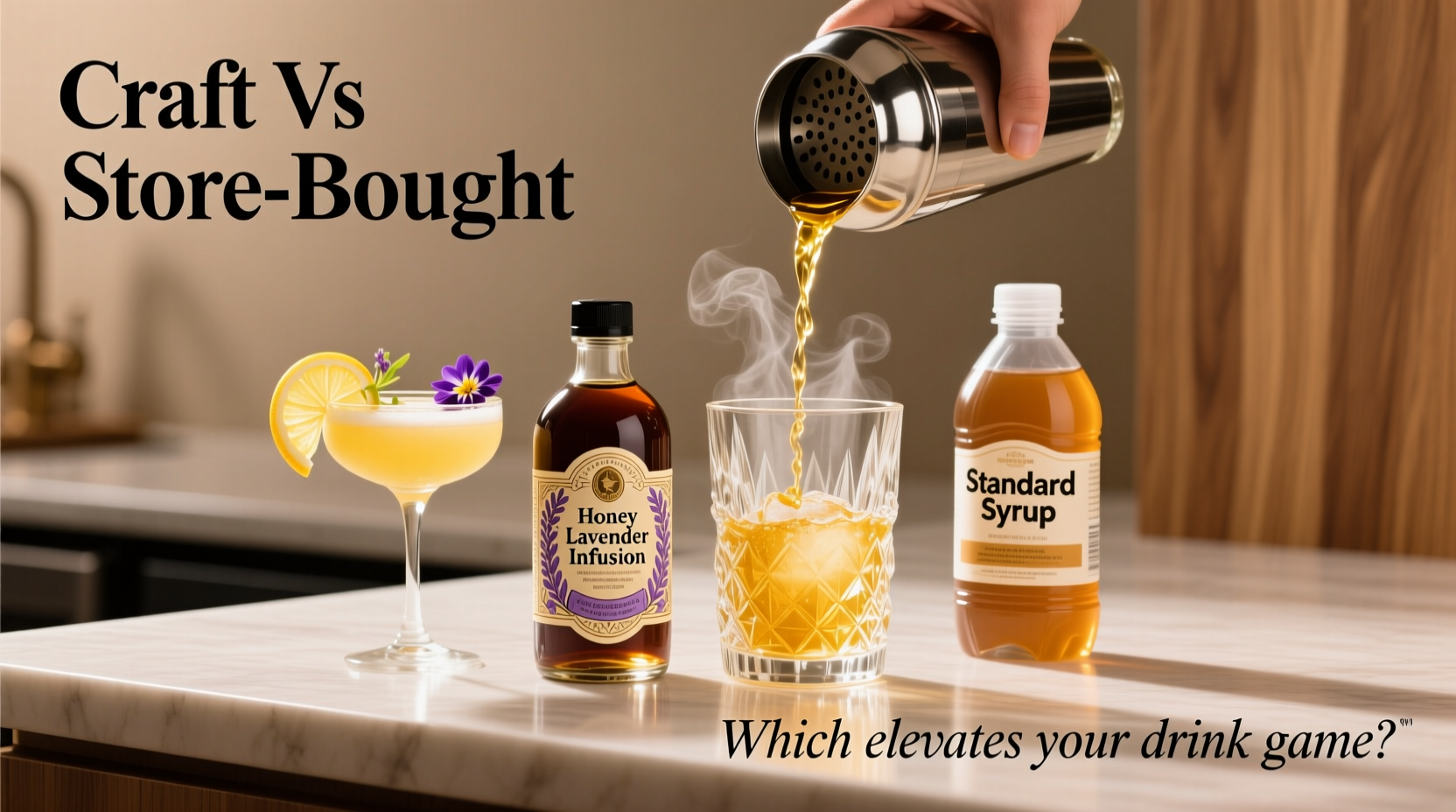
Store-bought syrups prioritize stability, uniformity, and shelf life. To achieve that, they rely on high-fructose corn syrup (HFCS), citric acid, artificial preservatives like potassium sorbate, and synthetic flavorings. These ingredients mute nuance and flatten aromatic top notes. A commercial ginger syrup may deliver heat—but rarely the bright citrus peel, earthy root, and floral stem notes you get from grating fresh ginger, simmering it gently with raw cane sugar, and straining it while still warm. Craft syrups preserve volatile oils and delicate sugars that evaporate or degrade during industrial processing.
This isn’t theoretical. In blind tastings conducted by the American Bartenders Guild’s San Francisco chapter (2023), 87% of professional tasters identified craft lavender syrup as “more aromatic, layered, and less cloying” than its leading retail counterpart—even when both were used at identical dilution in a French 75. The commercial version registered higher sweetness intensity but lower aromatic lift, creating a heavier, less refreshing finish.
“Commercial syrups are engineered for predictability—not pleasure. They’re designed to survive shipping, sit on shelves for 18 months, and behave identically across 10,000 bars. That engineering costs flavor.” — Javier Mendez, Beverage Director, The Violet Hour, Chicago; James Beard Award nominee for Outstanding Bar Program
Control, Customization, and Creative Leverage
Crafting your own syrup gives you granular control over every variable: sugar-to-water ratio (1:1, 2:1, or even rich 3:1 for spirit-forward drinks), extraction method (cold infusion, hot simmer, vacuum sealing, or sous-vide), botanical ratios, and finishing touches like acid adjustment or herbal tinctures. Want a rosemary syrup that leans savory for a Boulevardier? Reduce the sugar and add a pinch of flaky sea salt at the end. Building a smoky mezcal sour? Infuse your simple syrup with toasted cacao nibs and chipotle before straining.
Store-bought options offer zero flexibility. You’re locked into fixed sweetness levels, predetermined flavor balances, and static pH profiles. That becomes critical when balancing acidity. A craft lemon-thyme syrup can be adjusted to match the tartness of seasonal lemons—whereas a bottled version forces you to compensate with extra citrus or dilution, disrupting texture and integration.
Tip: Start with a 2:1 craft simple syrup (2 parts sugar to 1 part water) for stirred drinks like Manhattans or Old Fashioneds—it adds body without excessive dilution. Reserve 1:1 for shaken cocktails where lighter sweetness integrates more cleanly.Shelf Life, Stability, and Real-World Storage
It’s true: craft syrups don’t last as long as commercial ones. But “don’t last” is often overstated—and easily managed. A properly made craft syrup using pasteurized water, sterilized bottles, and refrigeration lasts 2–4 weeks for fruit-based versions (like strawberry-basil), 4–6 weeks for herb-forward syrups (rosemary, thyme), and up to 3 months for high-sugar, low-moisture preparations like gum syrup or rich demerara syrup.
Commercial syrups often list “12–24 months unopened, 6 months after opening”—but that longevity comes at a cost: preservatives that interfere with fermentation (a problem if you’re making shrubs or vinegar-based modifiers) and stabilizers that inhibit emulsification (critical for creamy or nut-based syrups like orgeat).
| Factor | Craft Syrups | Store-Bought Syrups |
|---|---|---|
| Typical Shelf Life (refrigerated, opened) | 2–12 weeks depending on base ingredients | 4–6 months |
| Preservatives Used | None (reliance on sugar concentration, acidity, refrigeration) | Potassium sorbate, sodium benzoate, sulfites |
| pH Flexibility | Adjustable—ideal for shrubs, acidulated syrups, or fermentation projects | Fixed and buffered—resists pH shifts |
| Emulsion Stability | Superior for nut/seed-based syrups (e.g., house orgeat holds texture longer) | Often relies on gums (xanthan, guar) that separate or become gummy over time |
| Bottling Requirements | Sterilized glass, tight seal, refrigeration essential | Plastic or glass; room-temp stable until opened |
A Mini Case Study: The Maple-Bourbon Revival at “The Copper Kettle”
In early 2022, Portland’s The Copper Kettle—a neighborhood bar known for its thoughtful whiskey program—replaced its bottled maple syrup with an in-house version made from Grade A dark amber maple syrup, brown butter, and a whisper of black pepper. They didn’t change their best-selling Maple Old Fashioned’s recipe—just swapped the sweetener.
Within three weeks, customer feedback shifted dramatically. Patrons described the drink as “deeper,” “warmer,” and “less sugary.” Sales increased 22%, and the bar began receiving requests for “that maple syrup” by name. More tellingly, guests started ordering the syrup itself—bottled in 200ml amber glass with hand-stamped labels—as a take-home item. The bar now sells 40+ bottles monthly, turning a $0.35-per-drink ingredient into a $14 premium product. Their insight? “People taste intention. When you reduce maple syrup slowly, toast the butter just until nutty—not burnt, and grind fresh Tellicherry peppercorns, you’re not just adding sweetness—you’re adding narrative.”
Cost Analysis: Upfront Investment vs Long-Term Value
Let’s address the elephant in the room: time and money. A 750ml bottle of premium store-bought ginger syrup retails for $18–$24. A craft version requires ~$6 in fresh ginger, organic cane sugar, and filtered water—and 25 minutes of active time. On paper, that’s a clear win. But the real economics go deeper.
First, yield: Commercial syrups are diluted to meet standard Brix levels (often 65–70°). Craft syrups let you choose strength. A 2:1 craft syrup delivers nearly twice the sweetening power per ounce—meaning fewer ounces used per drink, slower depletion, and better margin control.
Second, waste reduction: Because craft syrups are made in small batches aligned with demand, there’s virtually no spoilage. Bars report cutting syrup-related waste by 60–75% after switching to in-house production.
Third, cross-utilization: Ingredients used for syrups rarely sit idle. Leftover ginger pulp becomes a brine for pickled carrots. Spent vanilla beans go into sugar jars. Citrus peels infuse vinegar. Nothing is discarded—only repurposed.
Step-by-Step: Making Your First Craft Syrup (Vanilla-Bean Simple)
- Gather: 1 cup granulated cane sugar, ½ cup filtered water, 1 whole Madagascar bourbon vanilla bean (split and scraped)
- Combine: In a small saucepan, add sugar, water, and scraped vanilla pod + seeds. Do not stir once heated—this prevents crystallization.
- Heat: Bring to a gentle simmer over medium-low heat. Stir only to dissolve sugar initially. Once simmering, reduce heat to lowest setting and maintain for 4 minutes—no boiling vigorously.
- Cool & Steep: Remove from heat. Let cool 10 minutes in pan—this allows vanilla oils to fully infuse without bitterness.
- Strain & Bottle: Strain through a fine-mesh sieve lined with cheesecloth into a sterilized glass bottle. Discard pod (or rinse, dry, and reuse in sugar).
- Label & Store: Label with date. Refrigerate. Use within 8 weeks.
Do’s and Don’ts of Craft Syrup Mastery
- Do use filtered or distilled water—minerals in tap water can cloud syrups and accelerate oxidation.
- Do scale recipes by weight (grams), not volume—especially for sugars, which vary in density.
- Do keep a syrup journal: note dates, sugar ratios, infusion times, and tasting notes. Patterns emerge fast.
- Don’t boil delicate herbs (mint, basil, cilantro)—steep them off-heat in hot syrup instead.
- Don’t skip sterilization: wash bottles in hot soapy water, rinse, then pour boiling water inside and invert to dry.
- Don’t assume “organic” on a label means superior flavor—many organic commercial syrups still use HFCS and artificial acids.
FAQ
Can I make craft syrups without a stove?
Yes—cold-process methods work well for delicate aromatics. Combine sugar and botanicals (e.g., dried lavender, crushed cardamom pods) in a sealed jar. Add cold water, shake daily for 5–7 days, then strain. Cold infusion preserves volatile top notes but yields milder flavor and shorter shelf life (1–2 weeks refrigerated).
Why does my craft orgeat separate or turn cloudy?
Cloudiness usually indicates incomplete emulsification or residual starch from almonds. Always blanch raw almonds first (boil 1 minute, rinse, peel), then blend with water and strain through a nut milk bag—not just a fine sieve. Adding 0.1% gum arabic (by weight) stabilizes texture without altering flavor.
How do I adjust sweetness when substituting craft for store-bought?
Measure Brix if possible—but practically: start with 20% less craft syrup than the recipe calls for, then taste and adjust. Craft syrups are often more flavorful *per unit of sweetness*, so you’ll likely use less overall while gaining complexity.
Conclusion: It’s Not About Perfection—It’s About Presence
Elevating your drink game isn’t measured in Instagram likes or trophy shelves. It’s felt in the pause someone takes mid-sip—the slight lean forward, the quiet “huh,” the instinctive reach for the glass again. That moment happens when flavor has dimension, when sweetness serves structure rather than dominates it, and when every component feels chosen, not checked off. Craft syrups aren’t a luxury upgrade. They’re a return to fundamentals: attention to ingredient quality, respect for process, and confidence in your own palate. You don’t need a lab or a budget—just a saucepan, good sugar, and 20 minutes of presence. The first batch won’t be perfect. Neither was your first Old Fashioned. But each one deepens your understanding of balance, teaches you how heat transforms aroma, and reminds you that great drinks begin long before the ice hits the glass.
💬 Your turn: Brew your first craft syrup this week—vanilla, ginger, or even something unexpected like roasted peach. Share what you learned, what surprised you, or which store-bought staple you’ll never buy again. Tag us or drop your notes below—we read every one.