
When it comes to tackling home improvement tasks—whether hanging shelves, assembling furniture, or building a deck—the right drill can make all the difference. But with two dominant types on the market—corded and cordless—it’s not always clear which one delivers better performance for typical household jobs. While both have loyal followings, choosing between them depends on your priorities: raw power, consistent runtime, convenience, or flexibility. Understanding their strengths and limitations helps ensure you invest in the tool that matches how and where you work.
Power and Performance: The Core Difference
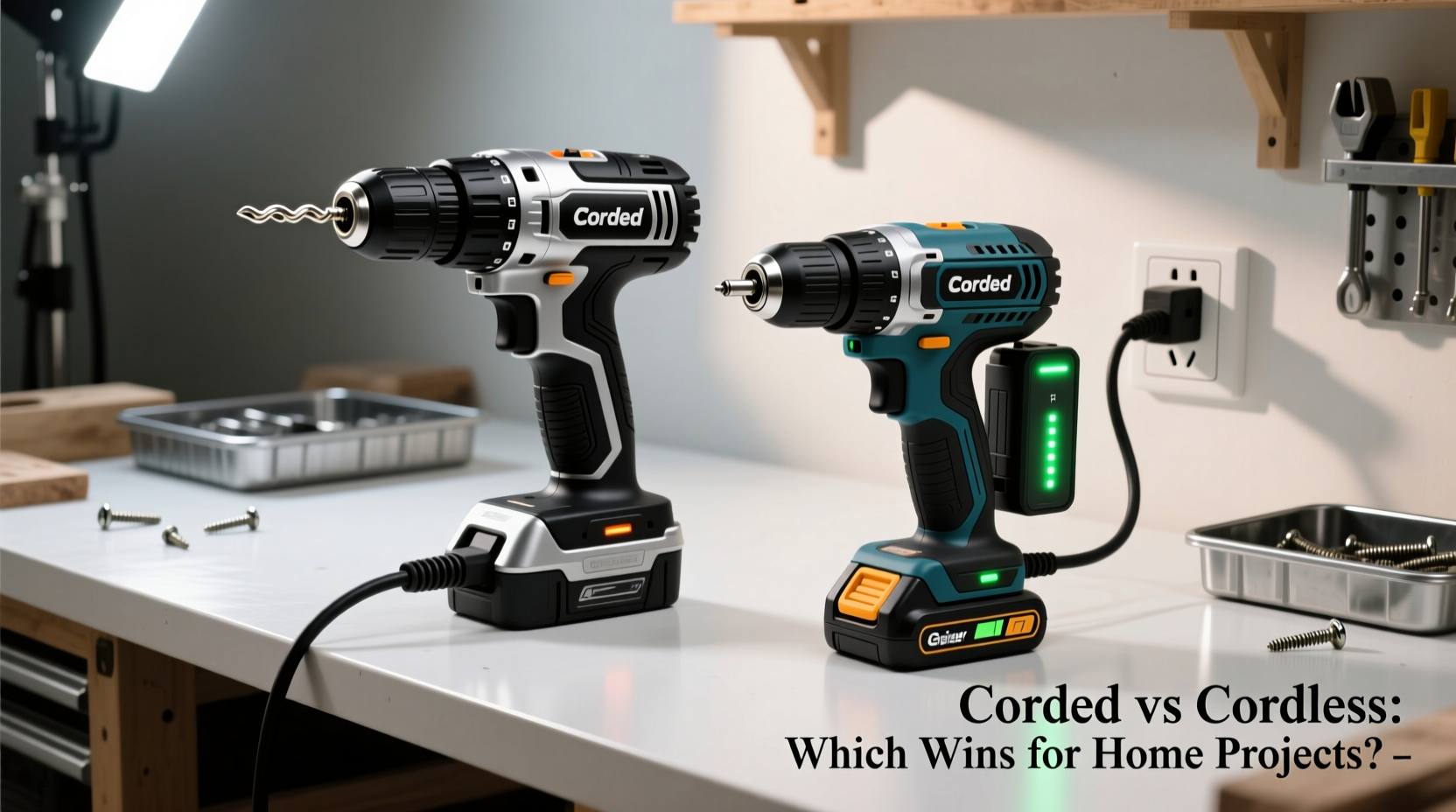
The most fundamental distinction between corded and cordless drills lies in their power delivery. Corded drills plug directly into an electrical outlet, providing a constant stream of energy. This allows them to maintain full torque and speed without degradation, even during extended use. For heavy-duty applications like drilling through masonry, metal, or thick hardwoods, this uninterrupted power is invaluable.
Cordless drills, powered by lithium-ion batteries, have made tremendous strides in recent years. Modern models can deliver up to 80% of the torque of their corded counterparts, making them suitable for most DIY tasks. However, as the battery drains, performance drops—especially under load. High-torque demands can cause voltage sag, leading to slower speeds and reduced effectiveness.
“While cordless tools have closed the gap, nothing beats a corded drill when continuous high torque is required.” — Mark Reynolds, Master Carpenter & Tooling Instructor
If your projects involve repetitive drilling or driving into dense materials, a corded model offers unmatched consistency. On the other hand, if you're primarily working with drywall, softwood, or fasteners, a cordless drill provides more than enough capability.
Mobility and Workspace Flexibility
Portability is where cordless drills truly shine. Without being tethered to an outlet, they offer freedom of movement across rooms, ladders, attics, or outdoor areas. This makes them ideal for homeowners who frequently move between locations within a house or garage.
Imagine installing curtain rods across multiple windows on different walls. With a cordless drill, you avoid dragging extension cords or switching outlets. The same applies to elevated work—like mounting a TV on a wall—where managing a power cord while balancing on a ladder becomes cumbersome and unsafe.
Corded drills require access to power, limiting their usefulness in unfinished basements, sheds, or remote corners of the yard. Even with extension cords, there’s always a risk of tripping hazards or accidental disconnection. In tight spaces or multi-level homes, this constraint can slow progress significantly.
Tip: Keep a fully charged spare battery on hand to extend cordless drill uptime during larger weekend projects.Cost and Long-Term Value Comparison
Initial cost is another critical factor. Entry-level corded drills typically range from $30 to $60, offering straightforward value with minimal maintenance. They don’t require battery replacements and have fewer components that fail over time.
Cordless drills usually start at $80–$120 for basic kits, including one battery and a charger. Higher-end models with brushless motors and advanced features can exceed $200. While pricier upfront, many users find long-term savings through compatibility with other tools in the same brand’s ecosystem (e.g., impact drivers, saws). Investing in a reputable brand often means expanding your toolkit using the same battery platform.
However, batteries degrade over time. After 2–5 years of regular use, capacity diminishes, requiring replacement at $50–$100 per unit. This ongoing cost must be factored into the total ownership expense.
Detailed Comparison: Corded vs Cordless Drills
| Feature | Corded Drill | Cordless Drill |
|---|---|---|
| Power Output | Consistent, high wattage (700W+) | Varies with battery charge; max ~500W equivalent |
| Mobility | Limited by cord length and outlet access | Full freedom of movement |
| Runtime | Unlimited (as long as plugged in) | 30–90 minutes per charge, depending on use |
| Weight | Lighter (no battery) | Heavier due to battery pack |
| Maintenance | Low; mainly motor brushes | Battery care required; storage at 40–60% charge |
| Best For | Workbenches, garages, fixed stations | General home repairs, mobility-heavy tasks |
| Average Price | $30–$70 | $80–$200+ (kit) |
Real-World Example: A Weekend Deck Project
Consider John, a homeowner building a small wooden deck in his backyard. His project involves drilling pilot holes and driving 150 exterior screws into pressure-treated lumber. He owns both a 7-amp corded drill and a 20V cordless model.
Initially, he starts with the corded drill. It powers through each screw effortlessly, maintaining speed even in dense wood. But after 30 minutes, he realizes the outlet is too far from the back corner of the yard. Running a 100-foot extension cord creates tension, limits maneuverability, and poses a tripping hazard near wet grass.
He switches to the cordless drill. Though slightly slower on tougher joints, it allows him to move freely around the deck frame. With two batteries, he rotates them every 20 minutes, minimizing downtime. Despite lower peak power, the convenience and safety outweigh the minor performance drop. By project end, he completes the job faster overall because he spends less time managing cords and repositioning equipment.
This scenario illustrates a common reality: for mobile, mid-intensity tasks, cordless wins on practicality—even if corded leads in pure specs.
When to Choose a Corded Drill
Corded drills remain relevant for specific use cases:
- Fixed workstation tasks: If you have a dedicated workshop or garage bench, a corded drill excels at repetitive drilling, sanding (with attachments), or mixing paint/compound.
- High-density materials: Drilling through concrete, steel, or hardwood beams benefits from sustained high RPM and torque.
- Budget-conscious buyers: Those needing only occasional heavy-duty performance may prefer a low-cost corded option over investing in a full cordless system.
- Long-duration jobs: When working for hours without breaks, corded eliminates anxiety about battery depletion.
Still, these advantages come with trade-offs in flexibility and safety. Indoor use near water sources (like bathrooms or kitchens) increases electrical risks, and tangled cords contribute to workplace accidents.
When a Cordless Drill Is the Better Choice
For the average homeowner, a cordless drill is often the smarter default pick. Here’s why:
- Versatility across rooms: From tightening loose cabinet hinges to assembling children’s furniture, cordless drills adapt seamlessly to changing locations.
- Safer operation on ladders: Eliminating cords reduces entanglement risks and improves balance during overhead work.
- Integration with smart features: Many modern cordless models include LED lights, built-in levels, Bluetooth connectivity, and adjustable clutch settings for precision.
- Brand ecosystem synergy: Buying into platforms like DeWalt, Milwaukee, or Ryobi lets you share batteries across drills, saws, trimmers, and vacuums.
- Easier storage: Compact designs and no dangling cords make them simpler to stow in closets or toolboxes.
Step-by-Step: Choosing the Right Drill for Your Needs
Follow this decision-making process to determine which type suits your home projects best:
- Assess your typical workload: List the last five projects you completed. Were they light (screwing, assembling), moderate (drilling into wood/metal), or heavy (masonry, framing)?
- Evaluate your workspace: Do you have reliable indoor outlets near your work zones? Do you often work outdoors or in unfinished areas? <3> Consider frequency of use: Will you use the drill monthly, weekly, or just once a year?
- Set a budget: Include potential future costs like spare batteries or chargers.
- Test ergonomics: Visit a hardware store to hold both types. Note weight distribution, grip comfort, and trigger sensitivity.
- Decide on brand commitment: If you plan to buy more power tools later, choosing a cordless system now ensures compatibility.
Based on this evaluation, most homeowners will lean toward cordless. But if your list includes frequent heavy drilling or stationary workshop use, a corded model deserves serious consideration.
Frequently Asked Questions
Can a cordless drill handle masonry work?
Yes, but with limitations. Cordless hammer drills can bore into brick or block using masonry bits, but they struggle with large-diameter holes or prolonged use. For extensive masonry tasks, a corded rotary hammer drill is more effective and durable.
Are corded drills becoming obsolete?
Not entirely. While cordless technology dominates consumer markets, professionals in construction and manufacturing still rely on corded tools for continuous operation. They also serve as backup options when batteries fail or charging isn't possible.
How long do cordless drill batteries last?
Lithium-ion batteries typically last 2–5 years or 300–500 charge cycles. Proper care—avoiding extreme temperatures, deep discharges, and long idle periods—can extend their life. Most lose about 20% capacity after two years of regular use.
Final Recommendation: Match the Tool to Your Lifestyle
The question isn’t whether corded or cordless drills are universally “better”—it’s which one aligns with how you actually work. For stationary, high-power needs, corded drills deliver unmatched performance and value. But for the vast majority of home projects—where mobility, convenience, and versatility matter most—cordless drills outperform expectations.
Modern advancements have erased much of the historical power gap. Today’s 18V or 20V MAX systems handle everything from drywall anchors to deck screws with ease. When combined with quick-charging batteries and thoughtful design, they represent the optimal balance for homeowners.
If you’re starting fresh, begin with a mid-range cordless drill kit from a trusted brand. You’ll gain immediate utility and leave room to grow your toolkit. If you already own a corded model, keep it for garage-based jobs but supplement it with a cordless for everyday fixes.
“The best tool is the one you’ll actually use. For most people, that’s the one they can grab quickly and take anywhere.” — Sarah Lin, Home Renovation Consultant
Take Action Today
Don’t let indecision delay your next project. Evaluate your past few repairs or upgrades. How often did you need maximum power versus freedom to move? Use that insight to choose confidently. Whether you go corded for raw strength or cordless for seamless usability, having the right drill in your arsenal transforms frustrating tasks into satisfying accomplishments. Share your experience below—what’s your go-to drill for home jobs?
💬 Have a favorite drill model or pro tip? Join the conversation and help fellow DIYers make smarter tool choices!