As holiday seasons approach and landscape lighting becomes more elaborate, many homeowners and event planners ask a critical question: can you use rechargeable batteries for large outdoor light displays? With growing interest in sustainability, cost savings, and reducing waste, rechargeable batteries seem like an appealing alternative to disposable ones. But when it comes to powering dozens—or even hundreds—of lights across extended periods, the answer isn’t always straightforward.
Large outdoor light displays often demand consistent voltage, long runtime, and resilience against cold weather. While rechargeable batteries have improved significantly over the past decade, their suitability depends on several factors including display size, battery chemistry, temperature conditions, and power management. This article explores whether rechargeables are viable, how to use them effectively, and what trade-offs exist compared to traditional power sources.
Battery Requirements for Outdoor Light Displays
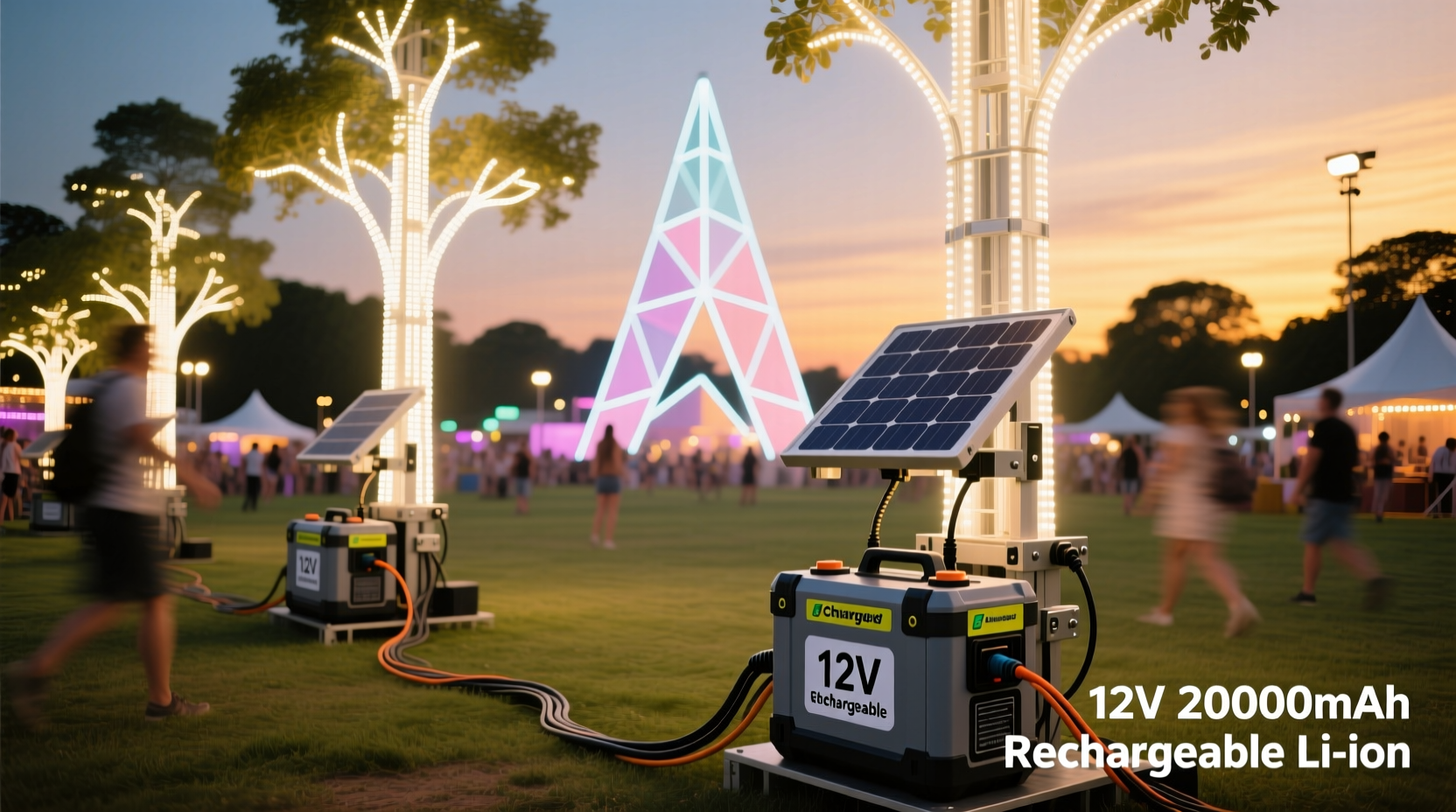
Outdoor lighting setups vary widely—from modest porch arrangements to full-yard spectacles with synchronized music and motion effects. The power needs scale accordingly. Most decorative LED string lights operate at low voltages (typically 3V to 12V), but draw current continuously for 4–12 hours per night. A typical 50-light mini string uses about 0.8 watts per hour, meaning ten such strings consume roughly 8 watts per hour or 96 watt-hours over a 12-hour period.
This may sound minimal, but multiply that by multiple zones (roof, trees, walkways) and you’re looking at hundreds of watt-hours per night. For battery-powered systems, energy density—the amount of power stored per unit of weight or volume—becomes crucial. Rechargeable batteries differ significantly from alkaline cells in both capacity and discharge characteristics.
Unlike single-use alkalines, which maintain a relatively stable voltage until near depletion, many rechargeables (especially NiMH) experience a gradual voltage drop. LEDs are sensitive to voltage; below a certain threshold, they dim or flicker. Lithium-ion variants perform better here, offering flatter discharge curves and higher energy density.
Tip: Always check the voltage requirements of your lights before selecting a battery type. Mismatched voltage leads to poor performance or damage.Types of Rechargeable Batteries: Pros and Cons
Not all rechargeable batteries are created equal. Understanding the differences helps determine which—if any—are suitable for your display.
| Battery Type | Voltage (per cell) | Energy Density | Cold Tolerance | Lifespan (Cycles) | Suitability for Lighting |
|---|---|---|---|---|---|
| NiMH (Nickel-Metal Hydride) | 1.2V | Moderate | Poor – loses ~30% capacity below freezing | 500–1000 | Fair – only for small, short-term displays |
| Li-ion (Lithium-Ion) | 3.7V | High | Good – retains >80% down to -10°C | 800–1500 | Excellent – best for larger setups |
| LiFePO4 (Lithium Iron Phosphate) | 3.2V | Medium-High | Very Good – stable in cold | 2000+ | Outstanding – ideal for permanent installations |
| Lead-Acid (Sealed) | 2.0V per cell (6V/12V common) | Low | Fair – works if insulated | 300–500 | Limited – bulky but reliable for fixed sites |
For most users, Li-ion and LiFePO4 stand out as top contenders due to their efficiency and longevity. However, they require proper charging circuits and protection against over-discharge. NiMH batteries, while safer and cheaper upfront, struggle in cold environments and lack the sustained output needed for large arrays.
“Rechargeable lithium solutions now offer real alternatives to grid power for seasonal lighting, provided they're properly sized and protected.” — Dr. Alan Zhou, Energy Systems Engineer, University of Colorado Boulder
Practical Considerations for Real-World Use
Even with high-capacity batteries, deploying them outdoors introduces challenges beyond raw specs. Temperature, weather exposure, wiring complexity, and maintenance logistics all influence success.
Winter nights, especially in northern climates, can drop below -15°C (5°F). At these temperatures, chemical reactions inside batteries slow dramatically. NiMH cells may deliver less than half their rated capacity. Even Li-ion units suffer unless housed in insulated enclosures. One solution is to place battery packs indoors or in garages and run low-voltage wiring outside—a method commonly used in professional landscape lighting.
Another concern is consistency. If one string dims while others remain bright, the visual effect is ruined. To prevent this, use a central power distribution system with regulated outputs. DC-to-DC converters can stabilize voltage across long cable runs, ensuring uniform brightness.
Also consider runtime. A 100Wh battery powering a 10W total load will last about 10 hours—enough for evening use but tight if you want lights on until midnight. Adding solar panels for daytime recharging extends usability, though winter sun availability limits effectiveness in many regions.
Mini Case Study: The Johnson Family Holiday Display
The Johnsons in Minneapolis run a popular neighborhood light show every December, featuring over 200 strings of LEDs, inflatables, and animated figures. In 2022, they attempted to switch entirely to rechargeable power using a bank of 12V LiFePO4 batteries charged via solar during daylight.
They calculated their total nightly consumption at approximately 650 watt-hours. Their initial setup included four 200Wh LiFePO4 units (800Wh total), connected through a central distribution panel with individual fuses. Lights operated reliably for two weeks, even during sub-zero temperatures, thanks to battery insulation boxes wrapped in reflective foam.
However, after a week of heavy cloud cover, the solar input dropped below 30%, and the batteries failed to fully recharge. By day 10, runtime shortened to just six hours. They reverted to partial grid connection for the remainder of the season.
The lesson? Rechargeables can handle large loads—but only with sufficient buffer capacity and backup plans for low-renewable periods.
Step-by-Step Guide: Setting Up a Rechargeable-Powered Display
If you're considering a battery-based system, follow this structured approach to ensure reliability and safety.
- Calculate Total Power Demand: Add up the wattage of all lights and accessories. Multiply by daily runtime to get watt-hours (Wh) per night.
- Select Battery Chemistry: Choose Li-ion or LiFePO4 for cold tolerance and cycle life. Avoid NiMH for large or cold-weather displays.
- Determine Required Capacity: Size your battery bank to provide 1.5x your daily usage to avoid deep discharges that shorten lifespan.
- Design Charging Method: Decide between wall charging, solar, or hybrid. Solar requires adequate panel wattage and charge controllers.
- Build Enclosure: House batteries in waterproof, insulated containers with ventilation. Include low-temperature shutoffs if possible.
- Wire System Safely: Use appropriate gauge wire to minimize voltage drop. Install fuses or circuit breakers on each output line.
- Test Before Deployment: Run a full-night simulation indoors to verify performance and detect weak connections.
- Monitor Performance: Track voltage and temperature nightly. Recharge promptly after use to maintain battery health.
Cost Analysis: Rechargeable vs. Disposable vs. Grid Power
While environmental benefits are clear, financial return depends on usage frequency and scale.
- Disposable Alkaline Batteries: Cost around $0.50–$1.00 per AA cell. A medium display using 20 AAs nightly would spend $300–$600 over a 60-day season—plus disposal hassle.
- Rechargeable Setup (Upfront): A quality 500Wh LiFePO4 battery with charger costs $250–$400. Additional components (wiring, enclosures, regulators) add $100–$200.
- Break-Even Point: After 2–3 seasons, the rechargeable system pays for itself. Over five years, savings exceed $1,000 compared to disposables.
- Grid Power: Cheapest long-term option—costing pennies per night—but requires access to outlets and extension cords, which may not be feasible in remote yards.
For occasional users, disposables may still make sense. But for annual displays, especially those requiring portability or lacking nearby outlets, rechargeables offer compelling value.
FAQ
Can I mix rechargeable and alkaline batteries in the same display?
No. Mixing battery types creates imbalance in voltage and internal resistance, leading to overheating, leakage, or premature failure. Always use identical batteries throughout a circuit.
How long do rechargeable batteries last in outdoor lights?
With proper care, modern Li-ion or LiFePO4 batteries last 5–7 years (or 1,000+ cycles). NiMH lasts 3–5 years but degrades faster in cold conditions. Lifespan drops significantly if batteries are regularly drained below 20% or exposed to moisture.
Are solar-charged batteries practical for winter lighting?
In sunny climates like Arizona or Southern California, yes. But in cloudy or northern regions, solar alone is unreliable in December due to short days and low sun angles. Supplement with grid charging during prolonged overcast periods.
Checklist: Going Rechargeable for Outdoor Lights
- ✅ Calculate total watt-hours needed per night
- ✅ Choose lithium-based batteries (Li-ion or LiFePO4)
- ✅ Select a battery capacity at least 1.5x your daily draw
- ✅ Plan for cold-weather protection (insulation, indoor placement)
- ✅ Use a regulated power distribution system
- ✅ Install proper fusing and wiring
- ✅ Set up a reliable charging method (wall or solar + backup)
- ✅ Test the entire system before outdoor deployment
- ✅ Monitor voltage and temperature during operation
- ✅ Recharge promptly after nightly use
Conclusion: Is It Worth It?
Yes—under the right conditions. Rechargeable batteries can absolutely power large outdoor light displays, particularly when using advanced chemistries like LiFePO4 or high-quality Li-ion packs. They offer long-term cost savings, reduce environmental impact, and provide flexibility where grid power isn’t available.
Success hinges on accurate planning: sizing the battery bank correctly, protecting against cold, and maintaining consistent charging habits. While not a plug-and-play replacement for every scenario, a well-designed rechargeable system delivers reliable, clean-powered illumination year after year.
Whether you're illuminating a single tree or orchestrating a block-wide spectacle, consider making the switch. With thoughtful design and responsible use, rechargeable energy can light up your holidays—and your conscience—with pride.
💬 Have you tried running your holiday lights on rechargeable power? Share your experience, challenges, and tips in the comments below—your insights could help others create brighter, greener displays!