For millions of people, audiobooks have become a daily companion—during commutes, workouts, chores, or quiet evenings. As listening habits evolve, so do the tools we use. Bluetooth speakers and wireless earpieces dominate the market, but which is better for audiobook consumption? The answer isn’t as simple as “one size fits all.” It depends on your lifestyle, environment, listening preferences, and even the narrator’s vocal dynamics. Let’s explore what truly matters when choosing between a Bluetooth speaker and an earpiece for audiobooks.
Sound Quality and Clarity: What Your Ears (and Brain) Prefer
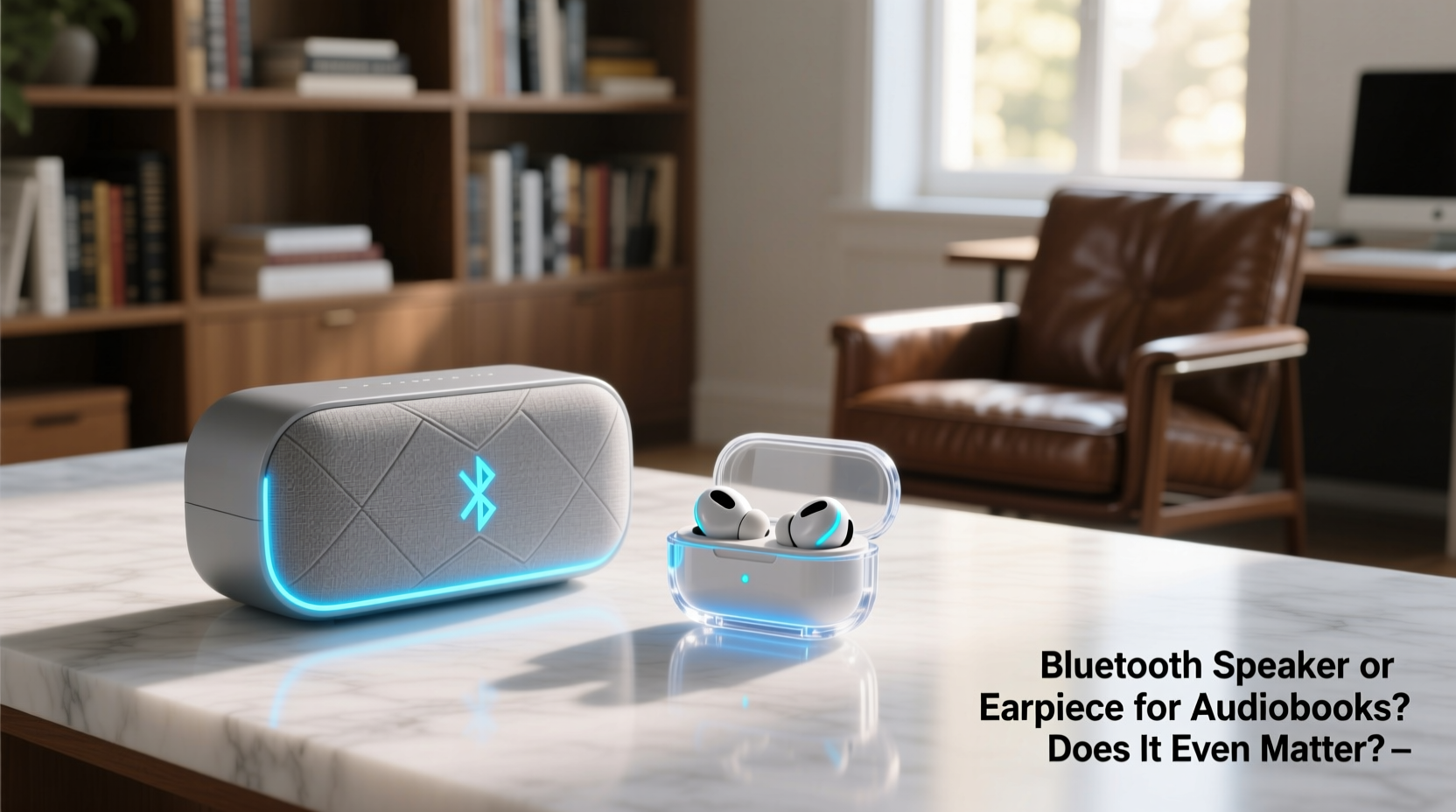
Audiobooks are dialogue-heavy, relying on subtle vocal inflections, pacing, and tonal shifts to convey emotion and meaning. Unlike music, where bass and stereo separation are critical, audiobook clarity hinges on mid-range frequencies—the human voice spectrum. Both Bluetooth speakers and earpieces can deliver excellent vocal clarity, but they do so differently.
Speakers project sound into space, creating a more natural, room-filling experience. However, this openness comes with trade-offs: ambient noise interference and potential distortion at lower volumes. In contrast, earpieces deliver sound directly into the ear canal, minimizing external interference and offering consistent volume control. High-end earbuds with voice-optimized tuning often outperform even premium portable speakers in speech intelligibility.
“Voice clarity is paramount in spoken-word audio. Earpieces provide a controlled acoustic environment that minimizes cognitive load during long listening sessions.” — Dr. Lena Patel, Audio Perception Researcher, MIT Media LabTip: Look for devices with \"voice mode\" or \"speech enhancement\" features—they boost mid-range frequencies for clearer narration.
Comfort and Wearability: The Long-Haul Listening Factor
If you listen to audiobooks for hours at a time—during cross-country drives or extended walks—comfort becomes non-negotiable. Earpieces, especially true wireless models, vary widely in fit. Some sit snugly without pressure; others cause fatigue after 30 minutes. Over-ear headphones offer comfort but may overheat in warm environments.
Speakers win here for passive listening. Placing one on a nightstand or desk eliminates physical contact altogether. You’re not tethered by earbuds or headbands. However, this freedom only works in private or low-noise settings. Public spaces demand discretion, making speakers impractical and potentially intrusive.
Consider your routine: Do you fall asleep listening? A speaker avoids the risk of damaging earbuds left in overnight. Are you walking through busy streets? Earpieces with noise isolation keep you aware and focused.
Portability and Practicality: Where and How You Listen
Portability isn’t just about size—it’s about usability in context. A compact Bluetooth speaker fits in a backpack and pairs instantly, but using it outdoors means competing with wind, traffic, and chatter. Volume cranked high distorts narration and drains battery fast.
Earpieces excel in mobility. They’re pocketable, sweat-resistant (many models), and ideal for multitasking. Whether you're cooking, cycling, or commuting, earpieces let you stay immersed without drawing attention. Modern models offer touch controls, automatic pause when removed, and seamless device switching—all crucial for audiobook listeners juggling multiple tasks.
| Feature | Bluetooth Speaker | Wireless Earpiece |
|---|---|---|
| Best For | Home, backyard, shared quiet spaces | Commute, exercise, travel |
| Noise Isolation | None (open sound) | High (especially ANC models) |
| Battery Life | 8–24 hours | 4–8 hours (case adds 20+) |
| Voice Clarity | Good (in quiet rooms) | Excellent (direct delivery) |
| Social Etiquette | Poor in public | Appropriate anywhere |
Real-Life Example: Two Listeners, Two Choices
Meet Sarah and James—both avid audiobook fans, but with opposite preferences.
Sarah listens primarily at home. She enjoys lying on the couch while her toddler plays nearby. She uses a small Bluetooth speaker placed across the room. It allows her to hear the narration clearly without blocking ambient sounds—like her child calling for help. She values situational awareness and doesn’t mind moderate background noise.
James, on the other hand, commutes 45 minutes each way on a crowded train. He needs focus. His wireless earbuds with active noise cancellation block out engine rumble and conversations. He listens at lower volumes because the sound is sealed, preserving his hearing over time. For him, the speaker isn’t just impractical—it’s unusable.
Their choices aren’t about budget or brand loyalty. They reflect how deeply personal listening habits are. One tool doesn’t replace the other—it complements different lifestyles.
When Environment Dictates the Device
Your surroundings play a decisive role. Consider these scenarios:
- At home, alone: A speaker creates a relaxed, immersive atmosphere—ideal for fiction or storytelling.
- In public transit: Earpieces prevent audio leakage and maintain privacy.
- While exercising: Sweat-resistant earbuds with secure fit ensure uninterrupted playback.
- During chores: A waterproof speaker in the kitchen or garage lets you listen hands-free.
- Falling asleep: Low-volume speaker avoids ear pressure; some models auto-shutoff after 30 minutes.
Step-by-Step: Choosing the Right Device for Your Audiobook Habits
- Map your listening environments: List where you most often listen—car, gym, bedroom, park.
- Assess noise levels: High ambient noise favors earpieces with noise isolation.
- Evaluate duration: Long sessions require comfort—test earbud fit or consider over-ear options.
- Check connectivity: Ensure stable Bluetooth pairing with your primary device (phone/tablet).
- Test voice clarity: Play a sample chapter and adjust EQ if available—boost mids, reduce bass.
- Review battery and charging: Earpieces with charging cases offer days of use; speakers need frequent recharging if used daily.
- Decide on sharing: Will others listen too? Speakers allow group enjoyment; earpieces are personal.
FAQ: Common Questions About Audiobook Listening Devices
Can I use regular earbuds for audiobooks?
Absolutely. Any earbuds that deliver clear mid-range sound work well. Focus on comfort and fit for long sessions. Models designed for calls often prioritize voice clarity, making them excellent for audiobooks.
Do noise-canceling earpieces damage hearing over time?
No—but they can lead to unsafe volume habits. Because ambient noise is reduced, listeners sometimes turn up volume without realizing it. Use volume limiters in your device settings and take listening breaks every hour.
Is a smart speaker better than a portable Bluetooth speaker for audiobooks?
Smart speakers (like Amazon Echo or Google Nest) offer voice control and multi-room audio, which is convenient. However, their built-in microphones may pick up background noise during playback. For dedicated audiobook use, a portable Bluetooth speaker with high voice clarity and no always-on mic might be preferable for privacy and focus.
Final Verdict: It Matters—But Not How You Think
The debate isn’t about which device is objectively better. It’s about alignment with your life. A Bluetooth speaker isn’t inferior to an earpiece, nor is the reverse true. What matters is intentionality. Matching your listening tool to your environment, routine, and comfort needs transforms audiobooks from a passive habit into a richer, more enjoyable experience.
Many listeners benefit from owning both. Use earpieces for mobility and focus, and switch to a speaker when relaxing at home. This hybrid approach maximizes flexibility without compromising quality.
“The right device doesn’t just deliver sound—it supports sustained attention, emotional engagement, and comprehension.” — Marcus Tran, UX Designer at Audible
Take Action: Optimize Your Audiobook Experience Today
Don’t settle for subpar audio or discomfort. Audit your current setup. Try a different device for one week. Adjust EQ settings. Experiment with placement or fit. Small changes can dramatically improve retention, enjoyment, and even how long you’re willing to listen.
💬 What’s your go-to device for audiobooks—and why? Share your experience in the comments and help others find their perfect listening match.