In an era where technology blends seamlessly into home decor, Bluetooth-enabled ornament speakers have emerged as a novel solution for ambient audio. These devices—often disguised as decorative figurines, snow globes, or seasonal ornaments—promise wireless convenience without compromising aesthetic appeal. But behind their charming exteriors lies a critical compromise: sound quality. While traditional speakers prioritize acoustics, ornament speakers must balance form and function, often sacrificing audio fidelity for visual integration. The question remains: Are they worth the tradeoff?
This article explores the practicality, performance, and positioning of Bluetooth ornament speakers in modern living spaces. From technical limitations to niche applications, we examine whether these devices offer meaningful value—or if they’re better suited as conversation pieces than serious audio solutions.
The Rise of Decorative Audio Technology
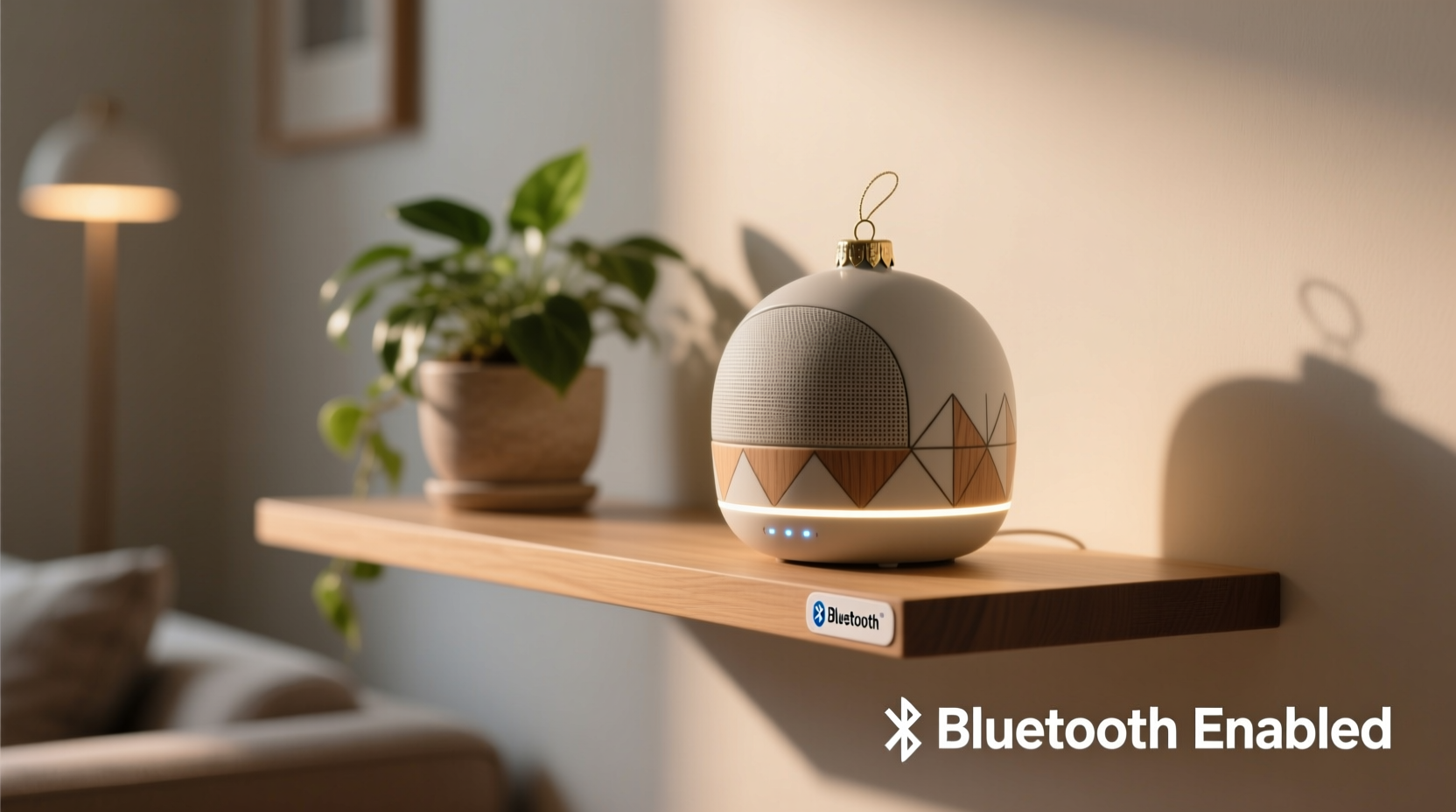
The demand for invisible tech has grown alongside minimalist interior trends. Consumers increasingly seek devices that serve functional purposes without disrupting visual harmony. This shift has led to innovations like smart mirrors, speaker-integrated lamps, and now, ornament speakers. Unlike bulky sound systems, these compact units blend into shelves, mantles, and holiday displays while delivering music via Bluetooth connectivity.
Manufacturers target lifestyle-conscious buyers who value ambiance over audiophile-grade reproduction. Brands such as Xiaomi, Braven, and lesser-known specialty designers have introduced products ranging from reindeer-shaped holiday speakers to crystal orb diffusers with embedded drivers. Their appeal lies not in power or precision, but in subtlety and surprise—a whisper of music emanating from what appears to be mere decoration.
Yet this design-first approach raises questions about utility. Can something so small and stylistically constrained deliver satisfying audio? Or does the novelty wear off once users realize the sonic limitations?
Understanding the Audio Tradeoff
All speakers face engineering constraints, but ornament speakers operate under extreme spatial restrictions. Most measure between 3 to 6 inches in height, leaving minimal room for drivers, amplifiers, or resonance chambers. As a result, several key aspects of sound are compromised:
- Limited frequency range: Small drivers struggle to reproduce deep bass or crisp highs, leading to muffled mid-tones and thin overall output.
- Low volume capacity: Maximum loudness rarely exceeds 70–75 dB, suitable only for quiet rooms or background listening.
- Poor stereo separation: Many models feature mono sound due to size constraints, reducing spatial depth.
- Compression artifacts: To compensate, some use digital signal processing (DSP) that boosts certain frequencies unnaturally, distorting the original mix.
Acoustic physics dictates that larger enclosures produce fuller sound. Ornament speakers, by definition, cannot meet these physical requirements. Even advanced materials and passive radiators can't overcome fundamental limits of displacement and air movement.
“Miniaturization has its price. You can’t cheat the laws of acoustics—especially when the enclosure is smaller than a coffee mug.” — Dr. Lena Tran, Acoustical Engineer at Sonance Labs
That said, context matters. For listeners seeking immersive concerts or high-fidelity playback, these speakers fall short. But for ambient use—soft jazz during dinner, gentle playlists while reading, or seasonal tunes during holidays—their modest output may suffice.
Use Cases Where Ornament Speakers Shine
Despite their audio shortcomings, Bluetooth ornament speakers fulfill specific roles where aesthetics and placement outweigh sonic performance. Consider these realistic scenarios:
1. Holiday and Seasonal Displays
During festive seasons, families decorate homes with themed ornaments. A snow globe speaker playing classic carols enhances immersion without requiring additional hardware. Its charm isn’t in volume or clarity, but in thematic cohesion—a glowing village with synchronized music feels more magical than one relying on hidden Bluetooth boxes.
Tip: Use seasonal ornament speakers as temporary audio accents—pair them with your main system for layered effects rather than relying on them alone.2. Subtle Background Ambiance in Small Spaces
Bathrooms, walk-in closets, or powder rooms often lack space for conventional speakers. An ornamental bird figurine or zen garden sculpture with built-in audio can provide light background sound without cluttering surfaces. In these contexts, discretion is more valuable than dynamic range.
3. Children’s Rooms and Themed Environments
Kids respond to whimsy. A dinosaur-shaped speaker that glows and plays bedtime stories captures imagination far more effectively than a plain cylinder. Parents report higher engagement when audio comes from characters children recognize—even if the sound quality resembles an old smartphone speaker.
4. Gift Markets and Novelty Appeal
Many purchases are driven by gifting logic. A rose-shaped Bluetooth rosebud speaker sells not for its specs, but as a romantic gesture. Similarly, a miniature Eiffel Tower with soft chimes appeals as a souvenir with added functionality. Here, emotional resonance trumps technical merit.
Comparative Analysis: Ornament vs. Compact Traditional Speakers
To assess value objectively, consider how ornament speakers stack up against similarly sized traditional alternatives like the JBL Clip series, Bose SoundLink Micro, or Sony SRS-XB13.
| Feature | Bluetooth Ornament Speaker | Compact Traditional Speaker |
|---|---|---|
| Sound Quality | Low to moderate; limited bass, compressed mids | Moderate to high; balanced profile, better clarity |
| Design Priority | Decorative integration | Portability and durability |
| Volume Output | Up to 75 dB (best-case) | Up to 85–90 dB |
| Battery Life | 4–6 hours (small cells) | 6–12 hours |
| Price Range | $25–$60 (premium for design) | $30–$80 (value-focused) |
| Best Use Case | Themed decor, low-volume ambiance | Outdoor use, travel, active listening |
The data shows a clear divide: ornament speakers cost comparably but perform worse acoustically. However, their unique selling point isn’t performance—it’s presence. They don’t compete with portable speakers; they occupy a different category altogether: decorative tech hybrids.
Real-World Example: The Winter Mantle Setup
Sarah K., a graphic designer in Portland, uses a set of three Bluetooth-enabled village house ornaments during December. Each houses a tiny speaker and connects via a central hub. She pairs them with her phone each evening, playing instrumental Christmas music at 40% volume.
“It’s not loud,” she admits. “You wouldn’t hear it from the kitchen. But when I’m sitting on the couch with a blanket, it feels like the room itself is humming softly. My kids love watching the lights flicker in sync with the music. It’s cozy—not concert-level, but cozy.”
Sarah supplements the setup with a larger speaker in the adjacent living area for parties. But for quiet nights, the ornament system delivers exactly what she wants: atmosphere without intrusion.
This case illustrates a crucial insight: ornament speakers aren’t replacements. They’re enhancers—tools for mood layering rather than primary audio sources.
Practical Buying Checklist
If you're considering a Bluetooth ornament speaker, evaluate options using this checklist to ensure you get both aesthetic satisfaction and acceptable functionality:
- Determine your primary need: Is it decoration, background sound, or both?
- Check Bluetooth version: Look for Bluetooth 5.0 or higher for stable connection.
- Verify battery life: At least 4 hours for regular use; USB-rechargeable preferred.
- Test sound before purchase: If possible, listen at varying volumes to detect distortion.
- Assess material quality: Avoid brittle plastics; opt for weighted bases to prevent tipping.
- Confirm pairing method: Some require apps; others support direct Bluetooth.
- Consider multi-unit sync: Useful for creating distributed audio across multiple ornaments.
FAQ: Common Questions About Ornament Speakers
Can I connect multiple ornament speakers together for stereo sound?
Some brands allow daisy-chaining or grouping via companion apps, enabling synchronized playback across several units. However, true stereo separation is rare. Most systems play identical mono signals, creating a wider field but not left-right differentiation. Check product specifications before assuming multi-speaker compatibility.
Do these speakers work well with voice assistants?
Very few ornament speakers include microphone arrays or Wi-Fi connectivity required for Alexa, Google Assistant, or Siri. Most are passive Bluetooth receivers only. You’ll need to control playback from your phone or tablet. If hands-free control is important, consider alternative smart decor like voice-enabled clocks or picture frames.
Are they durable enough for long-term use?
Durability varies widely by build quality. Ceramic or metal-cased models last longer than plastic ones, especially in homes with pets or children. Since many are seasonal, manufacturers often prioritize appearance over longevity. Store them carefully in protective packaging when not in use to extend lifespan.
Final Verdict: Worth It Under the Right Conditions
Bluetooth-enabled ornament speakers are not universally worthwhile. For audiophiles, podcast enthusiasts, or anyone needing clear, powerful sound, they fail basic expectations. However, when judged within their intended context—decorative augmentation, ambient enhancement, and experiential design—they offer legitimate value.
Their strength lies in emotional impact, not technical prowess. A glowing unicorn playing lullabies may not impress an engineer, but it can delight a child. A vintage-style radio figurine emitting soft jazz transforms a bookshelf into a sensory experience. These moments justify the audio tradeoff for many users.
Ultimately, the decision hinges on intent. Ask yourself: Am I buying this for sound, or for atmosphere? If the answer leans toward the latter, an ornament speaker could be a fitting addition. But if you demand clarity, volume, or versatility, invest in proven audio hardware instead.
Conclusion: Embrace the Niche, Not the Hype
Bluetooth ornament speakers will never replace dedicated audio equipment. But they represent an evolving frontier where technology serves not just function, but feeling. When used thoughtfully—as accents, not anchors—they enrich environments in ways pure specs can’t measure.
Don’t expect miracles in sound. Do expect wonder in presentation. Choose wisely, set realistic expectations, and integrate them as part of a broader audio ecosystem. That’s how you turn a compromise into a clever design choice.
💬 Have you tried Bluetooth ornament speakers? Share your experience—was the audio tradeoff worth it for your space? Join the conversation and help others navigate this blend of tech and décor.