When it comes to decorating a small apartment, fairy lights offer charm, warmth, and versatility. Whether draped over a bed frame, wrapped around mirrors, or strung along shelves, they transform compact spaces into cozy retreats. But with two dominant power options—battery-operated and plug-in—choosing the right type can significantly affect safety, convenience, aesthetics, and long-term maintenance. For urban dwellers navigating tight layouts, limited outlets, and rental restrictions, this decision matters more than ever.
The ideal lighting solution balances practicality with ambiance. While both types deliver soft illumination, their differences in installation, energy efficiency, control, and adaptability can make one far more suitable than the other depending on your living situation. This guide breaks down every critical factor so you can choose wisely—and decorate confidently.
Understanding Your Lighting Options
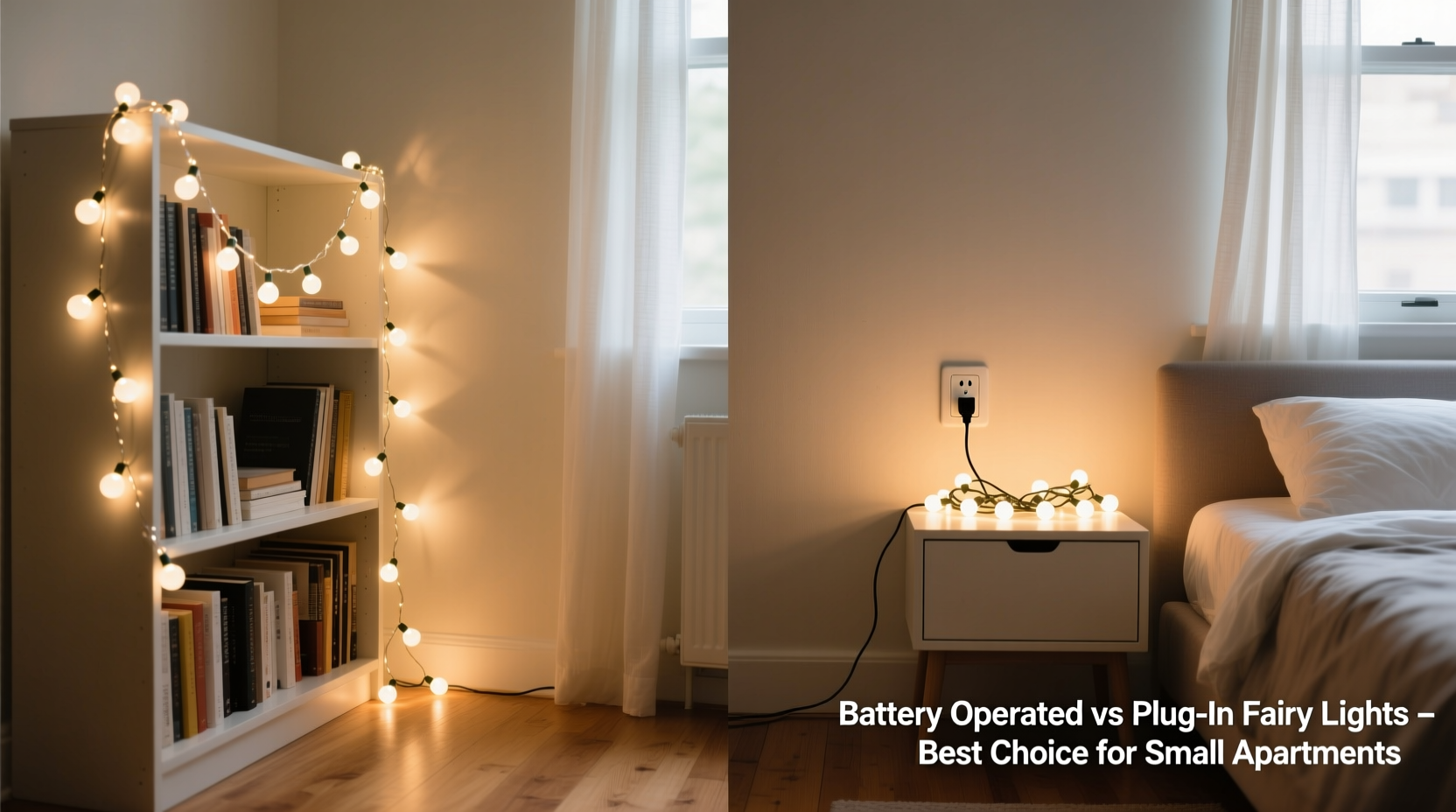
Fairy lights, also known as string lights or twinkle lights, come in two primary configurations based on power source: battery-operated and plug-in. Each has distinct advantages and trade-offs that become especially pronounced in confined environments like studio apartments, micro-lofts, or shared flats.
Battery-operated fairy lights run on disposable or rechargeable batteries—typically AA, AAA, or button cells. They require no access to electrical outlets and are entirely portable. Most models include an on/off switch and some offer timer functions or multiple lighting modes (twinkle, fade, steady).
Plug-in fairy lights, by contrast, must be connected directly to a wall socket via a power cord. These often support longer runs (up to 100+ bulbs), brighter output, and continuous operation without interruption. Many modern versions use LED bulbs and low-voltage transformers for improved safety.
In small apartments where every inch counts and outlet availability is limited, these distinctions aren’t just technical—they shape how freely you can express your personal style.
Key Factors in Choosing Between Battery and Plug-In Lights
Safety Considerations in Compact Spaces
Safety should never take a backseat when decorating, particularly in smaller homes where fire hazards can escalate quickly. Both types of fairy lights are generally safe if used correctly, but risk profiles differ.
Battery-powered sets eliminate concerns about overloaded circuits or tangled cords near bedding and curtains. Since they generate minimal heat and draw very little power, they're ideal for placing on flammable surfaces like fabric headboards or paper lanterns. However, improper battery handling—such as leaving dead batteries inside the casing—can lead to leakage and corrosion over time.
Plug-in lights, while typically UL-listed and designed for prolonged use, introduce electrical risks if extension cords are misused or wires are pinched under furniture. In cramped quarters, managing cords becomes crucial. Tangled or frayed wiring behind dressers or beneath rugs increases fire risk and reduces aesthetic appeal.
“Battery-operated LEDs are among the safest decorative lighting options for renters and city dwellers.” — Lena Torres, Home Safety Consultant at Urban Living LabsTip: Never leave plug-in fairy lights unattended for extended periods. Use smart plugs with timers to automatically shut them off during sleep hours.
Flexibility and Placement Freedom
One of the biggest challenges in small-space design is working within fixed infrastructure. Wall outlets are rarely located where you want them—especially above beds, inside closets, or along window frames.
Battery-operated lights win decisively here. Their complete independence from outlets allows placement anywhere: inside glass jars, along ceiling edges, around mirrors, or even outdoors on balconies without running cords through windows. This freedom enables creative layering and subtle accents that enhance spatial perception in tight rooms.
Plug-in models require careful planning. You may need extension cords, outlet multipliers, or floor-level routing—all of which can create tripping hazards or visual clutter. Even with cord concealers, the physical tether limits spontaneity.
Energy Efficiency and Operating Costs
Both types commonly use LED bulbs, making them energy-efficient compared to older incandescent strings. But total cost of ownership varies due to ongoing expenses.
- Battery-operated: Require regular battery replacement unless rechargeable. Alkaline batteries last 24–72 hours on continuous use; lithium variants extend up to several hundred hours. Rechargeable versions reduce waste and save money long-term but demand charging routines.
- Plug-in: Draw negligible electricity—most consume less than $1 per year in power—but rely on grid access. No recurring supply costs beyond minor electricity usage.
For those who plan to use fairy lights nightly, plug-in systems prove more economical. Battery-dependent setups suit occasional or seasonal use better.
Lifespan and Maintenance Needs
Durability depends heavily on build quality, but power type influences longevity indirectly.
Battery lights often have shorter lifespans because internal wiring and switches degrade faster due to moisture exposure or poor sealing. Corrosion from leaked batteries can permanently damage circuits. On average, well-maintained battery sets last 1–3 years.
Plug-in versions, especially outdoor-rated ones, tend to be sturdier with better insulation and weather resistance. With proper care, they can last 5 years or more. However, damaged cords or bent prongs can render them unusable prematurely.
Tip: Remove batteries from unused fairy lights to prevent leakage and extend device life.Comparison Table: Battery vs Plug-In Fairy Lights
| Feature | Battery Operated | Plug-In |
|---|---|---|
| Outlet Required | No | Yes |
| Portability | Excellent – movable anytime | Limited – tied to outlet |
| Running Cost | Higher (batteries) | Very low (electricity only) |
| Ideal Usage Duration | Short-term or intermittent | Long-term or continuous |
| Safety Risk Level | Low (no cords, minimal heat) | Moderate (cord management required) |
| Installation Ease | Very easy | Moderate (cord routing needed) |
| Average Lifespan | 1–3 years | 3–5+ years |
Real-World Example: A Studio Apartment Makeover
Maria, a graphic designer living in a 400-square-foot Brooklyn studio, wanted to soften her space without sacrificing functionality. She initially installed plug-in fairy lights above her Murphy bed but struggled with the visible cord snaking across the wall and floor. The outlet was behind her desk, forcing her to route the wire inconveniently and cover it with tape—a solution she found unsightly and potentially unsafe.
After researching alternatives, she switched to rechargeable battery-operated fairy lights with a 20-hour runtime and built-in timer. She mounted them using removable adhesive clips along the ceiling perimeter, creating a “starlight” effect that enhanced the illusion of height. Without any cords, the setup looked seamless and could be turned off remotely via a magnetic switch hidden in the trim.
Her only compromise was remembering to charge the lights weekly. Still, the upgrade transformed her apartment’s mood and proved far more adaptable to her minimalist lifestyle.
Step-by-Step Guide: How to Choose the Right Type for Your Space
- Assess your outlet access. Walk through each room and note available sockets. Are they near desired display areas? If not, battery-powered lights offer greater flexibility.
- Determine intended usage frequency. Will you use the lights daily, seasonally, or occasionally? Daily users benefit from plug-in models; infrequent decorators may prefer portable battery sets.
- Evaluate safety priorities. Do you have pets, children, or flammable materials nearby? Battery lights reduce electrical risks in sensitive zones.
- Consider maintenance willingness. Are you comfortable replacing batteries regularly or plugging/unplugging frequently? Rechargeable options bridge this gap but require discipline.
- Test one of each type. Buy a single strand of both kinds and trial them in your space for a week. Observe brightness, ease of use, and visual impact before scaling up.
Checklist: Selecting the Best Fairy Lights for Small Apartments
- ✅ Prioritize LED bulbs for lower heat and higher efficiency
- ✅ Choose warm white over cool white for cozier ambiance
- ✅ Look for timer functions to automate on/off cycles
- ✅ Opt for thin, nearly invisible wires to minimize visual clutter
- ✅ Use adhesive hooks or clear clips instead of nails for mounting
- ✅ Avoid daisy-chaining multiple plug-in sets (fire hazard)
- ✅ Select remote-controlled or app-enabled options for convenience
FAQ: Common Questions About Fairy Lights in Small Homes
Can I safely leave fairy lights on overnight?
Modern LED fairy lights generate minimal heat and are generally safe for extended use. However, plug-in models should be monitored, especially near bedding or curtains. Battery-operated versions pose less risk and are preferable for bedside or ceiling installations. Using a timer ensures automatic shutoff after 4–8 hours.
Are there eco-friendly options for battery lights?
Yes. Choose fairy lights powered by rechargeable batteries (USB-charged) rather than disposable alkalines. Some brands now offer solar-rechargeable strands suitable for balcony use. Additionally, look for recyclable packaging and RoHS-compliant electronics to reduce environmental impact.
How do I hide cords from plug-in fairy lights?
Use cord concealer raceways, paint-matched adhesive channels, or route wires behind baseboards. Alternatively, place furniture strategically to mask cords. Never staple or nail wires into walls—this damages insulation and creates shock hazards.
Final Recommendation: Matching Light Type to Lifestyle
There’s no universal “best” option—only what works best for your specific context.
If you value mobility, simplicity, and clean aesthetics, battery-operated fairy lights are likely the superior choice. They’re perfect for renters, frequent rearrangers, or anyone seeking subtle, cord-free elegance. Just commit to routine battery maintenance.
If you plan to keep lights up year-round, desire brighter illumination, or want to link multiple strands, plug-in fairy lights deliver reliability and lower operating costs. Just invest time in thoughtful cord management and consider pairing them with smart outlets for automation.
In many cases, a hybrid approach works best: use plug-in lights in permanent displays (e.g., living room shelves) and battery-powered versions for temporary or mobile accents (e.g., bedroom canopy, bathroom mirror).
“The most inviting small spaces combine practicality with personality. Lighting isn’t just functional—it’s emotional.” — Diego Mendez, Interior Designer & Urban Space Specialist
Conclusion
Choosing between battery-operated and plug-in fairy lights isn’t just about brightness or price—it’s about aligning your decor with how you actually live. In small apartments, where space, safety, and simplicity matter deeply, the right lighting decision enhances both comfort and creativity.
Take stock of your habits, layout, and priorities. Test options, apply smart solutions, and don’t underestimate the power of well-placed twinkle. Whether you go cordless or plug straight in, let your lights reflect not just your style—but your life.
💬 Have a favorite fairy light setup in your apartment? Share your tips, hacks, or photos in the comments—help fellow city dwellers light up their spaces smarter!