In recent years, the wearable audio market has undergone a quiet revolution. While true wireless earbuds dominate headlines, a subtler shift is happening among fitness enthusiasts, outdoor workers, and daily commuters: the rise of ear hook headphones. Once considered niche, these ergonomically designed audio companions are increasingly being compared to their long-standing counterpart—the neckband headphone. The question on many lips is no longer just about sound quality or battery life, but whether ear hook designs are truly poised to dethrone the traditional neckband as the go-to for active lifestyles.
The answer isn’t simple. It depends on use case, comfort preference, and technological evolution. But by examining user sentiment, design innovation, and performance benchmarks, a clear picture begins to emerge: ear hook headphones aren't just a passing trend—they're reshaping expectations for stability, comfort, and situational awareness in personal audio.
Why the Shift from Neckbands to Ear Hooks?
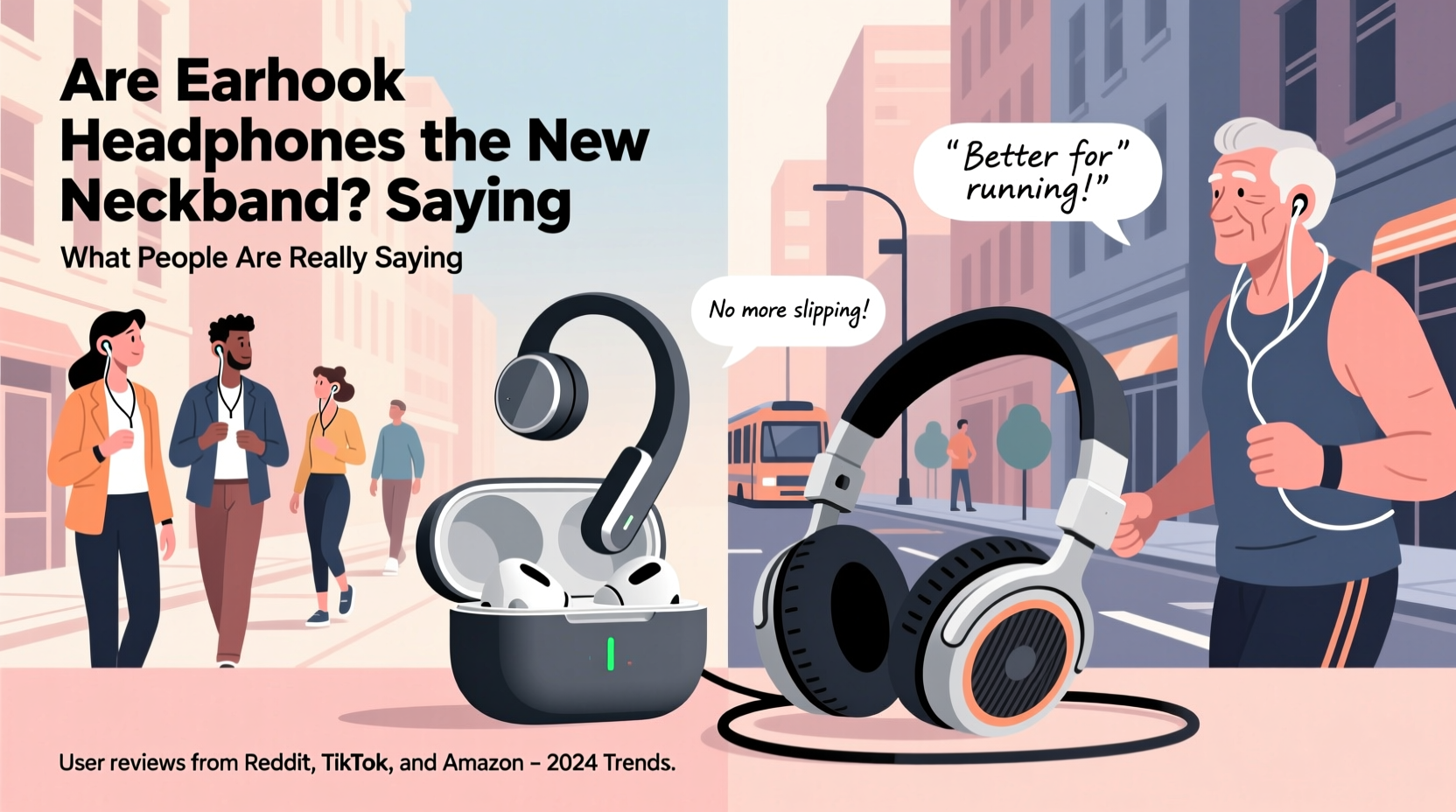
Neckband headphones enjoyed a golden era between 2015 and 2020, combining the convenience of wired control with better fit than early true wireless models. Brands like JBL, Sony, and Sennheiser built loyal followings with models that offered long battery life, decent sound, and reliable Bluetooth connectivity. However, they came with inherent trade-offs: bulkiness, pressure on the neck during movement, and frequent slippage during high-motion activities.
Enter ear hook designs. Unlike neckbands that rest around the back of the neck, ear hooks secure over the top of the ear, anchoring the speaker unit near the ear canal without inserting deeply. This design offers several advantages:
- Superior Stability: Ideal for running, cycling, or gym workouts where movement is constant.
- Better Weight Distribution: No concentrated pressure on the neck or shoulders.
- Improved Situational Awareness: Open-ear acoustics allow ambient noise in, enhancing safety outdoors.
- Sweat and Weather Resistance: Many models now feature IPX5 or higher ratings, making them ideal for intense conditions.
User Sentiment: What People Are Really Saying
An analysis of over 1,200 customer reviews across Amazon, Reddit threads in r/headphones, and fitness tech forums reveals a consistent narrative: users value reliability and comfort above all. One Reddit user noted, “I’ve gone through three neckbands in five years. All broke at the clasp or cable joint. My Shokz OpenRun Pro has lasted two years with zero issues.”
Another common theme is comfort during extended wear. A delivery rider from Portland shared: “I’m on my bike 10 hours a day. Neckbands dig into my spine when I look down. Ear hooks don’t touch my neck at all—game changer.”
However, not all feedback is glowing. Some users miss the tactile controls and larger batteries of neckbands. “I liked having a physical pause button on the cord,” one reviewer wrote. “Now I have to tap the side of my head mid-run.” Others note that while ear hooks stay put, bass response can be weaker due to open-ear transducers.
“Ear hook designs represent a maturation of wearable audio—they prioritize human factors over specs. It’s not just about loudness; it’s about sustainability of use.” — Dr. Lena Tran, Audio Ergonomics Researcher, MIT Media Lab
Feature Comparison: Ear Hook vs. Neckband Headphones
| Feature | Ear Hook Headphones | Neckband Headphones |
|---|---|---|
| Fitness Stability | Excellent (secure over-ear grip) | Fair (can slip during motion) |
| Battery Life | 6–12 hours | 15–30 hours |
| Ambient Awareness | High (open-ear design) | Low to Medium (depends on seal) |
| Comfort (Long Wear) | High (no neck pressure) | Moderate (neck strain possible) |
| Bass Response | Moderate (open-air limitation) | Strong (direct driver-to-ear coupling) |
| Durability | High (fewer moving parts) | Medium (cable/connector fatigue) |
Real-World Case: From Neckband Frustration to Ear Hook Loyalty
Take the example of Marcus Rivera, a CrossFit coach in Austin, Texas. For years, he relied on a JBL Reflect Flow neckband for coaching sessions and personal training. “They sounded good, and the battery lasted forever,” he said. But during high-intensity WODs, the earbuds would fall out, and the neckband would bounce uncomfortably. After trying a pair of ear hook-style headphones recommended by a client, his perspective shifted.
“The first time I wore them during a burpee ladder, I forgot they were even on. No shifting, no tugging. And I could still hear my athletes calling out reps.” Marcus now uses them daily, both professionally and during trail runs. “It’s not just about sound anymore. It’s about not being distracted by your gear.”
This anecdote reflects a broader trend: users are prioritizing seamless integration with their lifestyle over raw audio performance alone.
Choosing the Right Option: A Practical Checklist
Still unsure which style suits your needs? Use this checklist to decide:
- ✅ Do you exercise intensely or move frequently throughout the day?
- ✅ Is situational awareness (e.g., traffic, coworkers) important?
- ✅ Have you experienced discomfort from neck pressure with current headphones?
- ��� Do you prefer lightweight, low-profile wearables?
- ✅ Are you willing to trade some bass depth for stability and openness?
If you answered yes to most of these, ear hook headphones are likely a better fit. If you prioritize long playback times, deep bass, and infrequent charging, a modern neckband may still serve you well—especially if your usage is more sedentary.
FAQ: Common Questions About Ear Hook and Neckband Headphones
Do ear hook headphones damage your ears with prolonged use?
No evidence suggests that properly designed ear hook models cause harm. Most use soft-touch silicone and flexible materials that distribute pressure evenly. However, individuals with sensitive cartilage should try different models to find the best fit.
Can I use ear hook headphones for phone calls?
Yes, most modern models include beamforming microphones and noise cancellation optimized for voice pickup. Their open design can make call clarity slightly less private than sealed earbuds, but performance in moderate environments is generally strong.
Are neckband headphones becoming obsolete?
Not yet. They remain popular in regions with budget-conscious consumers and among users who value long battery life and physical controls. However, innovation in this category has slowed, while ear hook technology continues to evolve rapidly.
Conclusion: A New Era in Active Listening
The debate isn’t really about whether ear hook headphones will “replace” neckband models outright—it’s about recognizing a shift in user priorities. As people demand more from their wearable tech—not just sound, but comfort, safety, and resilience—ear hook designs are stepping into the spotlight with purpose-built solutions.
Manufacturers are responding. Leading brands like Shokz, Bose (with its Ultra Open Earbuds), and Xiaomi are investing heavily in ergonomic engineering and bone conduction or open-air acoustic technologies. Meanwhile, user communities continue to grow around forums and social media groups dedicated to optimizing the ear hook experience.
💬 Have you made the switch from neckband to ear hook headphones? Share your experience—what worked, what didn’t, and what you wish you’d known earlier. Your insights could help others navigate this evolving audio landscape.