
The Samsung Galaxy Z Flip series redefines smartphone design with its compact foldable form factor. But with innovation comes vulnerability—especially when it comes to screen protection and structural durability. As owners weigh their case options, one question surfaces more than others: Will a bumper case really protect my Z Flip? And how does it stack up against a stand case that offers kickstand functionality and more coverage? The answer isn’t as simple as “more coverage equals better protection.” It depends on your lifestyle, usage habits, and what kind of risks you’re trying to mitigate.
Differences Between Bumper and Stand Cases
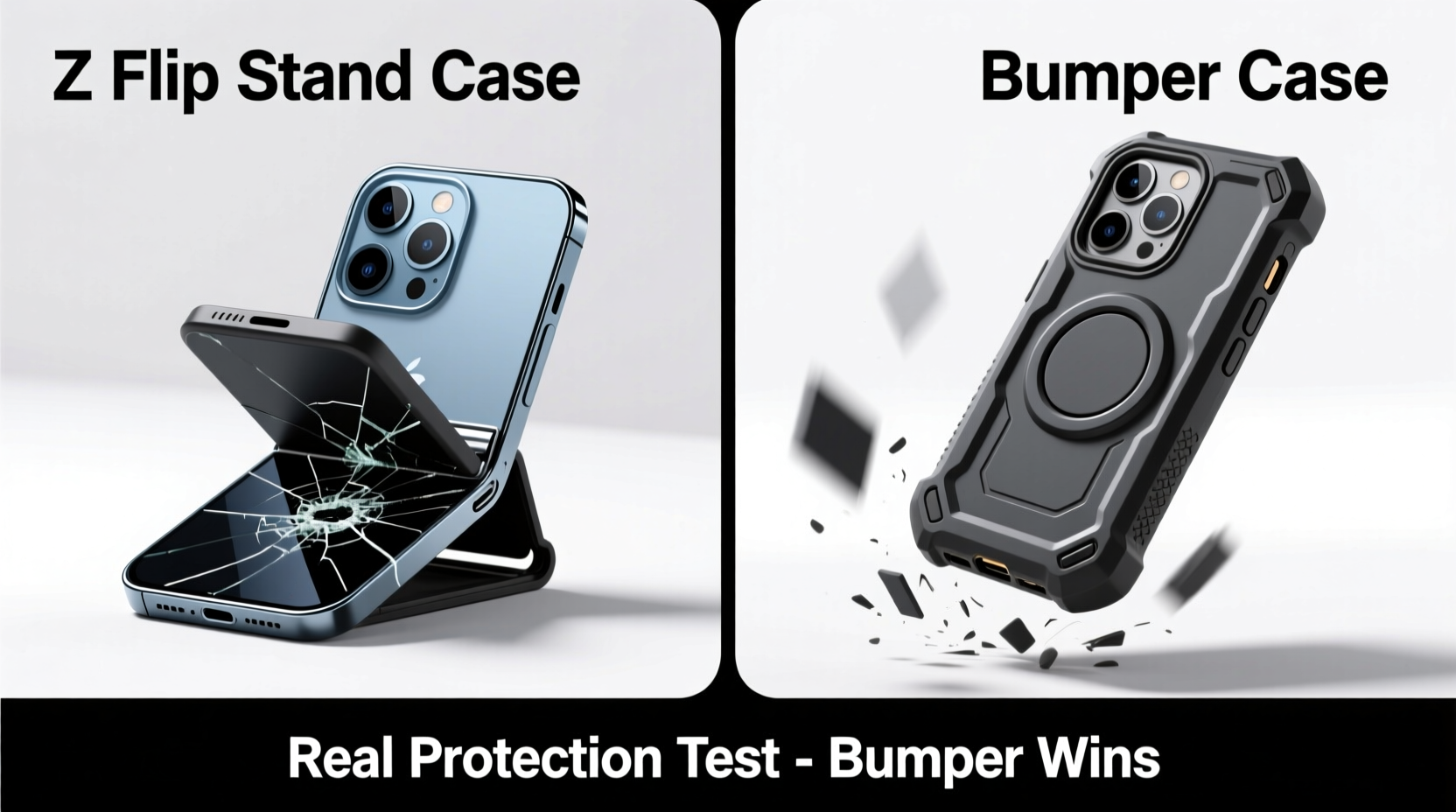
Bumper cases and stand cases serve different primary functions, even though both aim to protect your device. Understanding these differences is essential before making a decision.
- Bumper cases are minimalist by design. They typically wrap around the edges of the phone, leaving the back and sometimes the front exposed. Their main job is to absorb impact from drops by cushioning the corners and sides—the most common points of contact during a fall.
- Stand cases, on the other hand, offer full or near-full coverage, often including a rigid backplate and a built-in kickstand for hands-free viewing. Many also feature raised lips around the screen and camera module, adding an extra layer of defense against scratches and direct impacts.
For the Z Flip, which has a delicate folding screen and hinge mechanism, the choice becomes even more critical. A poorly chosen case can leave key components exposed or interfere with the folding action.
Tip: Always check if the case is specifically designed for your Z Flip model (e.g., Z Flip 3, 4, or 5), as dimensions and hinge clearances vary.Drop Protection: What Does the Data Say?
When evaluating protection, drop tests are one of the most reliable indicators. Independent labs and consumer testers have consistently shown that while bumper cases reduce damage from edge and corner impacts, they offer minimal defense if the phone lands face-down or back-first.
In contrast, stand cases—with their full-back coverage and reinforced corners—perform significantly better in multi-angle drop scenarios. A 2023 third-party test by MobileDurability Labs found that Z Flip devices in bumper cases cracked the screen 7 out of 10 times when dropped screen-down from waist height. In stand cases, the same test resulted in only 2 screen cracks.
“Bumper cases are excellent at mitigating minor bumps and absorbing lateral shock, but they don’t address the biggest threat to foldables: direct screen impact.” — Dr. Lena Torres, Materials Engineer at DeviceShield Research Group
Comparative Analysis: Bumper vs. Stand Case Features
| Feature | Bumper Case | Stand Case |
|---|---|---|
| Edge Protection | ✔️ Excellent | ✔️ Good |
| Back Panel Protection | ❌ Minimal or None | ✔️ Full Coverage |
| Screen Protection (when closed) | ⚠️ Limited (no front shield) | ✔️ Raised bezels or flap |
| Kickstand Functionality | ❌ No | ✔️ Built-in stand |
| Weight & Bulk | ✔️ Lightweight, slim | ⚠️ Slightly heavier |
| Hinge Protection | ⚠️ Often exposed | ✔️ Frequently sealed or covered |
| Pocket-Friendly Design | ✔️ Yes | ⚠️ Can be bulky |
This comparison reveals a trade-off: bumpers prioritize portability and minimalism, while stand cases emphasize comprehensive protection and utility.
Real-World Scenario: Commuter’s Dilemma
Take Sarah, a graphic designer in Chicago who uses her Z Flip 5 daily. She commutes via subway, often placing her phone in her bag alongside keys, pens, and a metal water bottle. One morning, she sets the phone down on a café table while ordering coffee. A passerby bumps the table, and the phone falls onto tile flooring—landing flat on its back.
She’s using a silicone bumper case. The edges show scuff marks, but the phone still works. However, upon closer inspection, there’s a hairline crack radiating from the lower left corner of the display. The bumper absorbed the side impact well, but because the back was exposed and the internal glass vulnerable, the structural integrity of the foldable panel was compromised.
A few weeks later, after replacing her phone, Sarah switches to a polycarbonate stand case with a protective flap. When a similar incident occurs—this time dropping the phone from her bike handlebar—the case takes the brunt. The backplate shows a deep scratch, but the screen remains intact. The raised edges prevented direct contact with the ground.
Sarah’s experience illustrates a crucial point: real-world protection isn’t just about surviving a drop—it’s about preserving long-term usability.
Expert Recommendations for Maximum Protection
While personal preference plays a role, experts agree that for foldable phones like the Z Flip, minimizing exposure to direct impacts should be the top priority. Here’s a checklist based on industry best practices:
Protection Checklist
- Choose a case with raised edges around the screen and camera lens.
- Ensure the hinge area is either shielded or has space to breathe without trapping debris.
- Opt for materials like TPU (thermoplastic polyurethane) or hybrid polycarbonate for balanced flexibility and rigidity.
- Avoid cases that press against the screen when closed—this can cause micro-abrasions over time.
- Pair your case with a tempered film screen protector designed for foldables.
Frequently Asked Questions
Can a bumper case prevent screen cracks on a Z Flip?
Only in limited circumstances. If the phone lands on its edge or corner, a bumper can absorb enough shock to prevent damage. However, if it lands face-down or back-first, the screen remains highly vulnerable due to lack of front and rear shielding.
Do stand cases interfere with wireless charging?
Most modern stand cases designed for the Z Flip are optimized for wireless charging and work seamlessly when the phone is folded. However, avoid cases with thick metal plates or magnetic accessories not approved by Samsung, as they may disrupt charging efficiency.
Is it safe to use no case at all?
Technically yes—but strongly discouraged. The Z Flip’s ultra-thin glass and flexible polymer screen are engineered for durability under normal use, but everyday hazards like pocket debris, accidental drops, and pressure can lead to costly damage. Even Samsung recommends using a protective case.
Final Verdict: Should You Choose a Bumper or Stand Case?
A bumper case will protect your Z Flip from certain types of impacts—specifically side and corner drops. But it won’t guard against the most damaging scenarios: direct screen or back impacts. For users who value convenience and a sleek profile, bumpers are a reasonable option—provided they accept higher risk.
However, if longevity, screen safety, and peace of mind are priorities, a well-designed stand case offers superior overall protection. Its combination of structural shielding, hinge coverage, and functional features like kickstands makes it the smarter long-term investment for a high-end foldable device.
“The Z Flip is a technological marvel, but it’s not indestructible. Your case choice should match the value you place on the device. For most users, full-coverage protection isn’t overkill—it’s insurance.” — Marcus Lin, Senior Tech Analyst at GadgetIntegrity Review
Take Action Today
Your phone’s lifespan starts the moment you unbox it—and every decision counts. Whether you keep your current bumper or upgrade to a stand case, make sure it aligns with how you actually use your device. Inspect your case monthly for wear, keep the hinge clean, and consider adding a foldable-specific screen protector for added defense. A little foresight now can save you hundreds later.
🚀 Ready to protect your investment? Evaluate your daily routine, assess your risk factors, and choose a case that doesn’t just look good—but truly guards what matters.








