
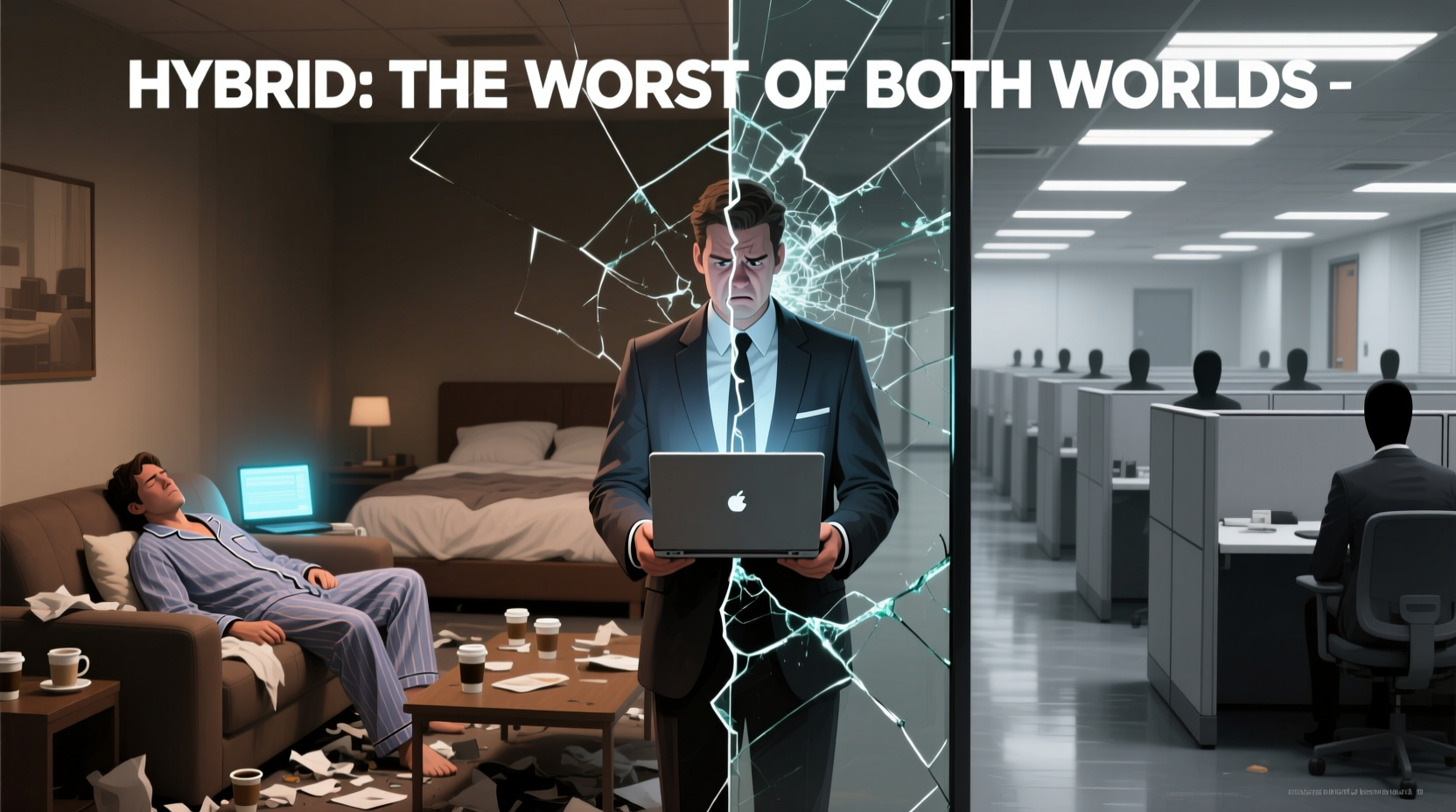
The shift in how we work over the past few years has been nothing short of transformative. The pandemic forced companies to embrace remote work, employees discovered new freedoms, and organizations began rethinking the value of physical office space. Now, as businesses settle into post-pandemic norms, many have landed on a compromise: hybrid work. It promises flexibility without full detachment from the office—a balance between autonomy and collaboration. But is it really the best of both worlds? Or could hybrid work be the worst?
On paper, hybrid sounds ideal. Work from home when you need focus. Come into the office for team meetings or culture-building. In practice, however, many employees and leaders report that hybrid models often deliver neither the productivity of full remote work nor the cohesion of traditional office environments. Instead, they create logistical headaches, inconsistent communication, and a sense of disconnection.
The Promise of Hybrid Work
When companies first introduced hybrid policies, the intention was clear: give employees flexibility while preserving organizational alignment. Employees would enjoy reduced commute times, better work-life balance, and more control over their schedules. Employers hoped to retain talent, reduce real estate costs, and maintain team synergy through periodic in-person interaction.
Surveys initially supported this optimism. A 2022 Gartner study found that 75% of knowledge workers preferred a hybrid model. Another report by McKinsey showed that companies offering flexible arrangements saw higher retention and engagement. But these findings were based on early-stage enthusiasm—not long-term operational reality.
The honeymoon phase has worn off. What once felt like freedom now feels like fragmentation.
Why Hybrid Might Be the Worst of Both Worlds
Hybrid work risks becoming a structural compromise that satisfies no one. On one side, remote workers lose the spontaneity and visibility of being in the office. On the other, in-office days feel underutilized—more about “showing up” than meaningful collaboration. The result is a split workforce where proximity bias creeps in, communication breaks down, and culture erodes.
Fragmented Communication and Proximity Bias
One of the most insidious issues in hybrid environments is proximity bias—the unconscious tendency to favor employees who are physically present. Managers may assign high-visibility projects to those they see regularly, while remote team members get overlooked despite equal or greater contributions.
This isn’t hypothetical. A 2023 study by Microsoft’s Work Trend Index revealed that 39% of remote workers felt passed over for promotions compared to their in-office peers. Meanwhile, 43% of managers admitted they found it harder to assess the performance of remote employees.
“Hybrid only works if equity is baked into the design. Without intentional effort, presence becomes performance.” — Dr. Linda Hill, Professor at Harvard Business School and co-author of *Collective Genius*
Meeting Inequity and Tech Fatigue
In hybrid meetings, those in the room often dominate the conversation. Remote participants become second-class attendees—struggling to speak up, hear clearly, or read body language. Even with advanced conferencing tools, the experience remains unequal.
Video fatigue compounds the problem. Employees now attend back-to-back virtual and hybrid meetings, often spending more time online than they ever did in conference rooms. A Stanford study confirmed that prolonged video calls lead to increased cognitive load and stress—what researchers call “Zoom fatigue.”
Logistical Chaos and Low Office Utilization
Companies adopted hybrid models expecting to save money on real estate. But without structured scheduling, office spaces sit half-empty on some days and overcrowded on others. Hot-desking systems fail due to poor coordination. Employees arrive to find no workspace or malfunctioning tech.
Meanwhile, individuals must plan commutes around shifting schedules, often traveling for meetings that could have been emails. The promise of fewer office days becomes a burden of inefficient ones.
Tip: If your company uses a hybrid model, block your office days in advance and align them with key team meetings to maximize impact.A Comparative Look: Remote, Office, and Hybrid
| Work Model | Pros | Cons |
|---|---|---|
| Full Remote | No commute; flexible schedule; broader talent pool; higher focus time | Social isolation; blurred work-life boundaries; limited spontaneous collaboration |
| Full Office | Stronger team cohesion; immediate feedback; easier mentorship; structured routine | Long commutes; rigid schedules; higher overhead; lower employee satisfaction post-2020 |
| Hybrid | Flexibility; partial face time; potential cost savings | Proximity bias; meeting inequality; low office utilization; scheduling complexity |
The table shows that hybrid inherits benefits from both models—but also accumulates their drawbacks. Without deliberate design, it becomes the path of least efficiency rather than optimal balance.
Real-World Example: The Tech Team That Lost Sync
Consider a mid-sized software company that shifted to a “flex hybrid” model in 2022. Employees could come in any two days per week. At first, morale improved. But within six months, problems emerged.
Developers reported missing critical updates because stand-up meetings rotated between virtual and in-person formats. Designers complained that whiteboard sessions were illegible on camera. Leadership noticed declining innovation and slower sprint cycles.
An internal survey revealed that 68% of employees felt out of the loop at least once a week. Worse, junior staff—who relied on informal learning—said they struggled to build relationships with mentors who rarely overlapped with them in the office.
The company eventually reverted to a structured hybrid model: all teams in-office on Tuesdays and Wednesdays, fully remote the rest of the week. This anchor approach restored predictability and improved collaboration. The lesson? Hybrid doesn’t fail because of the model itself—it fails when it lacks consistency.
How to Make Hybrid Work (Without Becoming the Worst of Both Worlds)
Hybrid isn’t doomed. But it requires far more intentionality than either full remote or full office setups. Success depends on structure, equity, and technology. Here’s how to fix common pitfalls.
1. Standardize Office Days
Letting employees choose random days leads to chaos. Instead, adopt team-based schedules. For example, have all product teams in on Mondays and Thursdays, marketing on Tuesdays and Fridays. This ensures critical mass for collaboration and reduces scheduling conflicts.
2. Adopt “Remote-First” Meeting Practices
Treat every meeting as if everyone is joining remotely—even if some are in a conference room. Use individual laptops instead of speakerphones. Share agendas and documents in advance. Assign a facilitator to monitor chat and ensure remote voices are heard.
3. Invest in Equity, Not Just Technology
Equip every meeting room with high-quality cameras, microphones, and dual screens. But go further: train managers to recognize proximity bias. Set performance metrics that focus on output, not visibility. Rotate office days fairly across teams.
4. Redefine the Purpose of the Office
The office shouldn’t be a place to check email or take calls. Reserve it for activities that truly benefit from physical presence: brainstorming, team bonding, client workshops, and onboarding. If a task can be done remotely, keep it there.
Tip: Audit your team’s calendar monthly. Identify which meetings require in-person attendance—and eliminate the rest.Actionable Checklist: Building a Better Hybrid Model
- ✅ Define core collaboration days for each team
- ✅ Implement a “remote-first” policy for all meetings
- ✅ Train managers on proximity bias and inclusive leadership
- ✅ Upgrade AV equipment in all conference rooms
- ✅ Set clear guidelines on what types of work belong in the office vs. at home
- ✅ Conduct quarterly pulse surveys to measure inclusion and engagement
- ✅ Rotate in-office responsibilities to prevent inequity
FAQ: Common Questions About Hybrid Work
Is hybrid work less productive than fully remote?
Not inherently. Productivity depends on implementation. Poorly managed hybrid models lead to inefficiency, but structured ones—with clear expectations and equitable practices—can match or exceed the output of fully remote teams. The key is minimizing context switching and ensuring consistent access to resources.
Why do some employees prefer full-time office work?
For some, the office provides structure, social connection, and separation between work and home. Parents, extroverts, or those in small living spaces may find remote work isolating or distracting. A one-size-fits-all approach doesn’t work—choice and flexibility remain essential.
Can hybrid work damage company culture?
It can, if left unmanaged. Culture thrives on shared experiences and trust. In hybrid settings, leaders must actively foster inclusion through rituals, recognition, and intentional relationship-building. Culture doesn’t sustain itself through chance hallway encounters—it must be designed.
Conclusion: Hybrid Isn’t the Problem—Poor Execution Is
The idea that hybrid work is the worst of both worlds isn’t entirely wrong—but it’s incomplete. The real issue isn’t the model itself. It’s the lack of strategy behind it. Too many organizations adopted hybrid as a default compromise, not a deliberately engineered system.
When implemented thoughtfully, hybrid can offer flexibility, connection, and efficiency. But it demands more than policy tweaks. It requires rethinking management practices, redesigning office use, and prioritizing equity over convenience.
If your company is struggling with hybrid, don’t abandon it—refine it. Align schedules, empower remote voices, and clarify the purpose of physical presence. Otherwise, you risk creating a fragmented workplace where no one feels fully included.
🚀 Ready to fix your hybrid model? Start by auditing one team’s weekly workflow. Identify pain points, test one change (like standardized office days), and measure the impact. Small adjustments can lead to major improvements.








