
There are few things more frustrating than turning on your car’s air conditioning on a sweltering summer day—only to be greeted by a blast of hot air. A malfunctioning AC system doesn’t just make driving uncomfortable; it can also signal underlying mechanical issues that may worsen if ignored. Understanding the root causes behind warm air output helps you diagnose problems faster, avoid costly repairs, and restore comfort efficiently.
The automotive air conditioning system is a complex network of components working together to cool and dehumidify cabin air. When any part fails, the entire process breaks down. From low refrigerant levels to faulty compressors, multiple factors can lead to inadequate cooling. This guide explores the most common reasons your car AC blows hot air, outlines typical repair costs, and provides practical steps for diagnosis and resolution.
How Car Air Conditioning Works: A Quick Overview
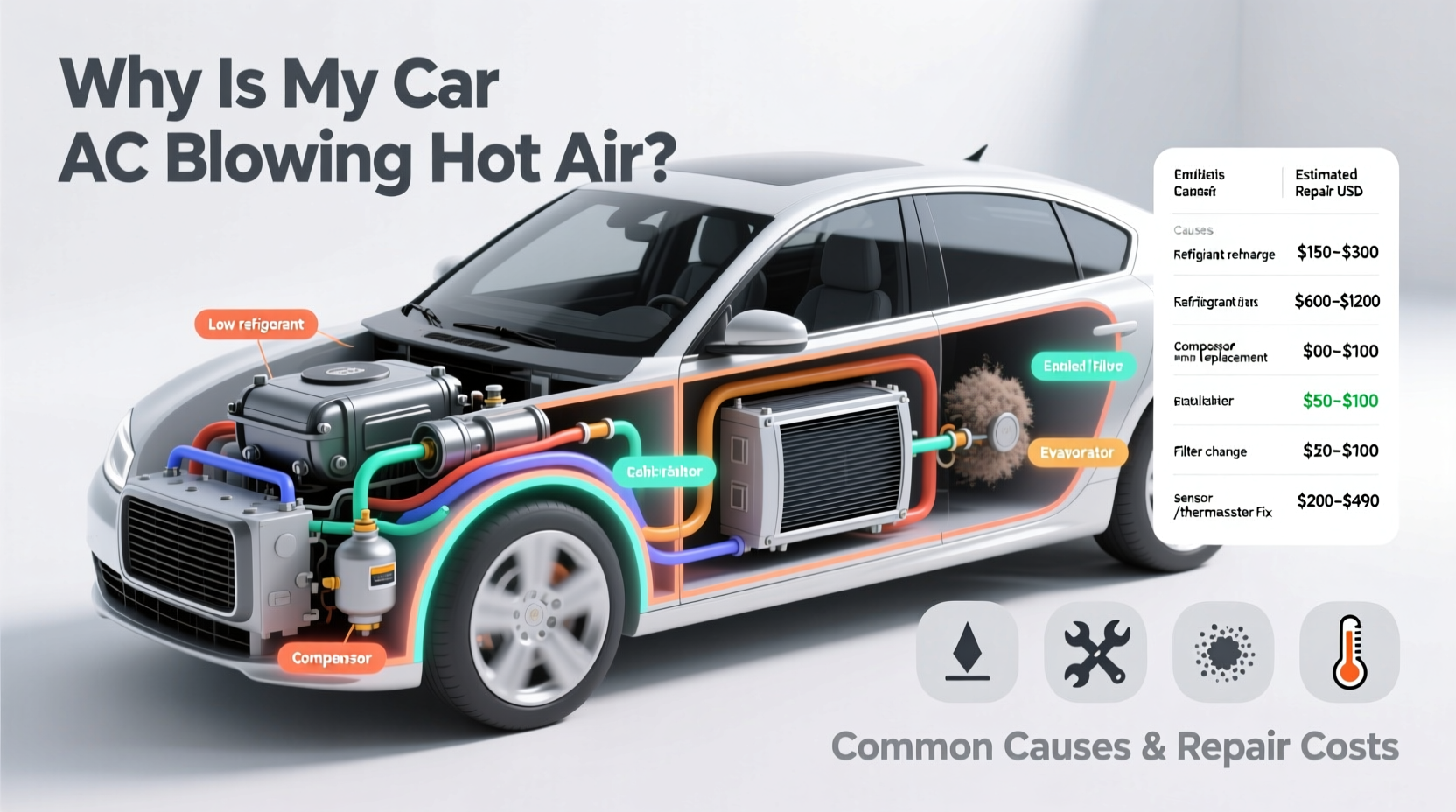
Before diving into failure points, it helps to understand how the system functions. The AC cycle relies on phase changes of refrigerant (commonly R-134a or newer R-1234yf) as it moves through four primary components:
- Compressor: Pressurizes refrigerant vapor and circulates it through the system.
- Condenser: Located in front of the radiator, it cools high-pressure refrigerant into a liquid.
- Expansion Valve or Orifice Tube: Regulates refrigerant flow into the evaporator.
- Evaporator: Absorbs heat from cabin air as refrigerant evaporates inside the dashboard.
A fan blows air over the cold evaporator core, delivering chilled air into the cabin. Any disruption in this loop—such as a refrigerant leak, electrical fault, or mechanical failure—can cause the AC to blow warm air instead.
Tip: Always check if the AC clutch engages when you turn on the system. If it doesn’t click or spin, the issue may lie with the compressor or electrical control.Common Causes of Hot Air from Car AC
1. Low Refrigerant Levels Due to Leaks
The most frequent reason for poor cooling is insufficient refrigerant. Unlike engine oil, refrigerant isn’t consumed—it circulates in a closed loop. A drop in pressure indicates a leak, which can occur at hoses, seals, O-rings, or the evaporator/condenser coils.
Modern vehicles use precise refrigerant charges. Even a 10–15% loss can significantly reduce cooling efficiency. Symptoms include weak airflow, intermittent cooling, or frost on lines due to moisture buildup.
Locating leaks often requires UV dye injection and blacklight inspection, or electronic leak detectors. Common leak points include the Schrader valve (service port), compressor shaft seal, and condenser fins damaged by road debris.
2. Faulty or Failed AC Compressor
The compressor is the heart of the system. If it fails to engage or seize internally, refrigerant won’t circulate. Signs of a bad compressor include:
- No clicking sound when AC is turned on
- Burning smell near the engine bay
- Visible oil stains around the compressor
- Loud grinding or squealing noises
Compressors fail due to lack of lubrication (often from refrigerant leaks carrying away oil), voltage issues, or age-related wear. Once seized, replacement is usually required.
3. Clogged or Damaged Condenser
The condenser dissipates heat from compressed refrigerant. If it becomes clogged with dirt, bent fins, or physical damage, it can’t release heat effectively—leading to high-side pressure buildup and reduced cooling.
Inspect the condenser located in front of the radiator. Look for debris like leaves, insects, or dents from stones. Poor airflow here mimics low refrigerant symptoms. Cleaning with compressed air or a soft brush can help, but severe damage requires replacement.
4. Malfunctioning Expansion Valve or Orifice Tube
This small component meters refrigerant flow into the evaporator. If it becomes clogged with debris or fails to open/close properly, refrigerant distribution becomes uneven. This leads to inefficient cooling and potential icing.
Contamination often stems from prior compressor failure (metal shavings) or improper servicing. Replacing the expansion valve typically requires system evacuation and flushing.
5. Electrical Issues: Fuses, Relays, and Sensors
The AC system depends on sensors, relays, fuses, and switches to operate. A blown fuse, failed pressure switch, or faulty relay can prevent the compressor from engaging—even if refrigerant levels are normal.
Check the owner’s manual for fuse box locations. Use a multimeter to test continuity in relays and verify power delivery to the compressor clutch. Modern cars also rely on ambient temperature sensors and cabin climate modules; software glitches or sensor errors can disable AC operation.
6. Blower Motor or Blend Door Actuator Problems
Sometimes, the issue isn’t cooling performance but airflow routing. The blend door directs air between heater and evaporator cores. If the actuator motor fails, it might default to “heat” mode even when AC is selected.
Listen for unusual clicking behind the dash when adjusting temperature settings. A stuck door may allow only heated air into the cabin regardless of AC status.
“Over 60% of AC complaints we see in our shop stem from refrigerant leaks or compressor clutch failures. Early detection saves thousands.” — Carlos Mendez, ASE-Certified Master Technician
Cost Breakdown: Repairs and Replacements
Repair costs vary widely based on vehicle make, model, labor rates, and severity of damage. Below is a summary of average U.S. prices (parts + labor):
| Issue | Typical Cost Range | Notes |
|---|---|---|
| Refrigerant Recharge (No Leak) | $100 – $250 | Includes evacuation, recharge, and dye for leak detection |
| AC Leak Repair (Hose/O-Ring) | $300 – $600 | Depends on accessibility and number of components replaced |
| Condenser Replacement | $500 – $1,200 | Higher cost if radiator or grille must be removed |
| Compressor Replacement | $800 – $2,500 | Includes new accumulator, orifice tube, and system flush |
| Expansion Valve/Orifice Tube | $350 – $700 | Often done with compressor work |
| Blend Door Actuator Replacement | $400 – $900 | Labor-intensive; may require dash disassembly |
| Electrical Diagnosis & Repair | $80 – $200 | Per hour labor; many shops offer flat-rate diagnostics |
Note: Luxury or European vehicles often incur higher costs due to specialized tools, longer labor times, and pricier parts. Hybrid models may require additional safety protocols during service.
Step-by-Step Diagnostic Checklist
Follow this logical sequence to identify the source of your AC problem without immediately visiting a mechanic:
- Test the basics: Ensure the AC button is on, fan speed is adequate, and temperature dial is set to cold.
- Listen for the compressor: Open the hood and start the engine. Turn on the AC. Watch the center pulley of the AC compressor—does it engage and spin? No movement suggests an electrical or pressure issue.
- Check for visible leaks: Look under the hood for oily residue around hoses, fittings, or the compressor. Shine a flashlight behind the dashboard (if possible) for signs of evaporator leaks.
- Feel the lines: After running the AC for 5 minutes, touch the larger, insulated suction line (should be cold). The smaller high-pressure line should feel warm or hot. Both being warm indicates poor circulation.
- Inspect fuses and relays: Locate the AC fuse and relay in the power distribution box. Swap the relay with a similar one (like horn or fuel pump) to test functionality.
- Verify airflow direction: Change the vent setting from floor to defrost. If airflow doesn’t change, the blend door or actuator may be faulty.
- Use a refrigerant gauge (optional): DIY kits are available, but misreading pressures can lead to overcharging. Consider professional help for accurate assessment.
Real-World Example: Sarah’s Summer Breakdown
Sarah, a schoolteacher in Phoenix, noticed her 2015 Honda Accord’s AC was blowing lukewarm air. At first, she assumed it needed a recharge. She bought a DIY kit from an auto store and added refrigerant—but cooling didn’t improve.
She took it to a local garage, where a technician performed a full diagnosis. The compressor wasn’t engaging. Further testing revealed a blown AC relay and a minor refrigerant leak at the service valve. The mechanic replaced the relay ($75), repaired the valve ($120), evacuated and recharged the system ($150).
Total cost: $345. By addressing both the electrical fault and the leak, Sarah restored full cooling and avoided premature compressor failure. Her mistake? Self-treating without proper diagnosis.
Frequently Asked Questions
Can I drive with a broken AC compressor?
Yes, in most cases. The compressor is belt-driven, and if the clutch fails but the pulley spins freely, the engine will run normally. However, if the compressor seizes completely, it can lock up the serpentine belt, affecting power steering, alternator, or water pump. Have it inspected promptly.
Why does my AC work sometimes but not others?
Intermittent cooling often points to a failing pressure switch, electrical connection, or low refrigerant level. As temperatures rise, refrigerant pressure increases, temporarily allowing the system to activate. When it cools down, pressure drops below the threshold, disabling the compressor.
Is it worth fixing AC in an older car?
It depends on the repair cost and vehicle value. If the fix is under $600 and the car runs reliably, yes. For repairs exceeding $1,000 on a low-value vehicle, consider weighing long-term ownership plans. In hot climates, functional AC significantly enhances comfort and resale appeal.
Conclusion: Take Action Before It Gets Worse
A car AC blowing hot air isn’t just an inconvenience—it’s a sign that something in the system needs attention. Whether it’s a simple fuse replacement or a full compressor overhaul, early intervention prevents cascading failures and keeps repair costs manageable.
Start with basic checks: listen for the compressor, inspect fuses, and observe airflow behavior. Avoid quick-fix refrigerant cans unless you’ve confirmed a sealed system. When in doubt, consult a certified technician with the right tools and experience.
Don’t wait until peak summer heat turns your commute into a sauna. Diagnose the issue now, schedule necessary repairs, and reclaim a cool, comfortable ride.
💬 Have a car AC story or tip to share? Leave a comment below and help fellow drivers stay cool on the road!








