Fermenting a kombucha–hard cider hybrid sits at the thrilling but treacherous intersection of two distinct microbial ecosystems: the acetic acid bacteria (AAB) and yeast consortium of SCOBY, and the Saccharomyces cerevisiae-dominant, ethanol-focused fermentation of hard cider. When these systems collide without intentional stewardship, off-flavors aren’t an anomaly—they’re the default outcome. Sourness becomes harsh, fruit notes turn medicinal or cheesy, and carbonation collapses into flat, vinegary water. This isn’t failure—it’s feedback. The root cause is rarely “bad SCOBY” or “spoiled apple juice.” It’s almost always pH imbalance disrupting microbial succession, inhibiting desirable yeasts while favoring spoilage organisms like Lactobacillus brevis, Pediococcus damnosus, or wild Acetobacter strains that produce acetaldehyde, diacetyl, ethyl acetate, or excessive volatile acidity. Understanding how pH governs this delicate truce—and how to measure, interpret, and adjust it with precision—is the single most actionable lever home fermenters overlook.
How pH Dictates Microbial Behavior in Hybrid Ferments
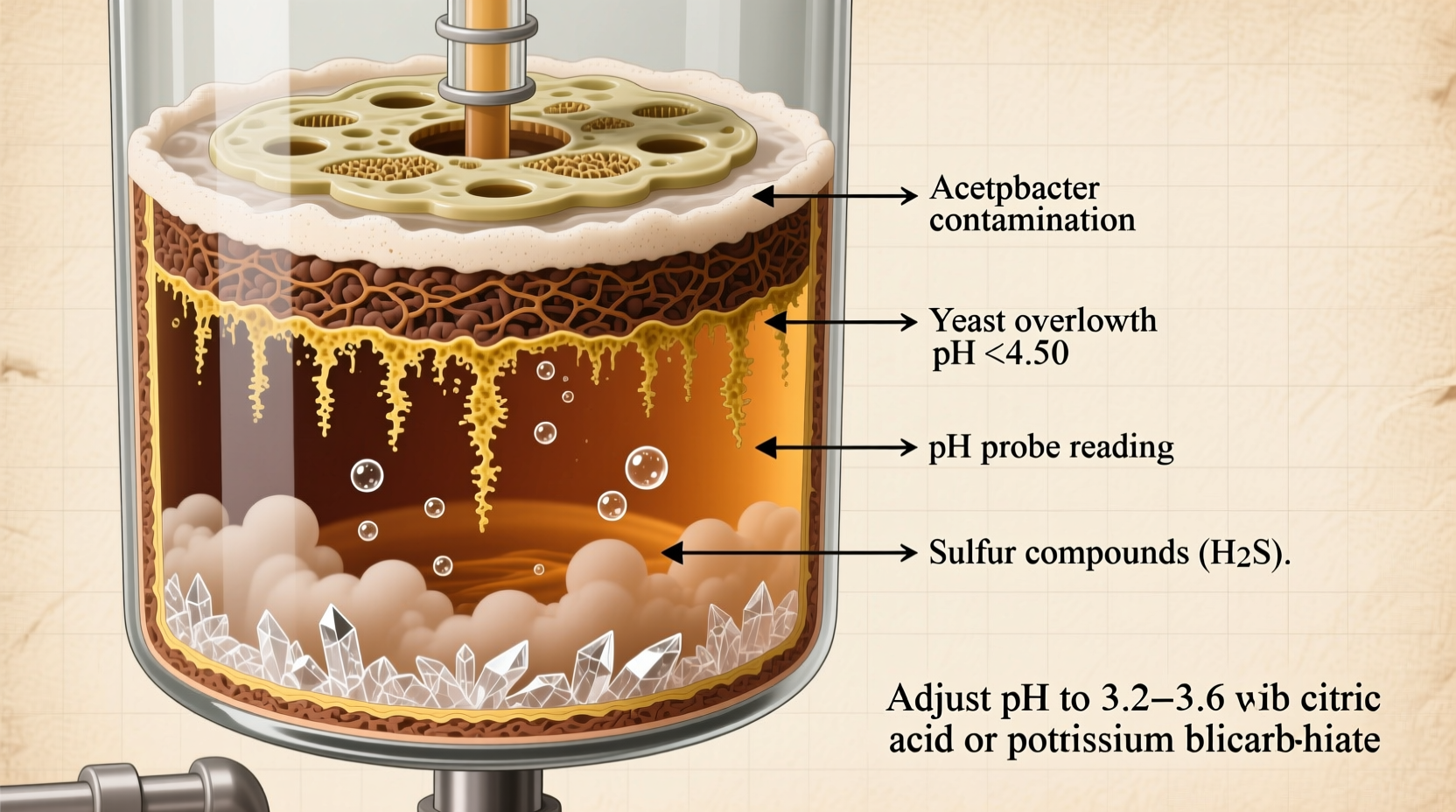
pH isn’t just a number on a meter—it’s the biochemical gatekeeper of your fermentation. In kombucha, the ideal range is 2.5–3.5; in hard cider, it’s typically 3.0–3.8. When you combine them, the resulting pH determines which microbes thrive, which stall, and which dominate. Below pH 3.0, Saccharomyces yeast activity slows dramatically—ethanol production drops, residual sugars linger, and osmotic stress triggers off-flavor metabolites. Between pH 3.2–3.6, AAB (like Gluconobacter) become hyperactive, converting ethanol into acetic acid faster than yeast can replenish it—leading to sharp, solvent-like vinegar notes. Above pH 3.8, lactic acid bacteria (LAB) and wild Pediococcus gain foothold, producing buttery diacetyl, barnyard phenols, or sour-milk acidity that clashes with apple brightness.
This isn’t theoretical. Microbiologist Dr. Elena Ruiz, who studies mixed-culture fermentations at Oregon State’s Fermentation Science Program, confirms:
“In co-fermented apple-kombucha batches, pH shifts of just 0.2 units correlate directly with shifts in dominant species—as measured by qPCR and metabolite profiling. A batch drifting from 3.4 to 3.7 doesn’t just ‘taste different’—it hosts a statistically distinct microbial community, with LAB abundance increasing 300% and Saccharomyces viability dropping 65% within 48 hours.”
The problem compounds because apple juice naturally buffers pH. Malic acid (the primary organic acid in apples) resists change—so adding acidic kombucha tea may not lower pH as expected. Conversely, active yeast metabolism produces CO₂, which forms carbonic acid and temporarily lowers pH—but that effect vanishes once fermentation slows. Without active monitoring, pH becomes a hidden variable driving inconsistency.
Common Off-Flavors—and What Their pH Profile Reveals
Off-flavors are diagnostic. They point to specific pH-driven imbalances—not random contamination. Here’s how to decode them:
| Off-Flavor | Typical pH Range at Onset | Primary Microbial Cause | Associated Metabolite |
|---|---|---|---|
| Vinegary/sharp/solvent | 2.8–3.1 | Overactive Gluconobacter or Acetobacter | Excess acetic acid + ethyl acetate |
| Buttery/diacteyl/caramel popcorn | 3.6–3.9 | Pediococcus damnosus or Lactobacillus casei | Diacetyl |
| Cheesy/sweaty/sock-like | 3.5–3.8 | Brevibacterium linens or Corynebacterium | Isovaleric acid |
| Green apple/acetaldehyde (freshly cut apple) | 3.0–3.3 | Stressed Saccharomyces (incomplete fermentation) | Acetaldehyde accumulation |
| Muddy/metallic/bitter | 3.7–4.1 | Oxidized polyphenols + iron leaching from equipment | Quinone complexes |
Note: Acetaldehyde—a natural intermediate in ethanol production—should be reabsorbed by healthy yeast during conditioning. But when pH dips below 3.1 *and* nutrients are low (e.g., nitrogen depletion from over-diluted juice), yeast shut down reabsorption. That’s why “green apple” notes often appear alongside sharp vinegar: both signal pH-induced metabolic arrest.
Step-by-Step: Measuring, Interpreting, and Adjusting pH Like a Pro
Accurate pH management requires more than a one-time reading. It demands timing, calibration, and context. Follow this sequence for every batch:
- Baseline Reading (Day 0): Measure pH of pasteurized, unfermented apple juice *after cooling to 20°C*. Record value. Pure apple juice typically reads 3.3–3.9—higher values indicate riper fruit or added calcium carbonate (a common juice stabilizer).
- Add Kombucha Starter (Day 0): Add 10–15% mature kombucha (pH ≤ 3.0) to juice. Stir thoroughly. Wait 15 minutes, then re-measure. A drop of ≥0.3 units confirms effective acidification. If drop is <0.2, add another 5% starter or consider buffering adjustment (see Tip below).
- First Active Check (Day 2–3): When visible bubbles form, measure pH *at same temperature* (20°C). Target: 3.2–3.5. If >3.6, add food-grade malic acid (0.5 g/L) dissolved in 10 mL warm juice. Recheck in 6 hours.
- Peak Fermentation Check (Day 5–7): When airlock activity peaks, measure pH *and* gravity (if using hydrometer/refractometer). Ideal: pH 3.3 ± 0.1, gravity ≤ 1.000. If pH >3.5 *and* gravity >1.005, yeast is struggling—add 0.25 g/L diammonium phosphate (DAP) and stir gently.
- Conditioning Check (Day 10+): After airlock activity ceases, measure daily for 3 days. Stable pH = no microbial shift. Rising pH (>3.6) signals LAB dominance—cold-crash to 4°C immediately to halt growth.
Mini Case Study: The Overlooked Buffer in Orchard Juice
In late 2023, home brewer Maya R. in Vermont struggled for months with her flagship “Honeycrisp-Kombucha Cider.” Batches consistently developed a cloying, cheesy note by week 2—despite sterile technique and fresh SCOBY. She tested her equipment, swapped yeast strains, and even filtered juice through activated charcoal. Nothing worked—until she sent her raw juice to a local co-op lab for titratable acidity (TA) and pH analysis. Results revealed a pH of 3.82 with unusually high TA (8.2 g/L as malic acid), indicating calcium carbonate had been added during commercial juicing to prevent browning. That carbonate was neutralizing her kombucha’s acidity, letting pH creep into the 3.7–3.9 danger zone where Pediococcus thrived. Her fix? Adding 1.2 g/L malic acid *before* introducing kombucha starter—dropping initial pH to 3.45. Within three batches, the cheese vanished, replaced by bright, clean apple-acid balance. Her takeaway: “Juice isn’t inert. Its mineral profile is part of your recipe.”
Essential pH Management Checklist
- ☑ Calibrate your pH meter daily with 3.0 and 7.0 buffer solutions (never skip dual-point calibration)
- ☑ Record pH *and* temperature for every reading—pH drifts 0.02 units per °C above 20°C
- ☑ Use glass or stainless steel probes—avoid plastic containers during measurement (static interference)
- ☑ Never adjust pH after day 10 without first confirming viable yeast (microscopic exam or methylene blue stain)
- ☑ Store all acidants in airtight, labeled containers—malic acid absorbs moisture and clumps if exposed to humidity
- ☑ For long-term storage, keep finished hybrid at pH ≤ 3.2 and ≤ 4°C to suppress all bacterial growth
FAQ: Addressing Real Home Brewer Concerns
Can I use vinegar instead of kombucha starter to lower pH?
No. Distilled white vinegar lacks the live Gluconobacter and Zygosaccharomyces needed for controlled acetic fermentation. It introduces only acetic acid—no microbial inoculum—so yeast dominance remains unchecked, and flavor complexity collapses. Stick to mature, unpasteurized kombucha tea (pH ≤ 3.0) as your starter.
My pH won’t drop below 3.7—even with 20% starter. What’s wrong?
Your juice likely contains buffering agents (calcium carbonate, potassium sorbate, or high mineral content). Test TA first. If TA >7.5 g/L, pre-acidify with malic acid to pH 3.5 *before* adding starter. Also verify starter pH—aged kombucha left at room temp for weeks can rise to pH 3.8+ as AAB exhaust ethanol.
Does cold crashing affect pH readings?
Yes—significantly. Cold temperatures suppress CO₂ solubility and slow ionic mobility, causing pH meters to read artificially high (up to 0.3 units). Always equilibrate samples to 20°C before measuring. If you must check cold-stored batches, remove sample, warm gently in hands, swirl, and measure within 90 seconds.
Conclusion: pH Is Your Co-Pilot, Not Your Enemy
Off-flavors in kombucha–hard cider hybrids aren’t mysterious failures. They’re precise, measurable symptoms of microbial miscommunication—most often triggered by unmanaged pH. When you track pH not as a static checkpoint but as a dynamic narrative—revealing yeast vitality, bacterial restraint, and metabolic health—you transform troubleshooting into intentionality. You stop asking “Why did this go wrong?” and start asking “What does this pH tell me about what’s happening right now?” That shift—from reactive to responsive—is where craftsmanship begins. Your next batch doesn’t need new equipment or exotic cultures. It needs one calibrated meter, 3 minutes of daily attention, and the confidence to adjust with purpose. Ferment with curiosity, measure with rigor, and taste with patience. The clean, complex, effervescent hybrid you envision isn’t elusive—it’s waiting in the numbers.
💬 Share your pH log and off-flavor breakthroughs! Drop your most surprising pH correlation or adjustment tip in the comments—we’ll feature the top three in next month’s fermentation round-up.








