
There’s little more frustrating than turning on your car’s air conditioning on a sweltering summer day only to be greeted by a stream of warm air. While the instinct might be to panic or assume the worst, many issues causing weak or ineffective cooling can be diagnosed—or even resolved—with simple checks you can perform at home. Understanding why your car AC blows warm air begins with knowing how the system works and what components are involved in keeping your cabin cool.
The automotive air conditioning system relies on a closed-loop cycle involving refrigerant, pressure, and heat exchange. When any part of this system fails—whether due to leaks, electrical faults, or mechanical wear—the result is often warm air from the vents. This guide walks through the most common causes, practical DIY troubleshooting steps, and signs that it's time to call a certified technician.
How Car Air Conditioning Works: A Quick Overview
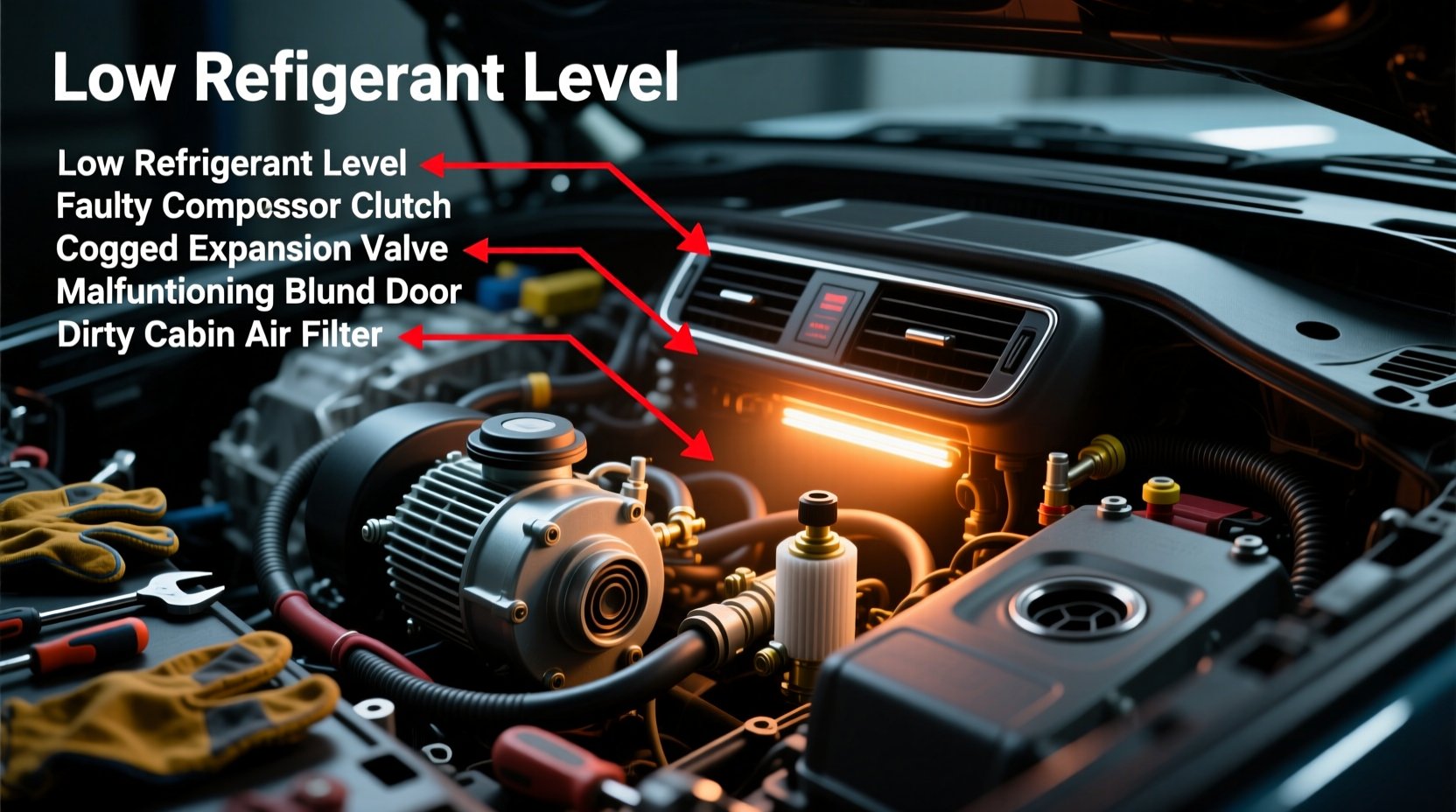
Before diving into potential problems, it helps to understand the basic operation of a vehicle’s AC system. The process follows four key stages:
- Compression: The AC compressor pressurizes the refrigerant gas, raising its temperature.
- Condensation: Hot refrigerant flows to the condenser (in front of the radiator), where it cools and turns into a liquid.
- Expansion: The liquid refrigerant passes through an expansion valve or orifice tube, reducing pressure and temperature dramatically.
- Evaporation: Cold refrigerant enters the evaporator inside the dashboard, absorbing heat from cabin air and blowing cool air through the vents.
This cycle depends on consistent refrigerant levels, proper electrical signals, mechanical integrity, and airflow. Any disruption—such as low refrigerant, a failed compressor, or blocked airflow—can cause the system to deliver warm air instead of cold.
Tip: Always turn the AC on periodically—even in winter—to keep seals lubricated and prevent compressor seizure.Common Causes of Warm Air from Car AC
Warm air doesn’t automatically mean your entire AC system needs replacement. Several components could be at fault, some requiring minimal repair, others needing professional attention.
1. Low Refrigerant Levels (Most Common)
Refrigerant (commonly R-134a or newer R-1234yf) is the lifeblood of your AC system. Over time, small leaks develop in hoses, seals, or connections, causing refrigerant loss. Without sufficient refrigerant, the system cannot create the necessary pressure differential to cool the air.
Symptoms include:
- AC starts cold but gradually warms up after 5–10 minutes
- Hissing or bubbling sounds under the hood
- Oily residue near AC lines or fittings
2. Failed or Worn AC Compressor
The compressor is the heart of the system. If it fails to engage—meaning the clutch doesn’t click when AC is turned on—it won’t circulate refrigerant. Common failure modes include seized internal parts, broken clutch coils, or belt slippage.
Warning signs:
- No clicking sound when activating AC
- Unusual grinding or squealing noises
- Belt slipping or visible damage
3. Clogged or Damaged Condenser
Located in front of the radiator, the condenser dissipates heat from the refrigerant. If it’s clogged with debris (bugs, leaves, dirt), bent fins, or leaking, it can’t cool the refrigerant effectively, leading to poor performance.
4. Electrical Issues
Modern AC systems rely on sensors, relays, fuses, and control modules. A blown fuse, faulty pressure switch, or wiring issue can prevent the compressor from engaging. These are often overlooked but easy to check.
5. Blend Door or Actuator Problems
If refrigerant and compressor are working but warm air still comes out, the issue may lie in the HVAC (heating, ventilation, and air conditioning) ducts. A stuck blend door—controlled by an actuator motor—might be directing hot engine coolant air into the cabin instead of cooled air.
6. Blocked Cabin Air Filter or Evaporator Core
A dirty cabin air filter restricts airflow over the evaporator core, reducing cooling efficiency. In extreme cases, mold or debris buildup inside the evaporator housing can insulate it, preventing proper heat absorption.
“Over 60% of AC complaints we see are due to low refrigerant from slow leaks. Many drivers ignore early warning signs until complete failure occurs.” — Carlos Mendez, ASE-Certified Technician, 15 years in auto HVAC
Detailed DIY Checks You Can Perform at Home
You don’t need specialized tools for preliminary diagnosis. With a few minutes and basic observation, you can narrow down the likely cause.
Step-by-Step Diagnostic Checklist
- Start the engine and turn the AC to max cooling. Listen for a clicking sound near the front of the engine—this indicates the compressor clutch engaging.
- Open the hood and visually inspect the compressor. Watch the center pulley: if the outer rim spins but the center hub doesn’t, the clutch isn’t engaging.
- Check AC fuses and relays. Refer to your owner’s manual for fuse box location. Look for blown fuses or loose relays in the power distribution center.
- Inspect the condenser. Shine a flashlight through the front grille. Look for bent fins, heavy grime, or signs of impact damage.
- Feel the two refrigerant lines under the hood. One should be cold (suction line), the other warm/hot (discharge line). If both are room temperature, refrigerant isn’t flowing.
- Replace the cabin air filter. Located behind the glovebox or under the windshield cowl, these filters are often neglected. A clogged one reduces airflow significantly.
- Test different temperature settings. Switch between hot and cold. If there’s no change in air temperature, suspect a blend door actuator issue.
When to Recharge Refrigerant—and What to Know First
Many drivers jump straight to buying a refrigerant recharge kit from an auto parts store. While convenient, this approach can do more harm than good if not done correctly.
Recharging should only be attempted if:
- You’ve confirmed the compressor engages
- There are no visible leaks
- The system previously worked well and has slowly lost cooling
However, adding refrigerant without fixing underlying leaks is a temporary fix. Moreover, overcharging the system—adding too much refrigerant—can cause high pressure, compressor damage, and reduced efficiency.
| Issue | DIY Fixable? | Requires Professional Help? |
|---|---|---|
| Low refrigerant (no leak found) | Yes, with proper kit and gauge | No |
| Visible refrigerant leak | No | Yes – leak must be sealed first |
| Compressor not engaging | Only if due to fuse/relay | Yes – if electrical or mechanical |
| Cabin air filter clogged | Yes – easy replacement | No |
| Blend door actuator failure | Possible, but complex access | Often recommended |
| Condenser damage | No | Yes – requires evacuation and replacement |
Real Example: Sarah’s Summer Commute Struggle
Sarah noticed her 2016 Honda Civic’s AC was blowing lukewarm air during her morning commute. At first, she assumed it needed a recharge. After watching a YouTube tutorial, she checked the compressor and heard no click. She located the AC fuse, found it blown, and replaced it. The compressor engaged immediately, and cold air returned. The root cause? A corroded relay that occasionally shorted the circuit. By addressing the fuse and upgrading the relay, she avoided an unnecessary $300 recharge service and saved herself a trip to the shop.
This case illustrates how simple electrical faults can mimic refrigerant issues. Always rule out the basics before assuming major component failure.
Frequently Asked Questions
Can I drive with a bad AC compressor?
Yes, in most cases. The AC compressor is belt-driven, and unless the pulley bearing is seized, it won’t affect engine operation. However, a seized pulley can cause the serpentine belt to snap, potentially disabling power steering or alternator. If you hear grinding or notice belt vibration, have it inspected promptly.
Why does my AC work better at highway speeds?
This often points to a low refrigerant charge or a failing condenser. At higher speeds, increased airflow through the radiator and condenser improves heat dissipation, allowing marginal cooling. At idle, insufficient airflow leads to warm output. It’s a classic sign of an underperforming system.
Is it safe to use stop-leak products in my AC system?
Generally, no. Many stop-leak additives can clog the expansion valve, orifice tube, or compressor internals. They may temporarily seal micro-leaks but often lead to costly repairs later. The proper fix is to identify and replace the leaking component after recovering refrigerant.
Final Steps: Knowing When to Call a Pro
While several AC issues can be diagnosed or remedied at home, certain situations demand professional expertise:
- You suspect a refrigerant leak (requires UV dye or electronic leak detection)
- The system needs to be evacuated and recharged (EPA regulations require licensed technicians)
- Compressor replacement or condenser repair is needed
- Electrical diagnostics point to control modules or sensors
Technicians use manifold gauges to measure high- and low-side pressures, helping pinpoint whether the issue is undercharge, overcharge, blockage, or compressor inefficiency. They can also recover refrigerant safely, repair leaks, and vacuum the system before refilling—steps impossible with consumer-grade kits.
Tip: Keep your receipts for AC services. Some states require emissions compliance, and documentation may be needed for inspections.Conclusion: Stay Cool with Smart Maintenance
Your car’s air conditioning system is more than a comfort feature—it’s essential for safety and alertness during hot weather. When it starts blowing warm air, don’t rush to conclusions. Start with simple checks: listen for the compressor, inspect fuses, replace the cabin filter, and observe system behavior. Many issues stem from easily fixable causes like blown fuses or dirty components.
However, refrigerant handling and major repairs belong in the hands of certified professionals. Recognizing the limits of DIY ensures you avoid costly mistakes. Regular maintenance, seasonal checks, and prompt attention to early symptoms can extend your AC system’s life and keep your drives comfortable for years.
💬 Experiencing AC issues? Share your story or questions below. Your experience could help another driver solve their cooling problem faster.








