
Rum occupies a curious place in the spirits world: beloved by connoisseurs for its complexity and versatility, yet frequently dismissed—sometimes with visceral intensity—by others. “It tastes like cough syrup,” “it burns my throat,” or ���it just smells medicinal” are common refrains. Unlike whiskey or gin, where dislike often stems from unfamiliarity with oak or botanicals, rum aversion tends to feel more personal, even primal. That raises a compelling question: Is rum’s polarizing reputation rooted in early sensory experiences—like a childhood sip of overly sweet, low-quality rum punch—or is it fundamentally tied to production variables that make many commercial rums genuinely unbalanced, harsh, or chemically off-putting? The answer isn’t binary. It’s a layered interplay of neurobiology, cultural context, distillation science, and decades of inconsistent global standards.
The Neurobiology of Early Taste Imprinting
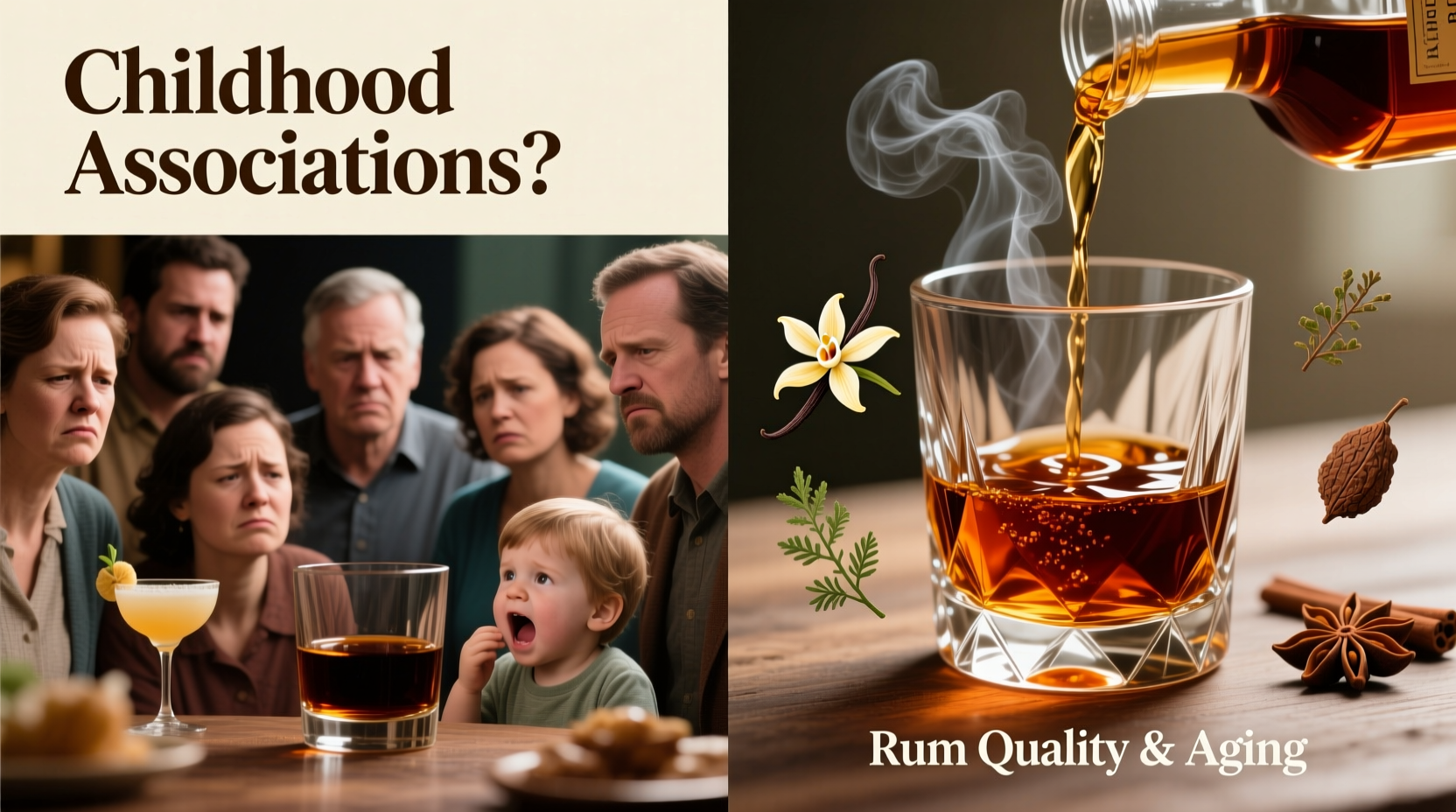
Human taste perception begins forming before birth. Amniotic fluid carries traces of maternal diet, and infants as young as four months show measurable preferences for flavors they encountered prenatally—especially sweet and umami notes. But bitterness and ethanol burn are wired differently. The TAS2R38 gene governs sensitivity to bitter compounds like propylthiouracil (PROP) and phenylthiocarbamide (PTC), and roughly 25% of people are “supertasters”: genetically hyper-sensitive to bitterness, astringency, and alcohol heat. For them, even mildly fusel-heavy or under-aged rum can trigger an overwhelming aversive response—not because the spirit is objectively “bad,” but because their gustatory system interprets certain congeners as danger signals.
This sensitivity becomes especially consequential during adolescence, when the brain’s reward circuitry is still maturing and negative flavor experiences create strong associative memories. A teenager forced to sip cheap, high-ester Jamaican rum at a family gathering—perhaps mixed poorly with flat cola—may encode that moment not just as “bad drink,” but as “rum = nausea + embarrassment + burning.” Neuroimaging studies confirm that such episodes activate the amygdala and insula—regions linked to fear conditioning and disgust processing—more robustly than neutral or positive taste events. Once formed, these neural pathways resist revision, even when later exposed to well-crafted, aged rums.
Tip: If you’ve historically disliked rum, skip the “tough it out” approach. Start with low-ester, column-distilled rums aged 3–5 years in ex-bourbon casks—like Appleton Estate Signature or Diplomático Reserva Exclusiva—served slightly chilled. This reduces perceived alcohol burn and emphasizes caramel and vanilla over funk.Distillation Methods: The Hidden Divide Between “Smooth” and “Funky”
Unlike whiskey or brandy, which follow relatively standardized distillation philosophies, rum has no universal method. Its character hinges almost entirely on how and where fermentation and distillation occur—and those decisions are rarely transparent to consumers. The table below outlines how key technical variables directly influence sensory experience:
| Distillation Type | Typical Congener Profile | Common Flavor Notes | Risk of Aversion Triggers |
|---|---|---|---|
| Column (continuous) still | Low esters, clean, light | Vanilla, toasted sugar, citrus zest | Low—unless over-diluted or artificially flavored |
| Pot still (single batch) | High esters, heavy congeners | Banana, rubber, overripe pineapple, wet earth | High—especially for supertasters or those sensitive to sulfur compounds |
| Hybrid (e.g., pot + column) | Moderate esters, balanced | Caramel, dried fig, clove, tobacco leaf | Moderate—depends on cut points and aging |
| Traditional Jamaican “dunder” fermentation | Extremely high esters (>700 g/hL AA) | Blue cheese, petrol, fermented mango, band-aid | Very high—intentionally challenging for new drinkers |
Crucially, many mass-market rums blend column-distilled neutrality with small amounts of high-ester pot-still rum to add “character”—a practice known as “dosing.” When done artfully (as at Foursquare in Barbados), it yields depth without abrasion. When done cheaply—using industrial-grade ester concentrates or poorly managed dunder pits—it creates jarring dissonance: a sugary, artificial sweetness clashing with solvent-like sharpness. That dissonance isn’t subjective preference; it’s a chemical mismatch the human palate instinctively rejects.
Quality Control Failures: From Fusels to Filtration Fraud
Global rum regulation remains fragmented. The EU defines rum as “spirit obtained exclusively by alcoholic fermentation and distillation of sugarcane products,” with minimal aging requirements. The U.S. allows “rum” labeling for spirits distilled from molasses *or* sugarcane juice—even if aged less than two years and filtered to remove color and flavor. This regulatory vacuum enables practices that directly undermine drinkability:
- Fusel oil accumulation: Improper still temperature control during distillation concentrates higher alcohols (propanol, isobutanol). These impart harsh, oily, nail-polish-remover notes that linger on the palate and cause physical discomfort—including headaches and nausea—in sensitive individuals.
- Over-charred or reused barrels: While charring adds desirable vanillin, excessive char or third-use barrels leach tannins and acrid smoke compounds that overwhelm rum’s natural sweetness, creating a bitter, ashy finish.
- Artificial filtration: Some producers use activated charcoal or reverse osmosis not just to stabilize color, but to strip out esters and congeners that give rum identity—leaving a hollow, thin spirit that tastes vaguely “chemical” due to residual processing agents.
- Sugar dosing beyond legal limits: Though permitted up to 20 g/L in many jurisdictions, undisclosed dosing above 10 g/L masks flaws but creates cloying, syrupy textures that clash with ethanol heat—triggering gag reflexes in some.
These aren’t hypothetical risks. In 2022, the French consumer agency DGCCRF tested 47 widely distributed rums sold across Europe. Thirteen exceeded legal fusel alcohol thresholds, while nine contained undeclared caramel E150a at levels altering both color stability and mouthfeel. One popular Caribbean brand registered 420 mg/L isobutanol—nearly triple the recommended safety threshold for smooth consumption.
A Real-World Case Study: Maria’s Shift from Revulsion to Reverence
Maria, 38, a graphic designer in Portland, Oregon, avoided rum for 22 years after a traumatic experience at age 16. Her uncle served her a glass of dark, syrupy rum labeled “premium” at a holiday party. She recalls: “It tasted like medicine mixed with burnt toast. I choked, my eyes watered, and everyone laughed. I swore I’d never touch it again.” She associated rum with shame, physical discomfort, and social judgment.
Her turning point came during a vacation in Barbados, where she joined a distillery tour at Mount Gay. Instead of being handed a neat pour, she was guided through a comparative tasting: a 3-year-old column-distilled rum, a 7-year-old pot-column blend, and a 12-year-old single-cask expression—all served at room temperature in proper tulip glasses. What surprised her most wasn’t the flavors (“cinnamon, dried apricot, salted caramel”) but the absence of burn. “The 12-year-old didn’t sting at all,” she says. “It felt round, warm, like spiced tea—not aggressive.” Back home, she sought out similarly transparent brands: Foursquare, Plantation, and Saint James. Within six months, she’d built a small collection and began hosting rum tastings for friends. Her aversion hadn’t vanished—it had been recontextualized. “I realized I didn’t hate rum,” she reflects. “I hated *badly made* rum—and the memory of being forced to drink it.”
“Rum is the most misunderstood spirit because it’s also the most diverse. A Jamaican DOK and a Brazilian cachaça share only a raw material—they’re as different as a Riesling and a Scotch. Calling both ‘rum’ is like calling all grain spirits ‘whiskey.’” — Dr. Anika Patel, Master Distiller & Sensory Scientist, University of the West Indies, Barbados
Practical Steps to Reassess Rum Without Bias
Rebuilding a relationship with rum requires intentionality—not just trying “better” bottles, but resetting expectations and engagement habits. Follow this evidence-informed sequence:
- Reset your palate: For three days, avoid highly processed sweets, artificial flavors, and excessive caffeine. These dull taste bud sensitivity and amplify bitterness perception.
- Start with low-ABV expressions: Choose rums bottled between 40–43% ABV, not cask-strength. Higher alcohol magnifies harshness and suppresses aroma volatiles.
- Use proper glassware: A Glencairn or copita glass concentrates esters and softens ethanol vapor. Never taste from a tumbler or shot glass.
- Introduce water mindfully: Add one drop of room-temperature filtered water per 10 mL of rum. Swirl gently. This breaks ethanol clusters, releasing hidden fruit and floral notes while reducing burn.
- Pair strategically: Serve with unsalted almonds or a slice of ripe plantain—not crackers or cheese. Fat and starch buffer bitterness receptors; fruit sugars harmonize with rum’s natural sucrose derivatives.
- Wait 20 minutes between pours: Ethanol temporarily desensitizes TRPV1 receptors (which detect heat). Rushing tastings leads to false negatives—labeling balanced rum as “harsh” simply because your tongue is fatigued.
FAQ: Addressing Common Misconceptions
Does “dark rum” always mean better quality?
No. Color in rum comes primarily from caramel coloring (E150a), not barrel aging. Many dark rums contain minimal aged stock—sometimes as little as 5%—with the rest being unaged, column-distilled spirit dosed with caramel and sugar. Always check the label for age statements (“10 Year Old”) rather than relying on hue.
Is “spiced rum” inherently lower quality?
Not necessarily—but transparency matters. Authentic spiced rums (like Chairman’s Reserve Spiced or Doorly’s Spiced) infuse whole spices post-distillation. Inferior versions add artificial flavorings (vanillin, ethyl acetate) and high-fructose corn syrup to mask poor base spirit. Look for ingredient lists that name actual spices—not “natural flavors.”
Can rum allergies explain intense dislike?
True IgE-mediated allergies to rum are exceptionally rare. What’s far more common is intolerance to histamines (naturally elevated in long-fermented, high-ester rums) or sulfites (used as preservatives in some blends). Symptoms include flushing, headache, or nasal congestion—not taste aversion. If physical reactions persist, consult an allergist; if it’s purely gustatory rejection, the issue lies in production quality or sensory history.
Conclusion
Rum aversion is neither irrational nor permanent. It’s a rational response to real variables: the neurological legacy of early negative exposure, the vast technical spectrum of distillation practices, and the troubling gaps in global quality oversight. Disliking a $12 bottle of over-sugared, fusel-laden rum tells us nothing about your capacity to appreciate a meticulously balanced, terroir-driven expression aged in first-fill bourbon casks. The spirit’s diversity is its greatest strength—and its greatest challenge. By understanding *why* certain rums trigger resistance, you reclaim agency over your palate. You stop asking, “Do I like rum?” and start asking, “Which rum, from which place, made how—and served how—resonates with *my* biology and history?” That shift transforms rejection into curiosity, and curiosity into discovery. Your next great rum isn’t waiting in a bar. It’s waiting for you to approach it with informed patience—and the willingness to taste it anew.
💬 Have you experienced a rum revelation—or a stubborn, lifelong dislike? Share your story, your go-to accessible rum, or your biggest tasting breakthrough in the comments. Let’s build a more nuanced, compassionate conversation about this extraordinary spirit.








