If you've tried to execute multiple trades in a single day on Robinhood and suddenly found your account restricted, you're not alone. Many beginner investors encounter confusion when they discover that their ability to day trade is limited — sometimes without warning. The reason lies in regulatory rules designed to protect inexperienced traders from high-risk behavior. Understanding these rules isn’t just about compliance; it’s about making smarter financial decisions and avoiding costly account limitations.
What Is a Pattern Day Trader (PDT)?
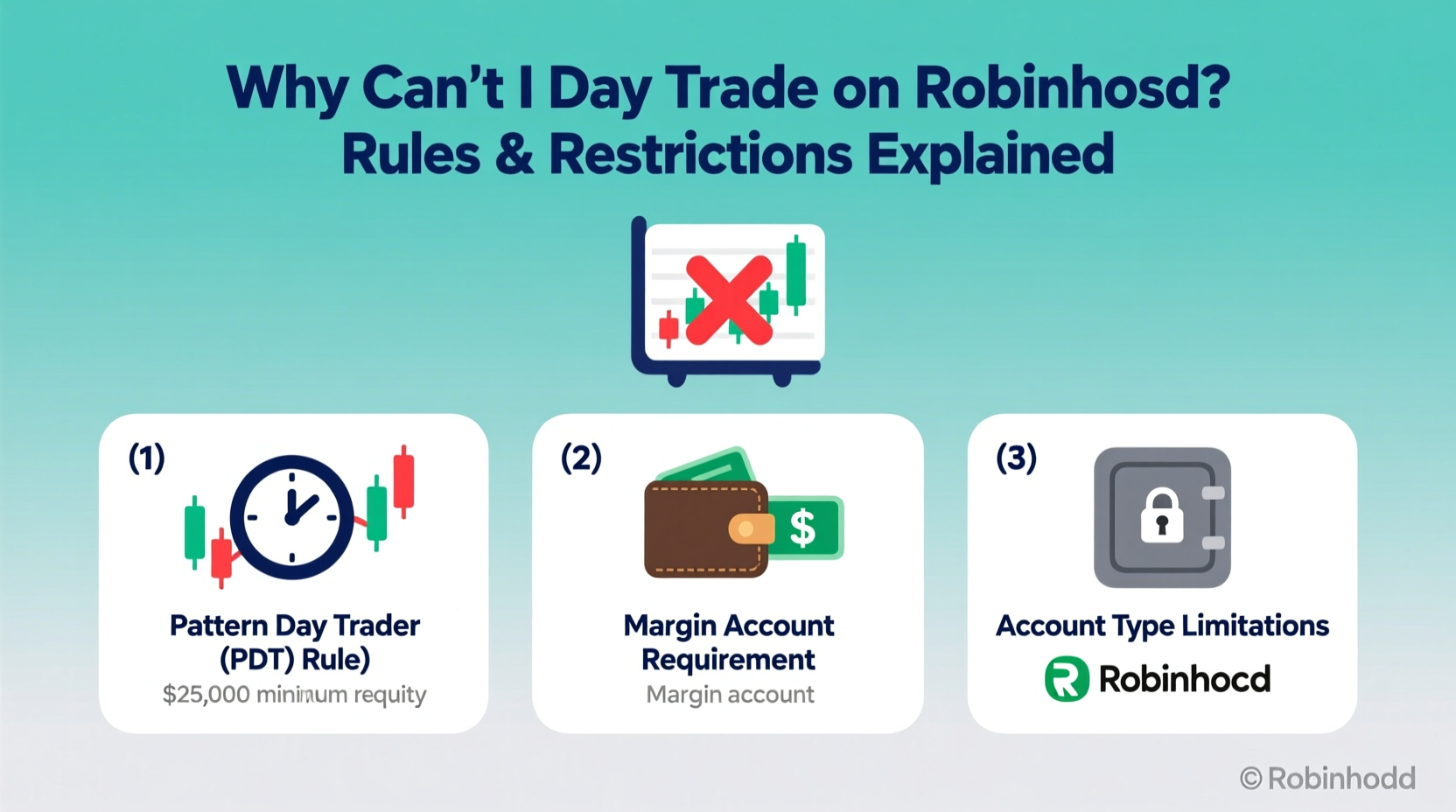
The U.S. Financial Industry Regulatory Authority (FINRA) defines a \"pattern day trader\" as someone who executes four or more day trades within five business days, provided those trades represent more than 6% of the customer’s total trading activity during that period. Once classified as a pattern day trader, specific equity requirements apply.
Crucially, this rule applies only to margin accounts. If your Robinhood account has less than $25,000 in equity, being flagged as a pattern day trader triggers automatic restrictions. This is why many users find themselves unable to place additional day trades after a few quick entries and exits.
“Day trading involves significant risk, and the PDT rule exists to ensure traders have sufficient capital to absorb potential losses.” — Sarah Chen, FINRA Compliance Advisor
The $25,000 Minimum Equity Rule
To engage in unrestricted day trading on platforms like Robinhood, you must maintain at least $25,000 in your margin account at all times. This isn’t a fee or deposit requirement—it's a regulatory threshold enforced by the New York Stock Exchange (NYSE) and FINRA.
If you attempt to exceed three day trades in a rolling five-day window without meeting this balance, Robinhood will issue a PDT violation and restrict your account from opening new day trades for 90 days unless you bring the balance up to $25,000.
Tip: Even if you close out positions the same day, each round-trip counts as one day trade. Monitor your trade frequency closely.How Robinhood Enforces Day Trading Limits
Robinhood automatically tracks your trading activity. When it detects potential pattern day trading behavior in a non-compliant account, it issues a “day trade call” requiring you to deposit funds to meet the $25,000 threshold—or face trading restrictions.
You’ll receive a notification if you violate the PDT rule. For example: if you make your fourth day trade while having under $25,000 in your account, Robinhood may freeze your ability to buy stocks or ETFs using unsettled funds for 90 days. During this time, you can still hold existing investments and sell them, but active trading becomes severely limited.
It's important to note that even partial executions count. Buying 10 shares of Tesla in the morning and selling them in the afternoon constitutes one full day trade, regardless of size.
Real Example: A New Trader Hits the Limit
Consider Alex, a college student with $3,000 invested in his Robinhood margin account. Excited by market movements during earnings season, he buys and sells Nvidia stock on Monday, Apple on Tuesday, Microsoft on Wednesday, and returns to Nvidia on Thursday—making his fourth day trade.
Because his equity remains below $25,000, Robinhood flags him as a pattern day trader. By Friday, he receives an alert stating his account is restricted. He can no longer initiate new day trades unless he deposits over $22,000 immediately. His momentum strategy grinds to a halt—not due to poor performance, but because of regulatory compliance.
Alternatives to Avoiding PDT Restrictions
While the $25,000 barrier may seem high, there are legal and practical ways to remain active in the markets without triggering the PDT rule.
- Leverage cash accounts: In a cash account, you avoid PDT rules entirely. However, you must wait for trades to settle (T+2) before reusing funds.
- Limit day trades to three per week: Stay just under the threshold by planning trades strategically across weeks.
- Use fractional shares wisely: While convenient, frequent buying and selling of fractions still count toward day trade totals.
- Explore options trading (with caution): Some strategies allow position adjustments without executing traditional stock day trades.
| Strategy | Complies with PDT? | Risk Level |
|---|---|---|
| Cash Account Trading | Yes – no PDT rule applies | Low to Medium |
| Three Day Trades Per Week | Yes – stays under limit | Medium |
| Maintaining $25k+ Margin | Yes – fully compliant | High |
| Unrestricted Day Trading Below $25k | No – leads to restriction | Very High |
Step-by-Step Guide to Regaining Trading Privileges
If you’ve already triggered a PDT violation, here’s how to regain full access:
- Check your account status: Log into Robinhood and review any alerts or emails regarding your PDT status.
- Deposit funds: Add enough money to reach $25,000 in your margin account. Transfers typically take 1–3 business days.
- Await confirmation: Once the balance is verified, Robinhood lifts the restriction automatically.
- Adjust your strategy: Either commit to consistent day trading with proper capital or switch to longer-term investing.
- Monitor future trades: Use Robinhood’s activity log to track how many day trades you’ve made in the past five business days.
Frequently Asked Questions
Can I appeal a PDT restriction on Robinhood?
No. PDT rules are federally mandated, not platform-specific policies. Robinhood cannot override or waive these restrictions. The only way to lift the block is to meet the $25,000 equity requirement.
Do crypto trades count as day trades on Robinhood?
No. Cryptocurrency trading on Robinhood does not fall under SEC regulations governing equities and is not subject to PDT rules. However, crypto transactions settle instantly and carry their own volatility risks.
Does holding a stock overnight eliminate a day trade?
Yes. A day trade only occurs when you buy and sell (or short and cover) the same security within a single trading day. Holding past market close breaks the cycle and doesn’t count toward the four-trade threshold.
Expert Tips for Staying Compliant
Navigating trading rules requires discipline and awareness. Here are key actions to stay within bounds:
Checklist: How to Trade Smartly Within PDT Rules- ☑️ Track your number of day trades weekly
- ☑️ Keep a separate journal or spreadsheet of entries/exits
- ☑️ Consider switching to a cash account if under $25k
- ☑️ Avoid rapid-fire trading based on emotions or news spikes
- ☑️ Plan trades ahead of time with clear entry and exit points
“The best traders aren’t always the fastest—they’re the ones who respect risk management and regulatory boundaries.” — Marcus Lee, Professional Swing Trader
Conclusion: Turn Restrictions Into Strategy
Being unable to day trade on Robinhood isn’t necessarily a setback—it’s an opportunity to reassess your approach. The PDT rule protects retail investors from overextending themselves in volatile markets. Instead of viewing it as a roadblock, use it as motivation to build a sustainable trading plan grounded in research, patience, and financial readiness.
Whether you choose to grow your capital toward the $25,000 threshold or refine a swing trading or buy-and-hold strategy, understanding the rules gives you control. Knowledge turns restrictions into informed choices.
🚀 Ready to level up your trading game? Share your experience with PDT rules in the comments and help others navigate their journey with confidence.








