
In nearly every zombie survival game—whether it’s a fast-paced shooter or a slow-burn strategy title—there’s one consistent rule: run them over with a vehicle, and they’re gone. Not just injured. Not knocked back. Gone. Tires, of all things, have become one of the most effective anti-zombie weapons in gaming. It doesn’t matter if the zombie is bloated, armored, or dragging a chain; a single pass from a pickup truck flattens it into pixelated paste. But why? What makes tires so absurdly overpowered against the undead in these virtual worlds?
The answer isn’t found in biology or real-world physics—it’s rooted in game design philosophy, player satisfaction, and the subtle art of making destruction feel rewarding. The tire-as-weapon phenomenon is more than a quirky detail; it’s a carefully engineered mechanic that shapes how players interact with the apocalypse.
The Physics of Crush vs. Cut
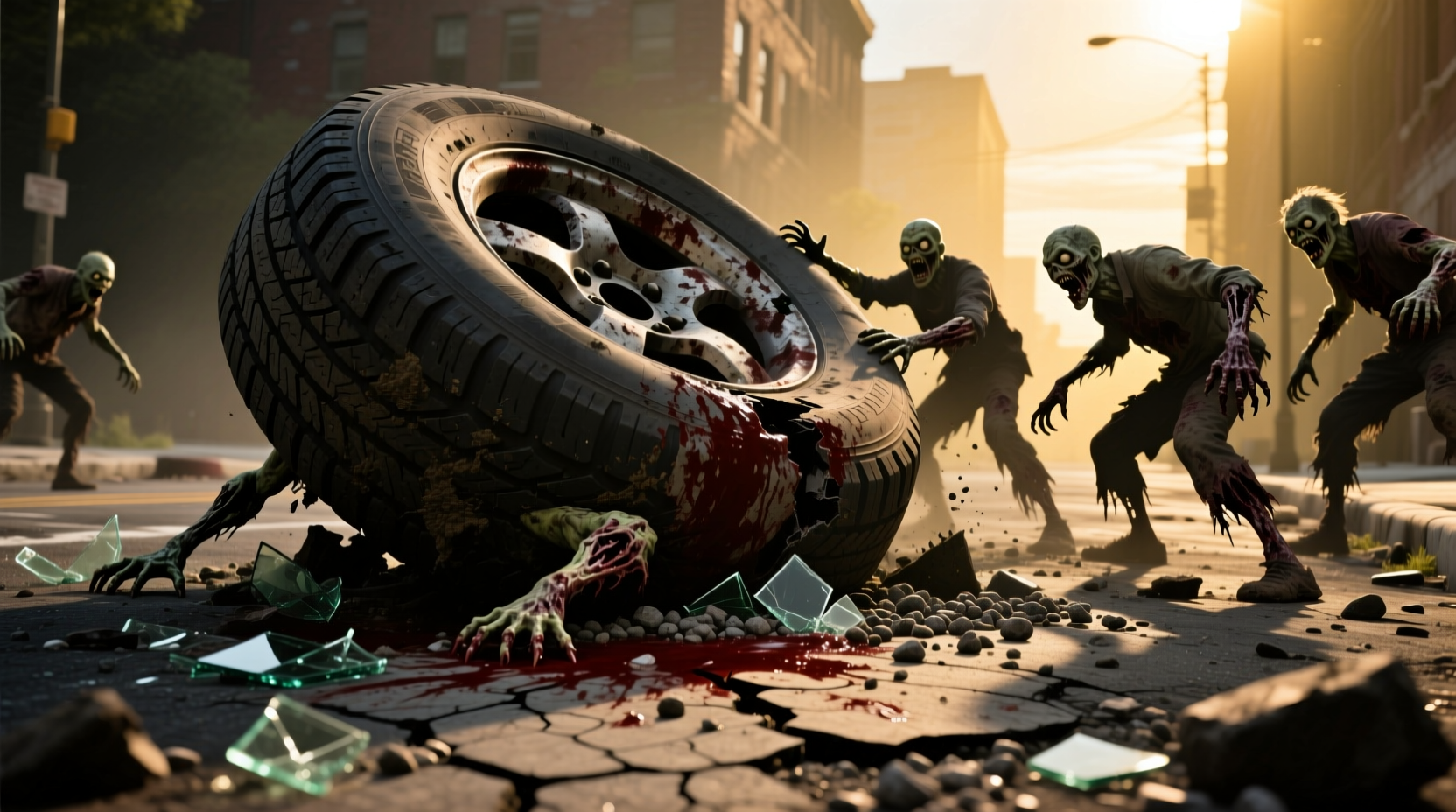
Zombies are typically weak to blunt force trauma in games—not because it's realistic, but because it simplifies gameplay. A bullet requires precise aiming, ammo management, and often multiple shots. A melee weapon demands timing, stamina, and puts the player at risk. But a car? A car lets you bypass all of that.
Tires don’t “cut” or “pierce”—they crush. And crushing is visually and mechanically satisfying. When a tire rolls over a zombie, the game engine can trigger a simple collision event that results in instant disintegration. There’s no need for complex limb damage systems, blood splatter calculations, or stagger animations. The zombie is either standing or deleted.
This binary state—alive or dead—makes tire kills efficient for both developers and players. From a coding standpoint, a weight-based collision check (e.g., \"if object mass > threshold and speed > 10 mph, delete target\") is far easier to implement than simulating realistic tissue damage or bone fractures.
Tip: In games like State of Decay or Dying Light, aim for head-on collisions when possible—side impacts may only knock zombies down, not kill them.Player Empowerment Through Vehicle Mechanics
One of the core challenges in zombie games is maintaining tension. Players start vulnerable, scavenging for supplies while avoiding threats. But as they gain resources, they need ways to feel powerful—without breaking the balance. Vehicles serve as a natural progression tool.
Acquiring a working car is often a milestone moment. It represents safety, mobility, and dominance. Letting that vehicle effortlessly dispatch zombies reinforces the player’s sense of advancement. It’s not just transportation—it’s a tank, a battering ram, and a psychological shield.
Game designers know this. As lead designer Marcus Rinehart noted in a 2021 GDC talk:
“Vehicles in survival games aren’t just tools—they’re emotional rewards. The first time a player runs over a horde, laughing as bodies fly, that’s the moment they stop feeling like prey.” — Marcus Rinehart, Senior Designer at Undead Labs
This empowerment is intentional. It transforms fear into control, turning the player from a fugitive into a force of nature.
Design Efficiency and Performance Optimization
Behind the scenes, allowing tires to instantly eliminate zombies solves several technical problems. First, it reduces enemy count quickly. Large hordes are expensive for game engines to render—each zombie needs AI routines, animation states, and collision detection. Running them over removes them from memory instantly.
Second, it avoids messy aftermaths. Imagine a world where zombies are merely injured by cars—limping around with broken legs, crawling toward the player, screaming. That would require additional animations, sound cues, and pathfinding logic. Instead, deletion is clean, fast, and final.
Finally, it prevents exploit loops. If vehicles couldn’t kill zombies efficiently, players might avoid using them altogether—or worse, use them to herd zombies without consequence. Instant kills ensure that driving remains a high-risk, high-reward activity, not a passive farming method.
A Comparative Look: Realism vs. Gameplay
Of course, none of this holds up in reality. In the real world, running over a person—even at high speed—doesn’t guarantee instant death, let alone disintegration. Roads are littered with tragic evidence of this. But realism isn’t the goal in most zombie games. Exaggeration is.
Consider the following comparison:
| Factor | Real World | Zombie Games |
|---|---|---|
| Killing Speed | Unpredictable, often slow | Instantaneous |
| Aftermath | Bodies remain, require cleanup | Bodies vanish or explode |
| Vehicle Damage | Significant wear from impact | Minimal or delayed degradation |
| Sound Feedback | Thud, silence | Squish, crunch, or explosion SFX |
| Psychological Effect | Traumatizing | Empowering, cathartic |
The table illustrates how game mechanics diverge from reality to serve fun and pacing. The exaggerated effectiveness of tires isn’t a flaw—it’s a feature designed to keep players engaged.
Mini Case Study: The Cement Truck in Dying Light
In Dying Light, one of the most celebrated moments in the game isn’t a scripted boss fight or a dramatic cutscene—it’s finding the cement truck in the quarry mission. Armed with nothing but momentum, players can plow through dozens of infected in seconds.
During a playtest session observed by Techland developers, a participant described the experience: “I’d been running for 20 minutes, heart pounding, barely surviving. Then I saw the truck. I didn’t even think—I just floored it. Watching those things get tossed like ragdolls… I screamed and laughed at the same time.”
That emotional release is precisely what designers wanted. The cement truck isn’t balanced—it’s overpowered on purpose. It provides a memorable power fantasy that offsets the game’s otherwise oppressive difficulty.
Checklist: How to Maximize Tire Efficiency in Zombie Games
- Upgrade your vehicle early: Even a small boost in speed increases kill reliability.
- Aim for direct hits: Glancing blows may not register as kills.
- Watch for terrain: Potholes, debris, and slopes reduce momentum.
- Use environmental hazards: Combine tire runs with cliffs or water traps for guaranteed eliminations.
- Conserve fuel strategically: Don’t waste it on small groups if ammo is plentiful.
- Listen for feedback: Distinctive squelch or crunch sounds usually confirm a kill.
Frequently Asked Questions
Do all zombie games make tires overpowered?
No. Some simulation-focused titles like Project Zomboid tone down vehicle lethality. In those games, cars may injure zombies but not always kill them instantly, requiring follow-up attacks. However, even there, repeated passes or high speeds eventually result in deletion for performance reasons.
Why don’t zombies learn to avoid roads or vehicles?
Most zombie AI is intentionally limited. They follow basic pathfinding rules and threat detection, but rarely adapt behavior long-term. This preserves challenge and ensures vehicles remain useful throughout the game. Smarter AI could make roads safer—but also make the game less playable.
Could real tires actually kill zombies effectively?
If zombies were real and functioned like those in games (slow, uncoordinated, no pain response), then yes—repeated crushing could incapacitate them. But unlike in games, the body would remain, creating obstacles and hygiene risks. Plus, tire damage from sustained use would be severe. So, theoretically possible—but impractical.
Conclusion: The Tire as a Symbol of Control
The reason tires are so overpowered against zombies in games isn’t about physics. It’s about psychology. They represent human ingenuity, mechanical advantage, and the triumph of order over chaos. In a world overrun by the mindless, a functioning engine and four good tires give players something rare: certainty.
Every squish, every thud, every disintegrating corpse under a spinning rim reinforces the idea that, despite the odds, the player is still in charge. Game designers lean into this because it works. It feels good. And sometimes, in a genre built on dread and desperation, feeling good is the most important mechanic of all.
🚀 Next time you hop behind the wheel in a zombie game, remember: you’re not just driving—you’re reclaiming control. Share your most satisfying tire takedown in the comments below!








