Sleeping eight hours per night is often cited as the gold standard for restful recovery. Yet, millions wake up feeling groggy, drained, or mentally foggy—despite hitting that target. The truth is, quantity doesn’t always equal quality. Even with adequate time in bed, lifestyle factors can sabotage your body’s ability to achieve deep, restorative sleep. This article explores the most common lifestyle-related reasons behind chronic fatigue and provides actionable strategies to help you feel more energized throughout the day.
The Myth of the 8-Hour Sleep Rule
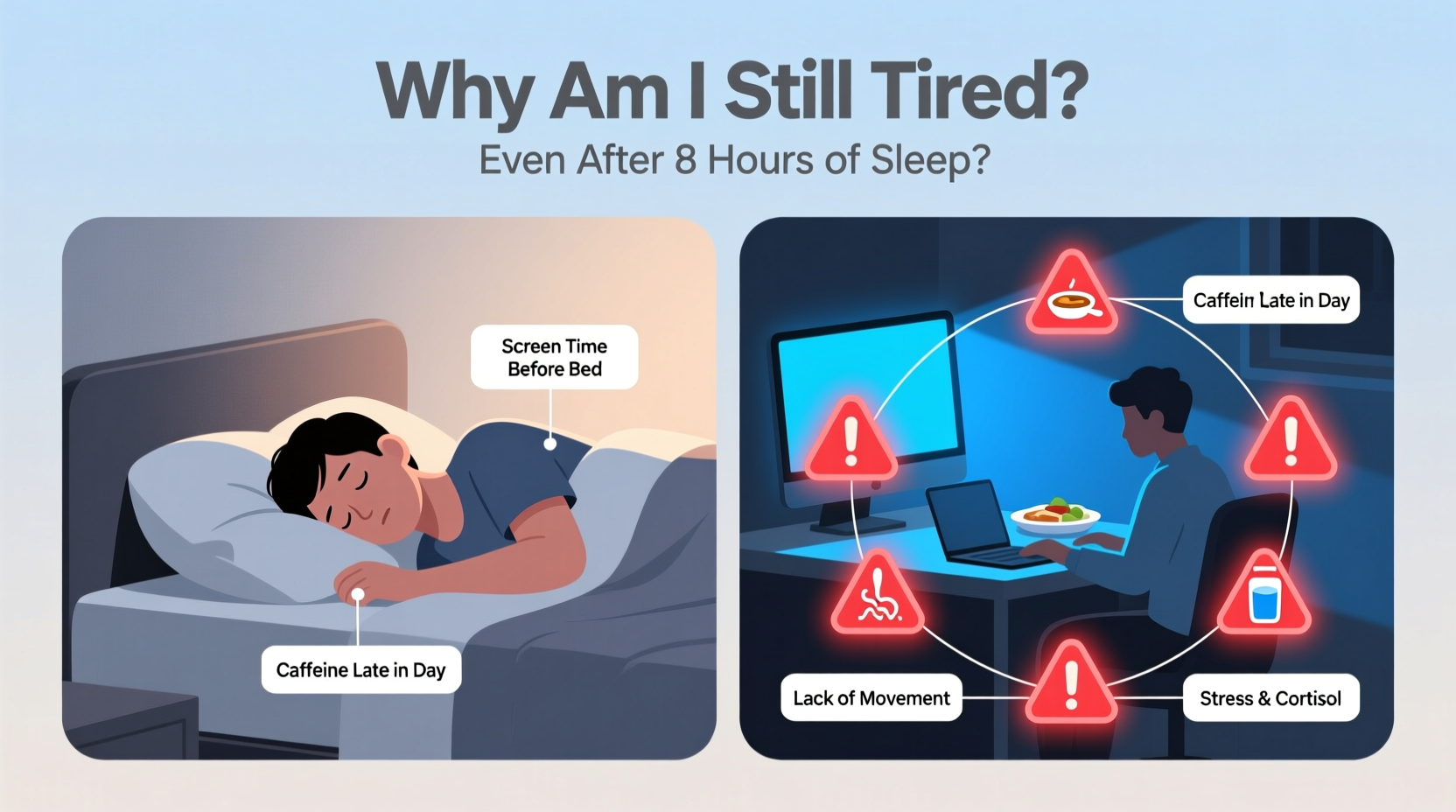
While eight hours is a useful benchmark, it's not a one-size-fits-all solution. Individual sleep needs vary based on age, genetics, activity level, and overall health. More importantly, how you live your life during waking hours has a profound impact on how well your body uses those eight hours of rest.
Research from the National Sleep Foundation indicates that only about 30% of adults consistently report feeling refreshed upon waking—even when they log sufficient sleep duration. This disconnect suggests that something beyond mere sleep length is at play. Lifestyle habits such as diet, stress levels, screen exposure, and physical activity directly influence sleep architecture—the cycle of light, deep, and REM sleep stages essential for true restoration.
“Sleep isn't just about time; it's about rhythm, environment, and daily behaviors. A person can sleep nine hours and still feel unrested if their circadian rhythm is disrupted.” — Dr. Lena Patel, Sleep Specialist and Circadian Health Researcher
Common Lifestyle Causes of Persistent Fatigue
1. Poor Sleep Hygiene
Sleep hygiene refers to the habits and practices that support consistent, uninterrupted sleep. Many people unknowingly undermine their rest through behaviors like using smartphones in bed, irregular sleep schedules, or consuming caffeine late in the day.
Blue light emitted by phones, tablets, and laptops suppresses melatonin production—the hormone responsible for signaling sleep onset. Even brief exposure before bedtime can delay sleep by 30 minutes or more, reducing the amount of deep sleep achieved.
Tip: Establish a no-screens rule at least one hour before bedtime. Replace scrolling with reading a book or journaling.2. Chronic Stress and Overstimulation
Living in a constant state of low-grade stress keeps cortisol levels elevated, which interferes with the body’s ability to relax and enter deep sleep stages. Work pressure, financial worries, relationship strain, or even information overload contribute to mental hyperarousal—a condition where the brain remains “on alert” even during sleep.
This results in fragmented sleep, frequent awakenings, and reduced slow-wave (deep) sleep, leaving you physically rested but mentally exhausted.
3. Sedentary Lifestyle
Contrary to popular belief, lack of physical activity can be just as detrimental to sleep quality as overexertion. A 2023 study published in *Sleep Medicine Reviews* found that individuals who spent more than 10 hours per day sitting had significantly lower sleep efficiency and higher rates of daytime fatigue.
Physical movement helps regulate circadian rhythms, reduce anxiety, and promote deeper sleep cycles. Without regular exercise—even moderate walking—the body lacks the physiological cues needed to transition smoothly into restful states.
4. Diet and Blood Sugar Imbalances
What you eat plays a direct role in energy regulation. Diets high in refined carbohydrates, sugar, and processed foods cause rapid spikes and crashes in blood glucose, leading to midday slumps and restless nights.
Eating heavy meals close to bedtime forces your digestive system to work while you're trying to sleep, disrupting core body temperature regulation and increasing the likelihood of acid reflux or discomfort. On the flip side, going to bed hungry can also impair sleep due to hormonal shifts triggered by low blood sugar.
5. Alcohol and Caffeine Consumption
Many people use alcohol to wind down, unaware that it fragments sleep architecture. While alcohol may help you fall asleep faster, it suppresses REM sleep—the stage critical for emotional processing and cognitive recovery. As alcohol metabolizes during the night, it often causes awakenings in the early morning hours.
Caffeine, with a half-life of up to six hours, can linger in your system long after consumption. Drinking coffee after 2 PM may still affect sleep onset and depth, especially in sensitive individuals.
Lifestyle Factors Compared: Impact on Energy Levels
| Lifestyle Factor | Impact on Sleep Quality | Effect on Daytime Energy |
|---|---|---|
| Irregular Sleep Schedule | Disrupts circadian rhythm | Low, inconsistent energy |
| High Screen Time Before Bed | Delays melatonin release | Morning grogginess |
| Sedentary Routine | Reduces deep sleep duration | General fatigue |
| Poor Diet (high sugar/processed) | Causes nighttime awakenings | Energy crashes |
| Evening Alcohol Use | Suppresses REM sleep | Unrefreshed feeling |
| Chronic Stress | Increases nighttime arousal | Mental exhaustion |
Step-by-Step Guide to Resetting Your Energy Cycle
If you’re consistently tired despite sleeping eight hours, making gradual changes to your daily routine can yield significant improvements. Follow this five-step plan over the course of two weeks to recalibrate your energy levels.
- Establish a Fixed Wake-Up Time
Create consistency by waking up at the same time every day—even on weekends. This stabilizes your internal clock and improves sleep drive at night. - Limit Evening Light Exposure
Turn off bright overhead lights two hours before bed. Use warm-toned bulbs and avoid screens. If necessary, enable blue light filters on devices. - Move Daily—Even Briefly
Aim for at least 20–30 minutes of moderate activity like walking, stretching, or cycling. Morning sunlight exposure enhances the effect by reinforcing circadian timing. - Adjust Meal Timing
Finish dinner at least three hours before bedtime. Prioritize protein, healthy fats, and fiber to stabilize blood sugar overnight. Avoid sugary desserts or large portions late at night. - Practice Wind-Down Rituals
Replace stimulating activities with calming ones: take a warm bath, practice gentle yoga, or write in a gratitude journal. These signal safety to the nervous system, easing the transition into sleep.
Real-Life Example: Sarah’s Transformation
Sarah, a 34-year-old project manager, slept an average of 7.5 to 8.5 hours each night but woke up feeling drained. She relied on two cups of coffee to function and experienced a severe energy dip around 3 PM. Despite trying various supplements, nothing helped.
After tracking her habits for a week, she discovered several red flags: she used her phone in bed until midnight, drank wine three times a week to “unwind,” skipped lunch due to meetings, and sat for over 11 hours daily.
She implemented small changes: set a 9:30 PM phone curfew, replaced evening wine with herbal tea, started taking 15-minute walks after lunch, and began eating balanced meals with protein. Within 10 days, she reported waking up without an alarm, needing only one cup of coffee, and sustaining energy through the afternoon.
Her sleep wasn’t longer—but it was deeper and more restorative.
Actionable Tips to Improve Sleep Quality and Energy
Tip: Keep your bedroom cool—between 60–67°F (15–19°C). Cooler temperatures support natural drops in core body heat, which facilitates sleep onset. Tip: Try a \"worry dump\" before bed. Write down all thoughts or to-dos on paper to clear mental clutter and reduce nighttime rumination. Tip: Reserve your bed only for sleep and intimacy. Working, watching TV, or eating in bed weakens the mental association between your bed and rest.Checklist: Optimize Your Daily Routine for Better Energy
- ✅ Wake up at the same time every day
- ✅ Get 10–15 minutes of morning sunlight
- ✅ Move your body for at least 20 minutes
- ✅ Eat balanced meals with protein and fiber
- ✅ Stop caffeine by 2 PM
- ✅ Avoid alcohol within three hours of bedtime
- ✅ Begin screen-free wind-down 60–90 minutes before sleep
- ✅ Keep bedroom dark, quiet, and cool
- ✅ Practice relaxation techniques (e.g., deep breathing, meditation)
- ✅ Track sleep and energy patterns for one week
Frequently Asked Questions
Why do I feel tired even after sleeping enough?
You may be experiencing poor sleep quality due to lifestyle factors like stress, screen exposure, diet, or irregular routines. Conditions such as sleep apnea or restless leg syndrome can also interfere with restfulness, but for many, the root cause lies in daily habits rather than medical issues.
Can dehydration make me feel tired despite sleeping well?
Yes. Even mild dehydration can impair concentration, mood, and energy levels. Your brain is highly sensitive to fluid balance. Drink water consistently throughout the day, especially if you consume diuretics like coffee or alcohol.
Is it better to sleep 8 hours straight or get broken sleep?
Continuous, uninterrupted sleep is generally more restorative because it allows full progression through all sleep cycles—including deep and REM stages. Fragmented sleep, even if total duration is eight hours, reduces sleep efficiency and leaves you feeling less refreshed.
Conclusion: Reclaim Your Energy Through Intentional Living
Feeling tired despite eight hours of sleep is not normal—and it’s not inevitable. The quality of your rest is deeply intertwined with the choices you make from the moment you wake up to the last moments before bed. By addressing lifestyle factors like stress, movement, diet, and digital habits, you can transform not just how you sleep, but how you feel during the day.
Start small. Pick one habit from the checklist above and commit to it for seven days. Notice how your energy shifts. Then build from there. Sustainable change comes not from drastic overhauls, but from consistent, mindful adjustments.
💬 Have you tried adjusting your lifestyle to improve energy? Share your experience or challenges in the comments below—your story could inspire someone else to make their first positive change.