Goth platform motorcycle boots are more than a fashion statement—they’re a commitment to bold style, structural craftsmanship, and personal identity. With their chunky soles, reinforced stitching, and often intricate hardware, these boots endure significant stress from daily wear. Without proper care, scuffs, sole separation, and leather degradation can shorten their lifespan dramatically. Yet, with consistent maintenance, they can remain both striking and functional for years. This guide delivers a comprehensive approach to preserving your boots’ integrity, appearance, and comfort through practical cleaning techniques, storage solutions, and preventative strategies.
Understanding Your Boot’s Materials and Construction
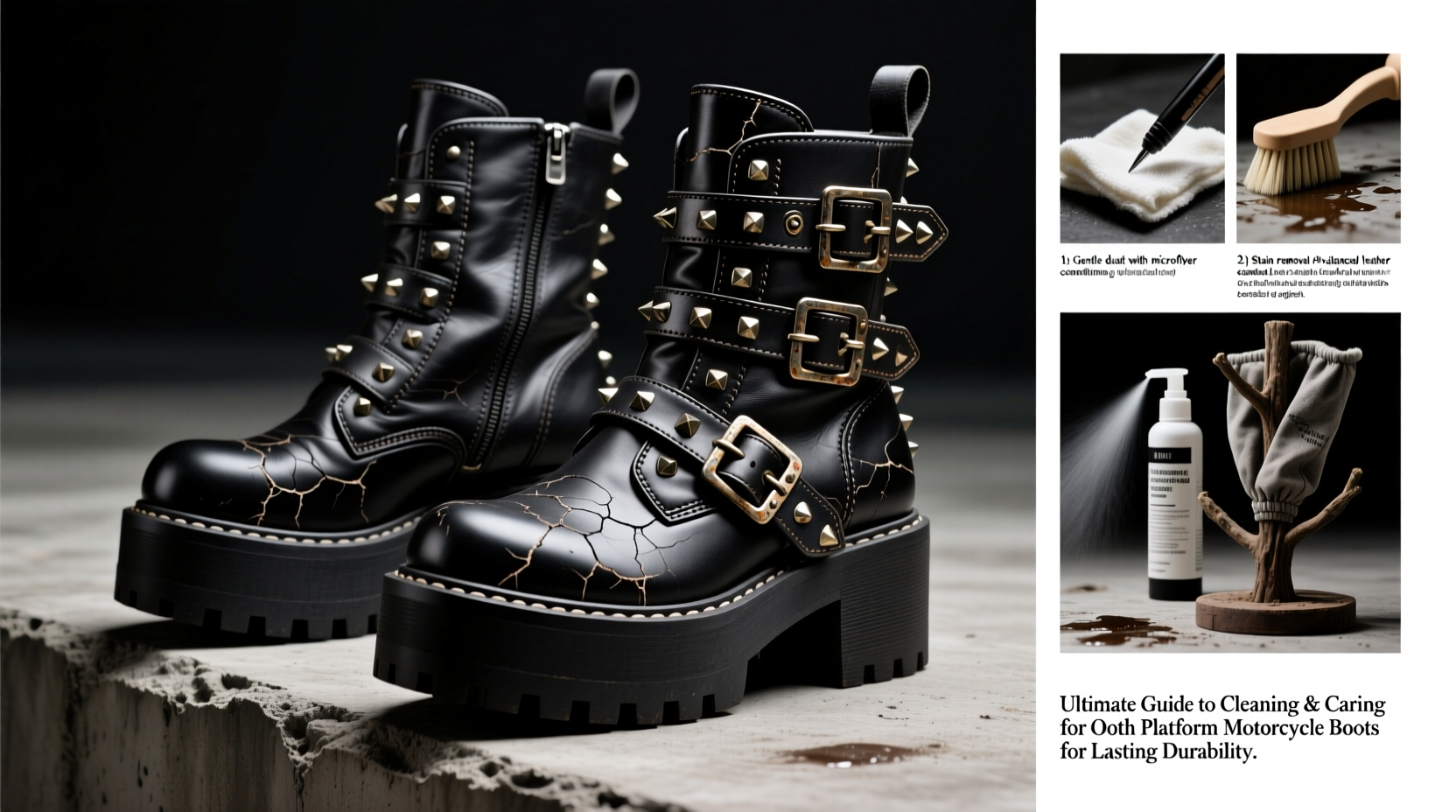
Before initiating any cleaning routine, it’s essential to identify the materials used in your boots. Most goth platforms combine full-grain or synthetic leather uppers, rubber or polyurethane platform soles, metal eyelets or buckles, and sometimes internal steel shanks for support. Each material responds differently to moisture, cleaners, and environmental exposure.
Leather, especially untreated varieties, is porous and susceptible to drying, cracking, and staining. Synthetic leather may resist water better but can delaminate under heat or harsh chemicals. Rubber soles harden over time if not conditioned, while metal components risk tarnishing or rusting when exposed to moisture without drying.
Tip: Check manufacturer tags or product descriptions for material specifications. When in doubt, perform a spot test on an inconspicuous area before applying any cleaner.Step-by-Step Cleaning Process for Deep Maintenance
Cleaning should be performed every 4–6 weeks under regular use, or immediately after exposure to mud, salt, or rain. Follow this structured timeline to ensure thorough yet safe treatment:
- Remove laces and insoles – This allows access to hidden dirt and prevents trapped moisture.
- Dry brush the surface – Use a soft-bristle shoe brush to remove loose dust, dirt, and debris from seams and tread.
- Wipe down upper surfaces – Dampen a microfiber cloth with distilled water and gently wipe leather areas. For synthetic sections, a mild soap solution (1 tsp dish soap per cup of water) may be used sparingly.
- Treat stains selectively – Apply a pH-balanced leather cleaner only to stained zones using a cotton swab. Avoid soaking the material.
- Clean soles and treads – Use an old toothbrush and soapy water to scrub between platform layers and around cleats.
- Disinfect and deodorize insoles – Wipe with a cloth dampened in equal parts water and white vinegar. Air dry completely before reinserting.
- Allow natural drying – Place boots upright in a well-ventilated room away from direct heat or sunlight. Stuff with acid-free paper to retain shape.
“Cleaning isn’t just about aesthetics—it removes abrasive particles that accelerate wear at stress points like toe caps and heel counters.” — Marcus Tran, Footwear Restoration Specialist
Do’s and Don’ts of Boot Care: A Quick Reference Table
| Category | Do | Don’t |
|---|---|---|
| Water Exposure | Wipe off moisture immediately; use waterproofing spray | Soak in water or leave wet overnight |
| Drying | Air dry at room temperature with stuffing | Use hairdryers, radiators, or direct sun |
| Conditioning | Apply leather conditioner every 6–8 weeks | Use petroleum-based products on suede or synthetics |
| Storage | Store in breathable cotton bags with silica packs | Keep in plastic bins or damp basements |
Preventative Care Checklist for Long-Term Durability
To maximize longevity, integrate these habits into your monthly routine:
- Inspect stitching along the sole edge for signs of lifting or separation.
- Rotate wear between multiple pairs to reduce fatigue on adhesives and cushioning.
- Reapply waterproofing spray every 2–3 months, especially before winter.
- Buff out light scuffs with a matching wax-based polish or magic eraser (for rubber).
- Lubricate zippers occasionally with silicone-based zipper glide.
- Check metal buckles and rivets for corrosion; clean with a dry cloth after rainy days.
- Use boot trees or rolled-up paper to prevent creasing at the ankle collar.
A Real-World Example: Preserving Custom Platforms Through Seasons
Sophia, a stage performer in Berlin, relies on her handcrafted goth platforms for nightly shows. After six months of frequent use and minimal upkeep, she noticed cracking near the toe box and a loosening sole. She consulted a cobbler who advised immediate intervention: cleaning with lanolin-infused soap, reinforcing the sole with contact cement, and storing them with cedar inserts. By adopting bi-weekly wipe-downs and seasonal deep conditioning, Sophia extended the life of her boots by nearly two years beyond the expected wear period. Her experience underscores how proactive care compensates for high-stress environments.
Seasonal Considerations and Environmental Threats
Environmental conditions play a critical role in boot degradation. In humid climates, mold and mildew can form inside unventilated boots. In colder regions, road salt draws moisture into leather, leading to dry rot and discoloration. During summer, UV exposure fades dyes and weakens adhesives bonding the platform layers.
Mitigate these risks by adjusting your care frequency with the seasons. Winter demands more frequent wiping of salt residue and heavier waterproofing. Summer calls for UV-protectant sprays and shade-only drying. Spring and fall are ideal times for deep conditioning and structural inspections.
Frequently Asked Questions
Can I machine-wash my goth platform boots?
No. Machine washing subjects boots to excessive agitation, heat, and water saturation, which can delaminate soles, warp shapes, and crack leather. Always clean manually using the methods outlined above.
How do I fix a separating sole at home?
If the gap is minor (under 3mm), clean the area thoroughly, roughen the surface lightly with fine sandpaper, and apply a high-quality shoe adhesive like Barge All-Purpose Cement. Clamp with rubber bands and let cure for 24 hours. For larger separations, consult a professional cobbler.
Is it safe to use saddle soap on thick platform boots?
Saddle soap can be too harsh for finished leathers commonly used in modern goth boots. It’s best suited for rawhide or workwear leather. Opt instead for a glycerin-based cleaner formulated for fashion footwear to avoid stripping protective coatings.
Final Steps Toward Lifelong Wear
Great boots deserve great care. The durability of your goth platform motorcycle boots hinges not on a single deep clean, but on consistent, informed attention. From identifying materials to mastering drying techniques and seasonal prep, each action contributes to structural resilience and aesthetic preservation. These boots were built to stand out—make sure they last long enough to tell a story.
💬 What’s your go-to method for keeping your platforms pristine? Share your tips and favorite products in the comments below—your insight could help fellow enthusiasts protect their prized footwear.








