Entering the world of Yu-Gi-Oh can be overwhelming. With thousands of cards, complex mechanics, and competitive meta shifts, new players often struggle to find a starting point. The good news? Konami has made it easier than ever with pre-constructed starter decks designed specifically for newcomers. These decks are not only affordable but also intuitive, fun, and surprisingly powerful. Whether you're playing casually with friends or testing the waters at local game stores, choosing the right starter deck sets the foundation for long-term enjoyment.
This guide highlights ten of the best beginner-friendly Yu-Gi-Oh starter decks—each selected for simplicity, entertainment value, and low cost. Most can be found under $20, require minimal extra investment, and offer clear paths for future upgrades.
What Makes a Great Starter Deck?
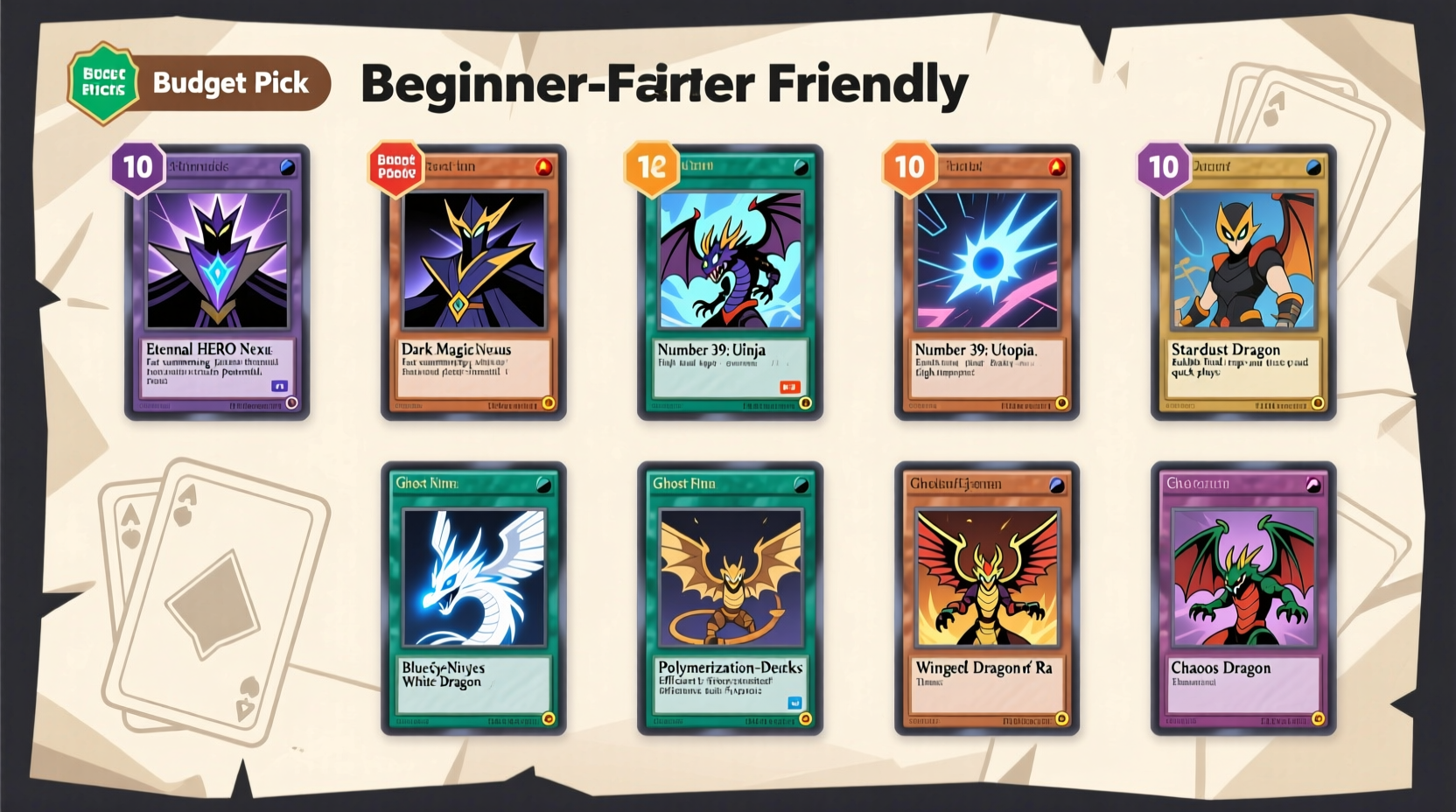
A strong starter deck balances three key elements: accessibility, consistency, and scalability. It should be easy to understand, reliably summon monsters and activate effects, and allow room for improvement as your collection grows. The best beginner decks focus on straightforward strategies—like swarming the field, using synchro summons, or leveraging monster effects—that teach core gameplay without overwhelming new players.
Konami’s Structure Decks and Starter Deck series (such as *Starter Deck: Yugi*, *Kaiba*, or *Rush Duel* releases) are ideal entry points. They come pre-built, include strategy guides, and often feature iconic characters and cards from the anime.
Tip: Always keep your starter deck intact for at least 5–10 games to fully understand its mechanics before making changes.Top 10 Starter Decks for Beginners
- Starter Deck: Yugi – Dark Magician
- Starter Deck: Kaiba – Blue-Eyes
- Starter Deck: Jaden – Elemental HERO
- Starter Deck: Yuya – Performapal
- Structure Deck: Spellcasters
- Structure Deck: Warriors
- Rush Duel Starter Deck: Rise of the True Dragon
- Starter Deck: Abydos – Girls’ Frontline (Fan-favorite theme)
- Structure Deck: Invoked
- Starter Deck: Mega Monster Mayhem
1. Starter Deck: Yugi – Dark Magician
This classic deck centers around the most iconic card in Yu-Gi-Oh history. It introduces spellcaster support, fusion mechanics via Polymerization, and staple spells like Pot of Desires. Easy to grasp and nostalgic, it's perfect for fans of the original series.
2. Starter Deck: Kaiba – Blue-Eyes
For fans of raw power, this deck focuses on summoning Blue-Eyes White Dragon through tribute or special summons. Includes support cards like Heavy Storm Duster and Twin Burst Dragon, making it both flashy and functional.
3. Starter Deck: Jaden – Elemental HERO
An excellent choice for learning fusion mechanics. Uses polymerization to merge HERO monsters into powerful fusions like Neos Alius. The deck teaches hand management and combo sequencing in an approachable way.
4. Starter Deck: Yuya – Performapal
Introduces link summoning gently. Performapals swarm the field quickly and generate advantage through repeated effects. Ideal for aggressive players who enjoy constant action.
5. Structure Deck: Spellcasters
Built around control and resource generation, this deck uses cards like Master Peace, Lord of Heavenly Principles. It teaches board control and disruption, helping players understand defensive play.
6. Structure Deck: Warriors
Focuses on synchro summoning with a clear chain: Normal Summon a level 3, use a tuner, then synchro into powerful monsters like Red Dragon Archfiend. Great for visual learners who enjoy step-by-step progression.
7. Rush Duel Starter Deck: Rise of the True Dragon
Part of Konami’s simplified Rush Duel format, this is the easiest entry point. Games are faster, rules are streamlined, and the True Draco theme offers dramatic plays. Perfect for younger players or those short on time.
8. Starter Deck: Abydos – Girls’ Frontline
While technically a fan-made crossover (available through promotional events), this deck has gained popularity for its simple token-generating strategy. It's often distributed free or at low cost, making it one of the most budget-friendly options.
9. Structure Deck: Invoked
Teaches ritual summoning using Aleister the Invoker. Though slightly more complex, it provides a smooth learning curve with built-in tutorials. Offers high skill expression as players grow.
10. Starter Deck: Mega Monster Mayhem
A humorous, accessible deck featuring oversized monsters and exaggerated effects. Designed for casual play, it emphasizes fun over competition—ideal for family game nights.
Comparison Table: Key Features at a Glance
| Deck Name | Primary Summoning Method | Difficulty Level | Avg. Price (USD) | Best For |
|---|---|---|---|---|
| Yugi – Dark Magician | Fusion | Easy | $15 | Nostalgia lovers, spellcaster fans |
| Kaiba – Blue-Eyes | Tribute/Special | Easy | $18 | Power players, anime fans |
| Jaden – Elemental HERO | Fusion | Medium | $16 | Combo learners |
| Yuya – Performapal | Link | Medium | $20 | Aggressive players |
| Structure: Spellcasters | Normal/Effect | Easy-Medium | $12 | Control strategists |
| Rush Duel: True Dragon | Rush Summon | Very Easy | $10 | Beginners, kids |
Real Example: How One Player Started Strong
Mark, a college student with no prior experience, picked up Starter Deck: Yugi – Dark Magician after watching a few episodes of the original anime. Within two weeks of playing weekly at his campus game store, he won a small community tournament using only his starter deck with three added copies of Mystical Space Typhoon. His success came not from rare cards, but from mastering the deck’s rhythm—knowing when to set defenses, when to attack, and how to manage his life point buffer. “I didn’t need expensive cards,” he said. “I just needed to understand what my deck was trying to do.”
“Most new players lose not because their deck is weak, but because they don’t know how to pilot it.” — Daniel Lee, Level 3 Judge & Tournament Organizer
Budget-Friendly Upgrades Checklist
- ✅ Add 3x Pot of Prosperity or Pot of Duality for better draw power
- ✅ Include 1–2 copies of Called by the Grave to counter hand traps
- ✅ Swap out weaker monsters for universal staples like Ash Blossom & Joyous Spring (if budget allows)
- ✅ Use generic trap cards like Solemn Strike or Infinite Impermanence for disruption
- ✅ Keep extra sleeves and a dice for life point tracking
Frequently Asked Questions
Can I win tournaments with a starter deck?
Yes—especially in beginner or casual events. While top-tier competitive formats require extensive collections, many regional qualifiers and entry-level tournaments see players succeeding with optimized starter decks. Consistency and knowledge often outweigh raw card power.
Are Rush Duel decks worth getting?
Absolutely. Rush Duel is designed for quick setup and fast gameplay (games last 10–15 minutes). It’s ideal for teaching fundamentals to children or playing during breaks. Cards are cheaper, and the learning curve is gentle.
How do I upgrade my starter deck without spending much?
Start by adding universal utility cards like Maxx \"C\", called by the Grave, or Forbidden Droplet—often available in affordable booster packs like Duelist Pack: Evolution. Focus on improving consistency rather than chasing meta dominance.
Final Thoughts: Start Simple, Play Smart
The best way to fall in love with Yu-Gi-Oh is to start with a deck that feels fun and manageable. You don’t need a $200 investment to enjoy strategic dueling. Each of the starter decks listed here offers a unique flavor, teaches essential mechanics, and opens doors to deeper engagement with the game. Whether you’re drawn to the mysticism of Dark Magician or the explosive energy of Performapals, there’s a perfect starting point waiting for you.
💬 Which starter deck did you begin with? Share your first win, favorite card, or upgrade tip in the comments below—help new duelists find their path!