
Diesel engines have long been recognized for their superior fuel economy, durability, and torque output—making them a preferred choice for drivers focused on efficiency and long-term value. With rising fuel prices and increasing environmental awareness, selecting a vehicle that maximizes miles per gallon (MPG) is more important than ever. This guide highlights the top 10 diesel-powered vehicles with exceptional fuel economy and pairs them with proven accessories that further enhance efficiency.
Why Diesel Still Matters for Fuel Efficiency
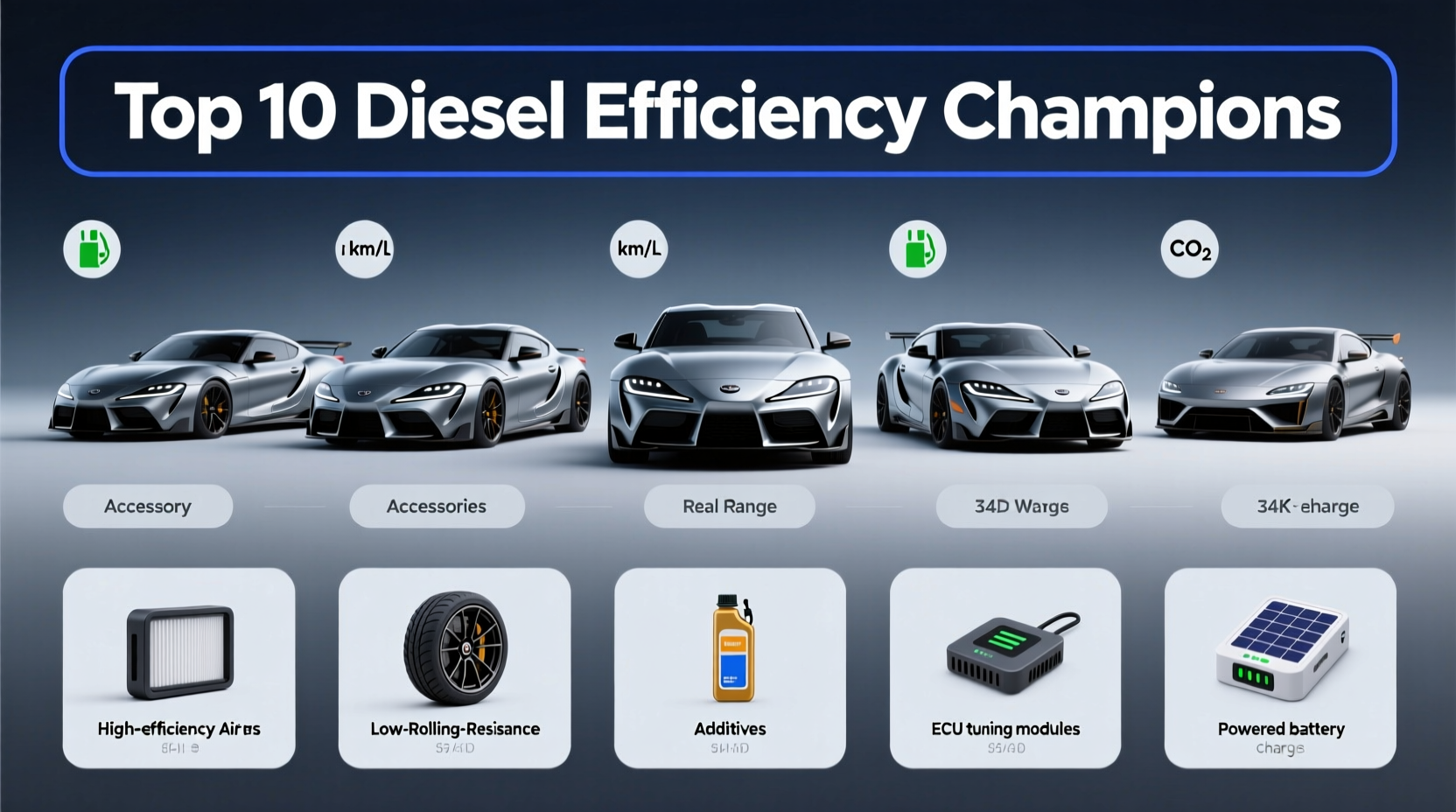
Despite growing interest in electric vehicles, diesel remains a strong contender in the realm of fuel-efficient transportation. Modern diesel engines benefit from advanced turbocharging, direct injection, and exhaust after-treatment systems that significantly reduce emissions while boosting efficiency. On average, diesel engines are 20–35% more fuel-efficient than their gasoline counterparts due to higher energy density and greater thermal efficiency.
For commuters, road trippers, or fleet operators, choosing a high-MPG diesel car translates into fewer fill-ups, lower operating costs, and reduced carbon dioxide emissions per mile. When paired with smart driving habits and efficiency-focused accessories, these vehicles deliver real-world savings and performance.
“Modern clean diesel technology offers a balanced solution between range, power, and economy—especially for drivers covering high annual mileage.” — Dr. Alan Reeves, Automotive Energy Systems Researcher
Top 10 Best Fuel Economy Diesel Cars (2024)
The following list ranks diesel passenger vehicles based on EPA-estimated highway MPG, reliability, owner satisfaction, and overall value. All models are either currently available or were recently discontinued but remain widely available in the used market.
| Rank | Vehicle | Engine | City MPG | Highway MPG | Key Feature |
|---|---|---|---|---|---|
| 1 | Mercedes-Benz GLC 300d | 2.0L Turbo Diesel I4 | 28 | 37 | Premium SUV with excellent refinement |
| 2 | Audi A3 TDI | 2.0L Turbo Diesel I4 | 30 | 38 | Compact luxury sedan, ideal for city/highway mix |
| 3 | Volkswagen Passat TDI | 2.0L Turbo Diesel I4 | 30 | 40 | Spacious midsize sedan with class-leading MPG |
| 4 | BMW 330d (Import/Used) | 2.0L TwinPower Turbo Diesel | 31 | 39 | Sporty handling with efficient inline-4 |
| 5 | Jeep Gladiator EcoDiesel | 3.0L V6 Turbo Diesel | 22 | 28 | Rare diesel pickup with strong towing and decent MPG |
| 6 | RAM 1500 EcoDiesel | 3.0L V6 Turbo Diesel | 22 | 32 | Luxury truck with smooth ride and reliable economy |
| 7 | Mini Cooper D (Used/Import) | 1.5L Turbo Diesel I3 | 34 | 40 | Urban-friendly hatchback with surprising efficiency |
| 8 | Ford Transit Connect Wagon (Diesel) | 2.2L Turbo Diesel I4 | 25 | 30 | Practical wagon with cargo versatility |
| 9 | Toyota Land Cruiser 300 Series (International) | 3.3L Twin-Turbo V6 Diesel | 21 | 28 | Off-road capable with modern efficiency upgrades |
| 10 | Skoda Octavia GreenLine TDI | 2.0L Turbo Diesel I4 | 32 | 43 | European favorite with exceptional highway economy |
Essential Accessories to Boost Diesel Efficiency
Selecting a fuel-efficient diesel car is only half the equation. The right accessories can fine-tune performance, reduce drag, and optimize engine operation for even better MPG. These upgrades are particularly effective when combined with eco-driving techniques.
1. Aerodynamic Add-Ons
Reducing wind resistance is one of the most effective ways to improve highway fuel economy. Consider installing:
- Front air dams or splitters
- Roof rack fairings or removal when not in use
- Underbody panels to streamline airflow
2. Low Rolling Resistance Tires
Tires contribute up to 20% of a vehicle’s fuel consumption. Switching to low rolling resistance (LRR) tires such as Michelin Energy Saver or Bridgestone Ecopia can improve MPG by 1–3%. Ensure proper inflation—underinflated tires increase drag and wear.
3. Engine Tuning Modules
Programmers or piggyback tuning modules (e.g., from brands like Superchips or ECUtek) can recalibrate fuel delivery and boost pressure for improved combustion efficiency. Some units offer an “eco mode” that prioritizes fuel economy over power.
4. Diesel Particulate Filter (DPF) Cleaners
Regular use of DPF cleaning additives helps prevent clogging and maintains regeneration cycles. Products like Liqui Moly DPF Cleaner or Wynn’s Diesel Particulate Filter Treatment keep exhaust systems flowing efficiently.
5. Cabin Airflow Management
Use manual climate control settings instead of automatic modes to reduce alternator load. At speeds above 45 mph, open windows increase drag—rely on AC sparingly and close vents when not needed.
Real-World Example: Maximizing Efficiency on Long Hauls
Mark, a sales representative from Colorado, drives over 25,000 miles annually. After switching from a gasoline SUV to a used Volkswagen Passat TDI, he immediately noticed a drop in fuel costs. He further enhanced his efficiency by installing low rolling resistance tires, removing roof rails, and using cruise control on highways. By maintaining steady speeds between 55–65 mph and avoiding rapid acceleration, Mark consistently achieves 43 MPG on road trips—well above the EPA estimate. Over two years, he saved nearly $2,800 in fuel alone.
“Small changes compound. I don’t race to lights, I coast downhill, and I plan routes to avoid traffic. My Passat feels like a hybrid in terms of cost per mile.” — Mark T., Frequent Driver
Step-by-Step Guide to Optimizing Your Diesel’s Efficiency
- Inspect and maintain the air filter: A clogged filter reduces combustion efficiency. Replace every 15,000–30,000 miles.
- Use ultra-low sulfur diesel (ULSD): Always refuel with ULSD to protect injectors and meet emissions standards.
- Check tire pressure monthly: Underinflated tires increase rolling resistance and wear unevenly.
- Install a fuel additive regimen: Use cetane boosters and injector cleaners every 5,000 miles to maintain optimal spray patterns.
- Drive smoothly: Accelerate gradually, anticipate stops, and use engine braking on descents to minimize brake use.
- Utilize cruise control on highways: Maintains constant speed and prevents unintentional throttle fluctuations.
- Reduce vehicle weight: Remove unnecessary items from the trunk or cargo area—every 100 lbs reduces MPG slightly.
- Schedule DPF regeneration checks: If warning lights appear, address them early to avoid costly repairs.
FAQ
Are diesel cars still worth it in 2024?
Yes, especially for drivers who travel long distances or frequently drive on highways. Diesel cars typically offer longer engine life, better towing capacity, and higher MPG than gasoline equivalents. However, initial purchase prices and maintenance costs can be higher, so evaluate your driving needs carefully.
Do diesel accessories really improve fuel economy?
Some do—particularly aerodynamic improvements, proper tire selection, and tuning modules designed for economy. Others, like cheap fuel-line magnets or \"hydrogen boosters,\" lack scientific backing. Stick to well-tested, reputable products with verified user results.
How often should I service a diesel engine?
Follow the manufacturer’s schedule, typically every 10,000–15,000 miles. Diesel-specific services include DPF inspection, AdBlue refill (if equipped), injector cleaning, and glow plug checks in colder climates.
Conclusion
Choosing a diesel car with strong fuel economy is a smart move for cost-conscious and environmentally aware drivers. Models like the Volkswagen Passat TDI, Audi A3 TDI, and RAM 1500 EcoDiesel prove that diesel still holds a competitive edge in efficiency and real-world usability. When paired with intelligent accessories and disciplined driving habits, these vehicles can deliver exceptional value over time.
Don’t just buy a fuel-efficient car—optimize it. Start with tire maintenance, add strategic upgrades, and refine your driving style. The result isn’t just better MPG—it’s greater control over your vehicle’s performance and long-term ownership costs.
🚀 Ready to maximize your diesel’s potential? Audit your current driving habits, research one efficiency accessory, and implement one change this week. Share your progress or questions in the comments below!








