Car interiors have long been a canvas for self-expression. From air fresheners shaped like pine trees to figurines that nod along with every bump in the road, personalization is inevitable. But when does personality cross into cringe? Two of the most polarizing automotive accessories—“toothless” car decor (a slang term for cheap, often gaudy aftermarket items) and dashboard bobbleheads—are frequently at the center of this debate. While both aim to add character, they diverge sharply in perception, longevity, and social reception. Understanding the differences can help drivers make choices that reflect their personality without inviting eye rolls.
Defining the Contenders
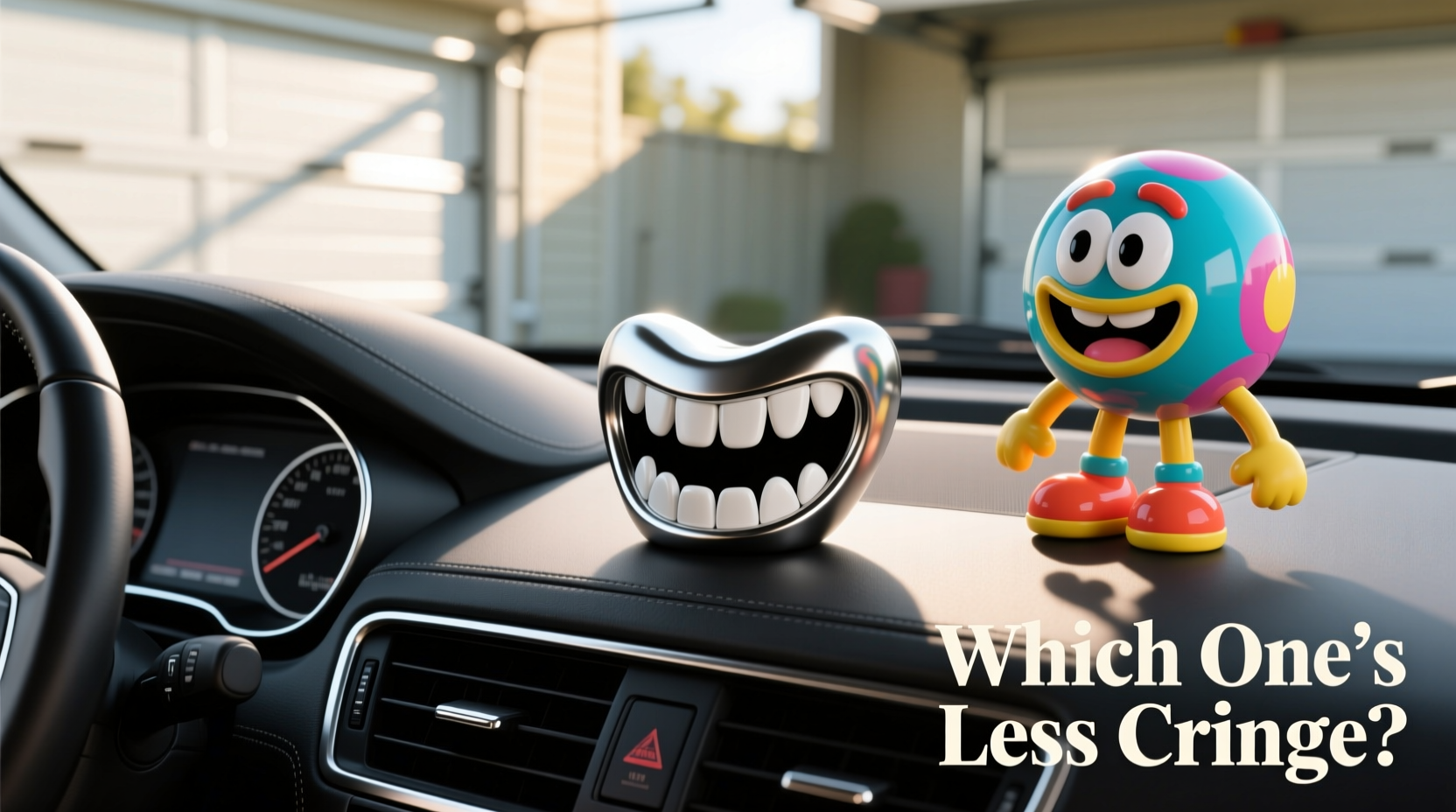
The term “toothless car decor” isn’t literal—it’s a cultural jab aimed at low-budget, mass-produced accessories associated with poor taste or socioeconomic stereotypes. Think fuzzy dice, dangling rosaries, neon underglow, or vinyl decals with phrases like “Honk If You’re Horny.” These items are often criticized not just for their appearance but for signaling a lack of refinement or awareness of aesthetic norms.
Dashboard bobbleheads, on the other hand, are collectible or novelty figures mounted on springs or flexible bases that wobble with motion. They range from classic Elvis Presley models to licensed characters like Pikachu or Darth Vader. Unlike toothless decor, bobbleheads often carry nostalgic or fandom-based appeal and are generally seen as more intentional in design.
Tip: When choosing car decor, consider whether it reflects your identity or just fills space—intentionality reduces cringe.Aesthetic and Cultural Perception
Perception plays a huge role in what's deemed “cringe.” Toothless decor often carries classist undertones. What some dismiss as tacky, others see as authentic expression—especially within subcultures like lowrider communities or Southern U.S. car culture, where personalized vehicles are a point of pride.
Still, mainstream media and urban stereotypes have cemented the idea that fuzzy dice and hanging air fresheners are relics of outdated kitsch. Social media trends amplify this, with TikTok and Instagram reels mocking cars decked out in “gas station chic.” The judgment isn't always fair, but it influences public opinion.
Bobbleheads fare better in the court of cool. Their pop-culture ties give them legitimacy. A bobblehead of Kermit the Frog sipping tea might earn a smile rather than a sneer. Collectors often display them proudly, treating them as miniature art. Their movement adds whimsy without overwhelming the cabin—provided there’s only one or two.
“Accessories aren’t inherently cringe. It’s about proportion, context, and confidence. A single well-chosen item says more than a dashboard cluttered with ten.” — Marcus Tran, Automotive Lifestyle Blogger & Car Show Judge
Comparison: Toothless Decor vs Bobbleheads
| Feature | Toothless Car Decor | Dashboard Bobbleheads |
|---|---|---|
| Design Quality | Often low-cost, plastic-heavy, mass-produced | Mixed; many are licensed, detailed, collectible-grade |
| Cultural Association | Stereotyped as unsophisticated or rural | Tied to fandoms, nostalgia, humor |
| Customization Level | Limited; usually one-off additions | High; series-based, thematic collections |
| Distraction Risk | Low (static items) | Moderate (movement may catch eye) |
| Social Acceptance | Polarizing, often mocked | Generally tolerated, sometimes admired |
| Longevity | Poor; fades, cracks, smells over time | Better; durable materials, replaceable parts |
When Accessories Cross the Line
Cringe isn’t solely about the object—it’s about execution. Even bobbleheads can become problematic when overdone. A dashboard crowded with five wobbling figures, paired with flashing LED strips and a blaring bassline, shifts from quirky to chaotic. Similarly, a single fuzzy dice might be nostalgic; but when combined with a dangling hamsa, a Jesus plaque, and a glittery steering wheel cover, the effect becomes overwhelming.
The key is cohesion. Are your accessories part of a theme? Do they reflect a passion—like vintage rock, anime, or retro gaming—or are they random impulse buys? Intentional curation signals thoughtfulness, while clutter reads as carelessness.
Mini Case Study: Alex’s Civic Transformation
Alex, a 28-year-old graphic designer, inherited his dad’s old Honda Civic. Initially, he added a few random items: a pine-scented tree, a rainbow fuzzy dice set, and a blinking unicorn horn on the dash. At a drive-thru, a friend laughed and said, “Dude, it looks like a gas station exploded in here.”
Embarrassed but reflective, Alex reevaluated. He kept the dice—his dad had hung them since the '90s—and replaced the rest with a minimalist black bobblehead of Batman, a small anime decal on the rear window, and a leather-trimmed phone mount. The result? Personal, respectful of heritage, and socially palatable. “I realized I didn’t need more stuff,” he said. “I needed better stuff.”
How to Choose Without Cringing Later
Selecting car decor isn’t just about taste—it’s about foresight. Will you still like this in six months? Does it obstruct your view or interfere with driving? Here’s a checklist to ensure your choices age well:
Checklist: Tasteful Car Decor Guidelines
- Limit decorative items to 1–3 focal points
- Ensure nothing blocks windshield visibility or airbag deployment
- Choose items that reflect a genuine interest (e.g., music, movies, hobbies)
- Opt for high-quality materials (rubber, metal, soft vinyl) over brittle plastic
- Avoid anything with loud slogans, offensive imagery, or strong scents
- Test for distraction: if it moves excessively or catches too much attention, reconsider
FAQ: Common Questions About Car Decor
Are bobbleheads safe to use while driving?
Yes, as long as they're securely mounted and don’t obstruct your view. Small to medium-sized bobbleheads placed at the edge of the dash or on the console are generally safe. Avoid large models that could become projectiles in a sudden stop.
Is all \"toothless\" decor really cringe-worthy?
Not necessarily. Context matters. In certain communities, these items are symbols of identity and pride. The stigma often comes from outsider judgment. If an accessory holds sentimental value and doesn’t compromise safety, it has a place—just be mindful of audience and environment (e.g., job interviews, first dates).
Can I mix bobbleheads and other decor?
You can, but moderation is key. Pair a single bobblehead with subtle accents like a themed floor mat or a custom license plate frame. Avoid stacking multiple moving objects or competing visual elements. Less is more when aiming for charm over chaos.
Final Verdict: Which Is Less Cringe?
If judged purely by public perception and design intent, dashboard bobbleheads win the “less cringe” title. They’re more likely to be seen as playful, nostalgic, or geek-chic rather than desperate or outdated. Their collectible nature gives them cultural capital that toothless decor rarely enjoys.
That said, neither category is inherently cringe. The real issue lies in excess, poor quality, and lack of intention. A single well-placed bobblehead of Mr. Bean can spark joy. So can a vintage dice set passed down through generations. The problem arises when accessories become noise instead of signal.
In the end, your car is an extension of you. But like any form of personal branding, restraint enhances impact. Thoughtful choices—not expensive ones—earn respect. Whether you lean toward fandom flair or sentimental keepsakes, prioritize meaning over momentum. Choose pieces that tell a story, not just occupy space.
💬 What’s your take? Do bobbleheads deserve their cooler reputation, or is all car decor fair game? Share your thoughts and favorite (or most hated) car accessories in the comments—we’d love to hear your story.








