Determining your car’s exact factory paint color is essential for touch-ups, resale value, or custom modifications. While many rely on the manufacturer’s color code—typically found on a sticker in the door jamb or glovebox—not everyone has access to that information. Whether the label is missing, faded, or you’re buying a used vehicle with no documentation, it’s still possible to pinpoint the precise hue. With careful observation, comparative analysis, and a few clever techniques, you can confidently identify your car’s true color—even without the code.
Why Accurate Color Matching Matters
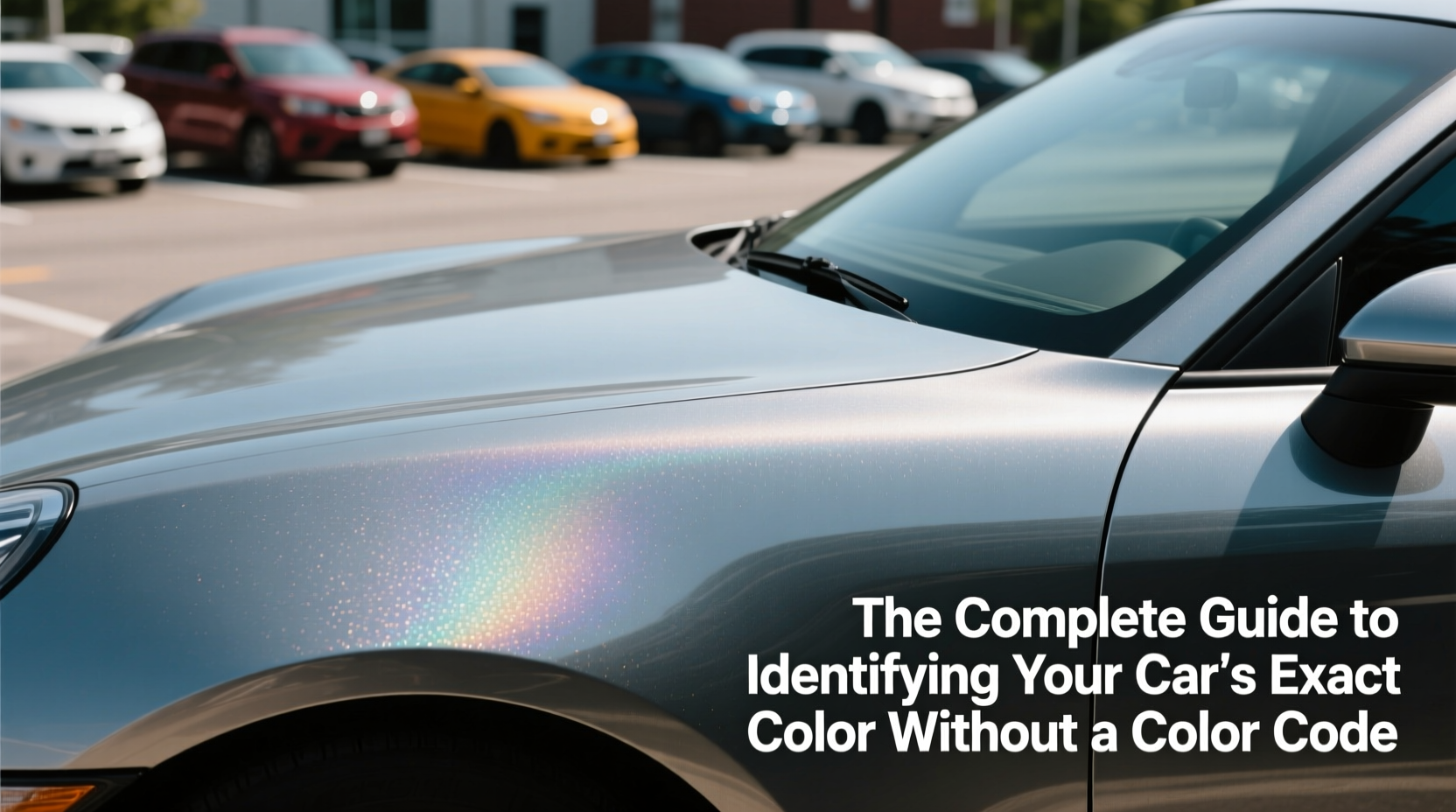
A mismatched paint job stands out instantly. Even slight variations in tone, sheen, or metallic content can make repairs look amateurish. Factory paints are complex blends, often containing specific pigments, mica, or pearl additives that shift under different lighting. Off-the-shelf “universal” touch-up paints rarely replicate these nuances. Identifying the correct color ensures seamless blending, maintains aesthetic integrity, and preserves your vehicle’s value.
“Factory paint formulations are proprietary and batch-specific. Two cars of the same model and year can have subtle differences based on production line and region.” — Daniel Reyes, Automotive Paint Specialist, 15+ years at OEM refinishing plants
Step-by-Step: How to Identify Your Car’s Color Without a Code
Follow this structured process to narrow down your car’s exact color using only visual inspection and accessible tools.
- Inspect the Vehicle in Natural Light
Artificial lighting distorts color perception. Examine your car outdoors during midday when sunlight is neutral and consistent. Avoid direct overhead sun if possible—diffused light (e.g., on an overcast day) reveals true tones best. - Locate Undamaged, Unexposed Panels
Open the hood and examine the inner fender, firewall, or underside of the trunk lid. These areas are shielded from UV rays and environmental wear, preserving the original finish. Compare this section to exposed surfaces like the hood or roof to assess fading. - Note Key Visual Characteristics
Observe the following:- Base Hue: Is it red, blue, gray, silver, black, white, or brown?
- Metallic Content: Does it sparkle? Tilt the panel; if speckles shift, it’s metallic.
- Pearl or Chromaflair Effects: Some colors change hue depending on angle. Look for green-to-purple shifts or gold undertones in darker finishes.
- Transparency: Clearcoat over solid color vs. translucent tint layers (common in deep blues or reds).
- Cross-Reference with Known Model-Year Charts
Search online databases like PaintScratch.com, ColorChips.com, or enthusiast forums specific to your make and model. Enter your car’s year, make, model, and trim level. Many list available paint options with sample names and photos. - Compare Against Physical Swatches
Visit auto parts stores like O'Reilly, AutoZone, or NAPA. Request physical paint chips for vehicles matching your year and brand. Hold them next to your car in natural light. Focus on shadowed areas to avoid glare.
Common Color Families and Their Clues
Understanding typical naming conventions helps narrow possibilities. Manufacturers use poetic names (e.g., “Shadow Black,” “Oxford White”), but underlying categories remain consistent.
| Color Family | Visual Cues | Common Additives | Frequent Misidentifications |
|---|---|---|---|
| Black | Glossy or matte; may reveal blue, red, or green undertones in sunlight | Carbon black, mica | Dark gray, charcoal |
| White | Bright, cool (bluish) or warm (creamy); some have pearl for depth | Titanium dioxide, pearl | Ivory, silver, off-white |
| Silver | Metallic flake dominant; cooler tone than gray | Aluminum flakes | Gray, platinum, gunmetal |
| Blue | Range from navy to electric; may shift with pearl | Pthalocyanine blue, pearl | Green-tinted black, dark teal |
| Red | Vibrant or maroon; metallic versions sparkle | Iron oxide, mica | Burgundy, copper, brown |
Real-World Example: Identifying a 2014 Honda Accord Sedan
Mark bought a used 2014 Honda Accord without any documentation. The previous owner repainted the bumper poorly, making color matching urgent. He opened the hood and inspected the inner fender—still factory-fresh. In daylight, he noticed a deep charcoal base with fine silver flecks and a faint blue undertone visible at low angles. He ruled out pure black due to the sparkle and lack of warmth.
He searched “2014 Honda Accord paint colors” and found three dark options: Modern Steel Metallic, Taffeta White, and Crystal Black Pearl. Only one had “metallic” in the name. He visited a local dealership parts department, requested the Modern Steel chip, and held it beside his fender. The match was nearly perfect—confirming his car’s original finish despite the misleading “black” appearance.
Advanced Techniques for Precision Matching
When standard methods fall short, consider these professional-grade approaches:
- Use a Spectrophotometer
Auto body shops use handheld devices that analyze reflected light wavelengths to determine paint composition. Some retailers offer free scans. Results often include OEM codes—even without labels. - Check Under Trim or Badges
Carefully lift edge of chrome trim or badges with a plastic tool. The paint beneath hasn’t been exposed to sun, offering a pristine reference point. - Consult VIN Decoders (Limited Use)
While not always listing paint, some manufacturer-specific VIN decoders (e.g., Ford, GM) include exterior color as part of the build sheet. Try services like DecoderVIN.com or contact dealer service departments.
Checklist: Verify Your Car’s Color in 7 Steps
Print or save this checklist to ensure no detail is missed:
- Wash and dry the vehicle thoroughly
- Examine protected areas (under hood, inside trunk) for original finish
- Observe color in natural, diffused daylight
- Identify metallic, pearl, or color-shift effects
- Search model-year paint charts by trim level
- Compare against physical paint chips at auto stores
- Confirm with a professional scan if precision is critical
Frequently Asked Questions
Can I trust online photos to match my car’s color?
No. Screen calibration, camera settings, and lighting drastically affect color representation. Always rely on physical samples viewed in real-world conditions.
What if my car was repainted? Can I still find the original color?
Yes. Inspect less-visible areas like door jams, under wheel arches, or behind trim. Original factory paint often remains in these spots even after a repaint.
Are there apps that can scan my car’s color?
Some mobile apps claim to match paint via camera, but they lack spectrophotometric accuracy. They may get close for basic colors but fail with pearls or metallics. Professional tools are far more reliable.
Final Thoughts and Action Plan
Identifying your car’s exact color without a code is entirely feasible with patience and attention to detail. Start with a clean vehicle and natural light, then methodically evaluate hidden surfaces, visual traits, and manufacturer data. Leverage physical swatches and expert resources when in doubt. Remember, the goal isn’t just a close match—it’s restoring or maintaining the factory-correct appearance that reflects your car’s true identity.
🚀 Take action today: Grab a cloth, head outside, and inspect your car’s shielded panels. Compare what you see with known color charts. You might be surprised how quickly you can pinpoint the exact shade—all without a single code.








