
A steering wheel that’s difficult to turn isn’t just an inconvenience—it’s a red flag for potential mechanical issues that can compromise vehicle control and safety. Whether you're turning at low speeds or noticing resistance even when parked, several underlying problems could be responsible. Understanding these causes and knowing how to address them promptly can prevent further damage and keep your driving experience smooth and safe.
Common Causes of a Hard-to-Turn Steering Wheel
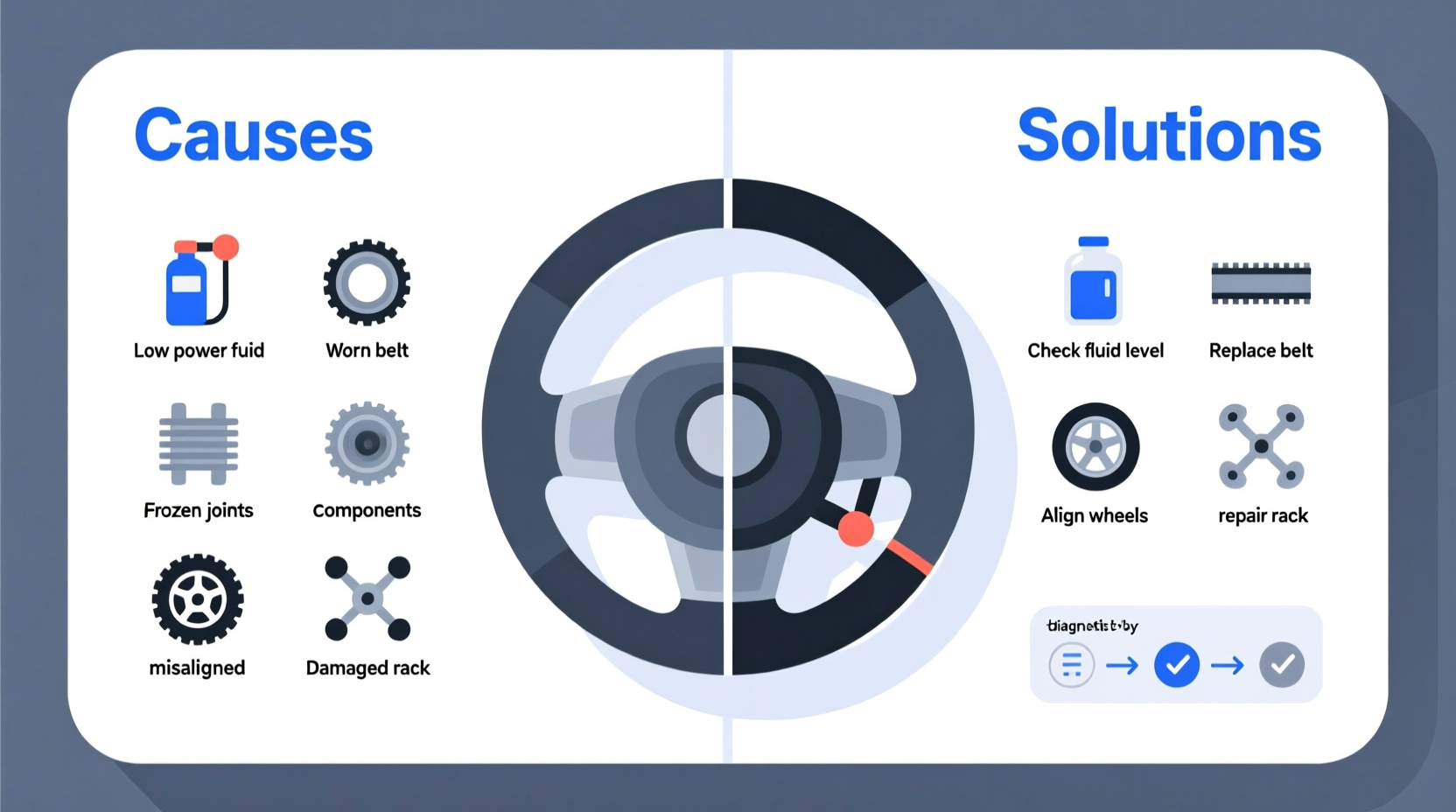
Steering difficulty often stems from problems within the power steering system, tire condition, suspension components, or fluid levels. Identifying the root cause is essential before attempting repairs.
- Low power steering fluid: The most frequent culprit. Fluid lubricates the system and provides hydraulic pressure. Low levels increase friction and strain on the pump.
- Contaminated or degraded fluid: Old or dirty fluid loses its viscosity and lubricating properties, reducing system efficiency.
- Power steering pump failure: A failing pump won’t generate enough pressure, making steering stiff, especially at low speeds.
- Leaking hoses or seals: Cracks or worn seals in the system can lead to fluid loss and pressure drops.
- Worn serpentine belt: This belt drives the power steering pump. If loose, cracked, or broken, it prevents proper pump operation.
- Tire pressure imbalance: Underinflated front tires significantly increase rolling resistance and steering effort.
- Alignment or suspension issues: Bent control arms, damaged tie rods, or misaligned wheels force the steering system to work harder.
- Rack and pinion problems: Internal wear or leaks in the steering gear reduce responsiveness and increase effort.
Step-by-Step Diagnosis and Solutions
Before visiting a mechanic, you can perform basic checks to narrow down the issue. Follow this logical sequence to identify and resolve the problem.
- Inspect power steering fluid level: Locate the reservoir (usually near the engine) and check the dipstick. Top off with the manufacturer-recommended fluid if low.
- Check fluid condition: Fresh fluid is typically clear or light amber. Dark, burnt-smelling fluid indicates contamination and needs flushing.
- Examine hoses and connections: Look for cracks, bulges, or wet spots indicating leaks. Replace damaged hoses immediately.
- Listen for whining noises: A high-pitched squeal when turning suggests pump strain due to low fluid or a failing pump.
- Test the serpentine belt: Check for fraying, glazing, or looseness. Ensure proper tension; replace if worn.
- Verify tire pressure: Use a gauge to confirm all tires meet the recommended PSI, especially the front ones.
- Assess steering at different speeds: If stiffness occurs only at low speeds, it points to power steering issues. Consistent resistance may indicate alignment or suspension faults.
- Inspect suspension components: Look for damaged ball joints, tie rod ends, or control arms. Any play or visible damage requires professional attention.
Preventive Maintenance Checklist
Regular maintenance can prevent most steering-related issues. Use this checklist monthly or every 3,000 miles.
- ✅ Check power steering fluid level and color
- ✅ Inspect serpentine belt for wear and tension
- ✅ Examine power steering hoses for leaks or swelling
- ✅ Confirm proper tire inflation and tread depth
- ✅ Listen for unusual steering noises during turns
- ✅ Schedule alignment checks every 6,000–10,000 miles
- ✅ Flush and replace power steering fluid every 30,000–50,000 miles
Comparison Table: Common Issues vs. Symptoms and Fixes
| Issue | Symptoms | Solutions |
|---|---|---|
| Low power steering fluid | Stiff steering, whining noise, fluid puddles under car | Top off fluid, inspect for leaks, repair as needed |
| Failing power steering pump | Gradual stiffness, grinding or screeching sounds | Replace pump, flush system, refill with new fluid |
| Worn serpentine belt | Squealing at startup, intermittent stiffness | Replace belt, check pulley alignment |
| Underinflated tires | Increased effort at low speed, uneven wear | Inflate tires to recommended PSI |
| Rack and pinion leak | Fluid near firewall, loose steering feel | Seal replacement or rack assembly replacement |
| Wheel alignment issues | Pulling to one side, uneven tire wear, constant correction needed | Professional alignment service |
Real-World Example: Diagnosing a Weekend Driver’s Struggle
Mike, a weekend commuter in his 2012 Honda Accord, noticed increasing resistance when turning into driveways. At first, he dismissed it as cold weather stiffness. But after a week, the effort remained even on warm days. He checked the power steering fluid—it was nearly empty. Upon closer inspection, he found a small puddle under the car and a damp hose connection near the pump. After replacing the leaking high-pressure hose and refilling the fluid, the steering returned to normal. Mike avoided a costly pump replacement by catching the leak early.
“Over 60% of power steering failures begin with undetected fluid leaks. Early intervention saves both money and safety risks.” — Carlos Mendez, ASE-Certified Master Technician
When to Seek Professional Help
While some issues can be resolved at home, others require specialized tools and expertise. Seek a qualified mechanic if you encounter:
- Visible damage to the steering rack or linkage
- Recurring fluid leaks after repair
- Steering wheel vibration or clunking noises
- Complete loss of power assist
- Recent collision or curb impact affecting front-end geometry
A professional diagnostic scan can reveal hidden issues like electronic steering sensor faults (in vehicles with electric power steering). Ignoring persistent stiffness may lead to total system failure, which compromises vehicle control—especially in emergency maneuvers.
FAQ
Why is my steering wheel hard to turn only when the car is not moving?
This typically indicates a power steering system issue. When the engine is off, there's no hydraulic assist. At idle, if turning remains difficult, it suggests low fluid, a failing pump, or internal rack problems.
Can I drive with a stiff steering wheel?
Short distances at low speeds may be manageable, but it’s unsafe. Increased steering effort reduces reaction time and increases driver fatigue. Prolonged driving under these conditions can damage the pump or rack.
How much does it cost to fix a hard-to-turn steering wheel?
Costs vary widely. Topping off fluid: under $20. Hose replacement: $150–$300. Power steering pump: $400–$700. Rack and pinion replacement: $800–$1,500. Labor rates and vehicle make affect final pricing.
Conclusion: Act Now for Safer, Smoother Driving
A steering wheel that’s hard to turn is more than a minor annoyance—it’s a warning sign that should never be ignored. From simple fluid top-offs to complex component replacements, addressing the issue promptly ensures your vehicle remains responsive and safe. Regular checks, attentive driving habits, and timely maintenance are key to avoiding major repairs. Don’t wait until steering becomes impossible. Take action today to protect your safety and extend the life of your vehicle’s steering system.
💬 Have you experienced a stiff steering wheel? Share your story or solution in the comments below—your insight could help another driver avoid a roadside emergency!