In an era where fast fashion blurs seasonal boundaries and climate-controlled environments make weather irrelevant, the idea of wearing “spring” or “summer” knits might seem outdated. Yet, knitwear remains a staple in wardrobes worldwide��not just for warmth, but for texture, structure, and subtle sophistication. The distinction between spring and summer knit sets used to be clear: lighter yarns and pastel palettes for spring, breathable fabrics and sleeveless silhouettes for summer. But now, with capsule wardrobes, year-round layering, and globalized trends, do these distinctions still hold weight?
The answer isn’t a simple yes or no. While traditional seasonal dressing has lost some of its rigidity, thoughtful consideration of fabric, weight, and function still matters—especially if you value longevity, comfort, and intentional style over trend-chasing.
The Evolution of Seasonal Knitwear
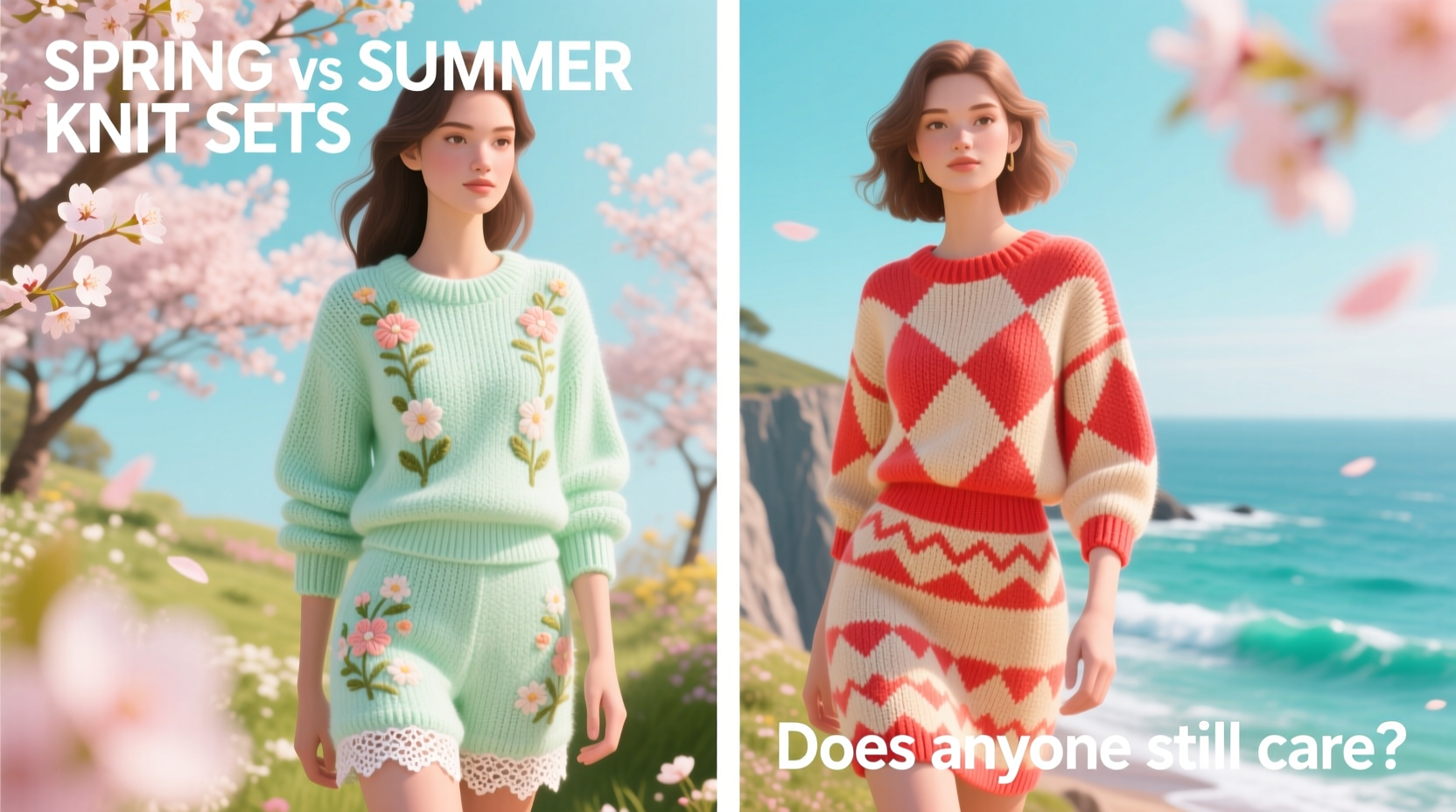
Historically, knit sets were deeply tied to climate and calendar. Spring knits leaned into transitional weather—think cotton-cashmere blends, cardigans with pearl buttons, and soft V-necks in blush or sage. Summer versions shifted toward linen-blend knits, open weaves, cropped tanks, and sleeveless vests designed for humidity without sacrificing elegance.
Today, many brands release “resort” or “vacation” collections that merge both seasons. A ribbed tank in mercerized cotton might be marketed as both a late-spring layer and a beachside cover-up. This fluidity reflects broader changes in consumer behavior: people buy based on occasion, not season; they live in temperature-regulated spaces; and they prioritize versatility above all.
“Seasonality in fashion is becoming more about mood than meteorology.” — Lena Park, Textile Curator at the Institute of Contemporary Style
Still, ignoring seasonal logic entirely risks overlooking performance. A tightly knit wool-blend set may look chic on Instagram, but it’s miserable in 90% humidity. Conversely, a sheer summer knit won’t provide enough coverage or warmth during a cool April evening.
Spring vs Summer: Key Differences That Still Matter
Despite the blurring lines, functional differences between spring and summer knits persist. Understanding them helps you make smarter purchases and build adaptable outfits.
| Feature | Spring Knit Sets | Summer Knit Sets |
|---|---|---|
| Fabric Weight | Medium-light (e.g., cotton-rayon, wool-silk blend) | Ultra-light (e.g., bamboo, linen-cotton, mercerized cotton) |
| Weave Type | Tighter ribbing, full sleeves common | Open stitches, lace-knit patterns, cut-outs |
| Color Palette | Pastels, earth tones, muted florals | Bright whites, neons, tropical prints |
| Layering Potential | High (worn over shirts, under jackets) | Low to moderate (often standalone pieces) |
| Climate Suitability | 50–70°F (10–21°C) | 70–90°F (21–32°C), low wind |
This isn’t to say one is superior. It’s about alignment with environment and lifestyle. A New York-based professional might layer a spring knit vest over a blouse well into early June. Meanwhile, someone in Miami might skip both and opt for air-conditioned office attire paired with a single lightweight duster.
Tip: When shopping online, check fabric composition before assuming a knit is \"seasonless.\" Even if styled in summer campaigns, a 60% acrylic blend will trap heat.Why Seasonal Awareness Still Enhances Style
Abandoning seasonal thinking doesn't lead to freedom—it often leads to clutter. Without context, consumers accumulate pieces that look good in photos but fail in real life. Recognizing subtle shifts in temperature, sunlight, and social rhythm allows for more intentional dressing.
For example, spring knits excel in layered ensembles: a longline cardigan over a slip dress, or a short-sleeve pullover with tailored shorts. They bridge winter tailoring and summer ease. Summer knits, by contrast, thrive in minimalism—paired with wide-leg linen pants or worn solo at outdoor dinners.
Moreover, caring for knitwear improves when you rotate by season. Storing heavier knits during peak summer prevents moth damage and reduces washing frequency. Lighter knits benefit from off-season rest, preserving elasticity.
A Real Wardrobe Shift: Sofia’s Coastal Move
Sofia, a graphic designer from Portland, used to buy knit sets based on Instagram aesthetics. She owned three cream-colored cashmere sets labeled as “spring,” but found herself overheating during her morning commute by May. After relocating to San Diego, she reevaluated her approach.
She donated two of the heavier sets and invested in two ultra-thin, UV-resistant cotton-linen knit tanks. These doubled as swim cover-ups and evening wear. By aligning her choices with actual climate—not arbitrary seasonal labels—she reduced laundry loads, increased wear frequency, and felt more comfortable.
Her experience illustrates a growing trend: consumers are shifting from symbolic dressing to situational dressing. Seasonality isn’t dead—it’s being redefined by personal geography and daily routine.
How to Build a Smarter Knitwear Rotation
You don’t need to follow fashion calendar dogma. Instead, adopt a flexible system that respects material science and lifestyle needs. Here’s a practical step-by-step guide:
- Assess Your Local Climate Pattern: Track average temperatures for March–June (spring) and June–September (summer). Note humidity levels and indoor AC use.
- Inventory Current Knits: Sort by fiber content. Label each piece as “cool-climate,” “transitional,” or “warm-climate” based on weight and breathability.
- Define Usage Scenarios: Will this be worn outdoors, in offices, or for travel? A merino blend may work in an icy conference room even in July.
- Invest in Two Anchor Pieces Per Season: One full set (top + bottom) and one standalone (cardigan or vest). Prioritize natural fibers.
- Rotate & Store Properly: Use breathable cotton bags for off-season storage. Avoid plastic bins, which trap moisture.
Checklist: Choosing the Right Knit Set for Your Season
- ✅ Check fiber content: Cotton, linen, bamboo > acrylic, polyester
- ✅ Test drape: Hold it up—does it feel airy or dense?
- ✅ Evaluate sleeve design: Long sleeves suggest spring; strapless or cap sleeves lean summer
- ✅ Consider colorfastness: Light colors fade faster in sun; dark summer knits absorb heat
- ✅ Ask: Can I wear this without sweating after 10 minutes outside?
FAQ: Seasonal Knitwear in a Post-Seasonal World
Can I wear a spring knit set in summer?
Yes—if it's made from breathable fibers like cotton or silk and worn in air-conditioned spaces or cooler evenings. Avoid heavy wools or tight weaves in hot, humid conditions.
Are “seasonless” knit sets worth buying?
Sometimes. Many so-called seasonless knits are medium-weight synthetics that pill quickly. True versatility comes from natural fibers with balanced weight, not marketing claims.
Do fashion seasons still influence production?
Absolutely. Despite “see-now, buy-now” models, most designers still create collections around spring/summer and fall/winter cycles. Retailers plan inventory accordingly, even if consumers don’t.
Conclusion: Caring About Care, Not Just Calendars
The question isn’t whether anyone cares about seasonal knitwear anymore—it’s whether they care enough to choose wisely. Fashion’s shift away from rigid calendars has empowered individuals to dress for their lives, not the runway. But discarding seasonal logic completely risks ignoring the very qualities that make knits valuable: tactility, temperature regulation, and timelessness.
Instead of asking “Is this a spring or summer knit?”, ask “Will this serve me comfortably in my environment?” That mindset fosters better purchasing decisions, longer garment life, and a more sustainable wardrobe.
🚀 Reassess your last knit purchase. Was it bought for a moment—or built for movement through seasons? Share your thoughts and styling tips in the comments below.








