The promise of self-driving cars has captivated the public imagination for over a decade. With headlines about fully autonomous taxis and AI-powered navigation systems, it’s easy to believe that driverless vehicles are the inevitable future of mobility. Yet beneath the excitement lies a complex web of unresolved challenges. While automation can reduce human error—one of the leading causes of road accidents—the technology introduces new dangers that demand serious scrutiny. From software failures to moral dilemmas in split-second decisions, understanding the risks is essential before widespread adoption.
1. Technological Limitations and Sensor Failures
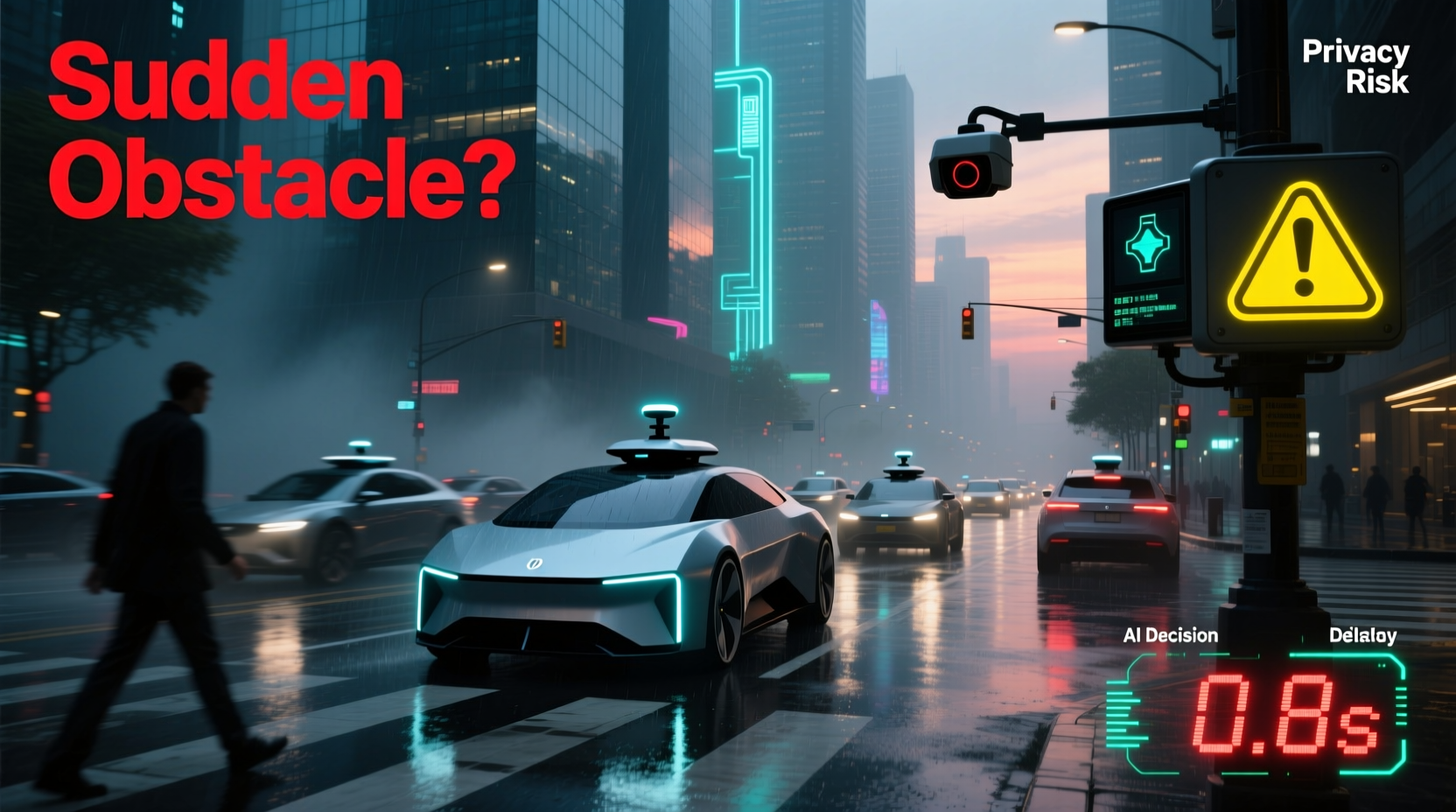
Autonomous vehicles rely on a combination of sensors—cameras, radar, lidar, and ultrasonic detectors—to perceive their surroundings. These systems are designed to detect pedestrians, other vehicles, traffic signs, and road conditions. However, no sensor suite is infallible. Environmental factors such as heavy rain, fog, snow, or even direct sunlight can impair visibility and cause misinterpretation of data.
In 2018, an Uber self-driving test vehicle struck and killed a pedestrian in Tempe, Arizona. The National Transportation Safety Board (NTSB) investigation revealed that the system detected the victim six seconds before impact but failed to classify her correctly. The software suppressed emergency braking commands to avoid false positives, assuming the human safety driver would intervene. They didn’t.
This incident underscores a critical flaw: current AI lacks contextual awareness. It struggles with unpredictable scenarios like jaywalking, construction zones, or erratic human behavior. Unlike human drivers who use intuition and social cues, autonomous systems operate within rigid programming boundaries.
Tip: Always assume autonomous systems may misread obscured or unusual road situations—never rely solely on automation.2. Cybersecurity Vulnerabilities
Self-driving cars are essentially mobile computers connected to cloud networks, GPS, and vehicle-to-vehicle (V2V) communication systems. This connectivity opens them up to cyberattacks. Hackers could potentially take control of steering, braking, or acceleration through vulnerabilities in software updates, infotainment systems, or wireless communication protocols.
In 2015, security researchers remotely disabled a Jeep Cherokee while it was being driven on a highway by exploiting its entertainment system. Although this wasn’t a fully autonomous vehicle, it demonstrated how deeply embedded software can be compromised. As cars become more automated, the attack surface expands significantly.
Manufacturers often prioritize functionality over robust encryption and real-time threat detection. Without standardized cybersecurity regulations across the industry, each company implements its own protections—or lack thereof—creating inconsistent safety levels across models.
“Autonomous vehicles represent one of the most complex cybersecurity challenges we’ve ever faced in consumer technology.” — Dr. Lillian A. Ratliff, Electrical Engineering Professor, University of California, Berkeley
3. Ethical Decision-Making in Critical Situations
One of the most debated aspects of self-driving cars is their ability—or inability—to make ethical decisions during unavoidable crash scenarios. Should a vehicle swerve to avoid hitting a child if it means endangering the passenger? Should it prioritize minimizing total harm, protecting its occupants, or follow traffic laws regardless of outcome?
This dilemma, known as the \"trolley problem,\" isn't just philosophical—it affects algorithm design. In practice, manufacturers must program decision trees into AI systems, but there is no consensus on what constitutes the “right” choice. Public opinion varies widely, and cultural differences further complicate global deployment.
A 2016 study published in *Science* analyzed responses from millions of participants worldwide and found significant disagreement on whether algorithms should minimize overall casualties or protect passengers at all costs. When asked if they would ride in a car programmed to sacrifice them to save others, most people said no.
The absence of clear ethical frameworks leaves automakers navigating uncharted moral territory without regulatory guidance, increasing the risk of public backlash when tragic decisions occur.
4. Regulatory Gaps and Inconsistent Standards
While companies race to deploy autonomous vehicles, regulation lags far behind. The U.S. Department of Transportation has issued voluntary guidelines, but no binding federal laws govern the testing or commercial use of self-driving cars. States set their own rules, creating a patchwork of oversight that allows aggressive testing in places like California and Arizona while leaving gaps in accountability.
For example, after the fatal Uber crash, Arizona suspended testing temporarily but later reinstated it with minimal new restrictions. Meanwhile, federal agencies have limited authority to enforce safety recalls or mandate transparency in accident reporting.
Without uniform standards for performance benchmarks, failure reporting, or mandatory black-box data logging, it’s difficult to assess true safety records across different platforms. This lack of transparency undermines public trust and hinders meaningful progress toward safer systems.
| Concern | Description | Current Regulatory Status |
|---|---|---|
| Sensor Reliability | Vulnerability to weather, lighting, and occlusion | No mandatory testing under adverse conditions |
| Cybersecurity | Risk of remote hijacking or data breaches | Guidelines exist; no enforced certification |
| Ethical Algorithms | No standard for life-risk decision-making | Unregulated; left to manufacturer discretion |
| Data Transparency | Limited access to crash logs and AI decisions | Voluntary disclosure only |
5. Overreliance and Driver Complacency
Even semi-autonomous systems like Tesla’s Autopilot contribute to a dangerous phenomenon: driver complacency. When drivers believe the car can handle most situations, they disengage mentally, often using phones, watching videos, or even sleeping at the wheel.
Multiple crashes involving Tesla vehicles operating on Autopilot show drivers failing to respond to warnings for extended periods. In some cases, hands were not detected on the wheel for over 30 seconds before collisions occurred. The NTSB has repeatedly warned that these systems create a false sense of security, especially given their marketing names, which imply full autonomy when they are not.
This mismatch between capability and perception increases risk. Drivers may hesitate to retake control because they weren’t paying attention, or worse, assume the system will act when it cannot.
Tip: Never treat Level 2 automation (like adaptive cruise control + lane keeping) as full self-driving. Stay alert and keep hands near the wheel.Mini Case Study: The 2018 Tesla Model X Crash on Highway 101
In March 2018, a Tesla Model X crashed into a highway barrier in Mountain View, California, killing the driver. The vehicle was operating on Autopilot at the time. Data showed the driver had received multiple visual and auditory alerts to place hands on the wheel in the 10 seconds before impact but did not respond.
Investigators found the Autopilot system had difficulty interpreting lane markings due to ongoing construction work. Instead of slowing down or rerouting, it continued forward until collision. Tesla emphasized that Autopilot requires active driver supervision, yet the incident raised questions about whether users truly understand the limits of partial automation.
This case illustrates how technological shortcomings combined with human overtrust can lead to fatal outcomes—even when safety mechanisms are technically functioning.
Checklist: What Consumers Should Know Before Using Autonomous Features
- Verify the vehicle’s automation level (Level 1–5); most consumer cars are Level 2 at best.
- Never assume the car sees everything you see.
- Keep your hands on the wheel and eyes on the road, even with Autopilot engaged.
- Understand that features like “Full Self-Driving” are misleading; they do not mean full autonomy.
- Review manufacturer warnings and limitations in the owner’s manual.
- Support policies that require transparent crash reporting and independent safety audits.
Frequently Asked Questions
Can self-driving cars currently operate safely without a human driver?
No commercially available vehicle can safely operate without a human ready to take over at any moment. Even Waymo’s robotaxis in Phoenix operate under strict geographic and weather limitations and still face challenges with complex urban environments.
Are self-driving cars safer than human drivers?
In controlled conditions, they may reduce certain types of errors, such as distracted or impaired driving. However, they struggle with unpredictability and edge cases. Overall, they are not yet proven to be safer across diverse real-world conditions.
What happens if a self-driving car causes an accident?
Liability remains legally ambiguous. Current law typically holds the human operator responsible, even if relying on automation. As technology advances, responsibility may shift toward manufacturers or software developers—but no comprehensive legal framework exists yet.
Conclusion
The development of self-driving cars represents a monumental leap in transportation technology, but it also brings unprecedented risks. From unreliable sensors and cybersecurity threats to ethical quandaries and inadequate regulations, the path to safe autonomy is fraught with obstacles. While innovation continues, consumers and policymakers must remain vigilant. Blind faith in technology can be as dangerous as the flaws it seeks to overcome.
💬 Stay informed, question claims, and demand transparency. The future of driving shouldn’t be decided by engineers alone—public safety depends on collective awareness and accountability. Share this article to help others understand the real risks behind the hype.








