
When a tire fails at high speed, every second counts. The difference between maintaining control and losing it can come down to the type of tire you’re driving on. Run-flat tires have been marketed as a revolutionary safety upgrade—allowing drivers to continue driving for up to 50 miles after a puncture, even with zero air pressure. But many owners complain about a harsher ride, reduced fuel efficiency, and higher costs. So, is the trade-off worth it? This article dives deep into the real differences between run-flat and regular tires, weighing safety against comfort, long-term value, and practicality.
The Core Difference: How Run-Flats Work
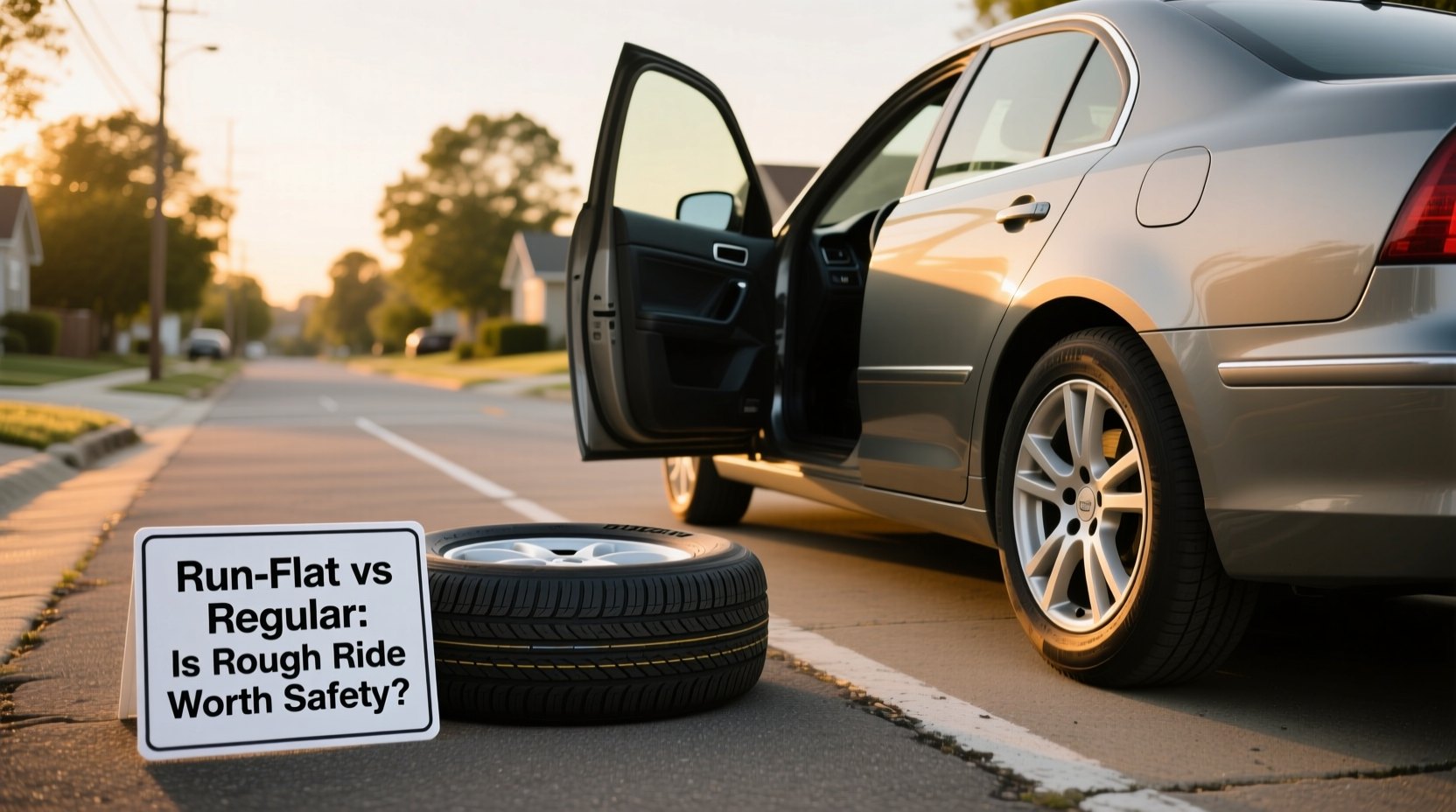
Run-flat tires are engineered with reinforced sidewalls made from heat-resistant rubber compounds and additional structural support layers. When a standard tire loses air, the sidewall collapses, making the vehicle unstable and dangerous to drive. In contrast, run-flat tires maintain their shape even when completely deflated, allowing continued operation under controlled conditions.
This design eliminates the immediate need for roadside tire changes—a scenario that’s not only inconvenient but also hazardous, especially on busy highways or in poor weather. Most vehicles equipped with run-flats do not include spare tires, freeing up trunk space and reducing vehicle weight slightly.
However, this innovation comes with compromises. The stiffer sidewalls required for run-flat functionality transmit more road feedback into the cabin. Drivers often describe the experience as “harsh,” “jarring,” or “like riding on rocks” over uneven pavement.
Tip: If your car came with run-flat tires, don’t assume all tire shops can service them. Always confirm compatibility before replacement.Safety Benefits: Are Run-Flats Really Safer?
Proponents argue that run-flat tires enhance safety by reducing the risk of blowout-related accidents. According to the National Highway Traffic Safety Administration (NHTSA), tire-related crashes cause over 700 fatalities annually in the U.S., many due to sudden loss of control after a blowout. Run-flats mitigate this by allowing drivers to keep moving to a safer location.
“Run-flat technology removes one of the most dangerous moments in driving—the roadside tire change. For urban commuters and frequent highway users, that’s a meaningful safety upgrade.” — Dr. Alan Reeves, Automotive Safety Researcher, University of Michigan Transportation Institute
Additionally, modern vehicles with run-flat systems include tire pressure monitoring systems (TPMS) that alert drivers immediately when pressure drops. This early warning helps prevent further damage and reduces the chance of secondary failures like wheel rim damage or brake interference.
Yet, safety isn't just about post-puncture mobility. Some studies suggest that the stiffer construction of run-flats may affect overall handling dynamics. Under normal conditions, they can deliver excellent grip and responsiveness, particularly in luxury and performance sedans. But in wet or icy conditions, certain models have shown slightly longer stopping distances compared to premium all-season radials.
Comfort and Ride Quality: The Trade-Off You Feel
There’s no denying it: most drivers notice a difference in ride comfort. Independent tests by consumer publications such as Consumer Reports consistently rank vehicles equipped with run-flat tires lower in ride quality than identical models with conventional tires.
The reason lies in physics. Stiff sidewalls reduce suspension compliance, meaning bumps, potholes, and expansion joints are transmitted more directly into the chassis. Over time, this can lead to increased driver fatigue, especially on long commutes or poorly maintained roads.
Another issue is noise. While not universally louder, some run-flat models generate more road noise due to their rigid tread blocks and dense rubber compounds. This becomes more noticeable at highway speeds.
Interestingly, automakers often pair run-flats with softer suspension tuning to offset the harshness. But even then, the compromise is evident. Luxury brands like BMW, which adopted run-flats widely across their lineup, have faced customer backlash—so much so that some now offer conventional tires as an option on certain trims.
Real-World Example: A Commuter’s Dilemma
Consider Sarah, a software engineer in Chicago who drives a 2022 BMW 330i. Her daily commute includes 45 minutes each way on aging city streets riddled with potholes. After six months, she began noticing how every bump felt amplified. “It’s like my spine gets shaken twice a day,” she says. She learned her tires were run-flats—standard equipment. When they wore out at 32,000 miles, she opted for high-quality conventional all-season tires paired with a full-size spare.
The result? Immediate improvement in ride comfort. “I didn’t realize how tense I was while driving until it went away,” she notes. She accepted the trade-off: carrying a spare and knowing she’d need to change it if needed. For her, comfort outweighed the convenience of run-flats.
Cost and Longevity Comparison
Run-flat tires typically cost 15% to 30% more than comparable conventional tires. A set of premium run-flats can exceed $1,800, while equivalent regular tires might run $1,300–$1,500. They also tend to wear out faster—often lasting 20,000 to 30,000 miles versus 40,000 to 60,000 for some all-season radials.
Replacement complexity adds to the cost. Not all tire centers can properly mount or balance run-flats, and improper installation can lead to vibrations or premature failure. Additionally, once a run-flat has been driven on while deflated—even briefly—it cannot be repaired and must be replaced, regardless of visible damage.
In contrast, many conventional tires can be patched or plugged safely if the puncture is in the tread area and detected early. This repair usually costs between $20 and $40, offering significant savings over time.
| Feature | Run-Flat Tires | Regular Tires |
|---|---|---|
| Average Lifespan | 20,000–30,000 miles | 40,000–60,000 miles |
| Initial Cost (set) | $1,500–$2,000 | $1,000–$1,600 |
| Repairable? | No, after any run-flat use | Yes, if puncture is minor and in tread |
| Spare Tire Included? | Rarely | Usually |
| Ride Comfort | Moderate to Poor | Good to Excellent |
| Blowout Response | Can drive up to 50 miles at 50 mph | Must stop immediately |
Environmental and Practical Considerations
Beyond personal comfort and cost, there are broader implications. The shorter lifespan of run-flat tires means more rubber ends up in landfills sooner. While recycling programs exist, tire recycling rates in the U.S. hover around 80%, with many shredded tires used in civil engineering or fuel recovery rather than closed-loop reuse.
From a practical standpoint, relying solely on run-flat capability assumes two things: that the TPMS alerts you promptly, and that you can reach a service center within 50 miles. In rural areas or during severe weather, this may not be feasible. A flat in the middle of nowhere could still leave you stranded—even with run-flats—if no repair facility is nearby.
Moreover, emergency kits become more important. Without a spare, drivers must depend entirely on roadside assistance. That works well for those with subscription services like OnStar or AAA, but less so for budget-conscious drivers without coverage.
Tip: If your car uses run-flats, invest in a reliable roadside assistance plan. You won’t be able to swap a tire yourself.Step-by-Step: Choosing the Right Option for Your Needs
Deciding between run-flat and regular tires isn’t one-size-fits-all. Follow this decision framework to make an informed choice:
- Evaluate your driving environment: Do you mostly drive in cities with quick access to service centers? Run-flats may be convenient. Frequent rural travel? A spare tire offers more flexibility.
- Assess road quality: Poor pavement increases discomfort with run-flats. If your area has bad roads, prioritize ride comfort.
- Check your vehicle’s original setup: Some cars are tuned specifically for run-flats. Switching to conventional tires may require suspension recalibration or void warranty provisions.
- Calculate long-term costs: Factor in expected mileage, replacement frequency, and repair potential. Use a simple formula: (Cost per set ÷ Expected miles) × Annual mileage = yearly tire cost.
- Test drive both configurations: If possible, test drive the same model with different tire types. Pay attention to how bumps feel and whether noise builds at speed.
Expert Insight: Industry Perspectives
While manufacturers continue to adopt run-flats—especially in premium segments—some tire engineers express reservations about universal application.
“The technology solves a real problem, but it shouldn’t be forced onto every driver. For someone who values comfort and cost-efficiency, conventional tires with a good spare and TPMS are still the smarter choice.” — Maria Chen, Senior Tire Development Engineer, Michelin North America
She emphasizes that advancements in conventional tire durability and TPMS accuracy have narrowed the safety gap. Modern sensors trigger warnings at just 25% pressure loss, giving drivers ample time to respond safely.
Frequently Asked Questions
Can I replace run-flat tires with regular tires?
Yes, in most cases—but proceed with caution. Your vehicle’s suspension may be tuned for the stiffer ride of run-flats, so switching may alter handling. Also, ensure you have a spare tire, jack, and tools. Consult your owner’s manual or a qualified mechanic before making the switch.
Do run-flat tires eliminate blowouts?
No. Run-flats can still blow out, especially at high speeds or under heavy loads. However, they are designed to remain functional after gradual air loss. A sudden catastrophic failure (e.g., sidewall rupture) can still result in loss of control.
Are run-flat tires repairable after a puncture?
Generally, no. Once a run-flat tire has been driven on without air—even for a few miles—it’s considered structurally compromised. Internal damage may not be visible, so manufacturers recommend replacement, not repair.
Final Verdict: Is the Rough Ride Worth It?
The answer depends on your priorities. If you live in an urban area, drive a luxury or performance vehicle, and value peace of mind over ultimate comfort, run-flat tires offer tangible safety benefits. The ability to avoid a roadside tire change in traffic, rain, or darkness is a legitimate advantage—one that could prevent injury or worse.
But if you prioritize ride quality, long-term affordability, and environmental sustainability, conventional tires with a full-size spare and robust TPMS system remain a compelling, and often superior, alternative. The automotive industry’s push toward run-flats hasn’t eliminated the drawbacks, and consumer sentiment remains divided.
Ultimately, this isn’t just about technology—it’s about lifestyle. Your tires are your only contact with the road. They influence how your car feels, handles, and endures. Making an informed choice means balancing marketing claims with real-world experience.
💬 Your turn: Have you driven on run-flat tires? Did the safety benefits outweigh the stiff ride? Share your story in the comments and help others decide what’s best for their journey.








