
From organizing a cluttered kitchen to securing tools in a workshop or hanging holiday decorations, hooks are one of the most versatile and overlooked solutions in everyday organization. While they may seem simple, choosing the right hook—durable, well-designed, and budget-friendly—can make a significant difference in both function and longevity. Not all hooks perform equally, and many fail under modest weight or peel off walls due to poor adhesive or weak mounting hardware. This guide explores truly reliable and affordable options that deliver performance without breaking the bank.
Why Hook Quality Matters More Than You Think
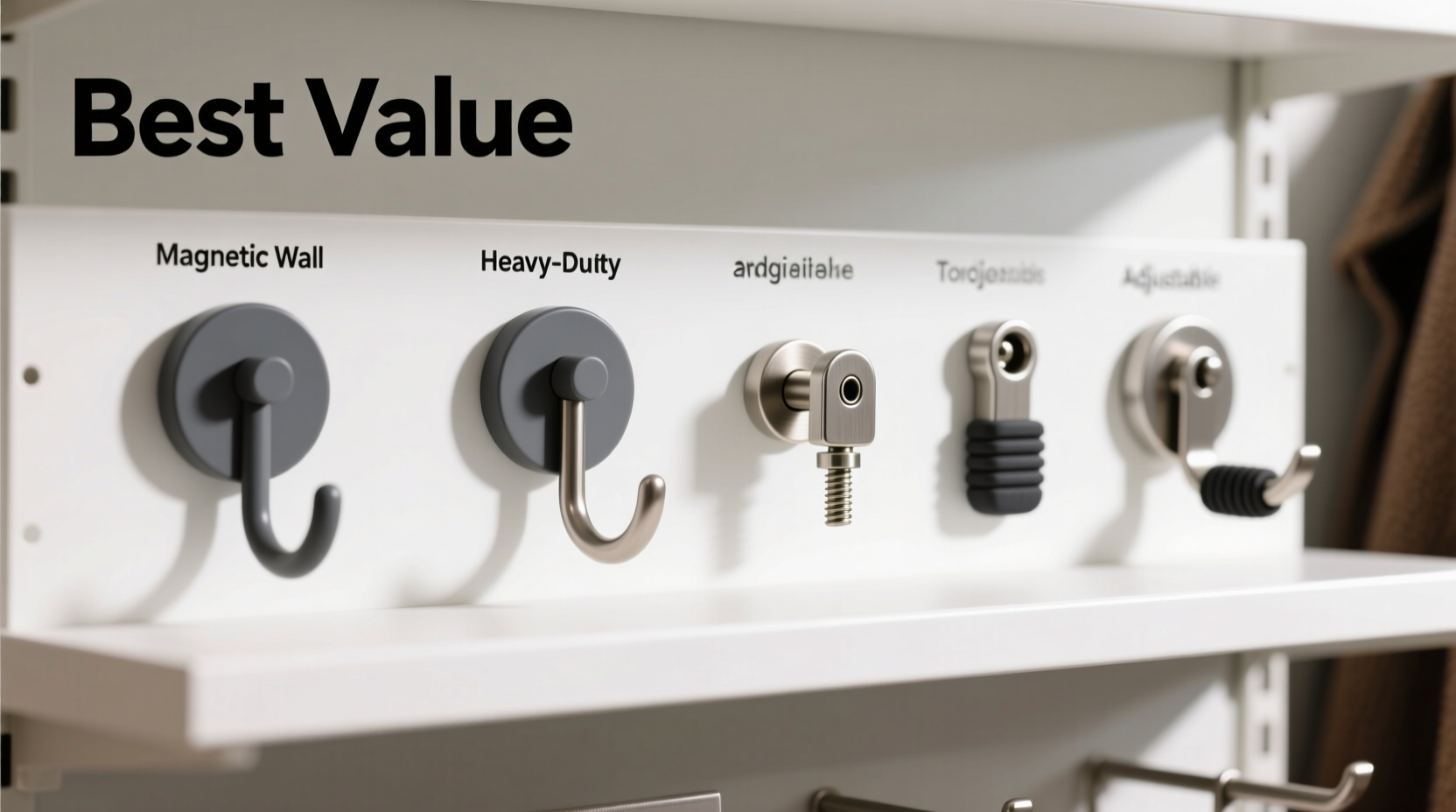
A poorly made hook might hold a light jacket for a few weeks before sagging or detaching completely. In high-moisture areas like bathrooms or garages, rust and corrosion can compromise even basic functionality. The best hooks balance strength, material durability, ease of installation, and cost. Whether you're dealing with drywall, tile, wood, or concrete, the right hook depends on the surface, load, and environment.
For example, over-the-door hooks often buckle under heavier coats, while adhesive hooks may lose grip in humid conditions. Conversely, properly installed screw-in hooks in wall studs can support up to 50 pounds or more. Understanding these differences helps avoid repeated replacements and wasted money.
Tip: Always match the hook type to the wall material and expected load. Using drywall anchors doubles holding power compared to screws alone.Top 5 Reliable & Affordable Hook Types
Below are five of the most dependable and budget-conscious hook types, each suited to specific needs and environments.
1. Steel Screw-In Hooks (Best for Heavy Loads)
Made from hardened steel or zinc-coated metal, these hooks are ideal for hanging heavy items like tools, bikes, or pots. They require drilling into wall studs or using wall anchors but offer unmatched stability. Brands like MonkeyFrog and Gorilla Grip offer packs of 10–20 for under $15.
2. Adhesive Command Strips with Hooks (Best for Rentals & Temporary Use)
3M Command Hooks remain a top choice for renters or anyone avoiding wall damage. Their adhesive technology holds firmly yet removes cleanly. Medium-sized versions support up to 7.5 pounds. While not suitable for long-term outdoor use, they excel in kitchens, bathrooms, and dorm rooms.
3. Over-the-Door Hooks (Best for Closets and Doors)
These no-installation hooks fit over standard doors and are perfect for robes, towels, or bags. Look for models with padded arms to prevent door scratches and reinforced metal cores. SimpleHouseware and mDesign offer durable options under $10 for multi-packs.
4. Cupboard Door Hooks (Best for Small Spaces)
Maximize unused space by installing small hooks inside cabinet doors. Ideal for hanging measuring tapes, oven mitts, or cleaning rags. These usually screw in and are made from stainless steel or coated metal to resist moisture.
5. S-Hooks (Best for Utility & Flexibility)
S-hooks are open-ended metal loops used in garages, sheds, and pantries. They’re excellent for hanging baskets, garden tools, or extension cords. Choose thick-gauge steel with a vinyl coating to prevent scratching surfaces. Often sold in bulk, they cost as little as $0.25 per unit.
Comparison Table: Best Hooks by Use Case
| Hook Type | Max Weight | Installation | Best For | Avg. Price (Pack of 10) |
|---|---|---|---|---|
| Steel Screw-In | 25–50 lbs | Drill + Anchor | Garage, Workshop, Outdoor | $12–$18 |
| Command Adhesive | 3–7.5 lbs | Peel & Stick | Rentals, Bathrooms, Kitchens | $10–$15 |
| Over-the-Door | 10–15 lbs | No install | Closets, Bedrooms, Dorms | $8–$12 |
| Cupboard Door | 5–8 lbs | Screw-in | Kitchen, Pantry, Utility | $6–$10 |
| S-Hooks | 10–30 lbs | Hang directly | Garage, Garden, Storage | $5–$9 |
“Most hook failures come down to mismatched application, not product quality. A Command hook isn’t flawed because it fails under 20 pounds—it’s being misused.” — Daniel Reeves, Home Organization Engineer
Step-by-Step: Choosing and Installing the Right Hook
Selecting the best hook isn’t just about price. Follow this sequence to ensure reliability and value.
- Assess the Load: Weigh or estimate the item’s weight. Double it for safety margin.
- Evaluate the Surface: Is it drywall, tile, wood, or metal? Each requires different mounting.
- Determine Duration: Is the hook temporary (rental) or permanent (owned home)?
- Choose Hook Type: Match your findings to one of the five types above.
- Install Correctly: Use anchors for drywall, proper drill bits for masonry, and follow adhesive instructions precisely.
- Test Gradually: Hang lighter items first, then increase weight over 24 hours.
Real-World Example: Organizing a Small Garage
Mark, a homeowner in Portland, struggled with tools scattered across his two-car garage. Shelves were full, and floor space was limited. He invested $20 in a mix of steel screw-in hooks and vinyl-coated S-hooks. After identifying stud locations, he mounted 12 heavy-duty hooks along a single wall. He hung wrench sets, pliers, extension cords, and even a foldable step ladder. Within an hour, the garage was transformed—tools were visible, accessible, and off the floor. Two years later, none of the hooks have failed, and Mark estimates he saved hundreds in unnecessary shelving units.
Smart Buying Checklist
- ✅ Confirm weight capacity exceeds your needs by at least 50%
- ✅ Check if installation method suits your wall type
- ✅ Look for rust-resistant materials (stainless steel, zinc coating)
- ✅ Buy multipacks for better per-unit pricing
- ✅ Read reviews focusing on long-term durability, not just initial stickiness or ease
- ✅ Avoid ultra-cheap no-name hooks on marketplace sites—many fail within months
Frequently Asked Questions
Can adhesive hooks work in bathrooms?
Yes, but only if applied correctly. Clean the surface with rubbing alcohol, let it dry completely, and wait 24 hours before use. High-humidity areas reduce lifespan, so replace them every 6–12 months.
What’s the strongest hook for drywall without a stud?
Toggle bolts or snap-toggle anchors paired with a screw-in hook can support up to 50 pounds. Standard plastic anchors are limited to 10–15 pounds and may pull out over time.
Are over-the-door hooks damaging to doors?
Poorly designed ones can scratch paint or warp door edges. Choose models with wide, felt-padded hooks and avoid over-tightening. Most modern versions are safe for standard interior doors.
Final Thoughts: Value Lies in Longevity
The most affordable hook isn’t the cheapest upfront—it’s the one that lasts longest without failing. Investing in a $1.50 steel hook that holds 30 pounds for years beats replacing ten $0.50 plastic hooks that break within months. Reliability comes from proper material selection, correct installation, and realistic load expectations.
Whether you're decluttering a closet, setting up a workshop, or simplifying daily routines, the right hooks make a tangible difference. By focusing on proven designs, trusted brands, and smart placement, you gain both organization and peace of mind—all without overspending.
🚀 Start today: Audit one area of your home or workspace, identify three items currently unorganized, and install the right hooks to solve it. Small changes create lasting order.








