In today’s fast-fashion landscape, where vintage aesthetics are endlessly recycled and rebranded, it's becoming harder to distinguish between once-distinct subcultural styles. Nowhere is this more evident than in the case of the punk and grunge hoodie. What were once symbols of rebellion with sharply different ideologies—punk’s confrontational anarchy and grunge’s introspective apathy—are now often lumped together under the umbrella of “edgy streetwear.” But beneath the surface, key differences remain. The question isn’t just about clothing—it’s about cultural memory, authenticity, and whether style still carries meaning.
The Roots: Punk Rebellion vs Grunge Resignation
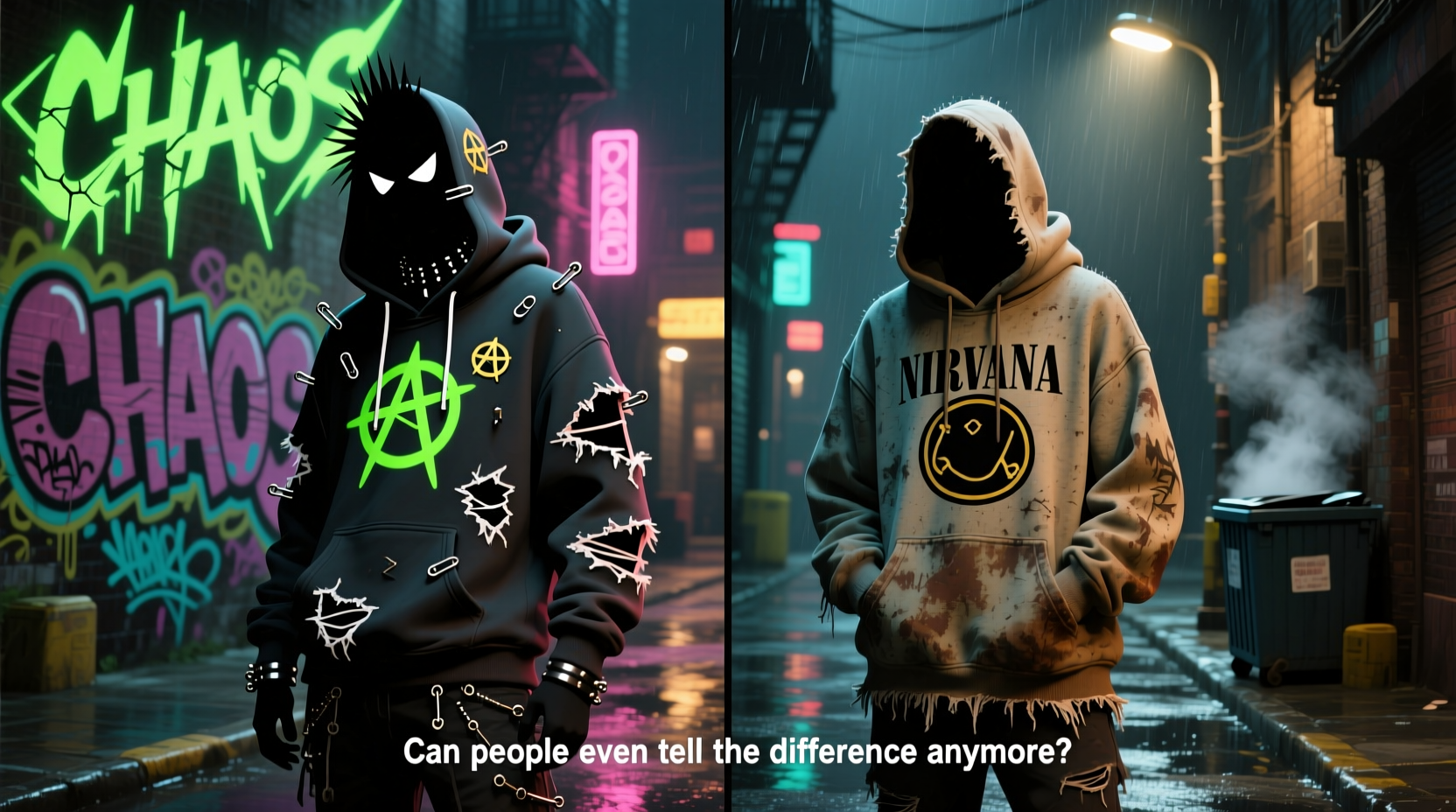
Punk emerged in the mid-1970s as a direct response to political disillusionment, economic stagnation, and mainstream complacency. Bands like the Sex Pistols, The Clash, and Dead Kennedys used music and fashion as weapons. Punk fashion was aggressive: ripped clothing held together with safety pins, studded leather jackets, tartan pants, and custom patches screaming anti-establishment slogans. The look was intentional, confrontational, and designed to shock.
Grunge, by contrast, took shape two decades later in the rainy basements of Seattle. It wasn’t crafted for rebellion but born from indifference. Bands like Nirvana, Soundgarden, and Mudhoney wore what they had—flannel shirts, worn jeans, and thrift-store sweaters—because comfort and practicality mattered more than image. Grunge was less about making a statement and more about rejecting the idea of needing one at all.
When it comes to hoodies, the divergence starts here. A punk hoodie was never just a sweatshirt—it was a canvas. Screen-printed with anarchist symbols, band logos, or provocative slogans, it carried ideology. Safety pins might dangle from the sleeves; patches sewn haphazardly declared allegiance to causes or bands. The message was loud, proud, and unapologetic.
A grunge hoodie, on the other hand, was likely plain, oversized, and slightly frayed at the cuffs. It might be stained with coffee or dirt—not because it was staged, but because no one cared enough to clean it. The aesthetic was “I rolled out of bed and threw this on,” not “I spent an hour curating my anti-fashion statement.”
“Punk dressed to disrupt. Grunge dressed because they couldn’t be bothered not to.” — Lila Monroe, Cultural Historian & Author of *Subculture Codes*
Modern Blurring: When Authenticity Gets Washed Out
Fast-forward to 2024, and both styles have been absorbed into mainstream fashion. High-end designers reinterpret punk’s DIY chaos as “deconstructed luxury,” while fast-fashion retailers sell “grunge-inspired” hoodies that have never seen a basement show or a drop of rain.
The problem? These interpretations flatten nuance. A black hoodie with a fake tear and a printed anarchist symbol isn’t punk—it’s costume. A pre-distressed, faded grey hoodie labeled “Seattle Vintage Style” isn’t grunge—it’s marketing.
Worse, social media accelerates the confusion. On TikTok and Instagram, #grunge and #punk often appear side by side, tagged on nearly identical outfits. Algorithms reward aesthetic over context, so visual similarity trumps historical accuracy. Younger audiences, disconnected from the original movements, see only the surface: dark colors, layers, and a general air of dishevelment.
Tip: If you're drawn to either style, research the music and history behind it. Wearing the look without understanding the culture risks reducing rebellion to a trend.Spotting the Difference: Key Visual & Cultural Cues
Despite the blending, distinctions still exist—if you know where to look. Here’s how to tell them apart:
| Feature | Punk Hoodie | Grunge Hoodie |
|---|---|---|
| Graphics | Political slogans, band logos, provocative imagery (e.g., swastikas crossed out, riot scenes) | Minimal or none; if present, obscure band logos (e.g., small Nirvana smiley face) |
| Fit & Condition | Tighter fit, intentionally distressed (rips, paint splatter), may include studs or chains | Oversized, naturally worn, fabric thinning at elbows, possible pilling |
| Layering | Leather jacket on top, combat boots, fishnets underneath | Flannel shirt tied around waist, worn jeans, work boots |
| Spirit | Defiant, theatrical, politically charged | Apathetic, understated, emotionally raw |
Checklist: Is This Look Actually Punk or Grunge?
- Does the hoodie feature intentional, meaningful graphics or slogans?
- Is the distressing random and chaotic (punk) or uniform and worn-in (grunge)?
- What else is being worn with it? Leather and spikes suggest punk; flannel and Doc Martens could go either way, but with ripped tights leans punk, with cargo pants leans grunge.
- Is the wearer engaging with the music and values behind the style?
- Was this bought as part of a \"rebellious aesthetic,\" or does it reflect genuine personal expression?
Real Example: Two Concertgoers, One Night
At a recent indie rock show in Portland, two attendees arrived wearing black hoodies. To a casual observer, they looked similar. But closer inspection revealed stark contrasts.
Jamal wore a tightly fitted black hoodie covered in hand-stitched patches: Crass, Dead Kennedys, and a large embroidered circle-A. His sleeves were pinned with safety pins, and he wore combat boots with laces untied. He’d spent hours preparing his look, not for attention, but as tribute to a movement that shaped his worldview. His hoodie was a manifesto.
Meanwhile, Casey wore an oversized, grey Champion hoodie, faded from years of washing. One elbow had a small hole, and the hem was fraying. She paired it with baggy jeans and beat-up Converse. She hadn’t thought much about her outfit—she’d grabbed it off the floor that morning. Her favorite band was playing, but she didn’t own any merch. Her hoodie was just what she lived in.
One was punk. One embodied grunge. Both were authentic. Neither was trying to impress the algorithm.
Why the Difference Still Matters
It might seem trivial—after all, clothing is clothing. But when we erase the distinctions between punk and grunge, we risk erasing the values they represented. Punk was about agency, resistance, and speaking up. Grunge was about honesty, vulnerability, and opting out. They responded to different crises in different ways. One said, “Fight back.” The other said, “I’m too tired to pretend.”
Today’s blended “alt-aesthetic” often strips both of their substance. A designer hoodie with fake patches sells the appearance of rebellion without the risk. That’s not empowerment—it’s exploitation.
As cultural critic Marcus Bell writes: “When dissent becomes décor, it stops being dissent.”
Frequently Asked Questions
Can a hoodie be both punk and grunge?
Rarely—and only in specific contexts. For example, a flannel-lined hoodie with a DIY band patch might bridge both worlds, especially in the early '90s when grunge absorbed some punk influences. But the intent matters: if it’s meant to provoke, it leans punk; if it’s meant to disappear, it leans grunge.
Are there modern bands keeping these styles alive?
Yes. Bands like IDLES and Priests carry punk’s political urgency and aesthetic boldness. Meanwhile, acts like Wet Leg or Orville Peck blend grunge’s emotional rawness with modern indie sounds, often dressing in worn, unpretentious clothing. The spirit lives on, even if the fashion industry oversimplifies it.
How can I wear these styles respectfully?
Start by listening to the music, learning the history, and supporting independent artists and brands. Avoid wearing symbols (like anarchist flags or swastikas) without understanding their context. And ask yourself: am I expressing something real, or just chasing a look?
Conclusion: Reclaiming Meaning in a Trend-Driven World
The line between punk and grunge hoodies may be blurring, but it hasn’t vanished. The difference lies not just in fabric or fit, but in intention. One was armor for a fight. The other was a shield against caring too much. Both were honest responses to their times.
As consumers, we have a choice: continue treating subcultures as disposable aesthetics, or dig deeper and let clothing reflect something true. You don’t have to live in a punk house or sleep in a Seattle van to honor these legacies. But you can start by asking why you’re wearing what you’re wearing—and whether it means anything at all.
💬 Do you think punk and grunge have lost their identity in modern fashion? Share your thoughts—have you seen these styles misrepresented? What does authentic alternative style mean to you?








