In the evolving world of home audio, two brands consistently rise to the top when it comes to soundbars: Polk Audio and Samsung. One carries decades of legacy in American speaker engineering; the other, a tech giant known for seamless integration and sleek design. But when it comes down to actual performance, features, and value for money, which brand truly delivers? Is the growing buzz around Polk Audio justified, or does Samsung still reign supreme in the soundbar arena?
This isn’t just about specs on paper—it’s about how these soundbars perform in real living rooms, how they handle movies, music, and voice clarity, and whether they offer long-term satisfaction. Let’s break it down with honesty and depth.
Sonics & Sound Quality: The Core of the Experience
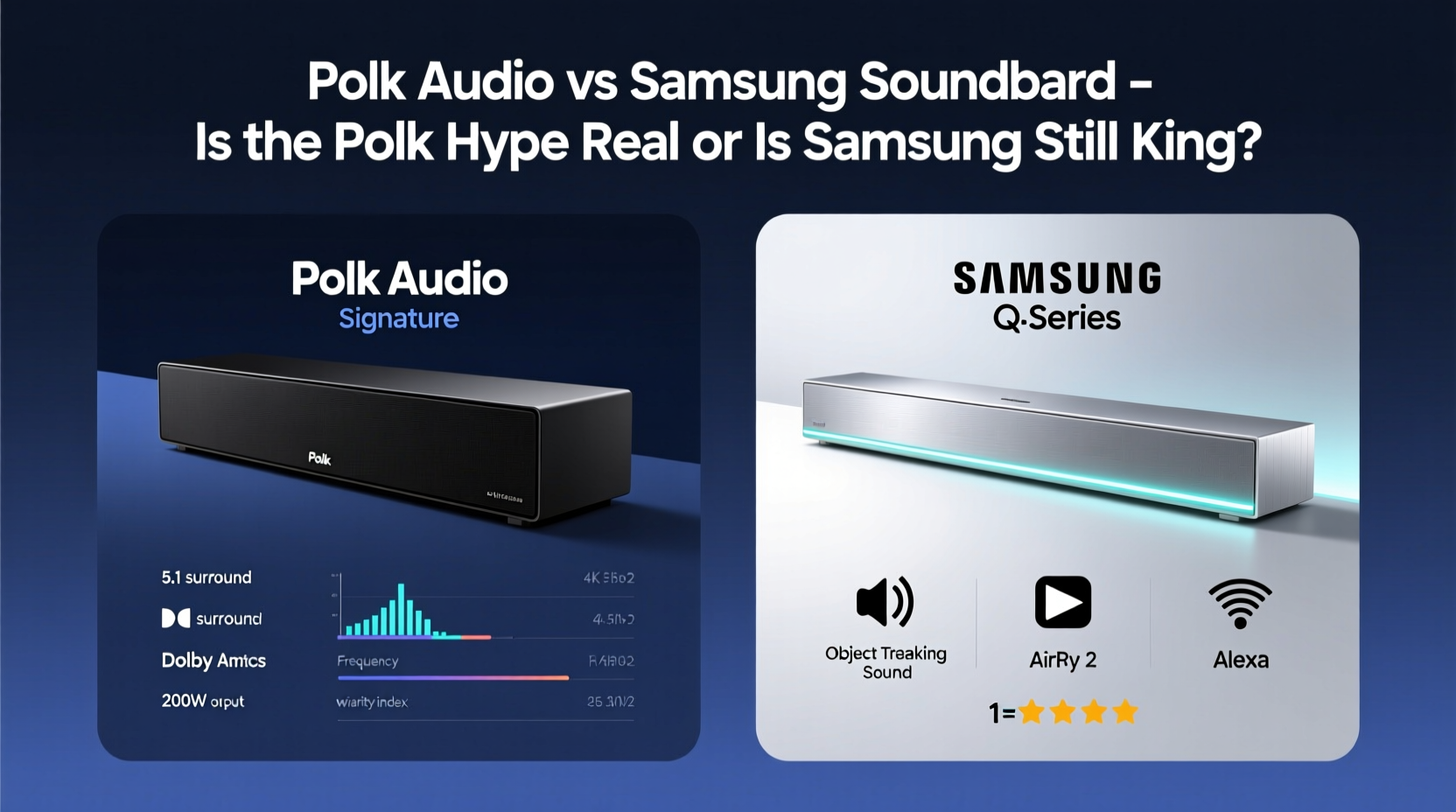
Sound quality remains the most critical factor in any audio purchase. Both Polk Audio and Samsung have distinct sonic signatures shaped by their engineering philosophies.
Polk Audio, rooted in over 50 years of speaker design, emphasizes natural tonality, balanced frequency response, and immersive spatial imaging. Their soundbars—especially models like the MagniFi Max SR—leverage proprietary technologies such as SDA (Stereo Dimensional Array) to create a wider, more three-dimensional soundstage without relying heavily on rear speakers. This results in a cinematic feel even in smaller setups.
Samsung, on the other hand, leans into modern processing and dynamic range. Models like the HW-Q990D utilize Dolby Atmos, DTS:X, and advanced upmixing algorithms to simulate height and surround effects. The result is often punchy, dramatic audio that enhances explosions and action sequences but can sometimes sacrifice midrange clarity—especially in dialogue-heavy scenes.
“Polk doesn’t chase loudness. They chase accuracy. That makes a difference when you’re watching dialogue-driven films or listening to acoustic music.” — David Lin, Audio Engineer and Home Theater ConsultantTip: If you prioritize clear vocals and nuanced instrument separation, Polk’s tuning philosophy may suit you better than Samsung’s bass-forward profile.
Design, Build, and Smart Integration
Samsung excels in aesthetics and ecosystem synergy. Their flagship soundbars feature minimalist designs, aluminum finishes, and near-invisible wireless subwoofers. They integrate effortlessly with Samsung TVs via Q-Symphony and Tap Sound, allowing synchronized audio between TV speakers and the soundbar. For users invested in the Samsung smart home ecosystem, this level of cohesion is a major advantage.
Polk takes a more utilitarian approach. While not unattractive, Polk soundbars focus on function over form. Materials are durable but rarely premium-feeling. However, what Polk lacks in polish, it often compensates for in flexibility. Many models support multi-room audio via Bluetooth or optional add-ons and work well across brands—not just one manufacturer’s walled garden.
Integration Comparison Table
| Feature | Polk Audio | Samsung |
|---|---|---|
| Ecosystem Lock-in | Low – works with any TV | High – best with Samsung TVs |
| Wireless Subwoofer Design | Bulky but powerful | Slim, modern look |
| Remote App Support | Limited (basic Bluetooth control) | Robust (SmartThings app) |
| Auto Room Calibration | Rarely included | Yes (Adaptive Sound Lite) |
Value for Money: What You Get Per Dollar
This is where Polk Audio often steals the spotlight. Take the Polk MagniFi Max SR, priced around $600. It includes a soundbar, wireless subwoofer, and two rear satellite speakers—all with true surround decoding (Dolby Digital Plus). Compare that to Samsung’s HW-Q800C at a similar price point, which offers virtual surround and no physical rears unless purchased separately (adding $300+).
For audiophiles and budget-conscious buyers alike, Polk delivers more hardware and authentic surround immersion out of the box. Samsung counters with higher peak volume, flashier effects, and deeper smart features—but often at the cost of authenticity in spatial reproduction.
Tip: Always check if rear speakers are included. Virtual surround ≠ real surround. Physical rears provide directional cues that enhance realism.Real-World Example: The Weekend Movie Test
Consider Mark, a film enthusiast in Austin, who recently upgraded his 55-inch LG TV with a soundbar. He tested both the Polk Signa S4 and the Samsung HW-Q700B over a weekend marathon: *Sicario* (for tension and bass), *La La Land* (for music fidelity), and *The Crown* (dialogue clarity).
With the Samsung, he was impressed by the booming low-end during raid scenes in *Sicario*, but noticed voices occasionally drowned in action sequences. *La La Land* sounded energetic but slightly compressed—cymbals lost sparkle. Dialogue in *The Crown* required occasional volume boosts.
The Polk system, while less aggressive in bass impact, delivered clearer midranges. Emily Blunt’s whispered lines in *Sicario* were crisp, piano solos in *La La Land* retained warmth, and British accents in *The Crown* came through naturally. The included rear speakers added subtle depth during ambient scenes.
Mark concluded: “Samsung wows you in the first 10 minutes. Polk earns your trust over hours of viewing.”
Expert Features & Future-Proofing
Samsung leads in connectivity and future-ready features. Most high-end models include HDMI 2.1 passthrough (supporting 4K@120Hz and VRR), making them ideal for gamers with next-gen consoles. eARC support is standard, ensuring lossless audio from compatible TVs.
Polk lags here. Many current models still rely on HDMI ARC or optical inputs only. No HDMI 2.1, no gaming-specific modes. While fine for movie watchers, this limits appeal for PS5 or Xbox Series X owners wanting full audio-video sync.
Checklist: Choosing Between Polk and Samsung
- ✅ Prioritize true surround sound with physical rear speakers? → Lean toward Polk
- ✅ Watching mostly movies and music with focus on vocal clarity? → Polk likely fits better
- ✅ Own a Samsung TV and want seamless pairing? → Samsung has an edge
- ✅ Need HDMI 2.1 for gaming or 4K HDR setup? → Samsung is the safer pick
- ✅ Want maximum value with full surround kit under $700? → Polk wins on hardware inclusion
- ✅ Prefer sleek design and app-based controls? → Samsung offers superior UX
Frequently Asked Questions
Can I use a Polk soundbar with a Samsung TV?
Absolutely. Polk soundbars connect via HDMI ARC or optical cable and work with any brand of TV. You’ll lose features like Q-Symphony, but core audio performance remains excellent.
Do Samsung soundbars work well with non-Samsung devices?
Yes, but you get the best experience within the Samsung ecosystem. When paired with a Samsung TV, features like Tap Sound, Auto Low Latency Mode, and Adaptive Sound activate automatically. With other brands, you’re limited to basic audio pass-through.
Is the Polk Audio hype justified?
For listeners who value accurate sound, genuine surround immersion, and hardware transparency, yes—the hype is real. Polk doesn’t oversell. They deliver what audiophiles call “honest” audio. But if you want flashy lights, deep bass thump, and tight smart integration, Samsung will feel more impressive initially.
Final Verdict: King vs Contender
Samsung remains a dominant force in the soundbar market—not because they always sound better, but because they offer a complete package: elegant design, cutting-edge features, and strong branding. For casual viewers and tech enthusiasts who appreciate plug-and-play perfection, Samsung is still king.
But Polk Audio is no longer just a challenger. It’s a legitimate alternative for those who care more about how sound feels than how it’s marketed. The \"hype\" around Polk stems from real strengths: transparent mids, effective true surround setups, and pricing that respects the buyer’s intelligence.
If you're after emotional impact and spectacle, Samsung delivers. If you seek authenticity, consistency, and musicality, Polk deserves your attention.
💬 Have you switched from Samsung to Polk—or vice versa? Share your experience and help others decide what matters most in their sound journey.








