For casual gamers, the decision between PC and console has never been more nuanced. In 2025, both platforms have evolved significantly—offering cloud integration, subscription services, backward compatibility, and enhanced accessibility. Yet, when it comes to long-term value, ease of use, and return on investment, one platform may edge out the other depending on lifestyle, budget, and play habits.
This analysis cuts through marketing hype to deliver a grounded comparison tailored specifically to casual players—those who game a few hours a week, prioritize simplicity over customization, and want the most entertainment for their money without technical headaches.
Understanding the Casual Gamer’s Priorities
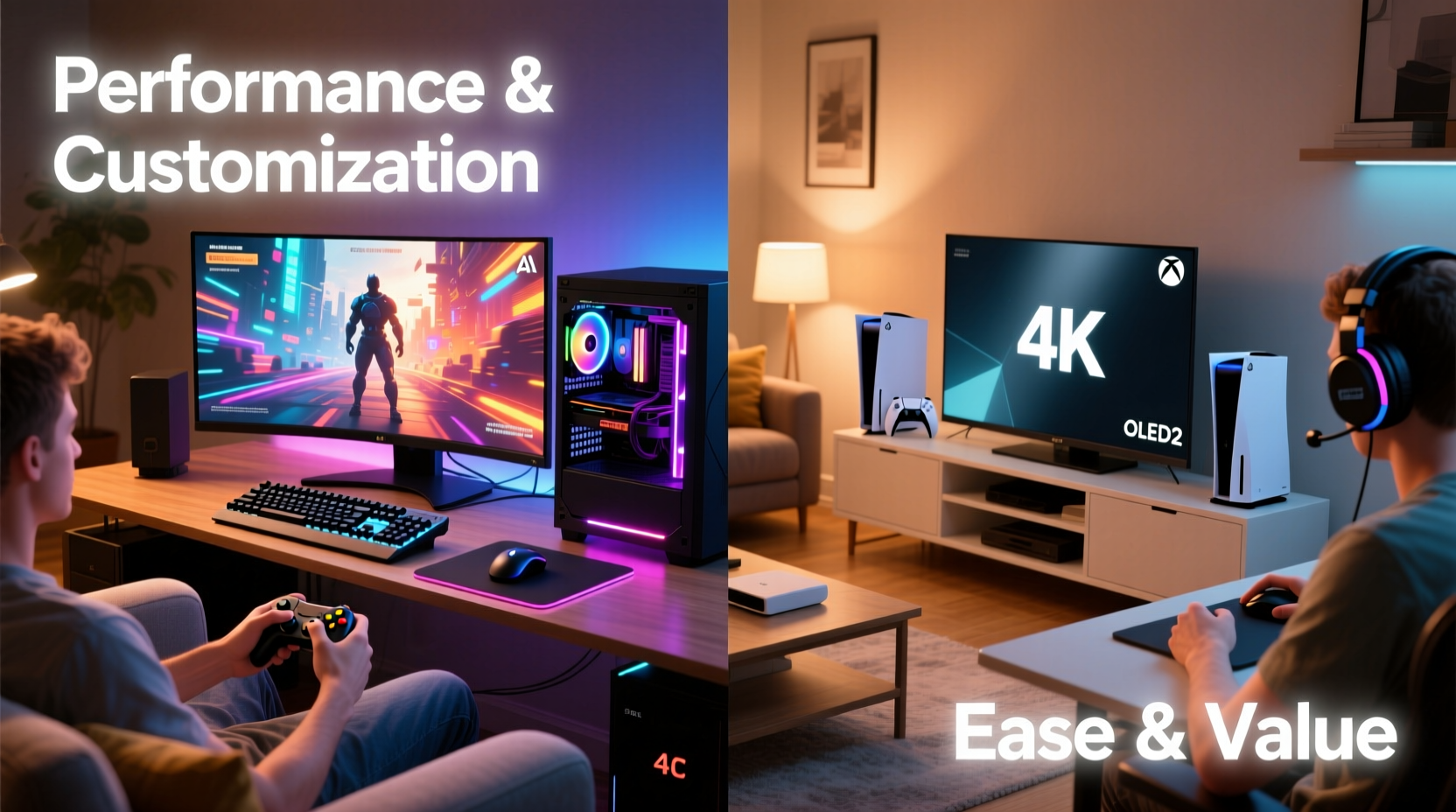
Casual gamers are not chasing 4K/120fps performance or modding communities. Their needs center around affordability, minimal setup, intuitive interfaces, and access to popular titles like Animal Crossing, The Sims, Minecraft, or narrative-driven adventures such as Life is Strange. They often share devices with family members, play during downtime, and prefer plug-and-play experiences.
Key priorities include:
- Low upfront cost
- Simple maintenance
- Broad game library with family-friendly options
- Minimal learning curve
- Long-term durability and support
These factors shift the traditional PC-vs-console debate. While PCs dominate in power and flexibility, consoles excel in accessibility—a crucial advantage for non-technical users.
Tip: If you only play a few times a week and don’t enjoy tinkering with drivers or updates, a console likely offers smoother day-to-day usability.Upfront and Long-Term Costs in 2025
Price remains a decisive factor. Let’s break down costs across three categories: hardware, software, and ongoing expenses.
| Platform | Avg. Upfront Cost | Game Price (New Release) | Subscription Required? | Expected Lifespan |
|---|---|---|---|---|
| Mid-tier Gaming PC | $800–$1,200 | $50–$70 | No | 5–7 years |
| Gaming Laptop | $900–$1,300 | $50–$70 | No | 4–6 years |
| PlayStation 5 / Xbox Series X | $400–$500 | $60–$70 | Yes (for online multiplayer) | 6–8 years |
| Steam Deck / Handheld Console | $400–$650 | $40–$60 (often discounted) | No | 4–5 years |
At first glance, consoles offer a clear savings advantage. But value isn’t just about initial price—it includes how much you pay over time to keep playing.
In 2025, Microsoft and Sony continue to push subscription models. Xbox Game Pass Ultimate ($17/month) delivers hundreds of games, including day-one first-party releases. PlayStation Plus Extra ($16/month) offers a robust catalog but lacks same-day exclusives. For casual players, these can reduce annual spending dramatically if used strategically.
On PC, while no mandatory subscriptions exist, digital storefronts like Steam, Epic, and EA Play encourage purchases through seasonal sales and bundles. However, building a comparable game library requires either higher upfront spending or patience waiting for discounts.
“Casual players benefit most from predictability. A $500 console with a $15 monthly subscription is easier to budget than fluctuating PC game prices.” — Dana Reeves, Tech Economist at Digital Trends Lab
Game Accessibility and Content Variety
Both platforms now offer cross-platform play, cloud saves, and streaming—but implementation varies.
Consoles have improved greatly in backward compatibility. The PS5 plays nearly all PS4 titles, and Xbox leads with four generations supported via Smart Delivery. This means a game bought in 2020 still works flawlessly in 2025, increasing its effective lifespan.
PCs technically support older games too, but compatibility depends on OS updates, driver changes, and DRM systems. Some indie titles vanish from storefronts; others require community patches to run on modern Windows versions. For someone who doesn’t want to troubleshoot, this adds friction.
However, PC wins in sheer volume and niche diversity. Platforms like Steam host over 50,000 titles, including free-to-play hits (Among Us, Warframe), early access experiments, and decades-old classics. Casual players seeking quirky or creative games beyond mainstream appeal will find more options here.
Meanwhile, console stores are curated. This limits choice but enhances trust—fewer scams, clearer ratings, and consistent UI design make browsing simpler for less tech-savvy users.
Cloud Gaming: A Game-Changer in 2025?
Cloud services like Xbox Cloud Gaming, GeForce NOW, and PlayStation Plus Premium have matured. With decent broadband (25 Mbps+), casual players can stream high-quality games to TVs, tablets, or phones—no powerful hardware needed.
This blurs the line between platforms. You can play Elden Ring on a $100 smart TV via Xbox Cloud if you subscribe to Game Pass. Similarly, GeForce NOW lets you stream your Steam library to low-end devices.
For casual players, this opens a new path: buy a cheap device, subscribe to a cloud service, and access premium games without investing in expensive gear. In 2025, this model is becoming viable—especially in regions where high-end hardware is costly or hard to obtain.
Tip: Test cloud gaming with a free trial before committing. Network stability matters more than speed alone.Usability and Maintenance Over Time
A major hidden cost of PC gaming is upkeep. Drivers need updating, storage fills up, antivirus software interferes, and operating system issues occasionally arise. Even simple tasks like reinstalling a game after a crash can frustrate non-technical users.
Consoles, by contrast, are appliances. Updates happen automatically. Games install with one click. Storage management is straightforward. There’s no risk of malware or conflicting software.
In 2025, Valve’s SteamOS on handhelds like the Steam Deck has improved Linux compatibility, making PC-like devices more console-like in usability. But occasional glitches, controller remapping quirks, and beta-stage features still require user intervention—something many casual players prefer to avoid.
Additionally, physical space matters. A full-sized gaming PC requires desk room, ventilation, and cable management. Consoles fit neatly under a TV. Laptops and handhelds offer portability, but battery degradation over time reduces practicality.
Maintenance Checklist for Longevity
- Update firmware regularly – Ensures security and performance fixes.
- Clear storage every 3–6 months – Delete unused games to prevent slowdowns.
- Use surge protectors – Protects against power spikes, especially important for PCs.
- Keep devices dust-free – Wipe vents monthly; compressed air helps.
- Enable automatic backups – Prevents loss of save data during failures.
Real-World Example: Sarah’s Setup Dilemma
Sarah, a 38-year-old teacher and mother of two, wanted a gaming system for weekend relaxation. She enjoys puzzle games, life sims, and co-op adventures with her kids. Her previous experience with computers was limited to email and Zoom.
She considered a pre-built gaming PC priced at $950, plus a $150 controller. After setup, she struggled with Windows notifications interrupting gameplay, had trouble finding where her games were installed, and accidentally deleted a driver file while cleaning “junk” files.
After six months, frustrated and playing rarely, she sold the PC at a loss and bought a PlayStation 5 for $450. Within minutes of unboxing, she was playing It Takes Two with her husband. System updates ran overnight. Game installations were automatic. When her daughter wanted to play Disney Dreamlight Valley, adding a second profile took seconds.
She now spends $16/month on PlayStation Plus Extra and plays 3–4 hours weekly. For her, the console delivered far greater value—not because it’s technically superior, but because it worked seamlessly within her lifestyle.
Future-Proofing: Where Are Platforms Headed?
By 2025, convergence is accelerating. Microsoft treats Xbox and PC as one ecosystem—same Game Pass, shared achievements, cross-save. Sony has begun expanding PlayStation Studios titles to PC (e.g., Horizon Zero Dawn, Ghost of Tsushima), signaling a hybrid future.
Yet divergence remains in philosophy:
- Console: Optimized for reliability, consistency, and living-room integration.
- PC: Built for adaptability, upgradeability, and open ecosystems.
For casual players, console ecosystems are better aligned with passive enjoyment. Features like voice assistants, media apps (Netflix, Spotify), and seamless TV integration make them central home entertainment hubs.
PCs remain strongest for multitasking—gaming while streaming music, chatting on Discord, or browsing—but that complexity is often unnecessary for light users.
Looking ahead, AI-driven optimization could reduce PC friction. Tools like automated driver tuning, self-healing game launchers, and smarter storage management may close the usability gap. But as of 2025, those tools are still emerging, not mainstream.
Frequently Asked Questions
Can I use a console for non-gaming activities?
Yes. All modern consoles double as media centers. You can stream Netflix, YouTube, Disney+, and music services. Some even support web browsing. They integrate easily with smart TVs and sound systems, making them versatile beyond gaming.
Is a gaming PC worth it if I only play casually?
Rarely. Unless you already own a capable machine or plan to use it for work/photo editing, the extra cost and effort aren’t justified. A mid-range laptop or console will serve better for occasional play.
Will consoles become obsolete with cloud gaming?
Not soon. Cloud gaming depends on internet quality, which varies globally. Local hardware ensures consistent performance. Moreover, publishers still release physical discs and downloadable versions optimized for consoles. Hybrid models—local + cloud—are the likely future, not full replacement.
Final Verdict: Which Offers Better Value in 2025?
For the majority of casual players, **consoles offer better value in 2025**. The combination of lower entry cost, simpler operation, longer effective game library life, and strong subscription offerings makes them the smarter financial and practical choice.
Xbox Game Pass stands out as the best value proposition—delivering dozens of high-quality games for less than the price of one retail title per month. PlayStation appeals to fans of exclusive narratives and polished single-player experiences. Nintendo Switch remains ideal for families and portable play, despite weaker specs.
PCs shine for users who value ownership, modding, or multi-use functionality. But for pure gaming convenience and cost efficiency, they demand more investment—both monetary and cognitive—that casual players typically don’t need or want.
If you’re buying your first system or upgrading an old one, start with a console. Rent or borrow a Steam Deck-style device to test PC-like flexibility before committing. And always consider trying a Game Pass or PS Plus trial—you might discover a world of content for less than your monthly coffee habit.
🚀 Ready to choose your next gaming platform? Start with a 7-day subscription trial on Xbox or PlayStation, compare the libraries, and see which feels right. Your perfect balance of fun, cost, and ease is closer than you think.








