
Choosing the right gear for your dog’s walks isn’t just about style—it directly impacts their comfort, safety, and behavior. With so many options on the market, two of the most commonly compared types are mesh harnesses and walking vests. While they may look similar at a glance, their design, function, and suitability vary significantly. Understanding these differences helps ensure your dog enjoys every walk without strain, chafing, or restricted movement.
The confusion often arises because both are worn over the torso and attach to a leash. However, subtle but critical distinctions in structure, pressure distribution, and intended use make one more appropriate than the other depending on your dog’s breed, size, activity level, and behavioral tendencies.
Understanding the Basics: What Is a Mesh Harness?
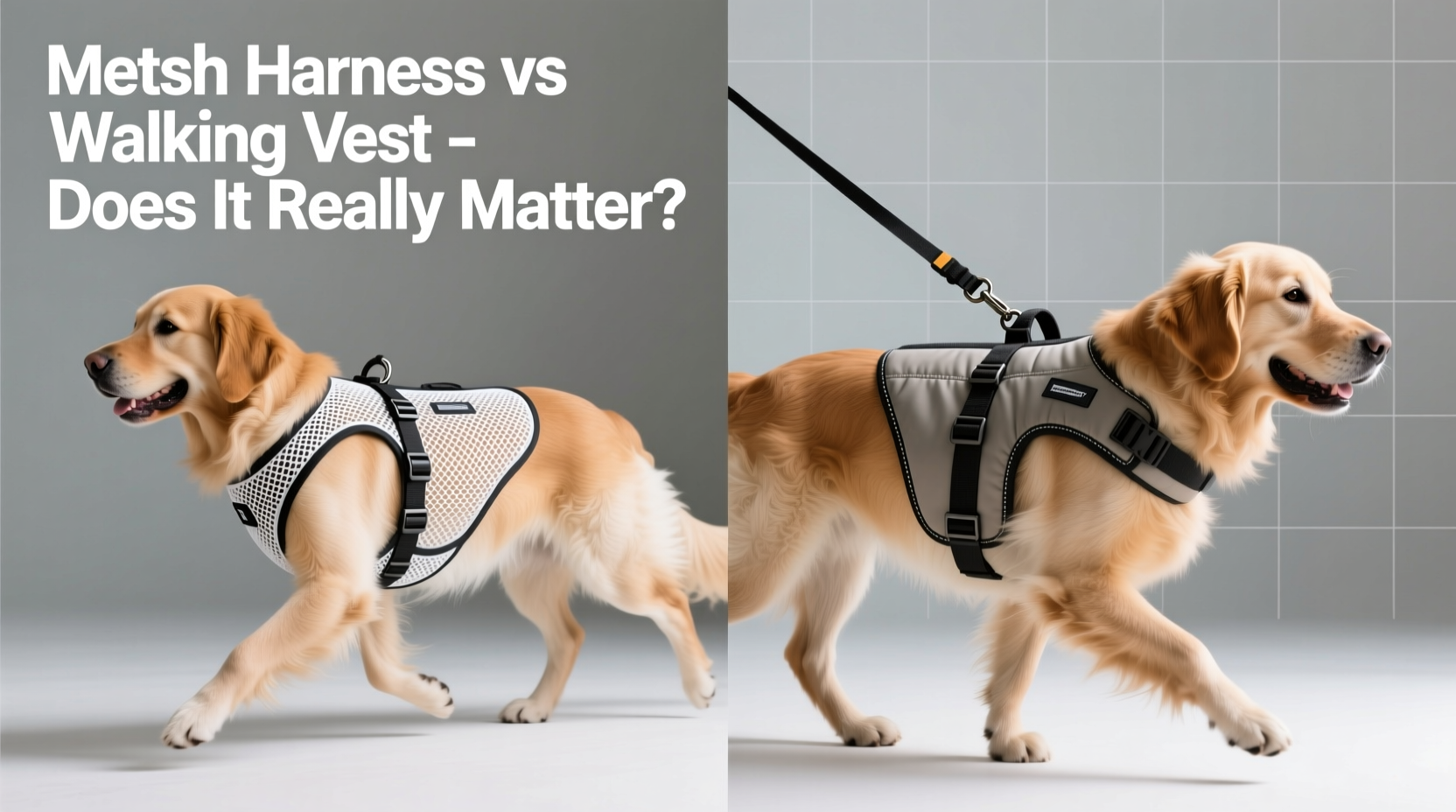
A mesh harness is typically a lightweight, breathable design made from soft, flexible mesh fabric. It features adjustable straps that go around the chest and behind the front legs, with a loop or clip on the back for leash attachment. Some models also include a front clip for better control during training.
These harnesses prioritize ventilation and ease of wear, making them ideal for warm climates or short daily walks. They’re especially popular among owners of small to medium breeds such as Pomeranians, Beagles, and Shih Tzus. The open weave allows air circulation, reducing the risk of overheating during exercise.
However, due to their minimal padding and simpler construction, mesh harnesses offer less support and control. Dogs that pull strongly may slip out of poorly fitted models, and extended use can lead to rubbing under the armpits if not properly adjusted.
Tip: Always check that you can fit two fingers comfortably under each strap—too tight causes chafing; too loose risks escape.What Defines a Walking Vest for Dogs?
A walking vest, sometimes called a padded harness or no-pull vest, is engineered for durability and enhanced control. Unlike basic mesh harnesses, walking vests feature broader panels, extra padding across the chest and shoulders, and often include structural reinforcement like nylon webbing or reflective stitching.
These vests distribute pressure evenly across the dog’s body, minimizing strain on the neck and trachea—especially important for breeds prone to respiratory issues like Bulldogs or Pugs. Many are designed with front-leash attachments to discourage pulling by redirecting the dog’s momentum when they surge forward.
Walking vests are favored by active dog owners, those with larger or stronger breeds (like Labradors or German Shepherds), and individuals who engage in hiking, jogging, or training sessions. The added weight and coverage mean slightly less breathability, but modern versions use moisture-wicking fabrics to mitigate discomfort.
“Harness design matters more than most owners realize. A well-fitted walking vest reduces injury risk and supports proper posture during movement.” — Dr. Lena Torres, Veterinary Behaviorist
Key Differences: A Side-by-Side Comparison
| Feature | Mesh Harness | Walking Vest |
|---|---|---|
| Material | Lightweight mesh, often stretchable | Dense nylon, padded foam, reinforced stitching |
| Ventilation | Excellent – ideal for hot weather | Moderate – padding limits airflow |
| Pressure Distribution | Limited – concentrated near shoulders | Even – spreads force across chest and back |
| Pulling Control | Fair – may allow forward lunging | High – especially with front-clip designs |
| Best For | Casual walks, small breeds, warm climates | Active dogs, training, large breeds, cooler conditions |
| Durability | Medium – susceptible to snagging | High – built for rugged use |
Real-World Example: Choosing Based on Lifestyle
Sarah adopted Milo, a young Border Collie rescue known for his high energy and tendency to chase squirrels. Her first attempt at walking gear was a basic mesh harness—lightweight and easy to put on. But within days, Milo pulled so hard he slipped partially out of it during a jog. Concerned about safety, Sarah consulted a local trainer who recommended switching to a walking vest with a front-clip design.
After transitioning, she noticed immediate improvements. Milo still pulled initially, but the vest gently turned him sideways when he surged ahead, teaching him to stay closer without choking or discomfort. Over time, his walking manners improved dramatically. The vest’s padding also prevented soreness during long hikes—a common issue with thinner harnesses.
This case illustrates that while a mesh harness might suffice for calm dogs with low activity levels, more dynamic breeds benefit significantly from the structured support of a walking vest.
How to Choose the Right Option for Your Dog
Selecting between a mesh harness and a walking vest should be guided by several key factors:
- Breed and Size: Small, flat-faced breeds may do well with mesh harnesses, while larger or powerful breeds need the control of a vest.
- Activity Level: Dogs that run, hike, or train regularly require sturdier, supportive gear.
- Climate: In hot regions, breathability becomes crucial—mesh wins here.
- Behavioral Traits: Pullers, escape artists, or easily distracted dogs benefit from the redirection and security of a vest.
- Medical Considerations: Dogs with tracheal collapse, spinal issues, or arthritis should avoid neck pressure—opt for vests that eliminate throat strain.
Step-by-Step: Fitting Any Harness Correctly
- Measure your dog: Use a soft tape measure around the deepest part of the chest (behind front legs) and neck.
- Select the correct size: Refer to manufacturer charts—don’t assume small/medium/XL fits universally.
- Put it on: Slide the harness over the head (or use step-in styles), then secure the belly strap.
- Adjust all straps: Ensure snugness without restriction. Two fingers should fit under any strap.
- Check mobility: Watch your dog move. There should be no rubbing, slipping, or restricted stride.
- Test on short walks: Monitor for signs of discomfort, redness, or behavioral changes.
FAQ: Common Questions About Dog Harnesses
Can a mesh harness be used for training?
Only if it has a front-clip option. Most basic mesh harnesses are back-clip only, which can actually encourage pulling by giving the dog leverage. For training, a walking vest with front-attachment is far more effective.
Are walking vests too heavy for small dogs?
Not necessarily. Many brands offer scaled-down versions with lightweight padding. The key is proper fit and ensuring the vest doesn’t restrict shoulder movement. Avoid oversized models on tiny breeds.
Is one type easier to put on?
Mesh harnesses are generally simpler—many are overhead designs with minimal buckles. Walking vests often have multiple adjustment points and belly straps, requiring a bit more time. However, once sized correctly, both become routine to use.
Final Checklist Before You Buy
- ✅ Measure your dog’s chest and neck accurately
- ✅ Decide primary use: casual walk, training, or adventure?
- ✅ Check for dual clips (front and back) for versatility
- ✅ Look for reflective elements if walking in low light
- ✅ Read return policies—fit issues are common with online purchases
- ✅ Review customer feedback on durability and comfort
Conclusion: Does It Really Matter?
Yes—it absolutely matters. While both mesh harnesses and walking vests serve the purpose of securing your dog during walks, their impact on comfort, safety, and behavior varies greatly. A mesh harness offers simplicity and breathability, perfect for relaxed outings with well-behaved, smaller dogs. A walking vest provides structure, control, and protection, making it the smarter choice for energetic, strong, or training-focused dogs.
The right choice depends not on trends or aesthetics, but on understanding your dog’s physical needs and daily routine. Investing time in selecting the appropriate gear leads to happier walks, healthier joints, and a stronger bond between you and your pet.
💬 Have experience with both types? Share your story or advice in the comments—your insights could help another dog owner make the right choice today.








