
Winter driving demands more than just defrosted windows and a warm engine. The moment you reach for a freezing steering wheel on a frosty morning, comfort becomes a priority. That’s where steering wheel covers come in—especially those designed for cold weather. Among the most popular options are knitted and faux fur covers, both marketed as cozy upgrades. But when it comes to actual winter performance, which one truly feels better?
This isn’t just about aesthetics or texture; it’s about how each material performs under real winter conditions—how quickly it warms up, how long it retains heat, how it handles moisture from gloves or hands, and how durable it is over time. Let’s break down the differences with practical insights, user experiences, and expert-backed comparisons.
Material Properties: What Makes Them Different
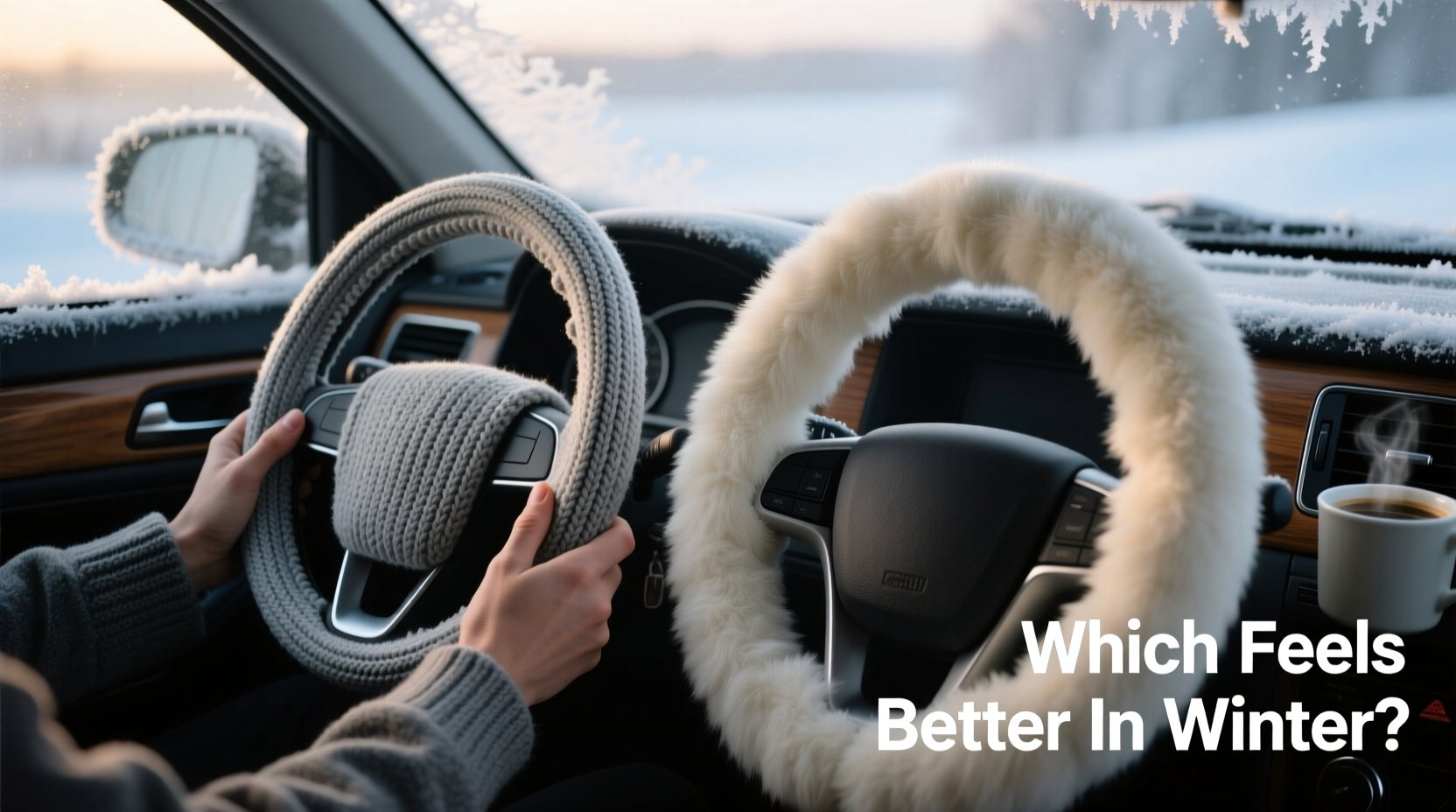
At first glance, knitted and faux fur covers may seem similar—both soft, both insulating, both visually appealing. But their construction and material behavior diverge significantly.
Knitted covers are typically made from acrylic, wool blends, or cotton-spandex mixes. They’re stretchy, form-fitting, and often feature ribbed textures that grip the wheel well. Their tight weave traps air, providing insulation while remaining breathable. Because of their elasticity, they conform closely to the steering wheel, reducing slippage.
Faux fur covers, on the other hand, use synthetic fibers designed to mimic animal fur. They have a plush, fluffy pile that feels luxuriously soft to the touch. The thick layer of “fur” creates a cushioned barrier between your hands and the cold metal or leather beneath. However, this loft can also trap moisture and compress over time.
Tip: In extremely cold climates, pre-warm your car for 5–10 minutes before driving to allow the cover to absorb ambient heat faster.Warmth and Thermal Performance
The primary reason people install winter steering wheel covers is to avoid the shock of touching a sub-zero surface. So how do these two materials stack up when it comes to warmth?
- Initial Feel: Faux fur wins at first contact. Its dense pile provides immediate softness and insulation, making it feel warmer the second your fingers touch it—even if both covers are equally cold.
- Heat Retention: Knitted covers, especially those with wool blends, retain body heat more effectively over time. Wool naturally wicks moisture and regulates temperature, meaning your hands stay warm even if they sweat slightly inside gloves.
- Conduction Reduction: Both materials reduce thermal conductivity compared to bare leather or plastic, but knits create a tighter seal around the wheel, minimizing cold air pockets.
“While faux fur feels cozier initially, knitted wool blends offer superior long-term thermal regulation—especially during longer commutes.” — Dr. Lena Park, Automotive Textile Researcher, Michigan Tech
Comfort and Tactile Experience
Comfort goes beyond warmth. It includes grip, texture, responsiveness, and how natural the wheel feels under your palms.
Faux fur offers a luxurious, almost spa-like sensation. The deep pile is undeniably soft, but this can be a double-edged sword. Thick fur reduces tactile feedback, making it harder to sense subtle movements of the wheel. Some drivers report feeling “disconnected” from the road, particularly in snow or ice where precision matters.
Knitted covers, by contrast, provide a balance of softness and control. Their tighter weave maintains direct contact with the wheel’s shape, allowing for better grip and responsiveness. Many users describe them as “like wearing a warm glove”—intimate, secure, and predictable.
| Feature | Knitted Cover | Faux Fur Cover |
|---|---|---|
| Initial Warmth | Moderate | High |
| Sustained Heat Retention | High (especially wool-blend) | Moderate |
| Grip & Control | Excellent | Fair (can slip when wet) |
| Moisture Handling | Good (wicks sweat) | Poor (holds dampness) |
| Durability | High (resists pilling) | Moderate (mats over time) |
| Cleaning Ease | Easy (machine washable) | Difficult (spot clean only) |
Real-World Performance: A Driver’s Perspective
Consider Sarah, a school counselor in Duluth, Minnesota, who drives 45 minutes each way through snowy backroads every winter. She started with a plush faux fur cover because it looked inviting and felt warm in her garage. But after two weeks, she noticed issues.
“On mornings when I wore gloves, the fur would bunch up under my hands,” she explained. “And once my gloves got a little damp from shoveling, the inside of the cover stayed wet all day. My hands were colder by noon than when I started.”
She switched to a merino wool-blend knitted cover. “It didn’t feel as fluffy at first, but within minutes of driving, my hands warmed up—and stayed warm. No slipping, no odor, and I could toss it in the wash once a month.”
Her experience reflects a common pattern: initial attraction to faux fur’s plushness, followed by a shift toward knitted covers for reliability and performance.
Maintenance and Longevity
Winter accessories take a beating—from salt residue to moisture buildup and frequent handling. How easy is it to keep each type clean and functional?
Faux fur covers are notoriously difficult to clean. Most manufacturers recommend spot-cleaning only, as machine washing can mat the fibers or distort the backing. Over time, the fur flattens, loses its fluff, and can develop odors—especially if exposed to damp gloves or sweaty palms.
Knitted covers, particularly those made with acrylic or wool-spandex blends, are generally machine washable. They resist pilling, maintain shape, and dry quickly. Even after multiple washes, they retain their elasticity and warmth.
Tip: Wash knitted covers in cold water on gentle cycle, then air dry to preserve elasticity and prevent shrinkage.Step-by-Step: Choosing the Right Cover for Your Winter Needs
- Assess your climate: If temperatures regularly drop below -10°C (14°F), prioritize heat retention—choose a wool-blend knit.
- Evaluate your driving habits: Frequent short trips favor faux fur for instant comfort; longer commutes benefit from knitted warmth and breathability.
- Check compatibility: Measure your steering wheel diameter. Most knitted covers fit 14–15 inches; faux fur models vary more in sizing.
- Test grip: Ensure the inner lining has silicone grips or textured backing to prevent rotation while driving.
- Review care instructions: Opt for machine-washable materials if you plan regular cleaning.
FAQ
Can I leave a steering wheel cover on year-round?
Technically yes, but it’s not recommended. Summer heat can degrade adhesives and cause synthetic materials to off-gas or become brittle. Remove covers during warmer months to extend lifespan.
Do knitted covers work with heated steering wheels?
Yes, and they enhance the effect. Knitted materials conduct heat efficiently and hold warmth longer than faux fur, which can insulate too much and delay heat transfer.
Are faux fur covers safe for leather steering wheels?
Generally yes, but ensure the inner lining is non-abrasive. Prolonged use may trap moisture against the leather, potentially causing cracking over time.
Final Verdict: Which One Actually Feels Better?
“Feels better” depends on what you value most. If your priority is instant softness and a cozy aesthetic, faux fur delivers in the first few minutes. But for sustained comfort, better control, easier maintenance, and long-term warmth, knitted covers—especially those with natural fibers like wool—are the superior choice for winter driving.
The best-performing winter covers aren’t just about texture—they’re about thermal efficiency, moisture management, and ergonomic design. While faux fur tempts with luxury, knitted covers win on functionality, durability, and real-world usability.
💬 Have you tried both types? Share your winter driving experience and let others know which cover kept your hands warmer and your drive safer.








