
Home heating and cooling account for nearly half of the average household’s energy bill. With utility costs on the rise and environmental concerns growing, homeowners are increasingly turning to smart thermostats as a way to gain control over their energy use. But is this technology truly delivering measurable savings, or is it just another high-tech trend with more hype than substance? The answer isn’t simple — it depends on how you use it, your home’s efficiency, and your lifestyle.
Smart thermostats like the Nest Learning Thermostat, Ecobee, and Honeywell Home T9 promise energy savings through automation, learning algorithms, and remote access. While they come with a higher upfront cost than traditional models, manufacturers claim users can save up to 10–12% on heating and 15% on cooling annually. But do these numbers hold up in real homes? Let’s take a deep dive into the data, user behavior, and long-term value to determine whether upgrading is a smart investment or just a digital indulgence.
How Smart Thermostats Work: More Than Just Scheduling
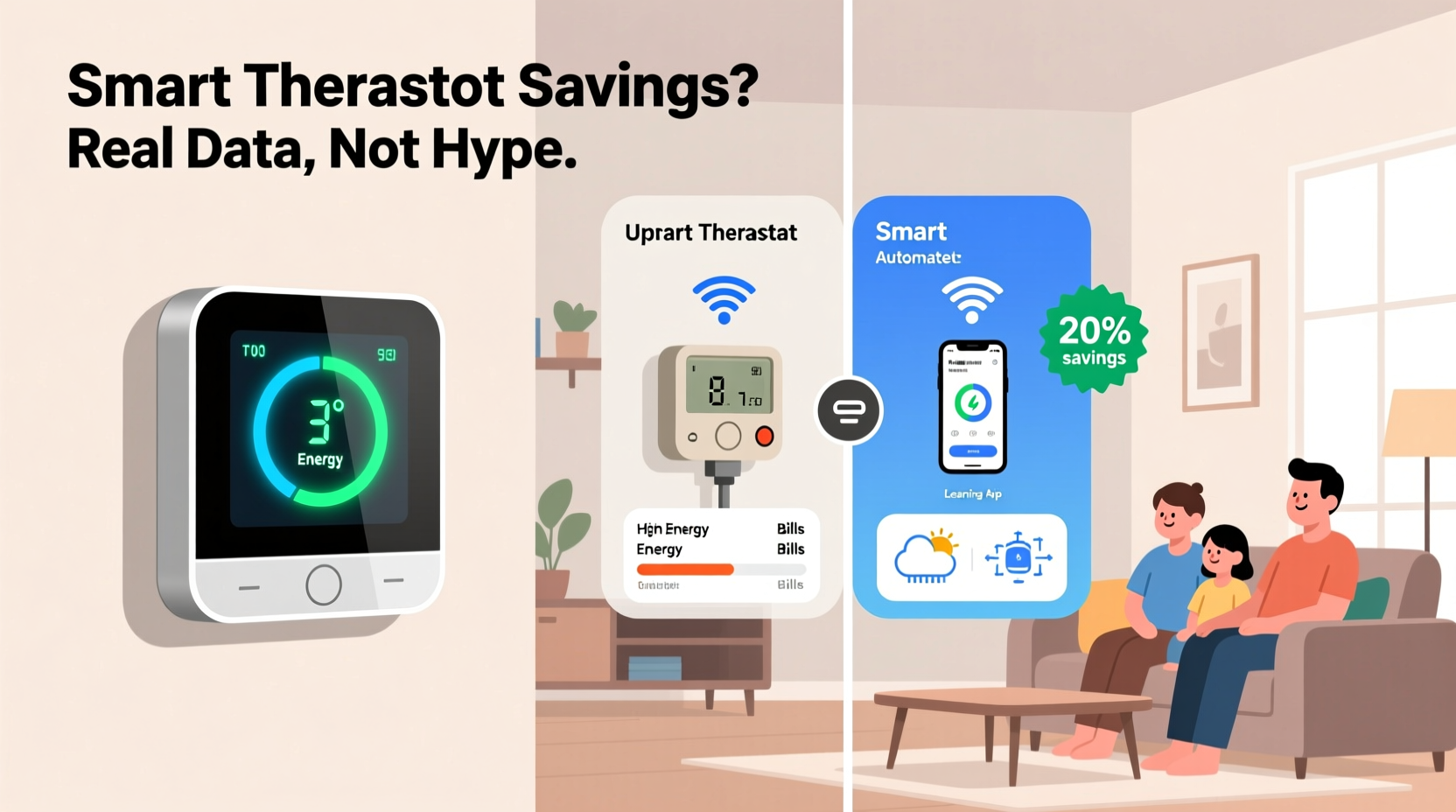
Unlike conventional programmable thermostats that require manual input of temperature schedules, smart thermostats learn from your habits. They track when you’re home, when you leave, and what temperatures you prefer at different times of day. Using Wi-Fi connectivity, they also pull in local weather forecasts, adjust based on occupancy (via motion sensors or geofencing), and allow remote control via smartphone apps.
For example, if you typically leave for work at 8 a.m. and return around 6 p.m., the thermostat will gradually lower the heat (or reduce cooling) during those hours and begin adjusting the temperature shortly before you arrive. This eliminates the common issue with programmable thermostats — where users either forget to set them or find rigid schedules inconvenient, leading to wasted energy.
Additionally, many smart thermostats provide detailed energy usage reports, HVAC system monitoring, and alerts for maintenance needs — features that help homeowners identify inefficiencies and prevent costly repairs.
Tip: Enable geofencing so your thermostat adjusts automatically when your phone leaves or returns home — no manual input needed.The Real Cost of Heating and Cooling
To understand the financial impact of a smart thermostat, it helps to first examine the baseline. According to the U.S. Energy Information Administration (EIA), the average American household spends about $900 per year on heating and $300 on air conditioning. That totals $1,200 annually — roughly 42% of total home energy use.
If a smart thermostat delivers the promised 10–15% savings, that translates to $120–$180 per year in reduced energy bills. At that rate, a $150–$250 device pays for itself in under two years. After that, every dollar saved is pure gain. But these figures assume optimal usage and a properly installed system.
Savings vary significantly based on climate, insulation quality, HVAC system age, and homeowner behavior. In milder climates, such as the Pacific Northwest, annual savings may be closer to $80. In extreme climates like Phoenix or Minneapolis, savings can exceed $200 due to higher reliance on HVAC systems.
“Smart thermostats aren’t magic, but they automate energy-saving behaviors that most people fail to maintain consistently.” — Dr. Linda Chen, Energy Efficiency Researcher, National Renewable Energy Lab
Comparing Smart vs. Programmable vs. Manual Thermostats
| Type | Upfront Cost | Energy Savings Potential | User Engagement Required | Remote Access |
|---|---|---|---|---|
| Manual Dial Thermostat | $20–$50 | Negligible | High (constant adjustment) | No |
| Programmable Thermostat | $50–$100 | 5–10% | High (must set schedules) | No |
| Smart Thermostat | $150–$250 | 10–15% | Low (learns over time) | Yes (app-based) |
While programmable thermostats have been available for decades, studies show they often go unused or misconfigured. A 2017 report by the American Council for an Energy-Efficient Economy found that only 30% of households with programmable thermostats actually used them correctly. Most defaulted to “hold” mode or left settings unchanged, negating any potential savings.
Smart thermostats solve this behavioral gap by adapting to real-life patterns instead of relying on rigid schedules. This automation is key to unlocking consistent energy reduction without demanding constant attention from the user.
Real-World Case Study: The Johnson Family in Denver, Colorado
The Johnsons, a family of four, lived in a 2,200-square-foot home built in 1998. Their old HVAC system ran constantly, especially during winter months, and their monthly heating bill averaged $180 from November to March. They replaced their outdated programmable thermostat with a Nest Learning Thermostat in October.
Over the next six months, the thermostat learned their routines: kids off to school at 7:30 a.m., parents returning between 5:30 and 6:30 p.m. It began lowering the heat to 62°F during school and work hours and warming the house 30 minutes before arrival. Geofencing ensured adjustments even on irregular days.
Their gas bills dropped by an average of 14% in the first winter. Combined with improved awareness from the monthly energy reports, they made additional changes — sealing drafty windows and scheduling furnace maintenance — which further reduced consumption. By the end of the year, they saved $167 compared to the previous heating season.
After accounting for the $219 purchase price, the thermostat paid for itself in 16 months. Now in its third year, the device continues to deliver savings while offering convenience and peace of mind.
Tip: Pair your smart thermostat with ceiling fan usage — reversing fans in winter pushes warm air down, reducing heating load.When Smart Thermostats Fall Short
Despite their advantages, smart thermostats aren’t universally effective. Several factors can limit or eliminate potential savings:
- Poorly insulated homes: If your house leaks heat in winter or gains excessive solar heat in summer, even the smartest thermostat can’t compensate for structural inefficiencies.
- Old or inefficient HVAC systems: A smart thermostat can’t make an aging furnace or AC unit run more efficiently. It may even cause older systems to cycle more frequently, increasing wear.
- Single-zone systems in multi-level homes: Without zoning or multiple sensors, temperature accuracy suffers in areas far from the thermostat.
- User disengagement: Some homeowners install the device but disable learning features, override schedules daily, or never connect it to Wi-Fi — defeating the purpose.
In homes where occupants are already highly disciplined about temperature management — for example, manually adjusting setbacks during sleep and away periods — the incremental benefit of a smart thermostat may be minimal.
Step-by-Step Guide to Maximizing Your Smart Thermostat Investment
To get the most out of your smart thermostat, follow this timeline and action plan:
- Week 1: Installation & Setup
Install the thermostat according to manufacturer instructions. Ensure compatibility with your HVAC system. Connect to Wi-Fi and download the app. - Week 2–4: Training Phase
Manually adjust temperatures as needed. Avoid overriding too frequently. Let the device observe your preferences and routines. - Month 2: Enable Automation Features
Turn on auto-schedule, geofencing, and eco modes. Set occupancy sensors if available. - Month 3: Review First Energy Report
Check the monthly summary. Note peak usage times and compare to previous bills. - Ongoing: Optimize & Maintain
Use sensor data to address hot/cold spots. Replace HVAC filters regularly. Update firmware for performance improvements.
This structured approach ensures you move beyond novelty to actual energy optimization. Many users skip the training phase and expect instant results, which leads to disappointment.
Hidden Benefits Beyond Dollar Savings
While direct financial savings are important, smart thermostats offer several indirect benefits that add long-term value:
- HVAC system longevity: Smoother operation and fewer abrupt cycles reduce strain on compressors and furnaces.
- Improved comfort: Consistent temperatures and pre-heating/cooling mean no more coming home to a freezing or sweltering house.
- Remote troubleshooting: Receive alerts for system issues (e.g., short cycling, filter replacement) before they become emergencies.
- Integration with smart homes: Works with voice assistants, security systems, and other devices for holistic home automation.
- Environmental impact: Reduced energy consumption lowers your carbon footprint — equivalent to taking a car off the road for several hundred miles per year.
These intangible benefits contribute to overall satisfaction and justify the upgrade even if energy savings fall slightly below projections.
FAQ: Common Questions About Smart Thermostats
Do smart thermostats work with all HVAC systems?
Most modern smart thermostats support standard single-stage, multi-stage, and heat pump systems. However, some older or commercial units may not be compatible. Always check compatibility using the manufacturer’s online tool before purchasing.
Can I install a smart thermostat myself?
Many models are designed for DIY installation, especially if replacing a similar digital thermostat. However, if your system lacks a C-wire (common wire) or involves complex wiring, professional installation is recommended to avoid damage or safety risks.
Are there rebates or incentives available?
Yes. Over 800 utility companies in the U.S. offer rebates ranging from $25 to $100 for installing ENERGY STAR-certified smart thermostats. Check programs like ecobee’s rebate finder or the Database of State Incentives for Renewables & Efficiency (DSIRE) to see what’s available in your area.
Conclusion: A Calculated Upgrade, Not a Gimmick
After examining the data, real-world usage, and long-term benefits, the evidence is clear: upgrading to a smart thermostat is not a gimmick — it’s a practical step toward smarter energy management. While savings depend on individual circumstances, most households can expect meaningful reductions in heating and cooling costs within one to two years.
The true value lies in automation and insight. Where humans forget, procrastinate, or overcomplicate, smart thermostats deliver consistency and intelligence. When paired with basic home efficiency upgrades, they become part of a broader strategy to reduce waste and increase comfort.
If you're still manually adjusting your thermostat or ignoring programming options, a smart model could be one of the simplest, highest-return investments you make in your home this year.
🚀 Ready to cut your energy bill? Evaluate your current setup, check for utility rebates, and consider making the switch today. Share your experience or questions in the comments below — let’s build a smarter, more efficient home together.








