
Choosing between a compact city car like the Ford Ka and a full-size pickup like a Chevrolet truck isn't just about preference—it's about lifestyle, budget, and long-term value. The Ford Ka, known for its nimble size and fuel efficiency, appeals to urban drivers and those seeking economical transportation. On the other hand, Chevrolet trucks—especially models like the Silverado—are built for power, towing, and rugged utility. But which one truly makes sense for your needs? Let’s break down the key factors so you can make an informed decision.
Understanding the Core Differences
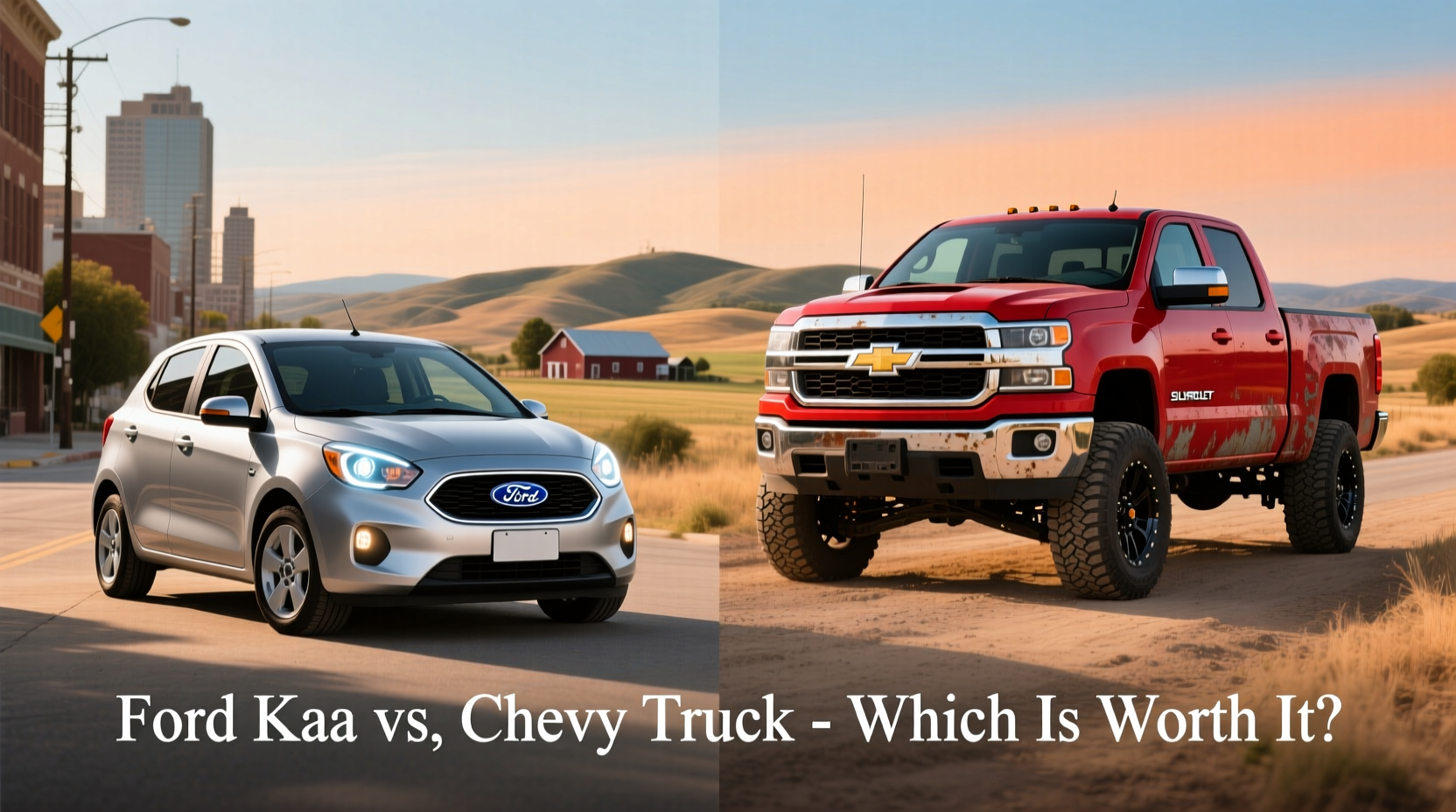
The Ford Ka and Chevrolet trucks serve entirely different purposes. The Ka is a subcompact hatchback designed primarily for city driving. It’s small, lightweight, and optimized for fuel economy. In contrast, Chevrolet trucks are part of a lineup engineered for heavy-duty tasks: hauling cargo, towing trailers, and navigating rough terrain. Comparing them directly might seem odd, but many buyers face this dilemma when balancing daily convenience with occasional work demands.
If you spend most of your time in traffic-heavy cities, parking on narrow streets, or commuting short distances, the Ka offers undeniable advantages. However, if you regularly transport equipment, tow boats or trailers, or live in rural areas with poor road conditions, a Chevy truck becomes far more practical—even necessary.
Tip: Don’t choose a vehicle based solely on what others drive. Match your pick to your actual daily and seasonal usage.Cost Comparison: Purchase Price and Long-Term Ownership
Pricing is one of the most immediate differences. The Ford Ka (where available) typically starts under $15,000 used, making it accessible for budget-conscious buyers. Meanwhile, a new Chevrolet Silverado 1500 begins around $38,000 and can exceed $60,000 with upgrades. Even base-model used Chevys often start above $25,000, depending on year and condition.
But upfront cost is only part of the story. Consider these ongoing expenses:
| Factor | Ford Ka | Chevrolet Truck (e.g., Silverado 1500) |
|---|---|---|
| Average Fuel Economy | 35–42 MPG (combined) | 17–23 MPG (combined) |
| Annual Fuel Cost (12k miles) | $1,100–$1,400 | $2,400–$3,200 |
| Insurance (est. annual) | $800–$1,100 | $1,500–$2,200 |
| Maintenance (5-year avg.) | $2,800 | $5,300 |
| Towing Capacity | Not rated / minimal | 7,000–13,000 lbs |
The data shows that while the Ka wins hands-down on running costs, the Chevy provides capabilities the Ka simply cannot match. If you don’t need towing or payload capacity, paying extra for a truck may not be financially justified.
Performance and Real-World Use Cases
Performance expectations vary widely between these two vehicles. The Ford Ka delivers responsive handling in tight spaces, easy parallel parking, and quick acceleration from stoplights—ideal for errands, school runs, or navigating dense downtown areas. Its 1.5L engine produces around 100 horsepower, sufficient for city speeds but underpowered on highways or steep inclines.
In contrast, even a base V6-powered Chevy truck generates over 280 horsepower and comes with advanced suspension systems, four-wheel drive options, and trailer sway control. These features matter when you're pulling a 6,000-pound camper or driving through snow-covered backroads.
“Vehicle choice should align with your highest-demand scenario, not just everyday convenience.” — Mark Reynolds, Automotive Industry Analyst at MotorInsight Group
Mini Case Study: Sarah vs. James
Sarah lives in Austin, Texas, works remotely, and drives less than 8,000 miles per year. She shops locally, parks on the street, and occasionally visits family three hours away. After analyzing her habits, she chose a used Ford Ka for $12,000. Her monthly fuel and insurance costs total $180. Over five years, she expects to spend under $20,000 including maintenance.
James, a contractor in Colorado, hauls tools, ladders, and materials weekly. He frequently tows a small trailer and drives on mountain roads in winter. A Ford Ka wouldn’t survive his workload. He opted for a 2021 Chevy Silverado with 4x4 and the trailering package. Though his monthly payment is $550 and fuel costs average $300, the truck pays for itself in job capability and reliability.
Their choices reflect their realities—one prioritizes efficiency, the other utility.
Reliability and Resale Value
When evaluating “worth,” longevity and resale value are critical. The Ford Ka has a solid reputation in markets where it’s sold (mainly Latin America and Europe), with many units surpassing 150,000 miles on original engines. However, parts availability outside those regions can be limited, affecting repair timelines and costs.
Chevrolet trucks consistently rank high in long-term durability. According to J.D. Power Vehicle Dependability Studies, Silverados average 200,000+ miles with proper maintenance. They also retain value well—many hold 60% of MSRP after five years, especially diesel or off-road trims.
Tip: Check local resale trends before buying. A reliable car isn’t valuable if no one wants to buy it used in your area.Step-by-Step Guide: How to Decide Which Vehicle Fits You
Follow this sequence to determine whether the Ford Ka or a Chevy truck better suits your life:
- Track your driving patterns for two weeks. Note distance, terrain, cargo needs, and passenger frequency.
- List your non-negotiables: Do you tow? Carry heavy loads? Drive in snow?
- Calculate total 5-year ownership cost for both options using online calculators (fuel, insurance, maintenance).
- Test-drive both types. Spend time loading cargo, checking visibility, and simulating real-use scenarios.
- Ask yourself: Will I regret not having X feature? For example, would lacking towing capacity limit future opportunities?
Checklist: Is a Ford Ka Right for You?
- ✅ You drive fewer than 12,000 miles per year
- ✅ Most trips are within city limits
- ✅ Parking space is limited
- ✅ You rarely carry more than two passengers
- ✅ Towing or hauling is never required
- ✅ Fuel economy is a top priority
Checklist: Should You Choose a Chevy Truck Instead?
- ✅ You regularly haul tools, equipment, or construction materials
- ✅ You tow a boat, camper, or trailer
- ✅ You live in a rural or snowy region
- ✅ You need four-wheel drive for safety or access
- ✅ Your job depends on vehicle capability
- ✅ You plan to keep the vehicle for 10+ years
Frequently Asked Questions
Can I use a Ford Ka for road trips?
Yes, but with caveats. The Ka is capable of highway driving and cross-country travel if loaded lightly. However, its smaller engine works harder at speed, reducing fuel efficiency and increasing wear over long distances. Wind and road noise may also make extended drives tiring.
Are Chevy trucks expensive to maintain?
They cost more than compact cars, but not excessively so when maintained proactively. Routine oil changes, tire rotations, and brake services are predictable. Major repairs (transmission, differential) are pricier but occur less frequently due to robust engineering. Extended warranties can reduce risk.
Is the Ford Ka available in the U.S.?
No. The Ford Ka was never officially sold in the United States. Some owners have imported units from Mexico or South America, but these face regulatory and parts challenges. Buyers in the U.S. seeking similar efficiency might consider the Ford Fiesta (discontinued) or current models like the Mazda2 or Hyundai Accent as alternatives.
Final Verdict: Which One Is Worth It?
The answer hinges on your definition of “worth.” If you value low operating costs, ease of parking, and simplicity, the Ford Ka—or a comparable subcompact—offers excellent value for light-duty urban living. But if your lifestyle demands strength, versatility, and all-weather confidence, a Chevrolet truck isn’t just worth it—it’s essential.
There’s no universal winner. What matters is alignment between your vehicle and your life. Choosing a truck because it looks impressive but never using its capabilities wastes money. Likewise, opting for a tiny car when you need to tow every weekend leads to frustration and limitations.
💬 Ready to make your move? Assess your real-world needs—not desires—and choose the vehicle that empowers your daily life. Share your thoughts below: have you upgraded from a compact car to a truck, or downsized for efficiency? Your experience could help someone else decide.








