
For many renters, especially those on short-term leases of six months to two years, investing in home upgrades can feel impractical. Yet, as energy costs rise and climate consciousness grows, more tenants are considering smart thermostats—not just for comfort, but for savings and convenience. The question remains: Is installing a smart thermostat truly worthwhile when you're not planning to stay long? The answer isn’t a simple yes or no. It depends on your lease terms, utility responsibilities, landlord policies, and personal habits.
Smart thermostats like the Nest, Ecobee, or Honeywell Home promise energy efficiency, remote control via smartphone, learning capabilities, and integration with voice assistants. But do these features translate into tangible benefits for someone who might move out in under a year? Let’s break down the financial, practical, and lifestyle implications to help renters make an informed decision.
How Smart Thermostats Work—and What They Offer
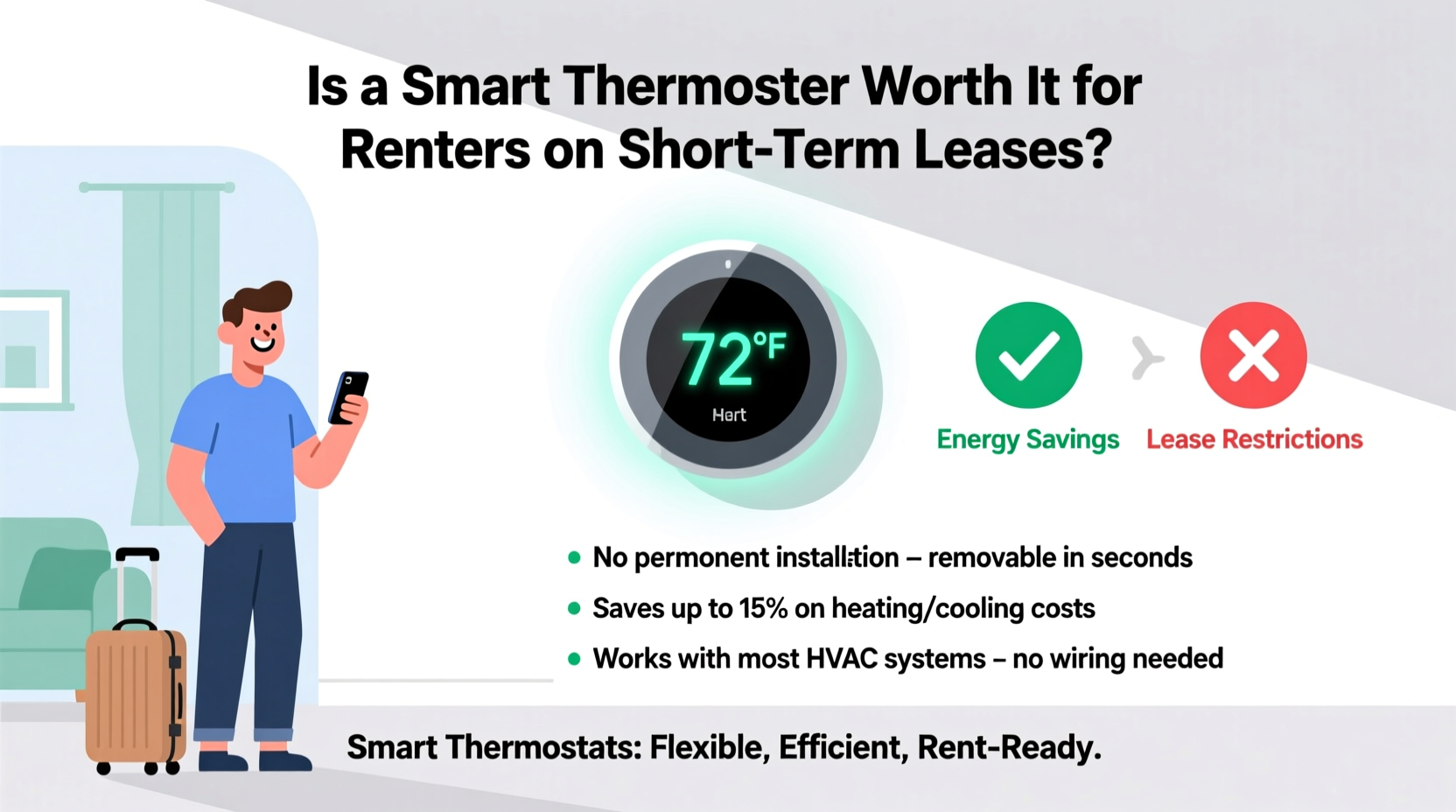
A smart thermostat learns your heating and cooling preferences over time and adjusts temperatures automatically based on your schedule, occupancy, and even local weather forecasts. Most models connect to Wi-Fi, allowing remote access through mobile apps. You can turn the heat up while commuting home or lower it if you’re running late—all from your phone.
Key features include:
- Learning algorithms: Adapts to your routine after a few days of manual adjustments.
- Geofencing: Uses your phone’s location to detect when you’re leaving or returning, adjusting temperature accordingly.
- Energy reports: Monthly summaries show usage patterns and suggest improvements.
- Voice control: Compatible with Alexa, Google Assistant, and Siri.
- Integration with other smart devices: Works with smart vents, humidifiers, or security systems.
These conveniences sound appealing, but their value hinges on consistent use and long-term residence. For a renter planning to move frequently, the setup effort and upfront cost may seem disproportionate to the return.
Tip: If your landlord covers utilities, a smart thermostat won’t save you money directly—focus instead on comfort and convenience.Cost vs. Payback Timeline for Renters
The average smart thermostat costs between $100 and $250, depending on brand and model. Installation is usually DIY-friendly, taking less than an hour for most users with basic tools. However, there's no guaranteed energy savings, and payback periods vary widely.
According to the U.S. Department of Energy, programmable thermostats can save about 10% annually on heating and cooling bills by turning down the temperature 7–10°F for eight hours daily. Smart thermostats often exceed this due to adaptive learning and remote management. Still, actual savings depend on climate, insulation quality, HVAC system age, and user behavior.
Let’s consider a realistic scenario:
| Factor | Assumption | Impact |
|---|---|---|
| Monthly HVAC Cost | $150 | Total annual: $1,800 |
| Potential Savings (10%) | $180/year | $15/month |
| Thermostat Cost | $150 (mid-range) | One-time expense |
| Payback Period | 10 months | Savings = cost |
| Lease Length | 12 months | Break-even at month 10 |
In this example, a renter with a 12-month lease would break even just before moving out. Any savings beyond that point benefit the next tenant or landlord—unless they remove and take the device.
“Smart thermostats are most effective when used consistently over time. For short-term occupants, the investment only makes sense if they plan to reuse the device or gain non-financial benefits like comfort and control.” — Dr. Lena Patel, Energy Efficiency Researcher at the National Institute of Building Sciences
Practical Challenges for Renters
Renters face unique hurdles when installing permanent or semi-permanent devices in leased units. Even if the thermostat seems like a minor upgrade, several issues arise:
- Landlord approval: Many leases require permission for any modifications. Removing the old thermostat—even temporarily—may violate terms.
- Deposit disputes: Improper installation or wall damage could lead to withheld security deposits.
- Device ownership: Who keeps the thermostat when the lease ends? Taking it means reinstalling the original, which may not be available.
- Compatibility: Not all HVAC systems support smart thermostats. Older buildings may lack C-wires or modern wiring.
Some landlords are open to smart upgrades, especially if they reduce overall building energy use. Others view them as unauthorized alterations. Always review your lease agreement and consult your landlord before proceeding.
Checklist: Before Installing a Smart Thermostat as a Renter- Review your lease for clauses about modifications or fixtures.
- Contact your landlord or property manager for written approval.
- Verify HVAC compatibility using online tools (e.g., Nest’s Compatibility Checker).
- Take photos of the existing thermostat wiring before removal.
- Purchase a model that allows easy removal and reinstallation (e.g., with a mounting plate).
- Keep the original thermostat in case you must restore it before moving out.
- Document everything: dates, approvals, installation steps.
Real Example: A 9-Month Sublet in Chicago
Jamal rented a furnished apartment in Chicago for nine months while working on a contract project. Winters were harsh, and the building’s heating system was outdated. His monthly electric bill averaged $220 during peak winter months. After getting landlord approval, he installed an Ecobee SmartThermostat ($219) because it included a room sensor to address uneven heating.
Within three weeks, the thermostat learned his schedule. It lowered the heat when he left for work and warmed the apartment before his return. He used geofencing to adjust settings remotely and set vacation mode during a two-week trip.
Over the next six months, his average heating cost dropped to $175—a $45 monthly saving. By month seven, he’d saved $315, exceeding the device’s cost. When his lease ended, he removed the Ecobee, restored the original thermostat, and took the smart unit with him to his next rental.
Jamal’s case shows that even short-term stays can yield financial returns—if conditions align: landlord approval, high baseline energy costs, compatible systems, and intention to reuse the device.
Alternatives for Renters Who Can’t Install Permanent Devices
Not every renter can install a smart thermostat—even with permission. For those restricted by lease terms or technical limitations, alternatives exist:
- Portable smart space heaters: Use models with app control and scheduling (e.g., Dyson, Honeywell). Zone-heat only occupied rooms to reduce central system load.
- Smart plugs with energy monitoring: Plug space heaters or fans into smart outlets to automate usage and track consumption.
- Programmable thermostats (non-smart): Some landlords allow temporary programmable models that don’t require wiring changes.
- Behavioral adjustments: Manually adjust the thermostat by 7–10°F when away or sleeping. Wear layers indoors instead of cranking the heat.
While these options lack the automation of true smart thermostats, they offer flexibility and portability—ideal for transient living situations.
When It Makes Sense—And When It Doesn’t
The decision ultimately comes down to four key factors:
- Who pays the utility bill? If you do, potential savings justify the investment. If the landlord covers utilities, savings go to them, reducing your incentive.
- Lease length: Leases under six months rarely allow enough time to recoup costs. Twelve months or more increases the likelihood of breaking even.
- Climate severity: In regions with extreme winters or summers, HVAC usage is higher, amplifying savings potential.
- Portability and reuse: If you plan to move the thermostat to future rentals, the initial cost spreads across multiple homes, improving ROI.
Additionally, consider non-monetary benefits. Remote access improves comfort and peace of mind. Parents can check if the house is warm enough for children arriving home from school. Pet owners can ensure safe indoor temperatures while at work. These intangible perks may outweigh modest financial returns for some users.
Frequently Asked Questions
Can I take my smart thermostat with me when I move out?
Yes, most smart thermostats are designed for removal. Just make sure to reinstall the original unit before handing back the keys to avoid deposit deductions. Keep all parts and packaging for safe transport.
Will a smart thermostat work with my rental’s HVAC system?
Most modern forced-air systems are compatible, but older buildings may lack a common “C-wire” for continuous power. Check compatibility using manufacturer tools online. Some models include power-extending kits for C-wire-free setups.
Do landlords ever install smart thermostats themselves?
Increasingly, yes—especially in luxury or eco-conscious properties. Landlords benefit from lower turnover costs, reduced energy waste, and marketing appeal. If yours hasn’t considered it, politely suggest it as a win-win upgrade.
Final Verdict: Worth It Under the Right Conditions
A smart thermostat isn’t automatically worth it for every renter on a short-term lease—but it can be a smart investment under specific circumstances. If you pay your own utilities, live in a climate with high heating or cooling demands, have landlord approval, and intend to reuse the device, the math often adds up within 10–12 months.
More importantly, the convenience, comfort, and environmental benefits extend beyond dollar figures. For tech-savvy renters who value control and efficiency, a smart thermostat enhances daily life in ways that persist even after moving.
The key is approaching it strategically: get permission, document the process, choose a portable model, and calculate your break-even point. With careful planning, a smart thermostat can be more than a gadget—it can be a smart tool for smarter living, no matter how long you stay.
🚀 Ready to evaluate your situation? Calculate your potential savings using your last utility bill, check compatibility, and start a conversation with your landlord today. Even if you don’t install one now, knowing your options puts you ahead.








