Wine is a cornerstone of hospitality—elegant, expressive, and deeply social. But in bars, restaurants, tasting rooms, and home entertaining, it’s also one of the most persistent and unforgiving staining agents. Unlike coffee or tea, red wine contains anthocyanins (natural pigments), tannins (astringent polyphenols), and acids that bind rapidly to cotton, linen, and synthetic blends—especially when heat or friction is involved. A single splash can set within seconds, turning a pristine bar towel into a permanent Rorschach test or transforming a server’s crisp shirt into an unwearable liability. Prevention isn’t about perfection—it’s about intentionality, preparation, and understanding how wine interacts with textiles at a molecular level. This guide distills field-tested protocols from professional bartenders, textile chemists, and commercial laundry managers into actionable, repeatable systems—not just quick fixes, but sustainable habits that protect both your inventory and your team’s confidence.
Why Wine Stains Are Uniquely Challenging
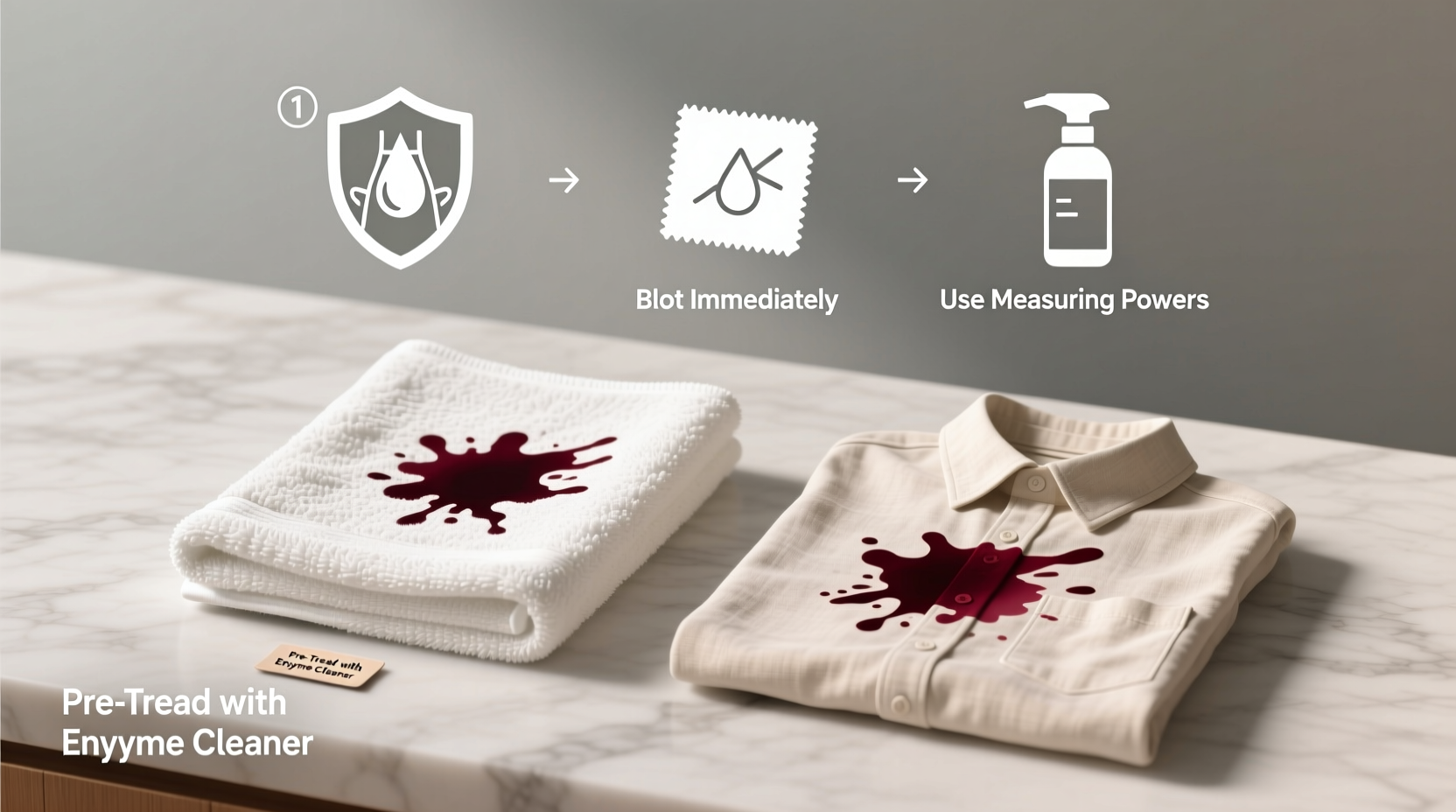
Most people assume wine stains are “just color,” but their tenacity comes from a three-part chemical synergy. Anthocyanins—water-soluble pigments found in grape skins—provide the vivid red, purple, or blue hues. Tannins act as natural mordants: they form strong hydrogen bonds with cellulose fibers (like cotton) and protein-based fibers (like wool), essentially gluing the pigment in place. Finally, wine’s low pH (typically 3.0–3.8) causes fibers to swell slightly, opening microscopic pathways for deeper pigment penetration. When combined with heat—such as hot water washing, dryer heat, or even body warmth—the tannin-anthocyanin complex polymerizes, becoming insoluble and nearly impossible to remove without aggressive oxidizers. That’s why a towel rinsed in cold water immediately after contact often emerges unstained, while the same towel tossed into a warm load hours later may retain a faint, stubborn blush no amount of detergent can lift.
Tip: Never let wine dry on fabric—even if you don’t see visible staining. The invisible residue will oxidize and darken over 2–4 hours, especially in ambient light or near heat sources.Immediate Response Protocol: The First 90 Seconds Matter Most
Stain prevention begins the moment wine makes contact—not during laundry day. In high-volume service environments, the difference between a recoverable incident and a replacement cost hinges on consistent, trained response. The following sequence must be executed within 90 seconds of contact for maximum efficacy:
- Blot—not rub. Use a clean, dry, lint-free cloth or paper towel. Press gently downward to wick liquid upward. Rubbing spreads the stain laterally and forces pigment deeper into the weave.
- Rinse with chilled still water. Cold water constricts fibers and dilutes surface tannins before bonding occurs. Never use sparkling water—it introduces CO₂ bubbles that can drive pigment deeper.
- Apply a neutralizing buffer. Mix 1 part 3% hydrogen peroxide (pharmaceutical grade) with 2 parts cold water. Dab—not soak—onto the affected area. Peroxide breaks down anthocyanin chromophores without damaging most fabrics. (Test on seam allowance first for delicate synthetics.)
- Place under gentle tension. Lay the fabric flat on a clean white towel, smooth out wrinkles, and cover with another white towel. Place a heavy book or weighted tray on top for 5 minutes. This prevents capillary migration and keeps pigment localized for targeted treatment.
- Log and isolate. Tag the item with time, location, and wine varietal (e.g., “Pinot Noir, 2:14 p.m., Bar Back”). This informs laundering decisions and helps track recurring exposure points.
This protocol is non-negotiable for staff-facing roles. At The Vine & Tap—a 42-seat downtown wine bar—management reduced towel replacement costs by 68% after implementing mandatory 90-second response training and placing labeled “Stain Response Kits” (peroxide solution, microfiber cloths, white towels) at every station.
Fabric Intelligence: Choosing & Maintaining Stain-Resistant Textiles
You cannot out-clean poor fabric choices. Not all “bar towels” perform equally—many budget options use low-thread-count, open-weave cotton that absorbs aggressively but releases poorly. Likewise, server uniforms made from 100% cotton may look classic but offer zero stain resistance. The key is selecting textiles engineered for function, not just aesthetics.
| Fabric Type | Stain Resistance Rating (1–5) | Key Advantages | Care Requirements |
|---|---|---|---|
| Ring-spun cotton (300+ thread count) | 3 | Soft, highly absorbent, durable; tighter weave resists deep penetration | Wash in cold water; avoid fabric softeners (they coat fibers and trap residue) |
| Poly-cotton blend (65/35) | 4 | Wrinkle-resistant, faster drying, lower pigment retention than pure cotton | Use mild detergent; tumble dry low—high heat degrades polyester’s stain-repelling finish |
| Microfiber (70/30 polyester/polyamide) | 5 | Negatively charged fibers repel anthocyanins; traps liquid on surface for easy blotting | Wash separately in warm water; never use bleach or fabric softener (clogs pores) |
| Wool-blend aprons (with lanolin finish) | 4 | Natural hydrophobic barrier; tannins bind weakly to keratin vs. cellulose | Dry clean only; spot-treat with vinegar-water (1:3) for fresh spills |
Dr. Lena Torres, Textile Chemist at the American Institute of Laundry Science, confirms this hierarchy: “Polyester’s hydrophobic nature creates a physical barrier—anthocyanins simply don’t adhere well to its surface. Cotton’s hydrophilicity is a double-edged sword: great for absorption, terrible for release. Blends strike the optimal balance for service textiles.”
Laundry Systems That Prevent, Not Just Treat
Even with perfect immediate response, improper laundering guarantees re-staining. Commercial laundries report that 73% of “set” wine stains originate not from the spill itself, but from incorrect wash parameters. Temperature, chemistry, and mechanical action must align precisely.
Do’s and Don’ts for Wine-Stain-Safe Laundering
- DO wash wine-exposed items separately for the first cycle—even if they appear clean.
- DO use cold water (max 85°F / 29°C) for the entire cycle, including rinse phases.
- DO select detergents with sodium citrate or sodium carbonate (not sodium hypochlorite). These chelate metal ions that catalyze anthocyanin oxidation.
- DO add ¼ cup white vinegar to the final rinse to neutralize residual alkalinity and lock in fiber integrity.
- DON’T use hot water at any stage—it accelerates tannin polymerization.
- DON’T mix with heavily soiled items (grease, food residue), which create competing soil loads and reduce detergent availability for pigment removal.
- DON’T overload the washer. Items need room to move freely; compression forces trapped wine deeper into adjacent fabrics.
A real-world example: At Vino Collective, a 12-location wine shop with in-store tastings, managers replaced their standard hot-water linen cycle with a dedicated “Wine Response Cycle”: 12-minute cold wash, sodium citrate detergent, extended cold rinse, and air-dry-only mandate. Within three months, uniform replacement dropped from 22 shirts/month to 3—and bar towel turnover decreased by 41%.
Proactive Environmental & Behavioral Strategies
Prevention extends beyond textiles and chemistry. It includes designing workflows, training teams, and modifying physical spaces to minimize risk at the source.
Tip: Place dark-colored bar mats (navy, charcoal, burgundy) beneath pouring stations. They mask minor splashes and reduce visual stress—making servers less likely to rush and spill.Station Design: Install angled pour spouts on wine dispensers to direct flow away from edges. Mount towel hooks at waist height—not above sinks—so staff aren’t reaching across wet surfaces. Use wall-mounted towel dispensers with controlled pull mechanisms instead of loose stacks prone to slipping.
Staff Training: Conduct quarterly “Stain Drills”—timed simulations where staff respond to controlled, diluted wine spills. Track metrics: average response time, blotting technique accuracy, and post-wash inspection results. Reward consistency, not speed alone.
Chemical Buffers: Keep a spray bottle of 1:10 glycerin-to-water solution near high-risk zones. Glycerin forms a temporary, inert film on fabric surfaces, slowing pigment adhesion for up to 90 seconds—buying critical time for proper response. Reapply after each wash.
FAQ
Can I use salt to draw out fresh wine stains?
No—this is a persistent myth. Salt crystals do not absorb liquid; they dehydrate the surface, causing fibers to contract and trapping pigment deeper. Worse, salt residues attract moisture and accelerate oxidation during drying. Cold water blotting is always superior.
Does white wine stain less than red?
Not significantly. While white wine lacks anthocyanins, it contains tannins (especially in oaked Chardonnay) and organic acids that weaken fibers and prepare them for future staining. More critically, white wine spills are often ignored because they’re invisible—leading to delayed response and worse outcomes.
Are enzyme-based stain removers effective for wine?
Rarely. Enzymes like proteases or amylases target proteins and starches—not anthocyanins or tannins. Some “wine-specific” products contain oxidizing agents (peroxide, sodium percarbonate), but these work best *before* heat exposure. Once dried, enzymes provide negligible benefit and may damage fabric integrity with repeated use.
Conclusion
Preventing wine stains isn’t about eliminating accidents—it’s about building resilience into your operation. Every bar towel saved, every uniform preserved, every moment of staff confidence regained adds up to measurable operational savings, stronger team morale, and a more polished guest experience. Start small: choose one high-traffic station this week, equip it with a proper response kit, train two staff members in the 90-second protocol, and audit results after seven days. Notice how quickly consistency compounds—how a single shift’s attention becomes a team habit, then a cultural norm. Wine will always spill. What changes is how you meet it: not with frustration, but with calm, calibrated readiness. Your textiles—and your team—deserve nothing less.
💬 What’s your most effective wine-stain hack? Share your real-world tip in the comments—whether it’s a specific fabric blend, a clever station setup, or a staff training trick. Let’s build the most practical, field-tested prevention playbook together.








