
In an age where minimalism meets functionality, the tiny crossbody bag has become a staple in urban wardrobes. Compact, stylish, and hands-free, it’s ideal for errands, dates, or city exploration. But fitting everything you need into a small space? That’s where the real challenge begins. The key isn’t stuffing more in—it’s rethinking what “everything” really means. With strategic planning, smart organization, and a few expert-backed tricks, you can carry all essentials comfortably, confidently, and without the constant rummaging.
The Psychology of Minimalist Carrying
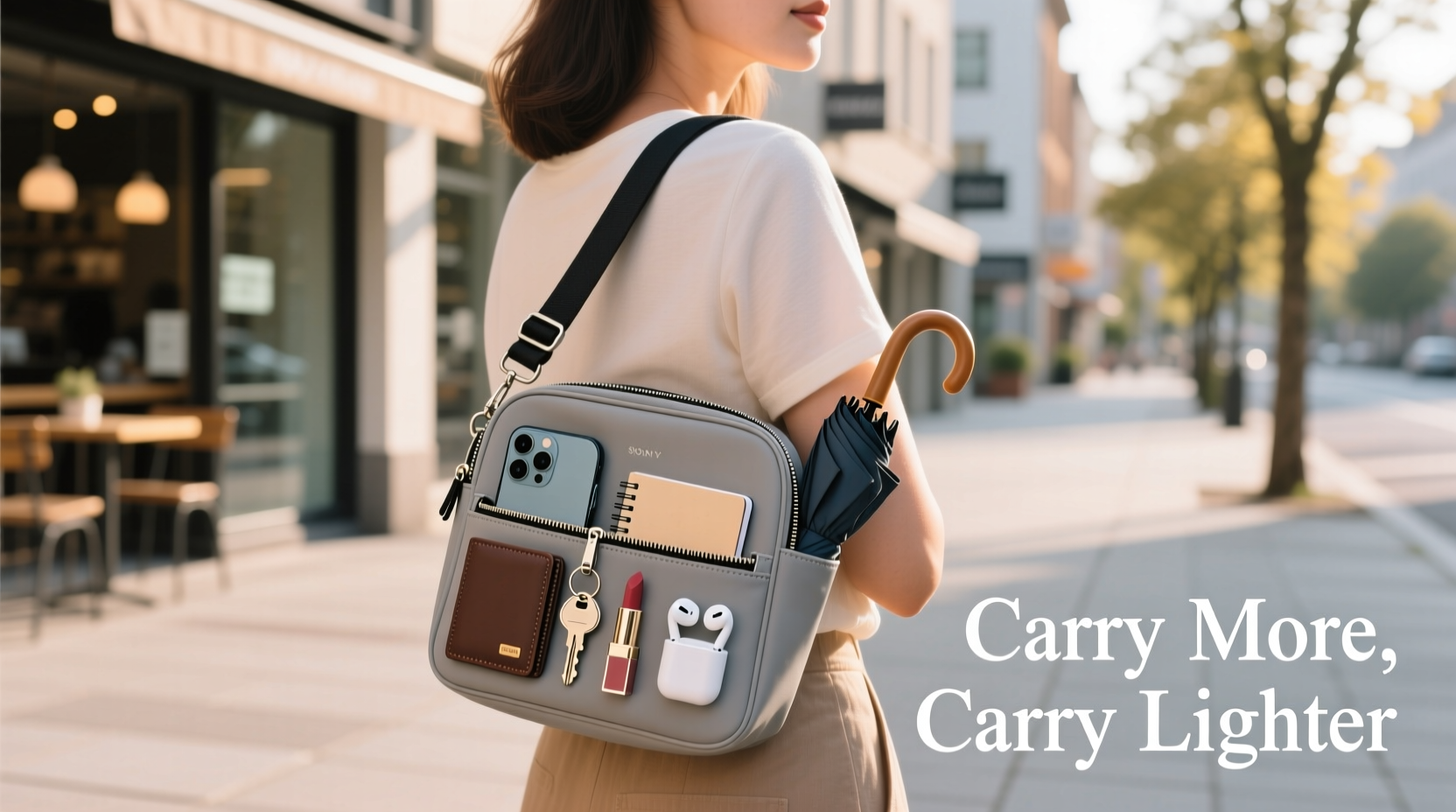
Before diving into logistics, it helps to shift your mindset. A tiny crossbody bag forces intentionality. Instead of defaulting to “just in case” items, ask: Will I actually use this today? Most people overpack due to anxiety about being unprepared. But in reality, 80% of what we carry goes unused. By identifying your true daily needs, you reduce physical weight and mental clutter.
Urban professionals and frequent travelers have long embraced this philosophy. Take Sarah, a graphic designer based in Brooklyn, who switched from a large tote to a palm-sized crossbody after realizing she only used her phone, wallet, and lip balm during her coffee-to-office commute. “I felt lighter, literally and mentally,” she says. “Now I don’t dread digging through a black hole of a bag.”
Tip: Carry only what serves a purpose within the next 4–6 hours. If it doesn’t fit that window, leave it behind.Essential Items: The Non-Negotiables
Start by defining your personal non-negotiables. These vary by lifestyle but typically include:
- Phone (and possibly a compact charger)
- Wallet or cardholder
- Keys
- Lip balm or lipstick
- Hand sanitizer or mini tissues
- Medication (if time-sensitive)
- One multitasking tool (e.g., compact mirror with powder)
The goal is to curate a core set of items that support your immediate needs. For example, instead of carrying a full-size wallet, switch to a slim cardholder with only the cards you’ll use that day. Remove duplicates—do you really need both Apple Pay and a physical credit card on hand?
“Minimalism in your bag isn’t about deprivation—it’s about liberation. When you remove excess, you gain speed, comfort, and confidence.” — Lena Torres, Urban Lifestyle Organizer
Smart Organization Strategies
Even the smallest bags can be efficient with the right internal structure. Since most tiny crossbodies lack compartments, creating micro-zones is crucial.
Use Mini Pouches and Compartments
Invest in soft, flexible silicone or fabric pouches designed for cosmetics or travel. Assign each a role:
- Clear zip pouch: Receipts, coins, gum
- Flat card sleeve: Emergency cash or ID
- Magnetic snap pouch: Hair tie, earring backs, nail file
These act as modular units, so you can swap them between bags or quickly find what you need without dumping the entire contents.
Layer Items Strategically
Think like a Tetris player. Place flat, rigid items at the bottom (wallet, phone), followed by soft, malleable ones (tissues, lip balm). Keep high-use items on top or near the opening. Avoid burying keys under layers—they’re the most frustrating to lose mid-reach.
Tip: Use a lanyard or retractable badge reel for keys. Clip it inside the bag so they dangle just enough to grab easily.Step-by-Step: Building Your Daily Loadout
Follow this routine every morning to ensure efficiency and avoid last-minute panic:
- Assess your day: Will you run errands? Attend meetings? Go straight home? Tailor your load accordingly.
- Gather core essentials: Phone, wallet, keys, ID.
- Add situational items: Sunglasses (in a crush-proof case), portable charger, medication.
- Double-check size: Test-fit each item in your bag before zipping up.
- Do a final sweep: Remove anything redundant (e.g., multiple pens, expired coupons).
- Test the carry: Wear the bag for five minutes. Is it balanced? Can you access your phone one-handed?
This process takes less than three minutes once practiced. Over time, it becomes automatic—like brushing your teeth.
What to Leave Behind (And Why)
Letting go of certain items is the hardest part. But consider the cost-benefit:
| Common Item | Why It’s Usually Unnecessary | Better Alternative |
|---|---|---|
| Full-size makeup palette | Takes up 40% of space; rarely used midday | Mini pressed powder + tinted balm |
| House keys (if not going home) | Adds weight and risk of loss | Leave at home or with trusted contact |
| Large water bottle | Too bulky; leaks possible | Hydrate before leaving; use public fountains |
| Notebook & pen | Digital alternatives are faster | Voice memos or notes app |
| Snacks (unless medical need) | Crushes, attracts pests, adds bulk | Buy locally if needed |
The rule of thumb: if it doesn’t serve a critical function or emotional comfort, reconsider its place in your bag.
Real Example: A Day in the Life of a Crossbody Pro
Meet James, a freelance photographer in Austin. His gear bag holds his camera, but when he’s off-duty, he uses a 7” x 5” crossbody for casual outings. Here’s how he structures his carry:
- Front pocket: Folded $20 bill, AirPods case
- Main compartment: Phone, slim leather cardholder (3 cards + ID), mini deodorant stick
- Side slot: Retractable key leash
- Attached charm: Tiny flashlight clip
He leaves his wallet at home, relying on digital payments. “If I need cash, I withdraw at a store while buying something anyway,” he explains. “And if I’m shooting, I just transfer what I need from my larger bag.” His system works because it’s adaptable—not rigid.
Upgrade Your Accessories
Sometimes, the problem isn’t what you carry—but how you carry it. Small upgrades make a big difference:
- Slip-resistant strap: Prevents sliding off shoulders, especially in humid climates.
- RFID-blocking cardholder: Protects against digital theft without adding bulk.
- Expandable crossbody: Some models have hidden gussets or zippers that add 1–2 inches when needed.
- Clip-on add-ons: Magnetic pockets for phones or cards that attach externally (but securely).
Also, consider bag material. Nylon and neoprene stretch slightly under pressure, while structured leather may resist expansion. Choose based on flexibility needs.
Checklist: Your Tiny Bag Readiness Guide
Use this checklist every morning or when preparing for a minimalist outing:
- ✅ Phone charged and in silent mode
- ✅ Wallet or cardholder with only necessary cards
- ✅ Keys secured with a clip or lanyard
- ✅ Lip product or hand sanitizer
- ✅ One emergency item (cash, pain reliever, etc.)
- ✅ Bag wiped clean (no crumbs or lint)
- ✅ Strap adjusted for comfortable wear
- ✅ No unnecessary receipts or wrappers inside
Run through this list once, and you’ll never open your bag wondering why it feels chaotic.
Frequently Asked Questions
Can I carry a phone and power bank in a tiny crossbody?
Yes, but choose wisely. Most modern smartphones fit in compact bags, especially if placed vertically. For a power bank, opt for ultra-slim models (under 0.5” thick) with 5,000mAh capacity—enough for one full charge. Alternatively, consider a credit-card-sized battery that slips into your wallet.
How do I prevent shoulder strain with a small bag?
Distribute weight evenly. Adjust the strap so the bag rests near your hip, not your ribs. Cross-body style naturally balances load better than shoulder carry. Also, rotate bags throughout the week to avoid repetitive strain.
What if I need to carry more occasionally?
Have a foldable backup—like a lightweight tote that fits in a coat pocket. Or use delivery services: order online and have packages sent to your office or home instead of lugging purchases back.
Final Thoughts: Less Bag, More Freedom
Carrying everything in a tiny crossbody isn’t about compromise—it’s about clarity. When you pare down to what truly matters, you move faster, feel lighter, and engage more fully with your surroundings. The bag stops being a burden and becomes an extension of your rhythm.
It’s not magic. It’s method. Start small: tomorrow, remove one item you don’t need. Then another. Within a week, you’ll notice the difference—not just in space, but in peace of mind. You don’t need to carry the world. You just need the tools to navigate yours.
💬 Ready to simplify your carry? Try the 5-item challenge: pack only your phone, wallet, keys, one personal item, and one situational tool. Share your experience in the comments!








