Tire size isn’t just a number stamped on the sidewall—it’s critical information that affects your vehicle’s performance, safety, and fuel efficiency. Whether you're replacing worn tires, upgrading to all-terrain models, or fitting winter rubber, knowing how to measure tire size accurately ensures compatibility with your rims, suspension, and speedometer readings. Misjudging dimensions can lead to rubbing against fenders, inaccurate speed readings, or even clearance issues with braking components.
This guide walks through the entire process of measuring tire size manually, decoding sidewall markings, and verifying fitment—whether you’re working with a compact sedan, a heavy-duty pickup, or an off-road SUV. No assumptions, no guesswork—just clear, repeatable steps anyone can follow.
Understanding Tire Size Markings
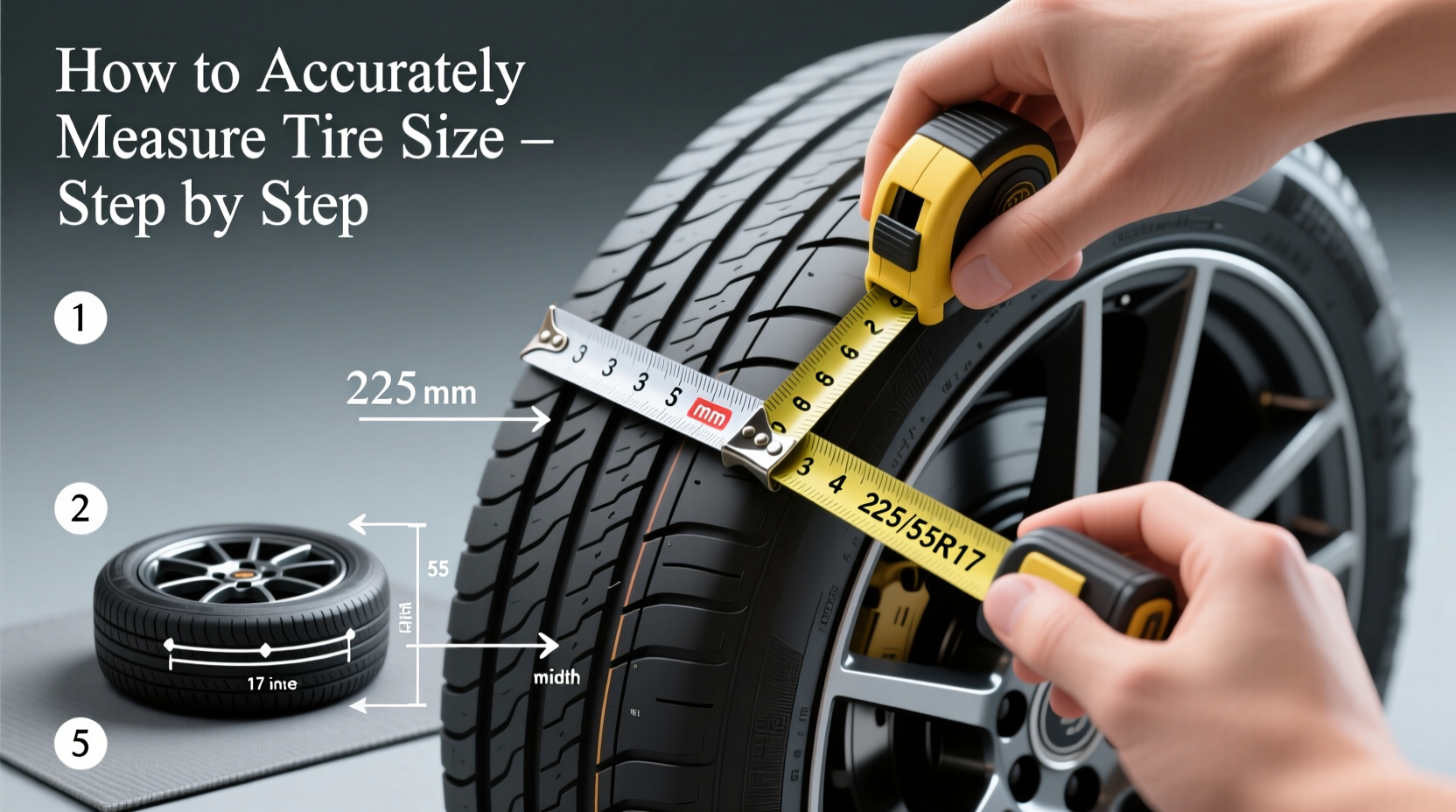
Before picking up a tape measure, it helps to understand what tire size labels mean. A typical sidewall marking looks like this: 225/60R16 98H. Each segment provides specific data:
- 225: Tread width in millimeters (from sidewall to sidewall)
- 60: Aspect ratio—the height of the sidewall as a percentage of the tread width (60% of 225mm = 135mm)
- R: Radial construction (standard on most modern tires)
- 16: Rim diameter in inches
- 98H: Load index (98 = 1,653 lbs per tire) and speed rating (H = 130 mph)
While this code gives you theoretical dimensions, actual physical measurements may vary slightly between manufacturers and wear conditions. That’s why physically measuring your tire is essential when modifying your vehicle or confirming compatibility.
Tip: Always check both the driver and passenger side tires—uneven wear or inflation can cause slight differences in measured dimensions.Step-by-Step Guide to Measuring Tire Size Manually
Measuring tire size doesn’t require advanced tools—just a few common items and about 15 minutes. Follow these steps precisely for accurate results.
- Prepare the Vehicle: Park on level ground, engage the parking brake, and ensure tires are inflated to the manufacturer’s recommended PSI (found in the door jamb sticker).
- Gather Tools: You’ll need a retractable steel tape measure, a straight edge (like a yardstick), and notepad for recording data.
- Measure Section Width: Place the tape across the tire from outer sidewall to outer sidewall at the widest point. Do not include any raised letters or protective ribs. Record in millimeters or inches.
- Measure Overall Diameter: Stand the straight edge vertically beside the tire. Measure from the ground to the top of the tire tread. This is the total height when mounted and inflated.
- Calculate Sidewall Height: Subtract the rim diameter (in inches) from the overall diameter, then divide by two. This gives you the sidewall height on one side.
- Verify Rim Fitment: Confirm the rim diameter matches your tire’s designated size. Use calipers if possible to measure the distance between the inner edges of the wheel bead seats.
For example, if your measured overall diameter is 27 inches and you’re using a 16-inch rim, each sidewall is approximately (27 - 16) / 2 = 5.5 inches tall. Convert this to millimeters (5.5 × 25.4 ≈ 139.7mm). Compare this to the expected sidewall height based on the aspect ratio to verify accuracy.
Do’s and Don’ts When Measuring Tire Size
| Do’s | Don’ts |
|---|---|
| Measure tires when cold (before driving more than a mile) | Don’t measure after highway driving—heat expands rubber |
| Use a steel tape measure for precision | Don’t use fabric tapes—they stretch and give false readings |
| Double-check measurements at multiple points around the tire | Don’t assume symmetry—tires can wear unevenly |
| Compare manual results with sidewall codes | Don’t rely solely on OEM specs if modifications exist |
| Record all values clearly for future reference | Don’t skip documenting—even small changes matter |
Real-World Example: Upgrading Tires on a Truck
Derek owns a 2018 Ford F-150 with factory P265/70R17 tires. He wants to install larger all-terrain tires without lifting the truck. His local shop suggests LT285/70R17s, but he decides to measure first.
Using a steel tape, Derek finds his current tire’s overall diameter is 30.6 inches. The new model’s catalog lists a diameter of 32.7 inches—a 2.1-inch increase. He measures his wheel well clearance and discovers only 2.5 inches of space above the tire at full compression. Installing the larger tire risks contact during bumps or turns.
Instead, Derek opts for a LT275/65R18, which has a diameter of 31.1 inches—still bigger than stock but within safe margins. After mounting, he recalibrates his speedometer via the onboard menu. By measuring first, he avoids costly damage and maintains drivability.
“Many drivers assume tire size is just about looks, but incorrect fitment stresses suspension components and can void warranties.” — Carlos Mendez, ASE-Certified Master Technician
Checklist: Verifying Tire Size Before Purchase
- ☐ Confirm current tire size via sidewall code
- ☐ Physically measure tread width and overall diameter
- ☐ Check clearance in wheel wells (front and rear)
- ☐ Verify rim diameter and width compatibility
- ☐ Cross-reference with online tire fitment guides
- ☐ Account for load range and inflation pressure needs
- ☐ Update TPMS settings or reprogram ECU if necessary
This checklist applies whether you're staying stock or modifying. Skipping even one item can result in poor handling, accelerated wear, or mechanical interference.
Frequently Asked Questions
Can I use a different tire width than what's listed in my owner’s manual?
Yes, within limits. Most vehicles allow a 10–20mm variation in width without issues. However, wider tires may rub during steering lock, and narrower ones can affect stability. Always remeasure clearance and consult fitment charts before switching.
Why does my measured tire size differ from the sidewall label?
Manufacturers list nominal sizes, not exact physical dimensions. Variations occur due to tread design, inflation pressure, load, and brand tolerances. A difference of up to 0.5 inches in diameter is normal. If discrepancies exceed 1%, investigate further.
Do oversized tires affect gas mileage and transmission?
Absolutely. Larger tires rotate slower at the same speed, reducing engine RPM but tricking the transmission into shifting late. This decreases fuel economy and increases strain on drivetrain components over time. Consider a gear ratio adjustment or ECU tune for frequent towing or off-roading.
Final Thoughts and Action Steps
Accurate tire measurement is more than a technical detail—it's a cornerstone of vehicle safety and performance. Whether you're maintaining your daily commuter or customizing an off-road rig, taking precise physical measurements eliminates guesswork and prevents expensive mistakes.
Start by inspecting your current tires, decoding their markings, and validating those numbers with hands-on measurement. Use the checklist provided to evaluate any new tire option thoroughly. Share your findings with mechanics or tire specialists to get informed feedback before purchasing.
🚀 Take action today: Grab a tape measure, head to your garage, and record your tire dimensions. Having this baseline data empowers smarter decisions for replacements, upgrades, or repairs down the road.








