Walking a puppy should be a joyful experience, not a battle of wills. Yet many new dog owners quickly discover that their adorable pup turns into a determined sled dog the moment the leash is clipped on. The instinct to pull is strong, especially in curious, energetic puppies drawn to every scent and sound. But how you manage this behavior matters—not just for training success, but for your puppy’s long-term physical health.
The debate between harnesses and collars isn’t just about preference—it’s about safety, effectiveness, and proper development. Puppies have delicate tracheas, developing spines, and immature musculoskeletal systems. A tool that causes choking or strain can lead to lasting damage. So when it comes to stopping pulling without harming your puppy, the right choice is critical.
Why Pulling Is More Than Just Annoying
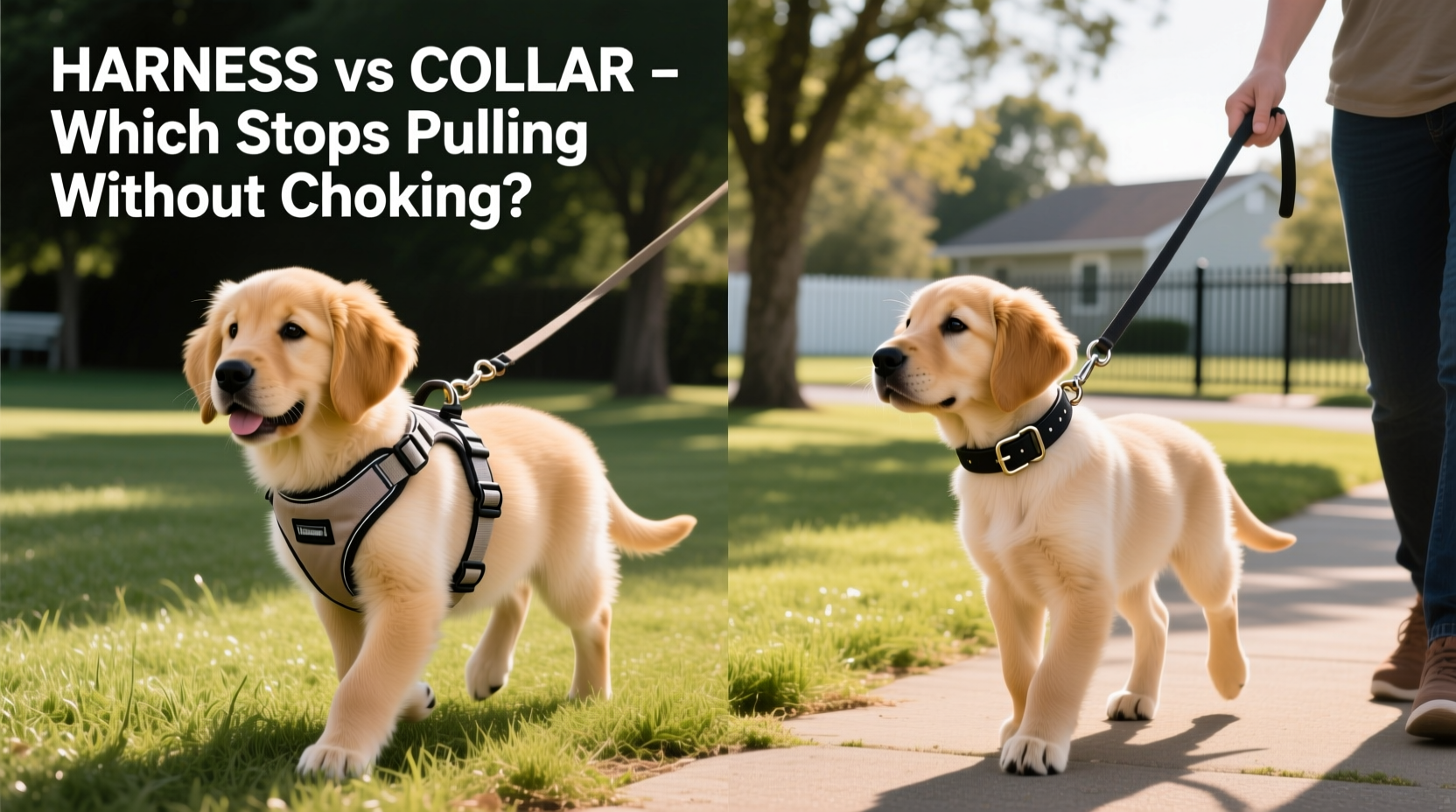
Pulling isn’t simply a behavioral nuisance; it poses real risks, especially for young dogs. When a puppy pulls against a traditional neck collar, pressure is concentrated on the trachea, cervical spine, and eyes. Repeated strain can contribute to:
- Tracheal collapse or irritation
- Thyroid gland damage
- Increased intraocular pressure (a risk for dogs predisposed to glaucoma)
- Neck and spinal misalignment
According to Dr. Christine Zink, a leading canine sports medicine researcher, “The neck contains vital structures including the trachea, esophagus, major blood vessels, nerves, and vertebrae. Applying force via a collar during pulling can cause serious, sometimes irreversible damage—especially in small or toy breeds.”
“Using a collar for training a pulling puppy is like asking a child to pull a wagon by hanging from a rope around their neck. It’s inefficient and dangerous.” — Dr. Karen Overall, Veterinary Behaviorist
How Harnesses and Collars Work Differently
Understanding the mechanics of each tool is essential to making an informed decision.
Traditional Neck Collars
A standard flat collar sits around the neck and connects to the leash at the back or side. While useful for holding ID tags and for light control, it transfers all pulling force directly to the throat. Even brief tugs can trigger coughing or gagging, particularly in brachycephalic breeds like Pugs or French Bulldogs.
Some trainers use correction collars like choke chains or prong collars, but these are inappropriate—and often harmful—for puppies. These tools rely on discomfort or pain to suppress behavior, which can damage trust and increase fear-based reactivity.
Front-Clip Harnesses
Front-clip harnesses attach the leash to a ring located on the chest, between the front legs. When a puppy pulls forward, the design gently steers them back toward the handler, discouraging straight-line tension. This redirection reduces strain on the neck and makes pulling self-limiting.
These harnesses distribute pressure across the chest and shoulders, areas better suited to handle force. Because they don’t compress the trachea, they’re safer for respiratory and neurological health.
Back-Clip Harnesses
Back-clip harnesses connect at the top of the shoulders, similar to a backpack. While more comfortable than collars, they can actually encourage pulling because the point of pressure aligns with forward motion. Think of it like being harnessed to a sled—pulling feels natural, even rewarding.
For this reason, back-clip harnesses are best suited for well-trained dogs who walk politely, not for puppies still learning leash manners.
No-Pull and Head Halters
Head halters, such as the Gentle Leader or Halti, fit around the muzzle and behind the ears. They give gentle directional control, allowing handlers to guide the puppy’s head and thus their body. When used correctly, they prevent pulling without choking.
However, some puppies resist head halters initially. Proper introduction and positive reinforcement are essential. Never force-fit or yank on a head halter—it should be a guiding tool, not a corrective one.
Comparing Safety and Effectiveness
| Tool | Safety for Puppies | Effectiveness Against Pulling | Best For |
|---|---|---|---|
| Flat Neck Collar | Poor – risk of tracheal injury | Low – encourages pulling | ID tags, short yard walks |
| Front-Clip Harness | Excellent – no neck pressure | High – redirects pulling | Training, daily walks |
| Back-Clip Harness | Good – distributes pressure | Low to Moderate – may encourage pulling | Calm dogs, socialization outings |
| Head Halter | Good – if fitted properly | High – controls direction | Distractible or strong puppies |
| Prong/Choke Collar | Poor – high risk of injury | Moderate (via aversion) | Not recommended for puppies |
Step-by-Step: Choosing and Training With the Right Tool
Selecting the right equipment is only half the battle. Pairing it with consistent, positive training ensures long-term success. Follow this timeline to build polite leash walking habits:
- Week 1: Introduce the Gear Indoors
Let your puppy wear the harness or halter for short periods while playing or eating treats. Use high-value rewards to create a positive association. - Week 2: Practice Leash Pressure Awareness
Attach the leash indoors and let your puppy drag it (under supervision). Gently pick up the leash and say “let’s go” when they move toward you. Reward attention and loose-leash moments. - Week 3: Begin Short Outdoor Sessions
Walk for 5–10 minutes in low-distraction areas. Use the front-clip harness to redirect pulls. Every time the leash goes slack, praise and treat. Stop moving when tension appears. - Week 4: Add Distractions Gradually
Visit busier sidewalks or parks. Keep sessions short. If your puppy pulls, turn and walk the opposite direction. This teaches that pulling leads away from excitement. - Week 5+: Fade Treats, Reinforce Consistency
Begin using intermittent rewards. Praise becomes the primary reinforcer. Maintain rules—never allow pulling, even occasionally, as this teaches inconsistency.
Patience is key. Puppies learn through repetition and emotional associations. A tool that makes pulling less effective—without causing pain—combined with positive feedback for good behavior, builds lasting habits.
Real Example: Transforming a Puller into a Polite Walker
Meet Milo, a 14-week-old Labrador Retriever mix adopted by first-time owner Sarah. Milo loved exploring but turned every walk into a tug-of-war. Using a standard collar, Sarah struggled to hold him back, and Milo began coughing after walks.
Her veterinarian recommended switching to a front-clip harness. Sarah chose a padded, adjustable model and began training using the step-by-step method above. She practiced indoors for three days, rewarding Milo for walking beside her with his leash slack.
After two weeks of consistent 10-minute outdoor walks, Milo started checking in with Sarah before charging ahead. By week six, he walked calmly past squirrels and other dogs, turning to look at Sarah when excited. The coughing stopped, and their walks became enjoyable again.
“I was worried I’d ruined our walks forever,” Sarah said. “But once we switched gear and stayed consistent, everything changed. Now he walks like a pro.”
Checklist: Selecting the Best Pulling Solution for Your Puppy
- ✅ Avoid neck collars for training or walks where pulling occurs
- ✅ Choose a front-clip harness made of breathable, adjustable material
- ✅ Ensure proper fit: two fingers should fit under any strap
- ✅ Introduce the harness gradually with treats and play
- ✅ Pair equipment with positive reinforcement training
- ✅ Avoid tools that rely on pain or fear (prong, shock, or choke collars)
- ✅ Consult a certified trainer if progress stalls
Frequently Asked Questions
Can I use a collar at all if my puppy wears a harness?
Yes—but only for identification. Keep a lightweight collar with ID tags on your puppy at all times, even when using a harness for walks. This ensures quick identification if they ever escape.
Will a harness stunt my puppy’s growth or hurt their shoulders?
No, provided it fits correctly. Poorly designed or ill-fitting harnesses can cause rubbing or gait issues, but modern veterinary-approved harnesses are engineered for comfort and mobility. Regularly check for chafing and adjust as your puppy grows.
What if my puppy still pulls even with a front-clip harness?
Equipment alone isn’t enough. Combine the harness with training. Use techniques like changing direction when pulling starts, rewarding attention, and keeping walks short and focused. If needed, enlist a positive-reinforcement trainer to help refine your approach.
Conclusion: Prioritize Safety, Comfort, and Long-Term Success
When it comes to stopping a puppy from pulling, the goal isn’t just control—it’s building a relationship based on trust, clarity, and mutual enjoyment. A front-clip harness offers the safest and most effective solution for preventing pulling without choking, protecting your puppy’s developing body while setting the stage for lifelong good habits.
Collars have their place, but not as primary training tools. Relying on them for leash control risks both physical harm and behavioral setbacks. By choosing humane, science-backed methods—from the right gear to reward-based training—you give your puppy the best start possible.
💬 Have a success story with a harness or training tip that worked for your puppy? Share your experience in the comments—your insight could help another pet parent avoid frustration and keep their pup safe.








